Yesterday, the European Business Association held its traditional Global Outlook event, where the business community discussed plans for 2024, the macroeconomic stability of the country, defense industry and development prospects, and Ukrainian-Polish cooperation.
Macroeconomic and macrofinancial stability of the country
Andriy Pyshnyy, Governor of the National Bank of Ukraine, emphasized that in 2023 Ukraine managed to achieve significant economic results and build up a certain margin of safety. This resource makes it possible to hold out until the rhythm of international assistance is restored. The NBU remains within the baseline scenario of its macroeconomic forecast and expects that external financing (its rhythmicity and sufficiency) will be restored soon. Mr. Pyshnyy emphasized that the regulator understands the difficulties for business due to the currency restrictions imposed, which were a necessary step to stabilize the situation at the beginning of the full-scale invasion. The NBU is actively working to create systemic preconditions for further currency liberalization. The first stage is almost complete, while the second stage will include the liberalization of trade finance, management of currency risks of banks, and the possibility of the repatriation of interest on “old” debt obligations. Progress on the currency liberalization roadmap depends, among other things, on the state of international reserves, which are replenished through international assistance and timely receipt of export earnings. Andriy Pyshnyy emphasized the need for companies to meet the deadlines for its return. Careful compliance with all the rules will bring the moment of further currency easing closer for everyone.
Tomas Fiala, CEO of Dragon Capital, supported the words of the NBU Governor. The banking sector is experiencing a much better situation than in the 2014 crisis, when there was a serious outflow of deposits, some banks had to close, etc. He also remains optimistic about the current situation and predicts a 4% growth in gross domestic product (GDP) if security risks remain at the same level. It is expected that this year Ukraine will receive $37 billion in loans and grants to the budget, including €18 billion from the EU, $5 billion from the IMF, $8 billion from the US, plus assistance from Canada, Japan, and Norway (although this is less than last year, when it was $42 million). This will bring the GDP to $203 billion in dollars, which is the highest GDP in dollars in the history of independent Ukraine. Of course, there are also risks of irregularity of assistance, and not receiving sufficient assistance from the US, but there is hope that even in this case, these risks can be covered by assistance from other countries, as well as if the country begins to work actively to combat the shadow economy. Mr. Fiala also emphasized that Dragon Capital analysts forecast the dollar exchange rate at 39 UAH/USD and inflation at 8%. At the same time, he noted that it is still important to systematically address the rule of law and fight against corruption, as selective justice has no positive impact on business or the country’s investment climate.
Crispin Ellison, Partner, Oliver Wyman, Marsh McLennan, shared the situation with the insurance market in Ukraine. He mentioned that the market suffered major losses connected to Ukraine over the past 5 years and the big providers of (re)insurance capital were reluctant to engage. Moreover, providing war risk insurance at any scale was not something that the insurance market had done before. Currently, the situation is even more challenging because most stakeholders lack data on the actual situation, many imagining that the whole of Ukraine is like Bakhmut.
Marsh McLennan had worked with Ukraine government to develop a war risk data platform to address this. It gives granular historic data in a user-friendly unclassified form to allow investors and insurers to make accurate risk assessments. It demonstrates the huge variation in risk by geography across the country and that, for example, that 2/3 of Ukrainian communities had not had a single explosive event since the February 2022 invasion.
Insurance is crucial for Ukrainian economic development, and global partners understand this. For war-risk cover, the infant insurance market needs support from public funds. Marsh McLennan is therefore focused on developing facilities based on public/private partnerships. The firm worked with the Government of Ukraine to put in place such a facility to insure shipping carrying cargo in the Black Sea at premiums less than half those available on the open market. Marsh McLennan is now working with the government on a new facility to cover cargo as well as the ships already covered, and also to develop an aviation insurance facility to allow the opening of Ukraine airspace to commercial traffic. Another current project is to provide affordable travel insurance for all business people visiting Ukraine. Currently the lack of such insurance discourages investors from overseas.
Crispin Ellison concluded by emphasising the importance of building confidence in the nascent war-risk insurance market. This would create the conditions to allow large scale (re)insurance capital to re enter the country once violence diminishes.
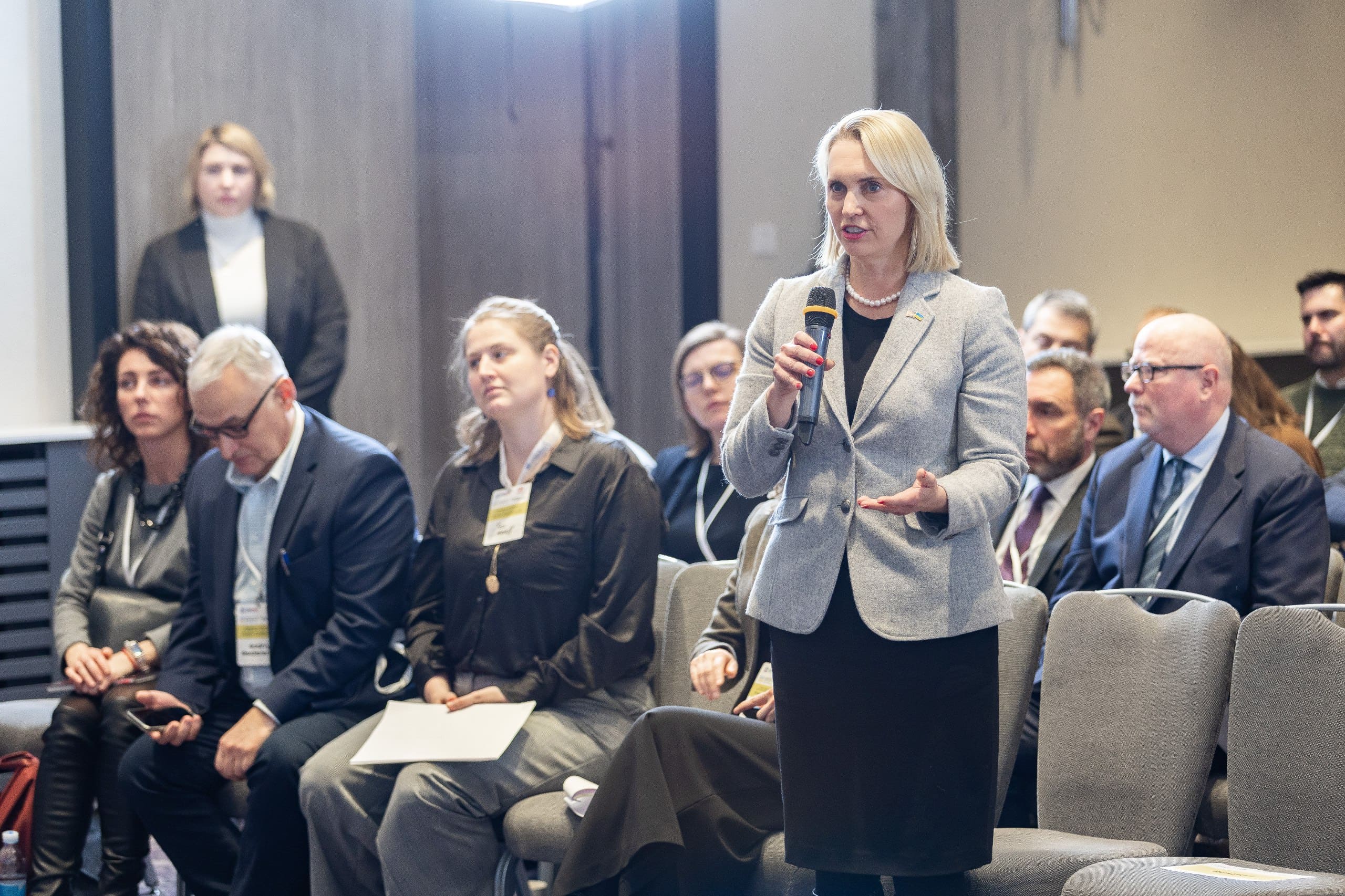
Larysa Bondarieva, Deputy Chairman of the Board of Raiffeisen Bank Ukraine, for her part, emphasized that Raiffeisen Bank is interested in finding a solution to cover war risks in the implementation of investment projects as soon as possible. In 2023, the bank actively lent to corporate clients, significantly supporting the Ukrainian economy. Since the second half of last year, the bank has begun to feel the willingness of companies to implement investment projects worth tens of millions of euros, so the bank continues to develop lending, including to small and medium-sized businesses, and sees great potential in the areas of logistics, agricultural production, processing, pharmaceuticals, and bioenergy. Ms. Larysa also emphasized that she would develop Raif and its portfolio of risk-sharing programs to support Ukrainian entrepreneurs: last year, the bank extended and attracted more than EUR 330 million in financing under risk coverage programs from the EBRD, DFC with the support of USAID, the European Investment Bank, and the European Investment Fund, MIGA, and implemented two large projects with the state Export Credit Agency to guarantee export contracts.
In 2023, the Ukrainian financial and insurance market will face challenges in terms of additional asset revaluations, bringing it closer to international regulatory standards.
“But based on my private experience, I am skeptical that European supervisors will give the green light to their shareholders to invest in Ukraine right now, in a period of uncertainty. In the face of open military aggression, we must resolve all financial nuances at the local level between the market and the regulator.
Corporate business is solvent and can give impetus to the development of the financial segment through long-term savings programs for its employees, additionally providing social protection and support. I believe that we must develop a strategy for the development of long-term insurance, as it is a resource for investments that can restore our post-war economy and help citizens create additional savings for the future,” said Natalia Bazilevska, Head of the Board of GRAWE Ukraine.
Prospects for the defense and military industry in Ukraine
Anna Gvozdiar, Deputy Minister for Strategic Industries of Ukraine, outlined the trajectory of the country’s defense industry in her speech. Thus, there is a significant growth in the defense industry – in 2023, the production of weapons and military equipment tripled compared to 2022. The Ministry has an ambitious vision of further strengthening this growth – today, private and state-owned manufacturers can produce six times more than last year. But to do so, they need orders and long-term contracts, primarily from the state. Increasing arms procurement is also critical for national defense.
Accordingly, the Ministry is making efforts to establish the practice of concluding long-term contracts with Ukrainian businesses and to find new sources of funding for these contracts to ensure stability and predictability in the supply chain and meet the needs of the Armed Forces of Ukraine. Ms. Gvozdiar reiterated her zero tolerance for corrupt practices and encouraged businesses to participate in the development of the defense industry. Finally, the deputy minister emphasized that it is important to retain capital and create jobs within the country to make Ukraine self-sufficient in critical defense technologies.
Dmytro Shymkiv, Co-founder of AeroDrone, discussed the challenges and opportunities for engaging the Ukrainian drone industry in the development of the defense sector. He highlighted such problems as lack of funding, complicated customs procedures, and unpredictability of orders. Shymkiv called on the relevant ministries to support Ukrainian producers as opposed to foreign ones, citing regulatory issues and the importance of fair competition. He also touched on profitability, regulatory issues, and the presence of ESG principles in the banks’ policies on financing arms development. Mr. Shymkiv emphasized the need for policy reforms to promote the growth and competitiveness of Ukraine’s defense industry.
Anton Skrypnyk, Founder of Roboneers, continued with a list of obstacles facing Ukrainian businesses seeking to engage in the defense industry. In addition to bureaucracy, he noted outdated legislation in Ukraine’s defense sector, excessive accounting requirements, and procedural issues. Skrypnyk also discussed broader issues of the business environment in Ukraine, including difficulties with access to financial instruments and the need for industry-wide changes. Nevertheless, Skrypnyk emphasized that his team has not encountered any cases of corruption, which is a positive aspect of their interaction with the government. The speaker emphasized cooperation with ministries to achieve common goals and called for systemic reforms to optimize processes in the defense industry.
Kateryna Mykhalko, Executive Director of Tech Force in UA, whose company started operating in August 2023, spoke about the process of uniting leading private enterprises that provide defenders with high military technologies and seek to address key challenges in the Ukrainian defense industry. These include budget redistribution, export restrictions, and long production cycles. In addition, Ms. Mykhalko emphasized the problems with human resources, in particular, the irreplaceability of certain specialists. The speaker also supported regulated technical requirements and a dialog between the Ministry of Defense and business.
Andriy Fialkovskyi, CEO of Skyeton, highlighted the challenges faced by companies in cooperating with the government for the defense industry. He emphasized the importance of financial forecasting, predictability in production, the critical role of exports in financing the company’s development, and noted obstacles such as the need to increase the length of contracts for procurement and customs clearance, as well as difficulties in securing credit due to lack of collateral. Implementing reforms and promoting more effective cooperation between the defense industry and the government will help to solve these problems.
Christian Seear, Senior Director of BAE Systems in Ukraine, noted the company’s commitment to the country. Thus, the opening of a representative office of the company, which is one of the largest suppliers of artillery equipment from different countries, including Sweden, the UK, and the US confirms BAE Systems’ commitment to working with the Ukrainian government to continue supporting the country’s current needs and to explore future requirements. Mr. Seear discussed the company’s strategy for Ukraine, which is initially focused on the repair and maintenance of vital artillery systems being operated by the Armed Forces of Ukraine inside Ukrainian borders. BAE Systems is open to working with local partners and engaging with the Ministry to build the local industrial base.
Dan Hallett, Director Ukraine, Central and Eastern Europe at Babcock International Group, emphasized Babcock’s commitment to working with Ukrainian industry based on partnership rather than competition and their cooperation with the British government and industrial partners such as BAE Systems. He called for bringing together the supply and demand for defense capabilities and outlined Babcock’s approach to doing business in Ukraine, which includes complying with British and Ukrainian law and focusing on creating economic and social value. Dan mentioned UK export credits to facilitate deals and emphasized the importance of the capacity for success in defense programs. He also praised efforts to fight corruption and noted the recent extension of the UK-Ukraine tariff-free trade agreement as an opportunity for increased cooperation.
Strategic cooperation between Ukraine and Poland
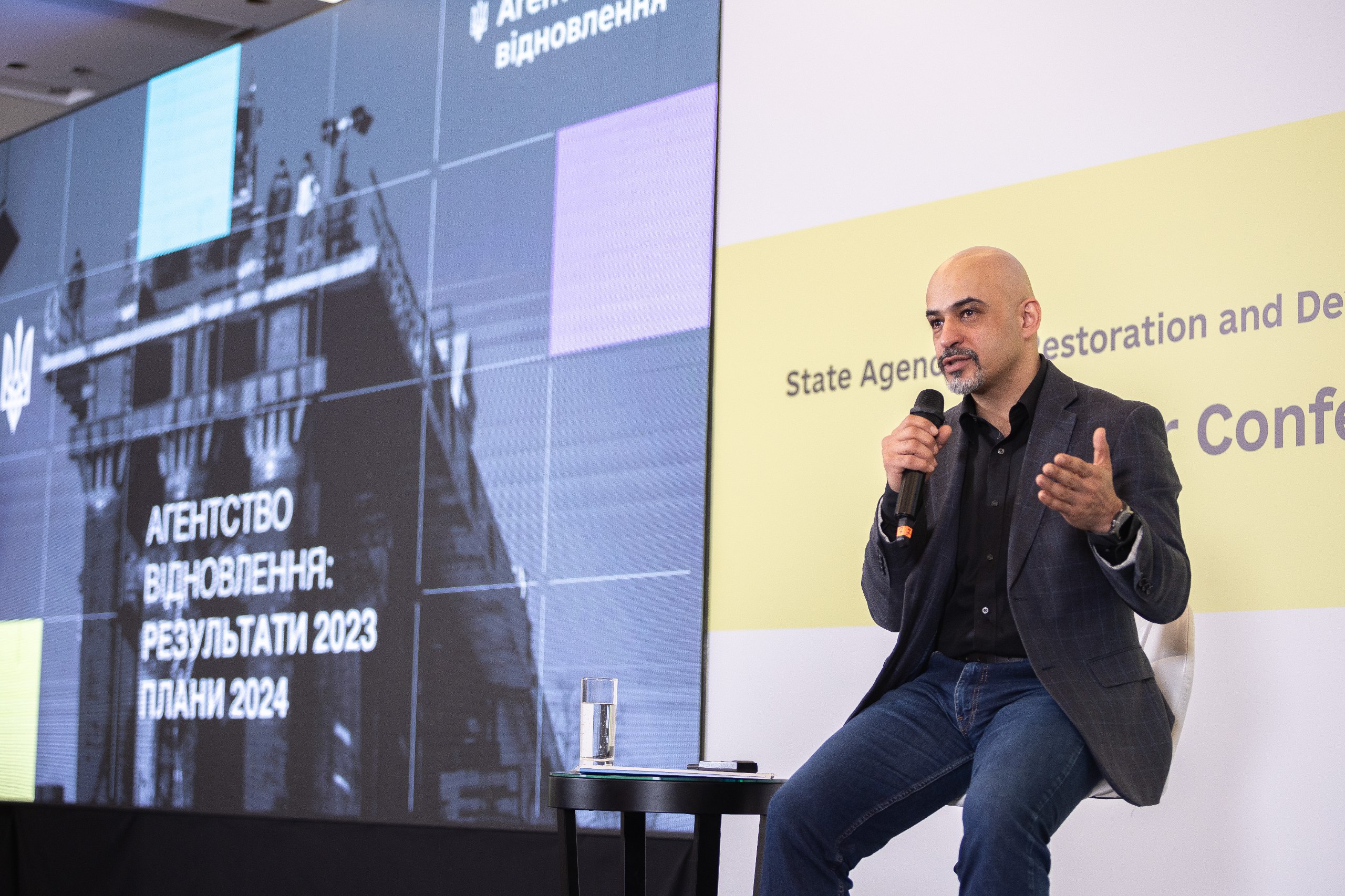
According to Yuriy Mushka, Ambassador-at-large at the Ministry of Foreign Affairs of Ukraine, Poland is a strategic partner of Ukraine and the largest trading partner among the EU countries with a trade turnover of about $13-14 billion, and important logistics routes run through Poland. The current situation with the blockade on the Polish-Ukrainian border is unfortunate in the context of the long and fruitful cooperation between the two countries. At the same time, such a blockade has a negative impact not only on the Ukrainian but also on the Polish economy. According to Mr. Mushka, such cases need to be addressed, in particular through legal means and at the level of Kyiv-Warsaw-Brussels dialogue.
Serhiy Derkach, Deputy Minister for Communities, Territories, and Infrastructure Development of Ukraine, noted that the issue of the blockade of the Polish-Ukrainian border is of particular concern to the President and Prime Minister of Ukraine. In addition, the team of the Ukrainian Ministry is in constant contact with colleagues from the Polish Ministry of Infrastructure. According to Mr. Derkach, they have a consensus on the necessary steps to avoid the resumption of the border blockade by Polish carriers and agree that the agreement on freight liberalization (abolition of road permits for international freight transportation) should be extended.
At the same time, there have been attempts to block the border not only by Poland but also by other neighboring countries, even if the strikers’ demands were exclusively domestic. Therefore, this issue is a key one in the negotiations with the European Commission, and the Ukrainian side insists on recognizing the roads to the checkpoints as critical to prevent their blocking, as this harms both the Ukrainian economy and the economies of the EU countries. Otherwise, there is a risk that the border may be permanently blocked by entrepreneurs from any sector and for any reason.
Tymofiy Murakhovskyy, Director of Commerce and Logistics at JSC “Ukrainian Railways”, said that last year Ukrainian Railways introduced a container train and has already tested its movement between Ukraine and Poland. Such trains can be used as an alternative to road transportation in times of heavy traffic on the roads. Negotiations are currently underway with the Polish side to optimize the cost of such transportation. Ukrainian Railways can send 4 trains per week, with a transit time of two days in both directions. In addition, Ukrainian Railways has opened a branch of Ukrainian Railways Cargo Poland, which has been operating since October 2023. The company is currently running freight trains from Kyiv, Dnipro, and Odesa to the port of Gdansk.
According to Oleksandr Tkachuk, Director of Terminal Network Development at Levada Cargo, blockades and strikes on the Ukrainian-Polish border may continue until Ukraine becomes an EU member. At the same time, the queues of vehicles encourage the development of railroad traffic, in particular, containerized transportation.
Dariusz Szymczycha, Vice President of the Polish-Ukrainian Chamber of Commerce, commented that the Chamber is in favor of restoring unimpeded traffic on the Polish-Ukrainian border. The current blockade has a significant negative impact on business ties between the two countries, although the Ukrainian economy is the one that suffers the most. The Chamber’s position is that it is necessary to restore the free movement of goods, as the Ukrainian economy relies heavily on revenues from agricultural exports, so the ways of solidarity must work.
Mr. Szymczycha expressed hope that the new Polish Government will pay attention to this issue and make concrete efforts to resolve it. This blockade has a political basis, as Polish farmers are protesting against the new Green Deal requirements and demanding subsidies as part of broader actions in the EU. The protests may likely end after certain conditions are met, such as compensation for the cost of grain.
Marcin Nowacki, Vice President of the Union of Entrepreneurs and Employers of Poland (ZPP), noted that the protests of Polish farmers have both a domestic and European focus, in particular because of grain prices and new ambitious climate targets for farmers. Farmers also have reservations about future EU regulations on Ukrainian agricultural exports. According to Mr. Nowacki, a predictable trade policy between Ukraine and Poland is needed, as well as a balanced position of the European Commission on trade with Ukraine. Mr. Nowacki suggested that the carriers’ protests may also resume on March 1, as it does not seem that all the carriers’ demands will be resolved by then.
We would like to thank the speakers and all participants for this event and, of course, our partners Raiffeisen Bank Ukraine and GRAWE Ukraine for their cooperation!
Source – https://eba.com.ua/en/2024-ochikuvannya-prognozy-ta-perestorogy-biznesu/