On 27 August 2026, the key provisions of Resolution of the Cabinet of Ministers of Ukraine No. 1051 dated 13 August 2026 “Certain issues of preparing public-private partnership projects and improving the public investment management process” (the Resolution No. 1051) entered into force. Resolution No. 1051 provides the secondary legislation needed to implement the new PPP model introduced by the Law of Ukraine “On Public-Private Partnership” No. 4510-IX.
Resolution No. 1051 approved the procedures for analysing the concept note and the effectiveness of implementing a PPP, introduced comprehensive changes to the public investment management system, and repealed the acts governing the previous state-private partnership analysis model.
New procedure for preparing PPP projects
For PPP projects, including concessions, the pre-investment stage now comprises: (i) a concept note prepared on the basis of a preliminary investment feasibility study; and (ii) a PPP feasibility study. The analysis of the concept note covers the strategic, economic, commercial, financial and managerial rationale, including a preliminary comparison of the project’s efficiency with and without the involvement of a private partner.
Projects with an expected value below the equivalent of EUR 5,538,000 are prepared under a single-stage PPP procedure, based on the concept note alone, without a separate PPP feasibility study. If a project was not classified as below-threshold at the concept-note stage, a subsequent reduction in its value does not change the applicable preparation procedure. For a below-threshold project involving state support from the state budget, the conclusion is agreed with the Ministry of Economy, with the involvement of the Ministry of Finance and the Ministry for Communities and Territories Development of Ukraine.
Engaging an advisor to prepare the concept note is mandatory if the project’s expected value exceeds the equivalent of EUR 10 million.
A negative conclusion on the use of the PPP model does not terminate the project itself: it can be continued as a public investment project from the investment feasibility study stage, using the materials already prepared.
PPP integrated into the public investment system
Special procedures apply to PPP projects, while the general procedure established by Resolution of the Cabinet of Ministers of Ukraine No. 527 applies only in expressly specified cases, in particular:
if the preliminary investment feasibility study indicates that a PPP is possible, the project, regardless of its value, is submitted for a sectoral (industry) assessment and, if the results are positive, is included in the relevant sectoral portfolio
for projects assessed before Resolution No. 1051 entered into force, the possibility of implementation on a PPP basis is additionally identified at the expert or sectoral assessment stage
a PPP project that requires budget financing to prepare the PPP feasibility study must be included in the relevant unified project portfolio in order to obtain such financing
Implementation, monitoring and DREAM
The procedure for implementing public investment projects and programmes has been set out in a new wording. It sets out in detail the readiness-for-implementation criteria, the roles of the initiator and the component executor, the reporting calendar, the performance evaluation, and the procedure for amending indicators during implementation.
DREAM becomes the digital basis for preparing and monitoring public investment and PPP projects. The necessary technical solutions must be rolled out within six months for public investment projects and no later than 1 April 2027 for PPPs (concessions).
Transitional rules for regions and communities
In 2026, local investment councils may include in unified project portfolios projects and programmes with confirmed sources of financing, provided they are consistent with the public investment areas set out in the medium-term plan of the relevant level. The Resolution also provides regional and local authorities with the technical ability to independently define such areas on the basis of strategic planning documents.
Practical implications
Resolution No. 1051 makes the new PPP model operational and links PPP preparation to the entire public investment management cycle. Initiators and public partners should, from the very outset, coordinate the preparation of the concept note, the sectoral assessment, the project’s inclusion in the portfolios, the need for budget financing, and the entry of data into DREAM.
Ukraine has adopted a new, simplified procedure for the export of military goods, dual-use goods and defence technology to partner countries. For Norwegian defence companies wishing to procure Ukrainian drone technology, enter into co-production agreements or licence Ukrainian defence solutions, this presents new opportunities – but also challenging regulatory conditions. For investors in the Ukrainian defence industry, export capacity is a key value driver that now has a legal framework. This article reviews the main features of the new regulations and highlights the practical implications for Norwegian stakeholders.
Ukraine has implemented a number of changes to its regulatory framework for the defence industry, both to strengthen the sector commercially and to facilitate cooperation with international players. The latest development is the adoption of Resolution No. 875 by the Cabinet of Ministers of Ukraine (CMU), which introduces a simplified procedure for the export of military goods, dual-use goods and related technologies from Ukraine. The resolution came into force upon its publication on 8 July 2026.
Whilst Norwegian defence companies have traditionally been suppliers to Ukraine, the current cooperation also makes Norway a buyer and co-production partner for Ukrainian defence technology, particularly in the fields of drones and electronic warfare. It is the Ukrainian exporter who must obtain authorisation under these regulations, but the timelines, conditions and risks involved in the Ukrainian authorisation process directly affect Norwegian purchasers’ ability to receive goods and technology.
The procedure is temporary. It applies expressly for the duration of Ukraine’s state of emergency (martial law), which has been in force since Russia’s full-scale invasion in February 2022, and for six months following its expiry or revocation. Industry players and investors relying on this regulatory framework must therefore be mindful of the uncertainty regarding whether, and if so how, the regime will be continued following a future peace settlement.
The new procedure must be viewed in the light of previously introduced modernisations to Ukraine’s regulatory framework, including the so-called ‘Drone Deal’ initiative and the ‘Defence City’ scheme – most specifically in the context that the new, simplified processes apply to countries that have been pre-approved by Ukraine’s Ministry of Foreign Affairs under a so-called Drone Deal agreement.
Who can use the new procedure
The new simplified procedure can be used by two categories of importers, namely:
By importers from the countries that are parties to bilateral agreements with Ukraine entered into under the “Drone Deal” framework; and
By importers from any other country included into a list of eligible countries as approved on a quarterly basis jointly by the Ukrainian MFA and the special governmental commission on the military technological cooperation and export control policy. The MFA will take into account positions and views of the Ukrainian Ministry of Defence, State Security Service of Ukraine, and the Foreign Intelligence Service of Ukraine. So far no such list has been approved and/or published, but this is to be expected some three weeks after the introduction of the new procedure.
The “Drone Deal” initiative is a series of bilateral agreements between Ukraine and selected partner countries, which facilitate cooperation relating to the development, production, exchange of technology and use of military technologies and products – not limited to drone technology, despite the name. According to open sources , as of July 2026, Ukraine has entered into formal ‘Drone Deal’ agreements with, amongst others, Latvia, Lithuania, the Netherlands, Estonia, Denmark, Saudi Arabia, the United Arab Emirates and Qatar.
Norway has not been formally announced as a party to such an agreement, but in connection with the signing of the declaration of cooperation between Støre and Zelenskyy in Oslo on 14 April 2026, Zelenskyy stated that this was a “first step towards a Drone Deal”. Later that same month, Norway and Ukraine signed a framework agreement under the “Build with Ukraine” initiative, focusing on the production of Ukrainian drones in Norway.
Whether these agreements will be deemed sufficient under Article 5 of the resolution remains unclear, but given the close cooperation between Norway and Ukraine, it is reasonable to expect that Norway will be included on the MFA list.
The ‘Defence City’ scheme is a purely domestic Ukrainian scheme (introduced by Laws Nos. 13420 and 13421, in force from January 2026) which grants eligible Ukrainian defence companies tax benefits and simplified procedures. ‘Defence City’ status is not a prerequisite for using the simplified procedure set out in Resolution No. 875 – the procedure is open to all registered Ukrainian exporters who export to ‘Drone Deal’ partner countries.
Defence City is nevertheless relevant to Norwegian stakeholders in two respects: (i) Ukrainian suppliers with Defence City status may enjoy additional benefits that make them more competitive, and (ii) investors in the Ukrainian defence industry should investigate whether the target company holds or qualifies for Defence City status, as this affects the company’s tax position and overall valuation.
Which goods are covered by the new procedure
The new regulations apply alongside the existing regulations on export licences and cover both military goods and dual-use goods. Military goods are products specifically developed for military purposes, such as weapon systems, ammunition and military equipment. Dual-use goods are products that have civilian applications but can also be used for military purposes, such as certain types of electronics, software, sensors and navigation technology. The procedure also covers technology transfers and transactions relating to intangible assets. A minimum value of UAH 15 million has been set for exports of finished defence products, which corresponds to approximately NOK 3.4 million as at today’s date.
Components and accessories (“складові частини” and “комплектувальні вироби”) are exempt from the value threshold and are subject to the procedure regardless of the contract value.
What is the essence of the simplified procedure?
Processing time and deemed approval
SECSU (State Export Control Service of Ukraine), Ukraine’s export control authority, must make a decision on an export licence within 30 calendar days of receiving an application, down from 90 days under the standard regulations. During this period, parallel consultations take place: the Ministry of Defence has 20 calendar days (10 days for technology exports) and the SBU, the Foreign Intelligence Service and the Ministry of Defence’s intelligence agency have 15 calendar days to provide their assessment. If these bodies do not respond within the deadlines, their approval is deemed to have been given by tacit consent (‘deemed approval’). Note that this rule on deemed approval does not apply to SECSU itself – SECSU must actively approve or reject the application within the 30-day deadline.
Implementation of the procedure
The Ukrainian Ministry of Foreign Affairs is required to maintain a list of countries approved for the procedure, whilst the Ministry of Defence maintains a list of critical goods and technologies where exports could harm Ukraine’s defence capabilities. Both lists are updated quarterly and approved by the Inter-Ministerial Commission for Military-Technical Cooperation and Export Control. Exports to countries that do not qualify, of critical technology or which otherwise raise national security concerns, fall outside the scope of the simplified procedure and will require further scrutiny in accordance with the underlying export control regulations.
Although the procedure has been simplified, several control mechanisms remain in place: mandatory consultation with the SBU and the intelligence services, quarterly updates to the list of critical goods, requirements for state guarantees from the importing country, and the possibility of cancellation with 72 hours’ notice.
Norwegian operators should nevertheless carry out their own integrity and due diligence assessments of Ukrainian counterparties, in line with good practice for defence sector transactions and Norway’s obligations under the OECD Anti-Bribery Convention.
Payment mechanisms and additional charges on re-export
The new procedure also includes fees payable to the Ukrainian authorities in connection with the export of covered goods and technology.
When exporting stand-alone (finished) goods, whether military or dual-use, a fee equivalent to 20% of the value of the goods is payable.
For components and accessories, a fee equivalent to 30% of the value of the goods is payable.
When exporting technology, not goods, a fee equivalent to 20% of the value is payable – where the value is to be set at either the actual selling price over the last six months or, where this is not possible, on a calculated basis.
In the case of re-export to third countries of goods produced using technology transferred to foreign entities, a fee of 20% of the value of the goods is payable.
The duties are due at the time of application, and proof of payment must be attached to the application. The resolution does not provide for the refund of fees if an export licence is refused – which entails a not insignificant commercial risk, particularly given that the Ministry of Defence may invoke priority for its own defence needs as grounds for refusal (see section 4.4 below).
State guarantees from the importing country
An application for an export licence must be supported by a guarantee document from the authorities of the importing country. In the case of technology transfers, the guarantee must, amongst other things, cover that (i) the technology is provided solely as a right of use, not as a transfer of intellectual property rights, (ii) re-export, sale or temporary export requires prior approval from SECSU, (iii) production shall only take place in the quantities and on the terms set out in the contract; and (iv) all upgrades, improvements or further developments must be reported and transferred back to Ukraine.
For Norwegian buyers, the practical challenge will be to secure such guarantees from the Norwegian government. This requires the involvement of the Ministry of Defence and, where appropriate, the Ministry of Foreign Affairs, and should be treated as a prerequisite for the transaction – not a formality that can be sorted out afterwards. The obligation to report on improvements is particularly relevant for co-production and licence agreements, as in practice it means that Norwegian partners must share the results of their own R&D based on Ukrainian technology.
Due diligence requirements for foreign operators
The procedure imposes strict requirements on foreign importers, end-users, intermediaries and other parties involved, in terms of identity, ownership and end-use.
Norwegian companies and funds should therefore expect that SECSU and Ukrainian exporters will require comprehensive KYC documentation, information on beneficial ownership and sanctions screening, including confirmation that no part of the ownership chain is linked to Russian or Belarusian persons or entities subject to sanctions. A thorough internal review should be carried out before negotiations commence.
Suspension and cancellation of licences
The regulatory risk does not cease upon the issue of an export licence. Licences may be suspended in the event of, amongst other things: (i) breach of the foreign importer’s obligations under government defence contracts, (ii) failure to pay duties, or (iii) notification from the Ministry of Defence of its intention to procure the goods in question itself (suspension limited to 30 days).
Furthermore, licences may be cancelled in the event of, amongst other things: incorrect information in the application, sanctions against any of the parties, breach of the licence conditions, breach of the importing country’s state guarantees, or intelligence information regarding the risk of deviant end-use or unauthorised re-export.
Contracts with Ukrainian suppliers should therefore address the consequences of suspension and cancellation, including payment milestones, delivery delays, the right of termination and limitations of liability.
Practical recommendations for Norwegian stakeholders
Norwegian defence companies and investors considering transactions relating to Ukrainian defence technology should, amongst other things, consider the following measures:
Initiate dialogue with the Norwegian authorities at an early stage. The requirement for state guarantees from the importing country cannot be met by the private buyer alone. Initiate dialogue with the Ministry of Defence and, where appropriate, the Ministry of Foreign Affairs at an early stage.
Carry out an internal KYC assessment. Confirm that the entire ownership chain is free from any links to Russian or Belarusian individuals. For funds: also assess whether the LP base, GP structure or other partners contain exposure that could create challenges.
Assess the commercial implications of the fee structure. The fees of 20-30% of the contract value, which are due at the time of application with no statutory right to a refund in the event of rejection, must be factored into pricing models and margin calculations from the outset. In the case of co-production or licence agreements, the 20% fee on re-export to third countries must also be taken into account.
Incorporate regulatory risk into the contract. Contracts with Ukrainian suppliers should address the risk of delays, suspension, refusal and cancellation of export licences, as well as Ukraine’s priority right of procurement.
For investors: carry out targeted due diligence. Investigate whether the target company has ‘Defence City’ status, existing export licences, any breaches under government defence contracts, and exposure to the list of critical goods. Also assess how the time limit on the procedure affects the value of export-driven revenue.
Carry out integrity and due diligence assessments. Norwegian entities have independent obligations under Sections 387-389 of the Penal Code and the OECD Anti-Bribery Convention. Carry out your own integrity due diligence on Ukrainian counterparties, irrespective of the Ukrainian authorities’ assessments.
The new export regime represents a significant development for Norwegian-Ukrainian defence cooperation. The framework creates genuine commercial opportunities, particularly in the fields of drones, electronic warfare and related technologies. At the same time, the procedure is conditional and subject to controls – it is not a free-trade regime. Norwegian operators who engage at an early stage with both Ukrainian and Norwegian authorities, carry out thorough internal assessments and build appropriate risk allocation into their contracts will be best positioned to benefit from this new framework.
What standard contract forms, if any, are used for construction and design? Must the language of the contract be the local language? Are there restrictions on choice of law and the venue for dispute resolution?
In Ukraine, there is no standard mandatory form of a construction contract. “The General Conditions for Conclusion and Performance of Capital Construction Contacts” approved by the Resolution of the Cabinet of Ministers of Ukraine No. 668, dated 1 August 2005 (Regulation No. 668), provides recommended terms and conditions of construction contracts in capital construction, which the parties may deviate from provided the provisions of the contract do not contradict imperative (mandatory) provisions of Ukrainian law. Regulation No. 668 provides that the general conditions should be “mandatorily taken into consideration” irrespective of the sources of construction funding or the form of ownership of an employer or a contractor.
Regulation No. 668 does not provide for a binary structure of a construction contract – there are no references to particular conditions such as in International Federation of Consulting Engineers (FIDIC) contracts. It is more common in Ukraine to have a construction contract drafted as a single document, without splitting it into General Conditions and Particular Conditions as in the case with FIDIC.
According to Regulation No. 668, the construction contract should contain the following material terms to be valid:
name and details of the parties;
date and place of execution of the contract;
subject matter of the contract;
contract price;
terms for commencement and completion of work;
rights and obligations of the parties;
instruments to secure the fulfilment of obligations under the contract;
terms and conditions of insurance covering the risk of accidental destruction or damage to a construction object;
order of procurement of design documentation, resources and services required for the performance of works;
order of engagement of subcontractors;
requirements for the arrangement of works;
order of employer’s supervision over the quality of resources;
terms for conduction of author’s and technical supervision with respect to construction works;
sources and order of financing of construction works;
payment procedure;
procedure of handover of completed construction works/construction object;
guarantee terms regarding the works and object, remedy of defects;
parties’ liability for the violation of the contract;
disputes resolution procedure; and
grounds and procedure for amendment of the contract and its termination.
Template forms of contracts such as FIDIC may be used subject to their alignment with Ukrainian imperative law provisions.
The language of business documentation, social and economic relations as well as agreements shall be the official state language (ie, Ukrainian). At the same time, the current legislation does not prohibit concluding bilingual contracts, which are widely used in international contracts (contracts with a foreign element).
Provided that the construction contract contains a foreign element (either party is a foreign entity), the contract may be governed by a foreign law and the parties may apply for disputes resolution either to Ukrainian courts or international arbitration institutions, subject to the agreement of the parties. As a matter of practice, construction contracts concluded as a result of public procurements are usually governed by Ukrainian law at the request of the customer.Payment methods
How are contractors, subcontractors, vendors and workers typically paid and is there a standard frequency for payments?
Payments under construction, supply and services contracts are normally made by wire transfer. The National Bank of Ukraine limits the amount of cash settlements per day to 10,000 hryvnias between business entities, 50,000 hryvnias for individuals (including both transactions between individuals and between a business entity and an individual). Non-cash payments shall be made through banks and non-bank payment service providers where the respective accounts are opened. Payment procedures as well as the payment schedule are subject to the agreement of the parties.Contractual matrix of international projects
What is the typical contractual matrix for a major project in your jurisdiction in terms of the contractual relationships among the various construction project participants? For example, do owners contract directly with contractors or do they contract through construction managers to trade contractors? Are any of the relationships legally defined?
As a matter of practice, employers in Ukraine usually conclude contracts for design works and construction works directly with certified designers and licensed contractors. For the small scale projects, employers usually engage a designer and multiple contractors, each responsible for separate work packages. For large-scale projects, employers engage a general contractor, who then hires subcontractors for relevant packages of works and manages construction. The general contractor may be responsible only for construction works based on the design documentation provided by the employer (eg, similar to the FIDIC Red Book contract) or perform both design and construction works (eg, similar to the FIDIC Yellow Book contract).
Engaging an engineer (eg, with the functions as provided, such as in the FIDIC Red, Yellow or Harmonised MDB edition) is not a widespread practice in Ukraine. Nevertheless, an engineer is often engaged in large-scale international contracts or contracts involving financing from international financial institutions.
In Ukraine, certain relationships among construction project participants are legally defined and regulated by Civil Code, construction-related and public procurement laws. These regulations set out the rights, obligations and responsibilities of the various parties involved in a construction project. Below are the main legal aspects defining relationships in construction projects:
The relationship between the employer and the contractor is primarily governed by the Civil Code of Ukraine and the Law on Regulation of Town-Building Activities and are typically formalised through a construction agreement, which defines the scope of work, deadlines and payment terms.
The relationship between the general contractor and subcontractors is governed by the Civil Code of Ukraine, the Law on Regulation of Town-Building Activities and a subcontract agreement. The subcontract defines the work to be performed by the subcontractor, terms of payment and scope of responsibilities.
The relationship between suppliers/vendors and contractors is typically based on supply contracts and governed by the Civil Code of Ukraine and the Law of Ukraine “On Public Procurement” (if applicable). Supply contracts govern the provision of materials, equipment and other resources required for the project.
For public construction projects, relationships between the state (public body) and contractors are governed by the Law of Ukraine “On Public Procurement“, which mandates competitive bidding, transparency and fair treatment for all contractors, both local and foreign. The law also defines the framework within which the state contracts for construction services, including the requirements for tendering, contract awards and execution of works.
PPP and PFI
Is there a formal statutory and regulatory framework for PPP and PFI contracts?
Ukraine has a regulatory framework for PPPs and concessions. It was significantly updated in 2018 and is still being improved. The Ukrainian PPP regulatory framework was developed in consideration of best international practices and currently includes over 20 laws and by-laws, including the following key legislation:
Are all members of consortia jointly liable for the entire project or may they allocate liability and responsibility among them?
Ukrainian law does not provide for the joint and several liability of the consortium members. Unless Ukrainian law directly provides for joint and several liability, the parties of the contract are free to agree on joint and several or joint shared liability of the consortium members.
In large-scale projects, employers prefer having a general contractor that is liable for the management, timely and proper fulfilment of all works.Tort claims and indemnity
Do local laws permit a contracting party to be indemnified against all acts, errors and omissions arising from the work of the other party, even when the first party is negligent?
Under Ukrainian law, the general contractor is liable for the proper performance of construction works under the construction contract, regardless of whether such works were performed by the general contractor or by a subcontractor. A general contractor is liable to the employer for non-fulfilment or improper fulfilment of obligations by its subcontractors, regardless of the subcontractor’s fault.
At the same time, a party that breaches its obligations (eg, subcontractor) shall compensate damages to another party (eg, general contractor), unless it proves that the breach of the obligation occurred through no fault of his or her own. Therefore, the general contractor may file a regress claim to its subcontractor.Liability to third parties
Where a contractor constructs a building that will be sold or leased to a third party, does the contractor bear any potential responsibility to the third party? May the third party pursue a claim against the contractor despite the lack of contractual privity? Can a contractor’s liability to contracting parties and others be limited by contract or law?
The contractor is liable to the employer or developer for the quality of works within the warranty period established by the contract or law and shall remove any defects in the building within the warranty period. A third party who purchased a building from the employer or developer (first purchaser) has the right to file a claim with regard to the defects of such building to the employer/developer, which will then have a right to file a regress claim to the contractor within the statute of limitation. If the first purchaser is to further sell the building to another person, such new purchaser will have no right of claim to the employer or developer.
A contractor’s liability to contracting parties and third parties can be limited by contract, except in cases involving gross negligence or wilful misconduct, harm to life or health, or personal injury. Ukrainian law allows parties to agree on liability caps, limitation periods and exclusions of indirect or consequential damages.Insurance
To what extent do available insurance products afford a contractor coverage for: damage to the property of third parties; injury to workers or third parties; delay damages; and damages due to environmental hazards? Does the local law limit contractors’ liability for damages?
The above risks may be covered by the following insurances available in Ukraine:
insurance of construction risks, including insurance against accidental damages to the property of third parties;
third-party liability insurance, which covers liability for the damages to the property or health of third parties;
professional indemnity insurance, which allows parties to ensure against losses unintentionally caused to third parties in the course of professional activities as a result of unintentional professional error (omission, negligence) or other events stipulated by the insurance contract;
environmental liability insurance; and
accident insurance, including an industrial injury and occupational illness of employees.
Under Ukrainian law, the damages and losses (direct losses and lost profit) shall be reimbursed in full unless liability is limited by the law or contract. Ukrainian law does not limit the contractor’s liability for damages. At the same time, the law prohibits limiting liability for the intentional breach of obligations.
Ukraine is launching a special mechanism for the controlled export of Ukrainian weapons and defence technologies to partner countries under the Drone Deal format. The new rules are intended to create a more predictable model for Ukrainian defence manufacturers to enter international markets, while preserving the priority of meeting the needs of Ukraine’s Defence Forces.
The introduction of this mechanism forms part of a broader state policy aimed at developing Ukraine’s defence-industrial complex, attracting additional financial resources, scaling up production, and strengthening international defence cooperation. In this context, the National Security and Defence Council of Ukraine has previously emphasised that controlled export should be applied only provided that the unconditional priority of the needs of the security and defence sector is maintained.
Overview of the Changes: What the New Mechanism Provides For
The policy does not provide for the removal of export restrictions but instead introduces a special controlled regime under which the state will retain decisive influence over the key parameters of export: the list of permitted goods and technologies, the range of partner countries, the terms of supply, and the subsequent use of Ukrainian defence products.
Export will be permitted to designated partner countries under the Drone Deal format. Under this policy, manufacturers will be able to work with them directly. At the same time, each contract will be reviewed both from the perspective of Ukraine’s defence needs and in terms of technology control.
Among the key features of the new mechanism, several important points can be highlighted:
export applications are expected to be reviewed within up to 30 days, which should provide manufacturers with relatively swift access to foreign markets
a minimum threshold of UAH 15 million will be established for contracts involving finished products, while no such limitation is envisaged for the export of components
part of the funds from export transactions will be allocated to a special fund of the state budget as a contribution to the development of the defence-industrial complex
the state will separately determine the list of countries to which Ukrainian defence products may be supplied
a list of critical goods and technologies that will not be subject to export will also be created
control will be introduced over the use of Ukrainian technologies, including with respect to their further re-export or transfer to third parties
The new mechanism should also be considered separately in connection with the Defence City regime (see also: “Law on special legal regime for defence industry enterprises ‘Defence City’ has been adopted”). For defence industry manufacturers that have obtained or plan to obtain Defence City resident status, controlled export may become an additional element of a broader regulatory model combining special tax, customs, currency control, and export control conditions with the possibility of expanding production and developing international defence cooperation.
Export as a tool for financing the defence industry
One of the key ideas of the mechanism is to make export not only a source of revenue for businesses, but also a tool for supporting the entire industry.
Part of the funds from export contracts will be allocated to a special fund: 20% from the export of finished products and technologies, and 30% from the export of components. In this way, the state is effectively integrating export into the financing model of the defence industry.
For companies, this means that an export contract should immediately be viewed more broadly than an ordinary foreign economic transaction. The contributions will affect the economics of the deal, from pricing to payment structure and financial planning.
Priority of defence needs
The opening of export opportunities does not create an automatic right to export: the state will retain the ability to refuse approval of a transaction.
If the products are needed by the Defence Forces or are included in the list of critical goods, an export permit may not be granted. Lists of such goods will be formed and regularly updated, and the range of countries with which such transactions are possible will also be determined.
For businesses, this means that the risk of refusal to approve an export should be taken into account as part of the regulatory model. Therefore, already at the stage of negotiations with a foreign partner, it is advisable to assess not only the commercial parameters of the contract, but also the potential sensitivity of the products for the state and the needs of the security and defence sector.
Accelerated process without reducing oversight
The declared timeline for reviewing applications up to 30 days should be noted separately. If this timeline is observed in practice, it may increase the predictability of the export process for Ukrainian manufacturers and their foreign counterparties.
At the same time, speed does not mean simplified requirements. End-user verification, compliance with export control rules, and sanctions compliance will remain in place.
Therefore, companies should prepare in advance by having a clearly described product, confirmed production capabilities, a transparent ownership structure, and a clear model for the use of technologies.
Intellectual property and re-export control
A separate focus of the mechanism is the protection of Ukrainian technologies. The transfer of technologies is permitted, but without the assignment of intellectual property rights and with clear restrictions on their use.
Re-export or transfer to third parties is possible only with the approval of the Ukrainian side. If products created on the basis of Ukrainian technologies are subsequently sold to other countries, part of their value must also be transferred to the budget.
In this model, intellectual property becomes not merely a technical contractual issue, but one of the central elements in structuring export contracts in the defence industry.
It is particularly important to:
clearly define who owns the rights to technologies and developments
limit the ways in which they may be used by the partner
provide for a prohibition on unauthorized copying or transfer
regulate matters related to subcontractors and production partners
set out the rules for re-export and liability for their violation
What this means for manufacturers
The new mechanism creates real opportunities for Ukrainian companies, from scaling up production to entering new markets and attracting investment.
At the same time, it also raises the requirements for businesses’ overall preparedness. Participation in such export operations requires not only a product, but also a well-established legal and compliance infrastructure.
Before entering export markets, companies should check:
whether they can simultaneously perform state and export contracts
whether intellectual property rights have been properly formalised
whether a complete set of technical and permitting documentation is available
whether the products fall under restrictions as critical goods
whether the partner meets the requirements applicable to partner countries
whether budget contributions have been taken into account in the financial model
whether the necessary sanctions and export control checks have been carried out
Key takeaways for the defence market
The controlled export mechanism is an attempt to balance between two objectives: giving businesses an opportunity to grow while maintaining full control over critical resources.
Success in export markets will depend not only on the technological level of the products, but also on how prepared the company is to operate under enhanced regulatory oversight, properly structure export contracts, confirm its production capabilities, and ensure the protection of defence technologies.
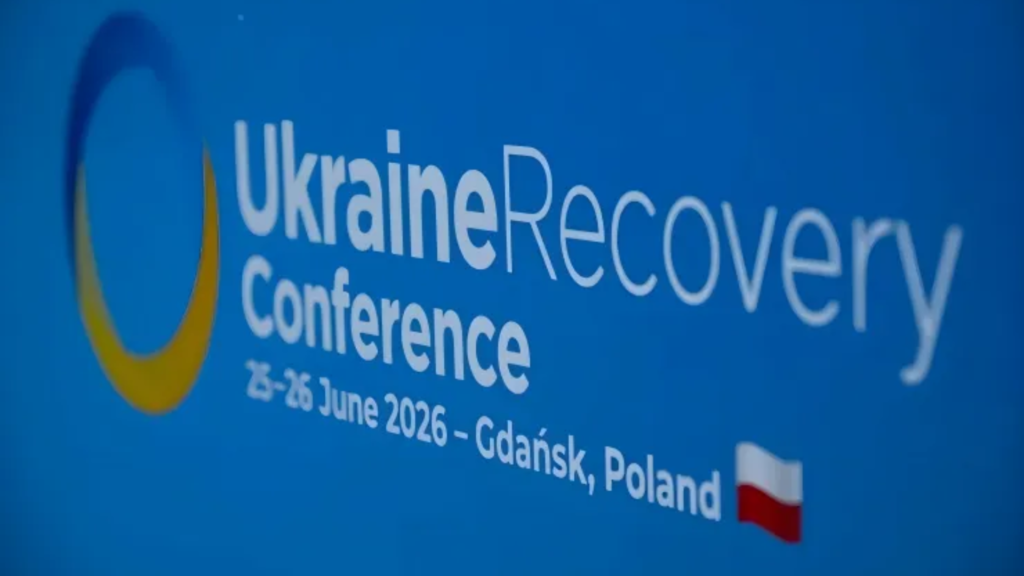
What happened to the transport sector as a result of the Ukraine Recovery Conference URC2026 held in Gdansk, Poland.
The Ukraine Recovery Conference URC2026 held this year in Gdansk is over. Prime Minister Yuliia Svyrydenko, head of our delegation after long discussions, stated that Ukraine managed to sign 160 agreements in the amount over 10 billion EUR during two days of work in Poland.
Head of the Government highlighted the following key results: first of all, 3.2 billion EUR to be received by Ukraine as the first tranche of the new EU financial instrument. The agreement with the World Bank provides allocation of 3.4 billion USD. 140 million EUR will be aimed at housing programs. Prime Minister also announced launching the European Flagship Fund for Reconstruction of Ukraine, creation of the Ukraine Transport Support Fund and an agreement with EIB on restoration and protection of roads in frontline regions. She noted, new partnerships in defense and power supply industries are also planned in the future.
Traditionally, in the framework of the Ukraine Recovery Conference and on site, the parties focus on key priorities for reconstruction, launching community resilience plans and attracting financing for infrastructure projects. At the start of URC2026, Ukraine announced its intention to present a portfolio of projects, which included, in particular, over 530 community and regional projects, as well as new public-private partnership projects in housing, infrastructure restoration and logistics development. The Ministry of Community and Territorial Development also reported that this year, for the first time, an Infrastructure Platform will be held in the framework of the Ukraine Recovery Conference.
Results of preliminary selection in the framework of concession of the First and Container Terminals of the Chornomorsk Sea Port
On the eve of URC2026, the Ministry of Development and Trade of Ukraine, in cooperation with the European Bank for Reconstruction and Development and the International Finance Corporation, presented to international investors in Gdansk the project of concession of the ferry terminal at the Chornomorsk Sea Port.
Representatives of international and Ukrainian companies, including port operators, business associations and international financial organizations attended the event.
Key parameters of the project presented in the framework of report remained unchanged: a terminal concession for 35 years; at least 40 million USD of investment throughout the entire concession period, maintaining throughput capacity at the level of ca. 2 million MT of cargo each year with the potential for further growth, annual concession payments to the state budget, preservation of existing jobs and creation of new ones.
Oleksii Kuleba, the Deputy Prime Minister for the Restoration of Ukraine – Minister of Community and Territorial Development, stated, “Restoration of Ukraine is impossible without attracting private capital. The scale of destruction caused by russian army to Ukrainian infrastructure requires new approaches to financing and development. That is why we are forming a systematic portfolio of public-private partnership projects and creating clear and transparent conditions for investors. Concession of the ferry terminal in Chornomorsk is one more signal to international business that Ukraine is ready for partnership and joint implementation of strategic infrastructure projects”.
During presentation of the ferry terminal, it was emphasized that this stage is a continuation of work on launching concession projects at the Chornomorsk Sea Port. They say, previously the Ministry of Development initiated concession of the First (Universal) Port Terminal and such proposal has already aroused significant interest from international operators. The relevant ministry states that now such project is at the stage of competitive dialogue. Participants shall submit their proposals on key project parameters – conditions for launching the concession, investment commitments, approaches to managing key risks. The results of this stage will form the final version of the concession agreement and instructions for submitting legally binding proposals.
During URC2026, Oleksii Kuleba announced the results of preliminary selection of applicants in the framework of the concession project of the First and Container Terminals at the Chornomorsk Sea Port. He reported, under the results of prequalification stage completed in early April, four applicants were admitted to further participation in the competitive dialogue, namely: APM Terminals B.V., Mariner and TAS consortium, Yilport Holding Anonim Şirketi, Abu Dhabi Ports Company PJSC and SKF Holdings UK LTD consortium.
The Deputy Prime Minister noted that Ukraine has already created the required legislative conditions for launching public-private partnership (PPP) projects, developed risk-sharing mechanisms and formed clear rules of cooperation for international investors. This allows businesses to evaluate Ukrainian infrastructure projects not only through the prism of risks, but also as long-term investment opportunities.
Hereby we remind that concession of the First and Container Terminals at the Chornomorsk Sea Port is the first public-private partnership project in the port industry to be implemented after the outbreak of a full-scale war. This is potentially the largest investment in the history of Ukrainian sea ports, which should attract hundreds of millions US dollars of investment and provide over 1.1 billion USD in revenues to the state and local budgets (throughout all years of the agreement validity term).
Not only Chornomorsk
However, the ferry terminal concession was only part of the PPP portfolio presented by the Ministry of Development in the framework of URC2026. In total, it included over 30 projects related to transport, port, railway, road and municipal infrastructure at aggregate cost of ca. 5 billion USD. 15 projects are of priority for launch in 2026.
Oleksii Kuleba noted that priority projects included the following:
– Concession of the Ferry Terminal at the Chornomorsk Sea Port;
– Concession of the Second Terminal at the Chornomorsk Sea Port;
– Northern bypass of Lviv city;
– Border road corridor M-09 / M-10 / M-11;
– Modernization of the Transport Corridor Yagodyn – Kovel – Lutsk (Motorways M-07 / M-19);
– Reconstruction of the Transport Corridor M-15 Odesa – Reni;
– Construction of 10 Service Zones on motorways of international importance;
– Concession of the Sknyliv Intermodal Hub of JSC “Ukrzaliznytsia”;
– Concession of Kyiv Central Railway Station Complex;
– Concession of Lviv Railway Station Complex;
– Concession of Odesa Railway Station Complex;
– Reconstruction and technical modernization of the Kaidatska Pumping & Filtering Station (Dnipro city),
– Construction of a new line of wastewater treatment facilities in the Uzhgorod;
– Reconstruction of water supply and drainage systems in Khust (Zakarpatska region).
Road and bridge repair, development of border infrastructure
The Ministry of Community and Territorial Development reported on important agreements based on the results of URC 2026. In particular, they reported on signing an agreement with EIB, which will provide over 470 million EUR for restoration of critical infrastructure and business support.
Road and bridge repair, development of border infrastructure aimed to strengthen ties with the EU – that was included in the list of key areas of financing in the framework of such agreement. 96 million EUR have been allocated to this area. In the framework of such agreement, a little more amount (i.e. 100 million EUR) will be aimed only at the pilot program of modern social housing in five cities of Ukraine for IDPs and young professionals.
The Ministry of Finance reported that both Ukraine and the World Bank in Gdansk signed agreements for 3.39 billion USD in order to support the state budget and to continue key reforms.
Such financing package provides that 1.4 billion USD will be spent on development policy, i.e. loan in which 500 million USD will be provided to us under the guarantee of the United Kingdom, while 540 million USD dollars will be secured by Japan.
The Ministry of Finance reported that by late June 2026, Ukraine should receive in aggregate 3.35 billion USD to the general fund of the state budget. Such funds will be directed to supporting macro-financial stability and financing priority budget expenditures. One more share amounting to 40 million USD will be used to capitalize interest.
Among the interesting things there are prospects for localizing helicopter production in Ukraine with the American company Bell Helicopters. The Ministry of Economy called this direction as “having the potential for development of industry, technologies and creation of new jobs”.
What was requested for railway
Oleksii Balesta, the Deputy Minister of Community and Territorial Development, reported that Ukraine received from the World Bank a grant for 10 million USD aimed to strengthen protection and restoration of JSC “Ukrzaliznytsia”.
He noted, a separate railway panel was held in Gdansk for the first time within the URC. During the discussion, clear and positive signals were heard for Ukraine; he emphasized, Europe understands that railways, transport and critical infrastructure concern not only logistics, but also security and stability of the entire continent.
Meantime, the Deputy Minister informed that Ukraine signed an agreement with Sweden for 1 million EUR for the first steps in implementing the European ERTMS rail traffic management system.
In the framework of G2G meeting with representatives of Switzerland, special attention was drawn to finalization of the agreement on providing support in order to strengthen stability of various sectors. Part of the funds in the framework of this project will be allocated for supply of high-tech track equipment for JSC “Ukrzaliznytsia”.
The Ukrainian delegation in Gdansk spoke with Magda Kopczynska, the Director General for Mobility and Transport of the European Commission, about possible solutions for financing projects that enhance sustainability of the Ukrainian railway and its integration with the EU transport system. Also, discussion with the relevant ministers of Norway touched an opportunity to supply passenger trains to Ukraine. Approaches to further cooperation on development of the border railway connection between Ukraine and Poland were agreed with the Deputy Minister of Infrastructure of Poland.
During URC2026, the Ukrainian delegation sought practical solutions for attracting locomotives to Ukraine with Andris Kulbergs, the Prime Minister of Latvia. Oleksii Balesta noted, now there are not so many countries that have locomotives for our track width in sufficient quantities.
There were no more expectations
Alyona Shkrum, the First Deputy Minister of Community and Territorial Development of Ukraine, summing up the Conference on the Restoration of Ukraine, held the following speech: “It is good that Gdansk was not canceled”.
She noted the fact of signing an agreement with EIB, which “we were working towards for a year”, and in the framework whereof “funds for water and restoration of logistics” will be provided. She also explained what has been prescribed by that the Memorandum of Understanding on Security and Connectivity Initiative, signed between the Government of Ukraine, the European Commission and EIB. Alyona Shkrum noted, it lays foundation for financing 4 sectors of the country: infrastructure, transport, power supply and digital infrastructure. It also paves the way for 120 million EUR for border infrastructure and funds for restoration of transport and communications.
The Deputy Minister also announced that in the framework of URC2026 the first contributions of countries to the Transport Support Fund were obtained for restoration of transport.
Viktor Dovgan, ex-Deputy Minister of Infrastructure for European Integration, still staying in Gdansk, gave the CTS a quick comment on how he assessed the Recovery Conference held this year.
He noted, there were no special expectations from this event: “Just a month ago, at the pre-URC in Rzeszów, it was clear that the Ukrainian topic was becoming toxic for Polish politicians. The plans announced in Rome to sign loan and grant agreements aimed at reconstruction of large projects were not implemented. In fact, work on the agreement, based on the principle of the 2016 loan agreement (it provided 100 million EUR for development of checkpoints), whereunder Polish companies would have to participate in tenders and to build something here, ceased in May at the ministerial level. No one from the Polish side wanted to take this loan”.
Viktor Dovgan added, the story with Mr. Navrotsky and the White Eagle developed later, after a certain coolness was felt during the preparation for URC2026. Ex-Deputy Minister highlighted, “Politicians feel the mood of their voters, even if they are not ultra-rightists. On the sidelines, they told us: how will we explain to a Polish voter that we are giving Ukraine money on credit? In fact, only Polish companies that were counting on privileged financing lose from this”.
Viktor Dovhan sums up URC2026, “There are friendly relations, good meetings, dinners, brotherhood… but there are no specifics. In my opinion, Rome was more specific. There were higher expectations. In Rome, Poland announced 40 mechanisms to promote exports to Ukraine in the framework of the Team Poland for Ukraine project. It concerned both grants and loans – albeit small ones, from 200 thousand EUR, but it demonstrated drive. As the result, there is nothing… But what should we do? This is the decision of their politicians. We remain friends, we are going to Kyiv and we hope to see everyone next year in Tallinn”.
In a less political and more practical way
On Friday afternoon, the Reconstruction Agency spoke in more detail about three agreements regarding its projects entered into at URC 2026.
In particular, they explained that the financial agreement (Tranche B) for 96 million EUR has been provided in the framework of the project Improvement of Motorway Networks in the framework of the EU initiative Solidarity Roads.
They also announced a grant agreement for 50.05 million EUR in the framework of the projects Transport Communication in Ukraine – Phase I and Transport Communication in Ukraine – Phase II and III.
The official statement says, “These agreements will provide financing for projects to be launched by the Reconstruction Agency, including, in particular, construction of transport interchanges in Kyiv region and capital repair of public roads of state importance in Lviv, Rivne and Kyiv regions”.
They confirmed that, according to the Memorandum of Understanding on the Security and Connectivity Initiative between the Government of Ukraine, the European Commission and EIB, a new agreement is being signed aimed to develop checkpoints and access roads. It will be implemented by the Reconstruction Agency in 2027-2029. Alyona Shkrum reported, total framework of the agreement will make up 120 million SUR. However, the Development Agency noted that first tranche amounting to 60 million EUR has already been agreed. Yuliia Sirko, the First Deputy Chairman of the Supreme Council Committee on Transport and Infrastructure, noted that after political speeches in the official part, the conference in Gdansk has shifted to a less political and more practical direction. She commented, “All hope is in negotiations between businesses and private investors”.
The Register of Damage for Ukraine has officially launched the first categories of claims for compensation for damage caused by the aggression of the Russian Federation against Ukraine for Legal Entities and the State of Ukraine:
B1.1, B1.2, C1.1, C1.2Damage or Destruction of Critical and Non-Critical Infrastructure; and
This is a fundamentally new stage in the work of the Register. For the first time, the opening of Claims categories enables the recording of not only individual losses, but also systemic economic losses sustained by business entities and by the State of Ukraine as a result of the aggression of the Russian Federation against Ukraine.
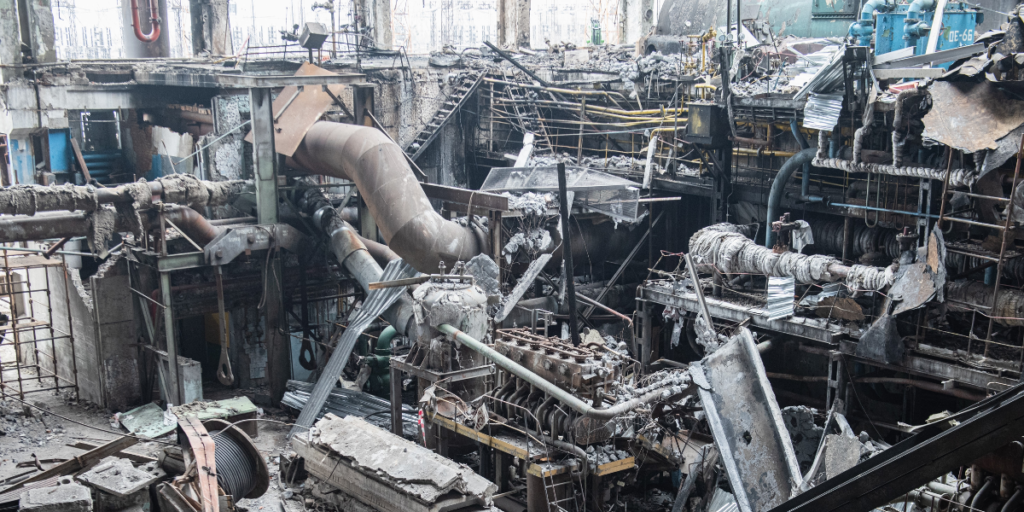
It concerns a different scale and a different dimension of the consequences of the war – the destruction of infrastructure, the loss of production capacities and assets, the disruption of logistic chains, and the interference with the functioning of entire sectors of the economy.
Claims in C categories can be submitted by any legal persons, regardless of the organisational and legal form and form of ownership, including state and municipal enterprises.
Categories B of claims are available for the State of Ukraine, state authorities, state institutions, local-self-governments, communities, municipalities etc.
In categories related to infrastructure (B1.1 and C1.1 – critical infrastructure, B1.2 and C1.2 – non-critical infrastructure), claims may be submitted for compensation for the value of destroyed or damaged property, as well as for the costs of repairs or restoration (including future costs) of damaged infrastructure or its functions.
Category of claim C3.1 covers damage, destruction or loss of assets, loss of profits from such assets, total loss of business or other direct costs associated with such losses.
Claims that meet the eligibility requirements will be recorded in the Register and subsequently transmitted to the future Claims Commission, which will determine the amount of compensation due.
In December 2025, 35 States and the European Union signed the Convention on the Establishment of an International Claims Commission under the auspices of the Council of Europe.
The opening of these categories creates the opportunity to systemically document such losses and to form a complete international evidentiary base, on the basis of which decisions on compensation will be made.
How to Submit Claims
Claims are submitted via the Diia web portal. Claims on behalf of a legal person or a state authority may be submitted by the head of the legal person (for example, director or chairperson). The director or chairperson may also appoint a Representative, who will be authorised to submit claims on behalf of the legal person by granting such Representative Digital Powers via Diia. Any legally capable individual may act as a Representative.
B1.1, B1.2, C1.1, C1.2Damage or Destruction of Critical and Non-Critical Infrastructure:
Modern Ukrainian business is all about constant challenges, new approaches to company development and increasing competitiveness in both the Ukrainian and international markets. One way to strengthen international expertise in a company is to attract foreign specialists. Let’s look at the details and specifics of attracting such specialists.
01 — Employment of a Foreigner Under a Labour Agreement: What are the Peculiarities?
Generally, the labour relations of foreign citizens in Ukraine are regulated by the laws of Ukraine[1]1, specifically the Law of Ukraine “On Employment of the Population” (hereinafter referred to as “the Law”).
Indeed, the Law establishes a specific procedure that precedes the conclusion of a labour agreement (contract) with a foreigner.
First and foremost, to employ a foreigner, it is necessary to determine the legal status of the potential employee. Certain categories of foreigners are entitled to work under the same conditions as citizens of Ukraine:
foreigners who hold a permanent residence permit in Ukraine (they submit the same package of documents as a citizen of Ukraine, but provide their residence permit instead of a national passport);
foreigners who have refugee status in Ukraine;
foreigners who have been recognized as persons in need of complementary protection;
and other foreigners of narrow specialization whose list is defined by the Law, for example, members of the clergy, athletes, individuals engaged in scientific activities, representatives of emergency rescue services, branches of foreign enterprises, etc., provided that the prescribed conditions are met.
If the foreigner does not belong to the mentioned categories, the employer must obtain a permit for the employment of foreigners (hereinafter referred to as “the Permit”).
If the candidate is a citizen of the russian federation, the republic of belarus or other countries recognized as posing a threat to the national security of Ukraine, the Security Service of Ukraine is involved in the consideration of the Permit issuance.
The Permit can be issued for different periods of time, depending on the duration of the labour agreement and the potential employee’s plans to remain at the specified place of work.
It is important to consider that the Permit is tied to a specific employer, meaning that if the foreigner changes their place of work, the new employer must undergo the procedure for obtaining the Permit from scratch.
For a foreigner’s arrival in Ukraine for employment, there are several methods:
immigration permit: the grounds for granting this permit are defined by Article 4 of the Law of Ukraine “On Immigration”. For certain categories of foreigners an arrival quota is established. This applies specifically to highly qualified specialists and workers whose acute need is felt by the Ukrainian economy, as well as their spouses and minor children in the case of joint entry. This quota is established annually by a Resolution of the Cabinet of Ministers of Ukraine.
type D work visa: this is issued for arrival in Ukraine for the purpose of employment. To obtain this visa, a potential employee must apply to the Ukrainian consular office or embassy in their place of residence and submit a package of documents. These must include documents confirming the purpose of the trip, specifically: an employment contract or a work permit in Ukraine.
02 — Concluding a Civil Law Agreement with a Foreigner: Are there differences from a Labour Contract?
If there are no actual labour relations between a foreigner and a company in Ukraine, meaning the foreigner is engaged to provide services as needed or to perform a specific task, a mechanism exists for concluding a civil law agreementwith them.
As a result of concluding such an agreement, labour relations do not arise between the parties, therefore, no work permit is required. A company that enters into a civil law agreement with a foreigner for the provision of services must comply with the requirements of civil legislation typically applied to contracts. In such an agreement it is important to specify exactly what service the counterparty will provide, what the result of such a service should be, and the amount of payment under the agreement.
It is crucial to avoid provisions similar to those found in labour contracts, such as specifying a work schedule, terms for granting vacation or sick leave, compensation, etc. That is, in the case of a civil law agreement, the company pays for the result of the services provided, rather than for the process of performing the work, as occurs with a labour contract.
However, it is worth noting that the existence of a service agreement does not grant a foreigner the right to cross the border. Therefore, it can only be concluded with a foreigner who is already legally residing in Ukraine, or if a foreigner residing abroad can be engaged to provide services in aremote format.
03 — Signing a Gig-Contract with a Foreigner: When is it applied?
An effective mechanism today for engaging IT specialists to work in Ukraine is the conclusion of gig-contracts, as provided for by the Law of Ukraine “On Stimulating the Development of the Digital Economy in Ukraine”.
Such contracts can be concluded with foreigners only by Diia City residents. At the same time, the status of a Diia City resident can only be obtained by a legal entity registered under the laws of Ukraine that carries out one or more types of activities provided for by the Law “On Stimulating the Development of the Digital Economy in Ukraine”.
The customer under a gig-contract must be a Diia City resident, and the contractor or performer must be a gig-specialist – this can include a foreigner.
It is important to note that for working with a foreigner through a gig-contract, the company must also obtain the Permit.
Thus, concluding a gig-contract with a foreigner is possible only for Diia City resident companies and is not applicable to any other entity; therefore, only a limited circle of companies can consider this method of engaging foreign specialists.
04 — Conclusion
For Ukrainian companies there are three primary mechanisms for engaging foreign specialists: concluding civil law agreements, labour agreements (contracts) and gig-contracts. The choice of a specific method depends on the nature of the relationship between the company and the specialist, as well as the purpose of their engagement.
Engaging foreigners helps partially resolve the problem of personnel shortages, allows for the acquisition of valuable expertise and introduces new approaches to work. This also contributes to increasing the competitiveness of Ukrainian companies in both domestic and international markets and is an essential element of modern labour relations in the context of globalization.
[1] Article 54 of the Law of Ukraine “On International Private Law”
During March and April 2026, the Cabinet of Ministers of Ukraine adopted a series of decisions aimed at simplifying the procurement of innovative defence products by the Ministry of Defence of Ukraine, harmonising the management of intellectual property rights in the military-industrial complex (MIC), and introducing new formats for technological cooperation in the field of AI.
1. The Ministry of Defence is empowered to procure innovative weapons for testing under a simplified procedure
The Cabinet of Ministers has launched a pilot project that creates the legal basis for the systematic procurement of innovative defence products with a view to testing them in real combat conditions.
Previously, no procedure existed that would allow the Ministry of Defence to procure innovations for troops to test. Samples of innovative solutions reached units in an unsystematic manner, without a structured mechanism for assessing performance or scaling up successful designs.
The pilot project introduces the concept of “defence innovation product” – a new or improved sample of weaponry, military or special equipment, with no analogues in service and offering improved tactical-technical or qualitative characteristics. Such products may be procured by the Ministry of Defence under a simplified procedure and transferred to designated units for experimental combat use.
Following experimental combat use, the sample is assessed for compliance (or non-compliance) with the declared tactical-technical, qualitative and other characteristics, and for its ability to address operational issues and challenges within the Defence Forces.
Where experimental combat use is successful, the Ministry of Defence will ensure the rollout of the defence innovation product across the Defence Forces, including its inclusion in procurement lists and volumes and, where required, its codification.
2. Unified rules for managing intellectual property in the MIC
On 10 April 2026, the Cabinet of Ministers approved the Policy on the Management of Intellectual Property in Ukraine’s Military-Industrial Complex (the “Policy”), which formalises the approach of the public sector (state customers and state-owned enterprises) to the management of its own intellectual property in the MIC and reduces legal uncertainty for private counterparties.
In particular, the Policy proceeds from the premise that state customers and MIC enterprises must contractually regulate compliance with IP legislation in their agreements with private counterparties.
The Policy’s objectives are to be achieved by state customers and enterprises through, among other things:
establishing or designating responsible units and officers for IP management;
developing internal documentation on the acquisition and exercise of IP rights;
ensuring timely registration of IP objects, maintaining the validity of protective documents (patents, certificates), and conducting regular inventories and valuations of intangible assets;
entering into licence agreements for the use of IP objects;
taking measures to protect IP rights in the event of their infringement.
A key element of the Policy is the creation of a “Unified Information System for Research and Development Works, Results of Intellectual Activity and Technologies for Military and Dual-Use Purposes, and Design Documentation for Military Products”. The system will function as a shared repository for state customers and MIC enterprises, with centralised state management exercised through the Ministry of Defence.
3. Ukraine becomes the first country to open access to AI model training on real combat data
The Cabinet of Ministers has launched a pilot project granting Ukrainian companies and foreign defence agencies access to the Ministry of Defence’s AI platform. The platform is built on real battlefield data and is intended to support the development of military products that use AI.
As the rights holder and project coordinator, the Ministry of Defence may grant access to the data, in particular for training AI models, verifying the compatibility of technologies, and developing new or improving existing military products that use AI. Access is provided through a dedicated platform built on the basis of the Ministry of Defence’s Centre for Innovation and Development of Defence Technologies.
Ukrainian companies interested in using the platform must meet one of the following criteria:
be a supplier under a state contract with the Ministry of Defence or a contractor under defence contracts concluded with other state customers;
be designated as critically important for the needs of the Defence Forces during the special period; or
be included in the electronic register of state contract performers.
Foreign defence agencies may obtain access under international treaties or separate agreements on the provision of access to software products. The Ministry of Defence decides on the terms of payment for access by foreign partners on a case-by-case basis. For Ukrainian companies, access is free of charge.
For the purposes of the project, the Ministry of Defence may export military products without obtaining authorisation from the Cabinet of Ministers. The obligation to obtain a permit from the State Export Control Service of Ukraine, however, remains in force.
Conclusions
Taken together, these changes form a consistent strategy for stimulating the development of the MIC: accelerating the cycle from development to combat use, harmonising the management of IP rights, and opening up new forms of technological partnership — all on terms that protect Ukraine’s national security interests.
For companies operating in the MIC, and for international partners considering cooperation in defence technologies, these developments raise practical questions: how the new mechanisms apply to current or planned activities, whether existing contractual structures and arrangements meet the new requirements, and whether these changes create opportunities previously unavailable.
On 29 April 2026, the Register of Damage for Ukraine (RD4U) opened new categories of claims for businesses regarding damage caused by the armed aggression of the Russian Federation. Below is a guide on who can file a claim, what documents are required, and how to proceed.
On 29 April 2026, the Register of Damage for Ukraine (RD4U) (the “Register“), established at the initiative of Ukraine, the European Union and 42 states, to facilitate compensation claims for damage caused by the armed aggression of the Russian Federation, announced the launch of new claim categories for businesses and the State of Ukraine.
Businesses are now eligible to officially submit claims for damage caused by armed aggression.
The newly introduced business claim categories include:
C1.1 – Damage to or destruction of critical infrastructure;
C1.2 – Damage to or destruction of non-critical infrastructure;
C3.1 – Damage, destruction, or loss of assets.
These categories are determined based on the type of property damaged or destroyed.
When can a claim be submitted?
The Register allows legal entities, regardless of ownership structure or institutional affiliation, to submit claims for material losses caused by the armed aggression starting from 24 February 2022.
The Register does not provide an exhaustive list of events giving rise to compensation claims. Eligible events may include direct military attacks, acts of sabotage, occupation, cyberattacks, supply chain disruptions, logistics interruptions, and similar consequences of the aggression.
Claims may be submitted in relation to:
damage to, destruction of, or loss of property and/or related loss of profit;
complete loss of business resulting from the destruction of property;
any other direct expenses arising from the destruction of property.
The affected property must be located within Ukraine’s internationally recognised territory.
Claims may cover not only damage or destruction itself but also expenses already incurred for restoration or recovery of the property.
What documents should be prepared?
To successfully submit a compensation claim, businesses are advised to secure documentary evidence confirming the fact of the damage; the amount of losses incurred; and ownership or lawful possession of the damaged or destroyed property.
Both official (court decisions; law enforcement resolutions; reports issued by the State Emergency Service of Ukraine etc.) and unofficial evidence (media publications; photographs and videos; witness statements; and other supporting materials) may be used to substantiate damage caused by the armed aggression.
We recommend collecting as much supporting evidence as possible and not limiting submissions to formal official documents only.
The Register also does not establish a strict list of evidence regarding the amount claimed, provided the claim is properly substantiated. Supporting documents may include invoices, sale and purchase agreements, financial statements, contracts, and similar records.
At the same time, obtaining an independent expert assessment of losses is advisable, as it may help quantify both direct property damage and lost profits.
It should also be considered that only duly substantiated claims will be included in the Register, while the burden of proof and associated risks remain with the claimant legal entity.
How to submit a claim?
Claims are submitted electronically through the Ukraine’s state digital services portal, Diia, by logging in to user account and completing the relevant application form.
A claim may be submitted on behalf of a legal entity either by its director or by an authorised representative – any individual with full legal capacity. For this purpose, the Diia portal provides the “Digital Authorisation” service.
What happens next?
Following submission, the claim is reviewed by the Register’s Secretariat for formal compliance and then referred to the Register Board, which determines whether the claim is admissible for inclusion in the Register.
Although no specific review deadlines have been established, the Register Board holds in-person meetings at least once per quarter to consider submitted claims and decide whether to register or reject them.
Applicants are notified of the decision through the Diia web portal.
The Register and its governing bodies are not authorised to determine the amount of compensation or make compensation payments. These functions are expected to be assigned to separate institutions to be established in the future.
The opening of the Register to businesses is undoubtedly an important and significant step toward compensation for losses caused by the armed aggression. It demonstrates that an effective compensation mechanism is becoming increasingly tangible.