Former Google CEO and his wife invest up to $70 million in Kyiv commercial real estate

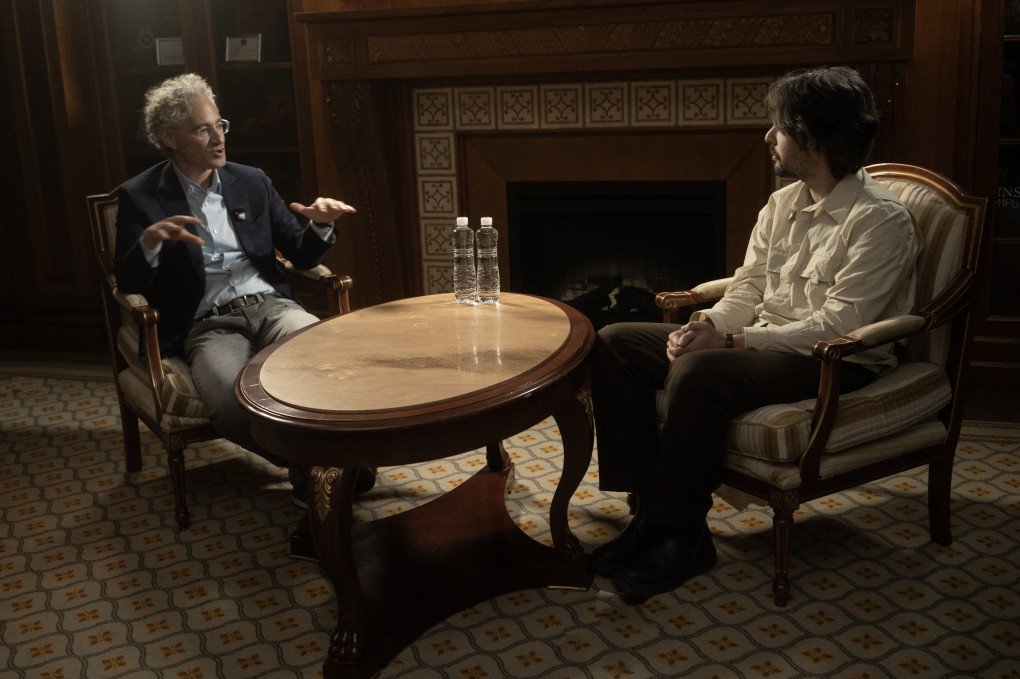
American billionaire and former Google CEO Eric Schmidt, together with his wife Wendy Schmidt, have joined the group of co-owners of several commercial real estate assets belonging to investment group Dragon Capital. The relevant changes in the ownership structure appeared in state registers in late May and early June.

According to YouControl data, the couple each acquired 36% in seven group companies that own several major real estate properties in Kyiv, including the Eurasia and Prime business centers, the Piramida shopping and business center, as well as the East Gate Logistic complex.

The transaction was structured through the Cyprus-based company New Ukraine PE Holding Limited, which owns the relevant Ukrainian assets. Following the ownership restructuring, around 22% of the holding remains with the family trust of Dragon Capital founder Tomas Fiala, while another 42% belongs to British investors Anton Schreider and Maxim Klimov, former Goldman Sachs executives and founders of investment firm Again Investments.

According to estimates by Forbes Ukraine analysts, the value of the stake acquired by the Schmidt family may range from $55 million to $70 million.

Despite the entry of new shareholders, Dragon Capital will continue to manage the assets. Market participants note that such a model makes it possible to attract additional capital, retain control over the properties, and at the same time reduce investment risks.

The portfolio included in the transaction consists of assets showing positive financial performance dynamics. Revenue at the 33,400 sq. m Eurasia business center increased by 24% in 2025, reaching UAH 194 million. The Prime business center grew revenue by 11%, to nearly UAH 95 million.

The Piramida shopping and business center, with an area of over 26,000 sq. m and more than 100 tenants, generated around UAH 463 million in revenue for its owners, up 11% year-on-year. The East Gate Logistic complex, with an area of around 50,000 sq. m, increased revenue by more than 10%, to UAH 138.8 million. Property Management Services, which manages the group’s real estate assets, increased revenue by 9.5%, to nearly UAH 24 million.

Experts link the interest of the American investor to the long-term prospects of the Ukrainian real estate market. In their view, foreign investors are considering the acquisition of quality commercial assets at valuations below pre-war levels, expecting significant capital appreciation after the situation in the country stabilizes and the economy recovers.

The transaction also reflects a gradual revival of investment activity in Ukraine’s real estate market. According to consulting firms, in 2025 the volume of office real estate transactions increased 2.5 times to $87 million, while investment in shopping centers rose by 35% to $81 million.

For Eric Schmidt, this is not his first investment project in Ukraine. In recent years, the entrepreneur has actively supported Ukrainian technology and defense initiatives. In particular, he participated in the creation of drone manufacturer White Stork and also cooperated with the Ukrainian side in the development and supply of advanced drones.

The appearance of one of the best-known figures in American technology business among investors in Dragon Capital’s assets is viewed by market participants as a positive signal for international capital and further confirmation of the investment attractiveness of Ukrainian assets even amid the ongoing war.

Source: https://inventure.com.ua/en/news/ukraine/former-google-ceo-and-his-wife-invest-up-to-dollar70-million-in-kyiv-commercial-real-estate

Register of Damage for Ukraine Announces Launch of Claims Categories B1.1, B1.2, C1.1, C1.2 and C3.1 for Legal Entities and the State of Ukraine

The Register of Damage for Ukraine has officially launched the first categories of claims for compensation for damage caused by the aggression of the Russian Federation against Ukraine for Legal Entities and the State of Ukraine:

  • B1.1B1.2C1.1C1.2Damage or Destruction of Critical and Non-Critical Infrastructure; and
  • C3.1 Damage, Destruction or Loss of Assets.

This is a fundamentally new stage in the work of the Register. For the first time, the opening of Claims categories enables the recording of not only individual losses, but also systemic economic losses sustained by business entities and by the State of Ukraine as a result of the aggression of the Russian Federation against Ukraine.

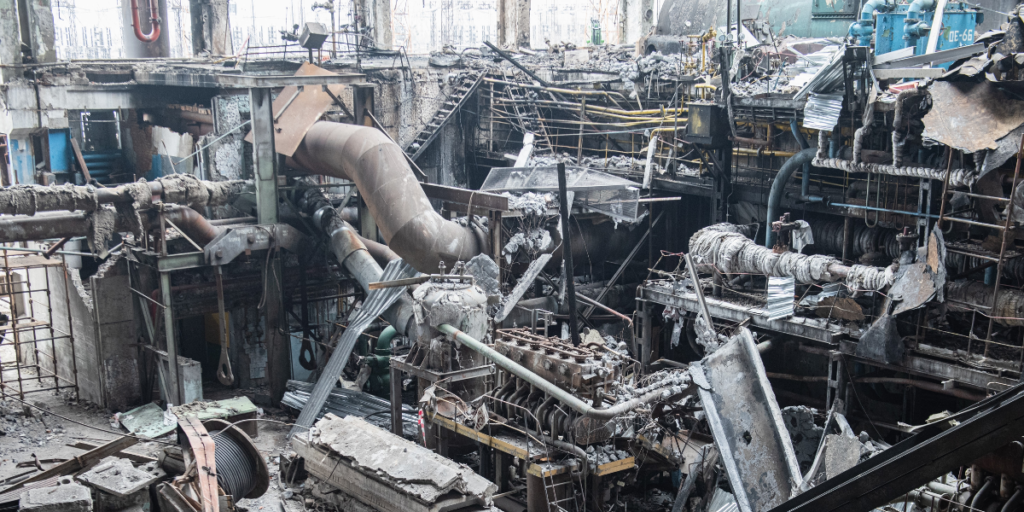
It concerns a different scale and a different dimension of the consequences of the war – the destruction of infrastructure, the loss of production capacities and assets, the disruption of logistic chains, and the interference with the functioning of entire sectors of the economy.

Claims in C categories can be submitted by any legal persons, regardless of the organisational and legal form and form of ownership, including state and municipal enterprises.

Categories B of claims are available for the State of Ukraine, state authorities, state institutions, local-self-governments, communities, municipalities etc.

In categories related to infrastructure (B1.1 and C1.1 – critical infrastructure, B1.2 and C1.2 – non-critical infrastructure), claims may be submitted for compensation for the value of destroyed or damaged property, as well as for the costs of repairs or restoration (including future costs) of damaged infrastructure or its functions.

Category of claim C3.1 covers damage, destruction or loss of assets, loss of profits from such assets, total loss of business or other direct costs associated with such losses.

Claims with respect to property and any assets owned by the individual that were destroyed, damaged or lost due the war shall be submitted in categories A.

Claims that meet the eligibility requirements will be recorded in the Register and subsequently transmitted to the future Claims Commission, which will determine the amount of compensation due.

In December 2025, 35 States and the European Union signed the Convention on the Establishment of an International Claims Commission under the auspices of the Council of Europe.

The opening of these categories creates the opportunity to systemically document such losses and to form a complete international evidentiary base, on the basis of which decisions on compensation will be made.

How to Submit Claims

Claims are submitted via the Diia web portal. Claims on behalf of a legal person or a state authority may be submitted by the head of the legal person (for example, director or chairperson). The director or chairperson may also appoint a Representative, who will be authorised to submit claims on behalf of the legal person by granting such Representative Digital Powers via Diia. Any legally capable individual may act as a Representative.

B1.1, B1.2, C1.1, C1.2Damage or Destruction of Critical and Non-Critical Infrastructure:

C3.1 Damage, Destruction or Loss of Assets:

To learn more and submit a claim, visit the Register’s website.

Source: Register of Damage for Ukraine Announces Launch of Claims Categories B1.1, B1.2, C1.1, C1.2 and C3.1 for Legal Entities and the State of Ukraine – Register of Damage for Ukraine

How to legally formalise the recruitment of foreign specialists to Ukrainian companies?

Contents

  1. 01Employment of a Foreigner Under a Labour Agreement: What are the Peculiarities?
  2. 02Concluding a Civil Law Agreement with a Foreigner: Are there differences from a Labour Contract?
  3. 03Signing a Gig-Contract with a Foreigner: When is it applied?
  4. 04Conclusion

Modern Ukrainian business is all about constant challenges, new approaches to company development and increasing competitiveness in both the Ukrainian and international markets. One way to strengthen international expertise in a company is to attract foreign specialists. Let’s look at the details and specifics of attracting such specialists.

01 — Employment of a Foreigner Under a Labour Agreement: What are the Peculiarities?

Generally, the labour relations of foreign citizens in Ukraine are regulated by the laws of Ukraine[1]1, specifically the Law of Ukraine “On Employment of the Population” (hereinafter referred to as “the Law”).

Indeed, the Law establishes a specific procedure that precedes the conclusion of a labour agreement (contract) with a foreigner.

First and foremost, to employ a foreigner, it is necessary to determine the legal status of the potential employee. Certain categories of foreigners are entitled to work under the same conditions as citizens of Ukraine:

  • foreigners who hold a permanent residence permit in Ukraine (they submit the same package of documents as a citizen of Ukraine, but provide their residence permit instead of a national passport);
  • foreigners who have refugee status in Ukraine;
  • foreigners who have been recognized as persons in need of complementary protection;
  • and other foreigners of narrow specialization whose list is defined by the Law, for example, members of the clergy, athletes, individuals engaged in scientific activities, representatives of emergency rescue services, branches of foreign enterprises, etc., provided that the prescribed conditions are met.

If the foreigner does not belong to the mentioned categories, the employer must obtain a permit for the employment of foreigners (hereinafter referred to as “the Permit”).

To obtain the Permit, it is necessary to submit an application to the territorial body of the State Employment Service(employment center) (the application form is approved by the Resolution of the Cabinet of Ministers of Ukraine dated January 24, 2023, No. 68).

If the candidate is a citizen of the russian federation, the republic of belarus or other countries recognized as posing a threat to the national security of Ukraine, the Security Service of Ukraine is involved in the consideration of the Permit issuance.

The Permit can be issued for different periods of time, depending on the duration of the labour agreement and the potential employee’s plans to remain at the specified place of work.

It is important to consider that the Permit is tied to a specific employer, meaning that if the foreigner changes their place of work, the new employer must undergo the procedure for obtaining the Permit from scratch.

For a foreigner’s arrival in Ukraine for employment, there are several methods:

  • immigration permit: the grounds for granting this permit are defined by Article 4 of the Law of Ukraine “On Immigration”. For certain categories of foreigners an arrival quota is established. This applies specifically to highly qualified specialists and workers whose acute need is felt by the Ukrainian economy, as well as their spouses and minor children in the case of joint entry. This quota is established annually by a Resolution of the Cabinet of Ministers of Ukraine.
  • type D work visa: this is issued for arrival in Ukraine for the purpose of employment. To obtain this visa, a potential employee must apply to the Ukrainian consular office or embassy in their place of residence and submit a package of documents. These must include documents confirming the purpose of the trip, specifically: an employment contract or a work permit in Ukraine.

02 — Concluding a Civil Law Agreement with a Foreigner: Are there differences from a Labour Contract?

If there are no actual labour relations between a foreigner and a company in Ukraine, meaning the foreigner is engaged to provide services as needed or to perform a specific task, a mechanism exists for concluding a civil law agreementwith them.

As a result of concluding such an agreement, labour relations do not arise between the parties, therefore, no work permit is required. A company that enters into a civil law agreement with a foreigner for the provision of services must comply with the requirements of civil legislation typically applied to contracts. In such an agreement it is important to specify exactly what service the counterparty will provide, what the result of such a service should be, and the amount of payment under the agreement.

It is crucial to avoid provisions similar to those found in labour contracts, such as specifying a work schedule, terms for granting vacation or sick leave, compensation, etc. That is, in the case of a civil law agreement, the company pays for the result of the services provided, rather than for the process of performing the work, as occurs with a labour contract.

However, it is worth noting that the existence of a service agreement does not grant a foreigner the right to cross the border. Therefore, it can only be concluded with a foreigner who is already legally residing in Ukraine, or if a foreigner residing abroad can be engaged to provide services in a remote format.

03 — Signing a Gig-Contract with a Foreigner: When is it applied?

An effective mechanism today for engaging IT specialists to work in Ukraine is the conclusion of gig-contracts, as provided for by the Law of Ukraine “On Stimulating the Development of the Digital Economy in Ukraine”.

Such contracts can be concluded with foreigners only by Diia City residents. At the same time, the status of a Diia City resident can only be obtained by a legal entity registered under the laws of Ukraine that carries out one or more types of activities provided for by the Law “On Stimulating the Development of the Digital Economy in Ukraine”.

The customer under a gig-contract must be a Diia City resident, and the contractor or performer must be a gig-specialist – this can include a foreigner.

It is important to note that for working with a foreigner through a gig-contract, the company must also obtain the Permit.

Thus, concluding a gig-contract with a foreigner is possible only for Diia City resident companies and is not applicable to any other entity; therefore, only a limited circle of companies can consider this method of engaging foreign specialists.

04 — Conclusion

For Ukrainian companies there are three primary mechanisms for engaging foreign specialists: concluding civil law agreements, labour agreements (contracts) and gig-contracts. The choice of a specific method depends on the nature of the relationship between the company and the specialist, as well as the purpose of their engagement.

Engaging foreigners helps partially resolve the problem of personnel shortages, allows for the acquisition of valuable expertise and introduces new approaches to work. This also contributes to increasing the competitiveness of Ukrainian companies in both domestic and international markets and is an essential element of modern labour relations in the context of globalization.

[1] Article 54 of the Law of Ukraine “On International Private Law”

Source: How to legally formalise the recruitment of foreign specialists to Ukrainian companies? – Lexology

Legal Digest: Developments in Ukraine’s Defence Sector (March – April 2026)

During March and April 2026, the Cabinet of Ministers of Ukraine adopted a series of decisions aimed at simplifying the procurement of innovative defence products by the Ministry of Defence of Ukraine, harmonising the management of intellectual property rights in the military-industrial complex (MIC), and introducing new formats for technological cooperation in the field of AI.

In our previous publication, “Ukraine simplifies the codification of military products and accelerates the contracting of newly developed systems”, we analysed the reform of the codification procedure for armaments and military equipment, as well as the simplification of the supply of products for the needs of Ukraine’s Defence Forces.

1. The Ministry of Defence is empowered to procure innovative weapons for testing under a simplified procedure

The Cabinet of Ministers has launched a pilot project that creates the legal basis for the systematic procurement of innovative defence products with a view to testing them in real combat conditions.

Previously, no procedure existed that would allow the Ministry of Defence to procure innovations for troops to test. Samples of innovative solutions reached units in an unsystematic manner, without a structured mechanism for assessing performance or scaling up successful designs.

The pilot project introduces the concept of “defence innovation product” – a new or improved sample of weaponry, military or special equipment, with no analogues in service and offering improved tactical-technical or qualitative characteristics. Such products may be procured by the Ministry of Defence under a simplified procedure and transferred to designated units for experimental combat use.

Following experimental combat use, the sample is assessed for compliance (or non-compliance) with the declared tactical-technical, qualitative and other characteristics, and for its ability to address operational issues and challenges within the Defence Forces.

Where experimental combat use is successful, the Ministry of Defence will ensure the rollout of the defence innovation product across the Defence Forces, including its inclusion in procurement lists and volumes and, where required, its codification.

2. Unified rules for managing intellectual property in the MIC

On 10 April 2026, the Cabinet of Ministers approved the Policy on the Management of Intellectual Property in Ukraine’s Military-Industrial Complex (the “Policy”), which formalises the approach of the public sector (state customers and state-owned enterprises) to the management of its own intellectual property in the MIC and reduces legal uncertainty for private counterparties.

In particular, the Policy proceeds from the premise that state customers and MIC enterprises must contractually regulate compliance with IP legislation in their agreements with private counterparties.

The Policy’s objectives are to be achieved by state customers and enterprises through, among other things:

  • establishing or designating responsible units and officers for IP management;
  • developing internal documentation on the acquisition and exercise of IP rights;
  • ensuring timely registration of IP objects, maintaining the validity of protective documents (patents, certificates), and conducting regular inventories and valuations of intangible assets;
  • entering into licence agreements for the use of IP objects;
  • taking measures to protect IP rights in the event of their infringement.

A key element of the Policy is the creation of a “Unified Information System for Research and Development Works, Results of Intellectual Activity and Technologies for Military and Dual-Use Purposes, and Design Documentation for Military Products”. The system will function as a shared repository for state customers and MIC enterprises, with centralised state management exercised through the Ministry of Defence.

3. Ukraine becomes the first country to open access to AI model training on real combat data

The Cabinet of Ministers has launched a pilot project granting Ukrainian companies and foreign defence agencies access to the Ministry of Defence’s AI platform. The platform is built on real battlefield data and is intended to support the development of military products that use AI.

As the rights holder and project coordinator, the Ministry of Defence may grant access to the data, in particular for training AI models, verifying the compatibility of technologies, and developing new or improving existing military products that use AI. Access is provided through a dedicated platform built on the basis of the Ministry of Defence’s Centre for Innovation and Development of Defence Technologies.

Ukrainian companies interested in using the platform must meet one of the following criteria:

  1. be a supplier under a state contract with the Ministry of Defence or a contractor under defence contracts concluded with other state customers;
  2. be designated as critically important for the needs of the Defence Forces during the special period; or
  3. be included in the electronic register of state contract performers.

Foreign defence agencies may obtain access under international treaties or separate agreements on the provision of access to software products. The Ministry of Defence decides on the terms of payment for access by foreign partners on a case-by-case basis. For Ukrainian companies, access is free of charge.

For the purposes of the project, the Ministry of Defence may export military products without obtaining authorisation from the Cabinet of Ministers. The obligation to obtain a permit from the State Export Control Service of Ukraine, however, remains in force.

Conclusions

Taken together, these changes form a consistent strategy for stimulating the development of the MIC: accelerating the cycle from development to combat use, harmonising the management of IP rights, and opening up new forms of technological partnership — all on terms that protect Ukraine’s national security interests.

For companies operating in the MIC, and for international partners considering cooperation in defence technologies, these developments raise practical questions: how the new mechanisms apply to current or planned activities, whether existing contractual structures and arrangements meet the new requirements, and whether these changes create opportunities previously unavailable.

Source: Legal Digest: Developments in Ukraine’s Defence Sector (March – April 2026) – Sayenko Kharenko

International register of damage for Ukraine now open to businesses

On 29 April 2026, the Register of Damage for Ukraine (RD4U) opened new categories of claims for businesses regarding damage caused by the armed aggression of the Russian Federation. Below is a guide on who can file a claim, what documents are required, and how to proceed.


On 29 April 2026, the Register of Damage for Ukraine (RD4U) (the “Register“), established at the initiative of Ukraine, the European Union and 42 states, to facilitate compensation claims for damage caused by the armed aggression of the Russian Federation, announced the launch of new claim categories for businesses and the State of Ukraine.

Businesses are now eligible to officially submit claims for damage caused by armed aggression.

The newly introduced business claim categories include:

  • C1.1 – Damage to or destruction of critical infrastructure;
  • C1.2 – Damage to or destruction of non-critical infrastructure;
  • C3.1 – Damage, destruction, or loss of assets.

These categories are determined based on the type of property damaged or destroyed.

When can a claim be submitted?

The Register allows legal entities, regardless of ownership structure or institutional affiliation, to submit claims for material losses caused by the armed aggression starting from 24 February 2022.

The Register does not provide an exhaustive list of events giving rise to compensation claims. Eligible events may include direct military attacks, acts of sabotage, occupation, cyberattacks, supply chain disruptions, logistics interruptions, and similar consequences of the aggression.

Claims may be submitted in relation to:

  1. damage to, destruction of, or loss of property and/or related loss of profit;
  2. complete loss of business resulting from the destruction of property;
  3. any other direct expenses arising from the destruction of property.

The affected property must be located within Ukraine’s internationally recognised territory.

Claims may cover not only damage or destruction itself but also expenses already incurred for restoration or recovery of the property.

What documents should be prepared?

To successfully submit a compensation claim, businesses are advised to secure documentary evidence confirming the fact of the damage; the amount of losses incurred; and ownership or lawful possession of the damaged or destroyed property.

Both official (court decisions; law enforcement resolutions; reports issued by the State Emergency Service of Ukraine etc.) and unofficial evidence (media publications; photographs and videos; witness statements; and other supporting materials) may be used to substantiate damage caused by the armed aggression.

We recommend collecting as much supporting evidence as possible and not limiting submissions to formal official documents only.

The Register also does not establish a strict list of evidence regarding the amount claimed, provided the claim is properly substantiated. Supporting documents may include invoices, sale and purchase agreements, financial statements, contracts, and similar records.

At the same time, obtaining an independent expert assessment of losses is advisable, as it may help quantify both direct property damage and lost profits.

It should also be considered that only duly substantiated claims will be included in the Register, while the burden of proof and associated risks remain with the claimant legal entity.

How to submit a claim?

Claims are submitted electronically through the Ukraine’s state digital services portal, Diia, by logging in to user account and completing the relevant application form.

A claim may be submitted on behalf of a legal entity either by its director or by an authorised representative – any individual with full legal capacity. For this purpose, the Diia portal provides the “Digital Authorisation” service.

What happens next?

Following submission, the claim is reviewed by the Register’s Secretariat for formal compliance and then referred to the Register Board, which determines whether the claim is admissible for inclusion in the Register.

Although no specific review deadlines have been established, the Register Board holds in-person meetings at least once per quarter to consider submitted claims and decide whether to register or reject them.

Applicants are notified of the decision through the Diia web portal.

The Register and its governing bodies are not authorised to determine the amount of compensation or make compensation payments. These functions are expected to be assigned to separate institutions to be established in the future.

The opening of the Register to businesses is undoubtedly an important and significant step toward compensation for losses caused by the armed aggression. It demonstrates that an effective compensation mechanism is becoming increasingly tangible.

Source: International register of damage for Ukraine now open to businesses – Sayenko Kharenko

Schoenherr CEE Compass 2026

7 May 2026 in Bucharest

Join us for the third edition of the Schoenherr CEE Compass, navigating the most pressing topics in law, business and society.

The half-day conference on Thursday, 7 May 2026 in Bucharest will address one of the most significant economic and humanitarian challenges of our time: Ukraine’s post-war reconstruction. As the global community mobilises around Ukraine’s recovery, businesses worldwide, whether experienced in post-conflict environments or new to the region, are uniquely positioned to play a transformative role in shaping the country’s future.

The conference aims to explore how the global and local business community can contribute to and benefit from Ukraine’s rebuilding. It will further examine the role of Central and Eastern European countries, which bring invaluable expertise from their own experience of post-conflict transformation and EU integration, while also drawing on lessons from reconstruction efforts in other regions worldwide.

The conference will convene Schoenherr lawyers with decision-makers and thought leaders to explore critical international developments shaping Ukraine’s reconstruction. Attendees will gain actionable insights into navigating the complex business, legal, regulatory, and financial landscape of reconstruction, whether they are CEE-based companies, global corporations, or organisations with prior experience in post-war investment environments.

Source: Schoenherr CEE Compass 2026

Ukraine in Focus: Investment into Post War Reconstruction, Contracts, and Disputes at Paris Arbitration Week

Key insights and perspectives from events we host, attend, and support highlighting what matters most to our clients and industries.

During Paris Arbitration Week, the firm, together with the Ukrainian Arbitration Association (UAA), hosted a panel discussion titled “Ukraine in Focus: Investment into Post War Reconstruction, Contracts, and Disputes.” The session examined the legal, regulatory, and dispute resolution considerations shaping investment into Ukraine’s post war reconstruction.

The distinguished panel featured in-house counsel Heorhii Hrabchak (Ukrnafta head of international disputes), Oleksandr Kushch (Naftogaz head of international disputes), alongside Markiyan Malskyy (Arzinger, managing partner and UAA Board Member), and Sergii Uvarov (Impacta partner and UAA President).

What We Shared

Maria Kostytska (Paris partner and UAA Board Member) opened the event by providing context for the discussion, noting the full-scale invasion going into the fifth year and underscoring the importance of looking ahead to investment opportunities and ensuring legal preparedness for investments into Ukraine’s post war reconstruction.

Sergii Uvarov followed with a comprehensive overview of how dispute resolution in Ukraine has evolved over the past four years, how the courts and arbitral institutions continue to function, and how enforcement was stayed in certain cases due to martial law and sanctions.

Thereafter, panel addressed a broad range of legal and practical issues relevant to investors, including:

  • Recent legislative and regulatory reforms affecting public private partnerships (PPPs) and privatization
  • The legal framework governing production sharing agreements (PSAs), subsoil licenses, conversion of subsoil licenses into production sharing agreements, concessions and joint ventures with foreign investors
  • Prevention and mitigation of disputes, as well as techniques and modalities of dispute resolution in the post-war reconstruction context.

Markiyan Malskyy (Arzinger) analyzed recent reforms in PPPs and privatization, highlighting Ukraine’s ongoing efforts to attract foreign capital. He reflected on historic privatization related disputes. He also addressed the risks associated with investing in or acquiring sanctioned assets—particularly those administered by ARMA and sold through the State Property Fund—as well as the potential for claims to be brought by sanctioned Russian individuals or entities for deprivation of assets.

Heorhii Hrabchak (Ukrnafta) shared insights into investments into Ukraine’s energy sector, which is currently shaped by financial restrictions and sanctions framework. He elaborated on PSAs and the conversion of subsoil licenses into PSAs as a mechanisms for foreign investor participation alongside state-owned enterprises. On the bright side, he commented on Ukraine’s recent victory in the first renewable energy case arising from the change in the green tariff regime, in which the government negotiated with the renewable energy producers, signed a memorandum of understanding, implemented it into law, and thus avoided liability under the Energy Charter Treaty (ECT).

Oleksandr Kushch provided insights into the gas wars ongoing until the termination of the long-term gas transit contract between Naftogaz and Gazprom, focusing on the ongoing enforcement of arbitral awards. He also mentioned recent achievements in enforcement of Crimea related awards and the complex interplay between Ukrainian and European creditors seeking recovery against assets of Gazprom Export, Gazprom and Russia.

Louis Degos (Bâtonnier du Barreau de Paris) concluded the session with a high level synthesis, emphasizing the importance of legal foresight and strategic planning for Ukraine’s reconstruction.

What We Learned

  • Ukraine continues to adapt its legal and regulatory framework to support investment during and after the war, particularly in energy, infrastructure, and natural resources.
  • Conducting early due diligence and planning for dispute resolution is critical in protecting investor interests.
  • Investors must carefully assess the evolving legal and regulatory framework, sanctions related risks and jurisdictional overlaps when structuring investment transactions and pursuing claims.

The discussion closed with an engaging Q&A, reflecting strong audience interest in the practical and forward looking issues raised by the panel.

Source: https://www.lexology.com/library/detail.aspx?g=fd47a0a5-c5ce-41be-8c02-f7a0c34ff487&utm_source=lexology+daily+newsfeed&utm_medium=html+email+-+body+-+general+section&utm_campaign=lexology+subscriber+daily+feed&utm_content=lexology+daily+newsfeed+2026-04-01&utm_term=

Photo: https://www.facebook.com/share/p/1GQFuZwupP/

Polish Development Bank to operate fully in Ukraine

The Ukrainian Parliament is set to ratify a landmark agreement that establishes the legal framework for the Polish Development Bank – the Bank Gospodarstwa Krajowego (BGK) – to operate fully in Ukraine. This move is designed to accelerate Ukraine’s recovery by providing a direct channel for financial and technical assistance to both public and private sector entities.

Key financial tools to be made available

BGK’s mandate will cover a broad range of instruments intended to reduce the friction of doing business in a wartime environment. These instruments include:

  • Direct funding: Loans, grants, and export support available in EUR, USD, and other currencies.
  • Bank guarantees: Unconditional, irrevocable, first-demand guarantees for banks operating in Ukraine.
  • Technical assistance: Capacity building and institutional strengthening for both state and private companies.
  • Broad operational power: BGK has the authority to negotiate contracts, issue financial instruments, and hire personnel directly to implement projects.

Wartime solutions: addressing business pain points

The agreement with BGK specifically targets the “bankability” of projects during martial law by addressing three critical hurdles:

De-risking for local banks

Local banks are often hesitant to take on performance or payment exposure during the war. The agreement will attempt to address bank de-risking in the following ways:

  • Collateral recognition: BGK-issued guarantees (backed by the European Commission or Poland’s Ministry of Finance) are intended to be treated as high-quality eligible collateral for Ukrainian banks.
  • Regulatory alignment: the National Bank of Ukraine (NBU) is expected to recognise BGK-backed exposures in its prudential calculations, aligning with EU-style frameworks.
  • Benefits: the above policies will increase the willingness of local banks to finance transactions and can lead to better pricing and longer loan tenors for corporate borrowers.

Currency convertibility & transfers

One of the largest constraints in wartime is the ability to convert the Ukrainian Hryvnia (UAH) to hard currency and remit it abroad for debt service or supplier payments.

  • Priority access: the agreement establishes a specific regime for BGK and its beneficiaries to purchase foreign currency and transfer it outside Ukraine.
  • Cross-border servicing: transfers will be facilitated by servicing banks to BGK accounts outside Ukraine using prevailing market rates.
  • Benefits: the above significantly reduces “convertibility risk” for international investors and suppliers.

Streamlined procurement

Although standard public procurement can be slow, projects supported by BGK will follow its procurement procedures.

  • Speed and integrity: these procedures are aligned with international development finance practices, which are typically faster and more standardised.
  • Benefit: using BGK procurement procedures will be critical for time-sensitive wartime reconstruction where speed is as important as transparency.

Business takeaways

For more information on Ukraine’s agreement with the BGK, contact your CMS client partner or the CMS experts who contributed to this article: Ihor Olekhov.

Source: https://www.lexology.com/library/detail.aspx?g=a276c9de-fc86-4ec7-85f6-4859d6c348bb&utm_source=lexology+daily+newsfeed&utm_medium=html+email&utm_campaign=lexology+subscriber+daily+feed&utm_content=lexology+daily+newsfeed+2026-03-05&utm_term=

Co-founder of the defense fund MITS Capital: “Either we change or we perish. We have six months for our defense industry”

If Ukraine neither opens the market nor attracts global capital in 6-8 months, the world will build this industry without it.

Anton Melnyk, co-founder of the defense fund MITS Capital, announced it at the Radio NV event “Defense Industry 2026. Efficiency, Development, Scalability”.

He noted, “As one famous person said at the end of last year: Either we change or we perish. We have started to change a little bit and that’s good. But today I will say by myself: either we change quickly, here and now, or we will all perish again this year. We don’t have much time. In fact, we have just six months for our defense industry. Maximum eight months… we have not enough time”.

Mr. Melnyk said, foreign partners already have a head start. Co-founder of the defense fund MITS Capital added, “If they don’t come here, if they neither create joint ventures nor invest, they’ll just copy and do it themselves”, having emphasized that either we’ll tie them down or they’ll do it without us.

As for exports, Mr. Melnyk noted that technical problem of exports can be solved in hours. He highlighted, “It’s technically and administratively closed. It can also be technically and administratively open”, having noted that it doesn’t matter how it happens: either through the State Export Control Service of Ukraine or through Defence City. Co-founder of the defense fund stated, “It’s important that the system is as open as possible”.

He also highlighted that a closed market kills investment, “It’s not just about leftover production. It’s about startups and companies that have grown into manufacturers of components and technologies. They need investment stability”, having noted that if an investor sees a closed market, he will not invest.

Mr. Melnyk emphasized, “Now either superstar foreigners or patriotic Ukrainian funds are investing. But this is not systemic capital”.

He says that the Ukrainian defense industry needs three key resources: time, people and money. “There is no time. People still left. There is enough money worldwide, we need it but for this purpose we need a world market”.

Regarding defense technologies, Mr. Melnyk noted that Defense Tech will grow in the next 20 years and transform into robotics within 10 years. Ukraine has received a technological and entrepreneurial explosion. Co-founder of the defense fund MITS Capital warned, “This chance can be lost”.

Regarding global players in the worldwide defense industry market who are already copying Ukraine, he stated: “Partners come, look, copy. FPV, which they used to laugh at, is now being made by Americans and they are proud of it”, having emphasized that there is not enough time for this.

He also stated that a technological race is underway at the front. “The enemy is using drones-queens, strikes hundreds of kilometers away, Lancets. We see long-range strikes in the rear”.

Speaking about urgent decisions, he emphasized, “Decisions need to be made in the coming months. I hope Mykhailo Fedorov will speed up this process”. He also noted that even without actual exports, an open market changes the investment logic.

In respect of joint ventures, Melnyk highlighted: “NATO has a longstanding practice in joint ventures between the countries. We need to do the same, from small to large companies”.

Finally, co-founder of the defense fund emphasized, “The USA is closing the component market. China may limit supply of engines and magnets. If this happens, FPV may run out in three months. Therefore, we need to diversify engines, magnets, missiles, heavy equipment and others. We need a comprehensive military industry. We have no time. We need solutions now”.

Source: ОПК України — Критичні шість місяців для розвитку та інвестиційних рішень / NV

Horizon Capital and Notus Energy signed the agreement on wind farm construction in Odesa region

Today, on January 20, the German Power Company Notus Energy and American & Ukrainian Investment Company Horizon Capital signed the agreement on financing joint project aimed at construction of a wind farm in Odesa region with capacity of 124 MW. In addition, Horizon Capital announced initial closing of its Horizon Capital Catalyst Fund focused on reconstruction.

Both agreements were signed at the World Economic Forum in Davos in the presence of Oleksii Sobolev, the Minister of Economy, Environment and Agriculture of Ukraine.

Previously, Horizon Capital successfully launched the Horizon Capital Catalyst Fund (HCCF) aimed at supporting recovery and reconstruction of key sectors of the Ukrainian economy. At the first closing stage, the Fund attracted €152 million, i.e. over 50% of the target size equal to €300 million. In particular, the Fund focuses on sectors that are critical for reconstruction of the country and those that require significant private capital investments, namely energy, digital infrastructure and construction.

Now, jointly with announcement of the first closing, the Fund has completed structuring of its first investment –construction of a wind farm in Odesa region, being developed by the German energy company and developer Notus Energy.

Oleksii Sobolev noted, “I congratulate Horizon Capital and our partners – IFC, EBRD, Proparco, Swedfund, Norfund and FMO – on the first closing of Catalyst Fund. This is a signal to the world: we are not waiting for end of the war in order to rebuild the country. Strategic partnership with the German company Notus Energy is also important, in particular, when Ukraine lost over 60% of its generating capacity due to constant shelling. The presence of such large players in Ukraine shows that Ukraine is capable of attracting large international capital even in the wartime”.

Structure of the deal provides the following:

• Catalyst Fund receives 45% in the project and provides a corresponding share of equity for construction.

• Notus Energy holds a controlling stake and acts as the lead investor in the deal: it finances the remaining required equity and is liable for construction and further operation of the facility.

• Total project budget exceeds €220 million and provides a significant amount of debt financing from international IFIs and DFIs, including with EBRD, IFC, Swedfund, BIO and Green for Growth Fund (GGF). In particular, the project in Odesa region is the first of three wind farms in Notus Energy portfolio for Ukraine, with aggregate capacity of ca. 300 MW, as well as a part of broader portfolio of renewable energy development in Ukraine with capacity over 1.3 GW under the projects at various stages.

Source: Horizon Capital та Notus Energy підписали угоду з будівництва вітропарку в Одеській області | Міністерство економіки, довкілля та сільського господарства України