The European Commission has confirmed that it has developed legally acceptable options for using Russia’s assets, both private and state-owned, to restore Ukraine.
Source: Christian Wiegand, the spokesman for the European Commission, reported by European Pravda
Details: According to Wiegand, the assets of Russian individuals and legal entities under EU sanctions worth about €24.1 billion have been frozen in the European Union. The sanctions do not provide for the seizure of these assets, as this would violate the law.
Quote from Wiegand: “We have put forward a proposal to criminalise the violation of EU restrictive measures, and discussions with other EU institutions have already made significant progress. This will allow for the seizure of these assets in case of sanctions evasion, which will be done in accordance with the law, in this case, criminal law.”
More details: As for the state-owned assets of the Central Bank of Russia, they cannot be simply confiscated, but the European Commission suggested a different way at the end of last year.
“The idea is, in fact, to work with these assets and use the profits from them. Because, again, we have to follow the rule of law and cannot simply confiscate such assets. But, according to our legal opinion, we can work with these immobilised assets,” Wiegand added.
The European Bank will grant one and a half billion euros for Odesa Region restoration, but this is not related to the damage caused by hostilities, as reported by Tetyana Khomenko, the UN Program representative. She notes, 11 reconstruction projects have been approved in Odesa under the program of restoration of Ukraine, while two more are waiting for approval.
It will be capital repair, reconstruction of the infectious disease hospital, repair of the first clinical hospital and several more schools in the city. It also includes hospitals, schools and kindergartens in the region, in particular, on the territory of the Baltic Community. Tender selection took place in August & September last year, the list of facilities was drafted jointly with the Odesa Region communities. We note that Odesa Region is the runner-up after Kyiv Region as for the number of restoration projects. We remind that Odesa Region is planning to hold four international expert events upon restoration of the region in order to join project development various industries.
The Advantage Ukraine investment platform team in partnership with the Ukrainian Economy Ministry, has prepared the first investment projects totaling $430 million and forwarded them to the United.
“The first five projects have been accepted for consideration by the DFC. In particular, these are projects of Ukrainian investors in the construction, manufacturing, e-commerce, and residential real estate sectors totaling $430 million. Each of them will be evaluated separately. There is also a lending project worth several million [U.S. dollars] for a foreign investor to manufacture construction materials,” Deputy Economy Minister Alexander Giban said.
Several projects are being reviewed at an early stage now, which Advantage Ukraine expects to forward to the DFC soon, Giban said. In particular, these include projects in the logistics, high-degree processing of agricultural products, energy, animal husbandry, and construction materials sectors, he said.
The DFC recently announced its willingness to mobilize over $1 billion in private capital to support the Ukrainian economy, the ministry said.
The Ukrainian Economy Ministry and the DFC are working together to prepare and compile a list of investment projects with assistance from Advantage Ukraine, whose project team is in charge of the initial selection of projects with support from the USAID Competitive Economy Program in Ukraine and in cooperation with applicants.
On 29 March, the European Investment Bank (EIB) approved the ‘EU for Ukraine’ Initiative, a new scheme to finance reconstruction and recovery in Ukraine.
The initiative is conceived as a temporary scheme which will enable European Union member states, the European Commission and other countries and donors to support reconstruction and recovery in Ukraine. The EU for Ukraine Fund will provide credit enhancement to EIB loans for both public and private sector investment.
The EU for Ukraine Initiative will be accompanied by a €100 million dedicated technical assistance package. This will provide best-practice reconstruction advisory expertise in both Ukraine and Moldova and help develop priority investment projects, assisting Ukrainian and Moldovan project promoters facing challenging circumstances.
The EIB also agreed €1.8 billion in financing for sustainable transport, corporate innovation, clean energy, climate action and digitalisation across Europe and around the world.
Ukraine has already begun to rebuild its country. In order to better reflect the diverse support from Germany and to open up opportunities for interlinking, the Federal Government has launched the “Platform for Reconstruction Ukraine”. It is aimed at civil society, science, business and municipalities in Germany. The platform provides you with information about reconstruction and funding opportunities for your commitment.
The aim of the platform is to network the actors involved in reconstruction. It will contribute to greater transparency, efficiency and effectiveness of initiatives aimed at rebuilding Ukraine. In its commitment, the German Government builds on long-established german-Ukrainian relations and the reconstruction efforts of the Ukrainian Government and the donor community.
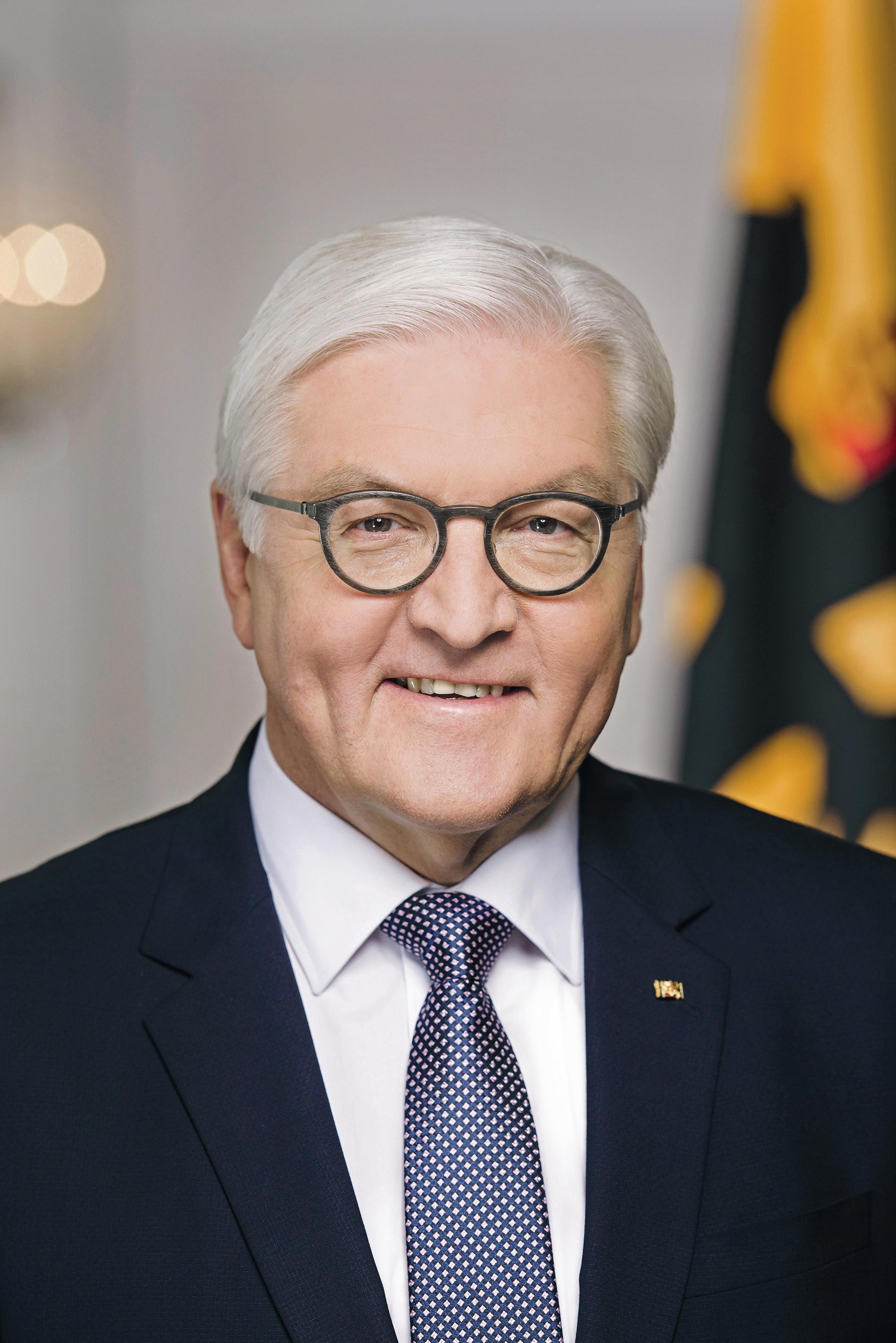
Frank-Walter Steinmeier
President of the Federal Republic of Germany
“The people of Ukraine fear and fight daily for their lives, their loved ones, their country. They do this at indescribable losses. Russian air strikes repeatedly destroy civilian infrastructure, homes are hit, people are killed. In many places, critical infrastructure, power and thermal power plants, bridges, railway stations and transport hubs have been destroyed. Russia’s war of aggression has reduced large parts of Ukraine to rubble. In view of the great destruction, reconstruction requires our full support. Germany stands in solidarity with Ukraine. The Ukraine Reconstruction Platform has created a basis for exchange and networking between and with municipalities, civil society, academia and business in order to put Germany’s contribution on a broad social basis. I would like to thank everyone who is involved with great commitment and commitment.
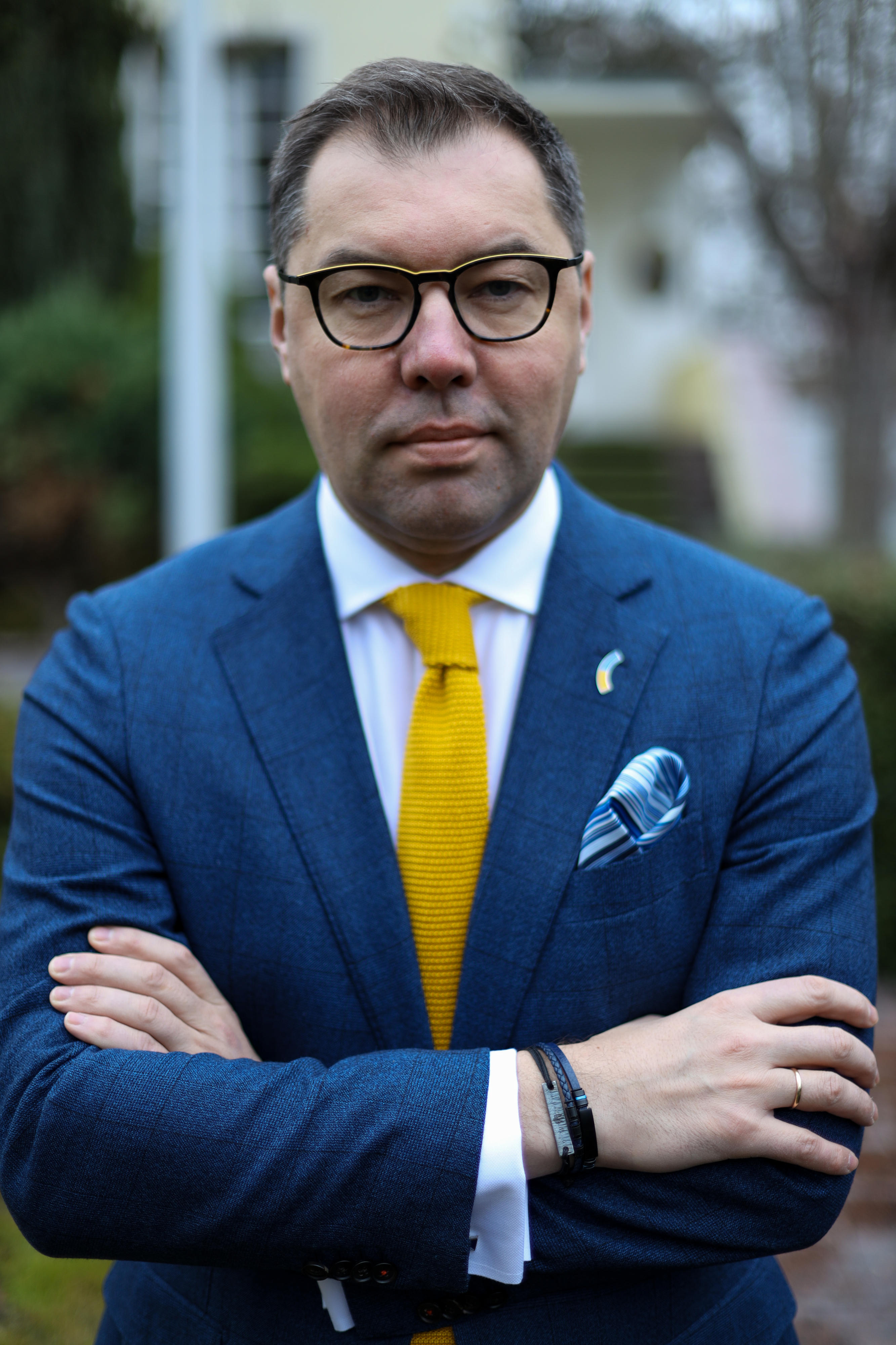
Oleksii Makeiev
Ambassador of Ukraine to Germany
“The reconstruction in Ukraine requires many forces and committed people who want to help shape the new Europe. This is a difficult task that we can only achieve together with our partners. The reconstruction of Ukraine begins now by rebuilding homes, schools, roads, energy facilities. The Ukraine Reconstruction Platform offers incredible opportunities to network at European level, exchange best practices and make contacts. After all, investing in Ukraine means contributing to a united Europe. Ukrainians greatly appreciate German solidarity. And it is gratifying that this solidarity support is now giving rise to new trusting partnerships between our people.”
Єврокомісія розглядає можливість отримання доходу у розмірі 2,6% від інвестицій у заморожені активи Центрального банку Російської Федерації.
“ЄС вивчає юридичні варіанти використання російських валютних резервів, заморожених у блоці, включаючи їхнє інвестування для отримання прибутку, який може бути використаний для фінансування відновлення України. Така безпрецедентна спроба порушує юридичні, політичні та економічні питання, і країни ЄС минулого місяця створили робочу групу для вивчення того, що можна зробити”, – йдеться у матеріалі.
Зазначається, що існує консенсус серед держав-членів ЄС у тому, що треба дуже ретельно вивчити, що можна зробити відповідно до інструкцій з цими активами.
Politico пише, що у документі Єврокомісії, який у вівторок обговорюватиметься на нараді національних експертів, роз’яснюються правові підстави для інвестування в російські активи, а також пов’язані з цим ризики та оцінки можливої прибутковості інвестицій. Єврокомісія хоче врахувати вторгнення РФ в Україну, що є рівносильним виключному та грубому порушенню міжнародного та гуманітарного права. Цим хочуть обґрунтувати свої докази на користь інвестування активів російського Центрального банку та отримання прибутку на користь України відповідно до міжнародного права.
Комісія вважає, що вкладення цих мільярдів у ліквідні активи з високим рейтингом із відносно коротким терміном погашення може принести значний річний дохід із середнім значенням близько 2,6%. Близько двох третин із 300 млрд доларів заморожених резервів ЦБ РФ перебувають у країнах G7, державах Євросоюзу та Австралії.
РБК-Україна писало про те, що, за словами прем’єр-міністра України Дениса Шмигаля, наразі потреби України на відбудову зросли до 411 млрд доларів. Водночас сума завданої шкоди не включає дані про втрати на тимчасово окупованих територіях.
White paper in Port Industry, a strategic document that includes a set of decisions and necessary changes in the port sector. It contains the list of burning issues in port infrastructure with a description of the problem, an indication of its relevance, solutions, and the responsible authority. We thank our partners for cooperation and bringing the voice of business to the international level!
The stability in the energy sector is the prerequisite for Ukraine’s economic development, the uninterrupted operation of all businesses, and the decent quality of life
That is why the European Business Association has developed the EBA Energy Outlook White Paper 2021/22 – the first document that embraces consensus proposals from the business for solving problems in electricity &renewables, gas production, and gas distribution industries.
The White Paper also contains a balanced vision of market participants regarding the future of the energy sector, key problems, and necessary reforms. After all, the whole country needs to prevent a crisis in the industry, especially throughout the heating season. Thus, the presentation of this fundamental document took place on November 29.
A brief overview of the White Paper was given by Karl Sturen and Volodymyr Kushil who are Co-Chairs of the EBA Energy Committee.
After the White Paper presentation, the participants proceeded to two-panel discussions dedicated to the current energy situation in Ukraine.
The speakers of the first panel were Olena Osmolovska, Director at Reform Support Team at Ministry of Energy of Ukraine, Andriy Gerus, Chairman of the Verkhovna Rada Committee on Energy, Housing and Utilities, Olga Babiy, member of the National Energy and Utilities Regulatory Commission, Valerii Bezus, Head of the State Agency on Energy Efficiency and Energy Saving of Ukraine, Maksym Yurkov, member of the Supervisory Board of PrJSC NPC Ukrenergo, Dmytro Saharuk, Executive Director of DTEK, Stanislav Kazda, RGC Development Strategy Director.
As a result of the discussion, the participants agreed that it is strategically important to continue the synchronization of Ukraine’s energy system with the European energy system ENTSO-E, as well as to continue the integration of gas markets. In this context, the state, regulators, and energy companies pursue the same goals. Therefore, to achieve the result there must be a constant dialogue between the parties. Thus, the key challenge now is to pass the heating season without disruptions. Whether the country will be provided with enough heat, light, and gas this winter depends on the actions of each participant in the energy system. For their part, the participants agreed that from a technical point of view, Ukraine will pass this period stably, but from a financial point of view, significant costs would be expected. We also talked about decarbonizing the industry, creating conditions for transparent competition, and improving the country’s energy security. Regarding the gas, the focus was on the situation with the gas distribution sector, namely, with economically unprofitable tariffs for natural gas distribution and chronic underfunding. Therefore, Ukraine as a European country must implement the European principles of equality of regulation, ensuring the break-even point for the industry and establishing a level playing field.
The second panel featured Michael Grossman, Managing partner, Tumbleweed Partners, Kyrylo Kryvolap, Executive Director of the Center for Economic Recovery, Volodymyr Omelchenko, Director, Energy Programmes, the Razumkov Center, Andrian Prokip, Energy Programme Expert of the Ukrainian Institute of the Future, Leonid Unihovsky, General Director, «Naftogazbudinformatyka» Ltd, and Liudmyla Buimister, Chair of the Subcommittee on Competition and Equal Business Conduct of the Verkhovna Rada Committee on Economic Development.
The focus of the discussion, again, was the issue of Ukraine’s energy security. In particular, the impact of Nord Stream-2 on the gas market and the need to prepare for the consequences upon its launch. The participants also discussed the energy crisis and the need to increase own production, attract investment in energy modernization, financial obligations of the state, etc.
The European Business Association would like to thank all the participants who joined the discussion. And we very much hope for the continuation of the respectful dialogue of the parties on topical energy issues!
Currently, the European Business Association is developing an Investment and business opportunities map of Ukraine, which (in terms of each region) will present the current economic indicators, geographical features, level of education, employment, etc. In addition, each region will have a description of actual investment projects.
Currently, we want to fill the Map with as much practical information as possible. In particular, with investment projects — to demonstrate Ukrainian economic potential and investment projects that are worth investing in right now.
Therefore, if you have such projects (requiring investment), we invite you to fill out the form via the link and provide more details about the project. We more than welcome photos and documentation for the project. All projects will be added to the Investment and business opportunities map of Ukraine, which will be published on the European Business Association and the Global Business for Ukraine websites. In case of any questions, please, feel free to ask pr@eba.com.ua.
It’s worth mentioning, that this Map can be of great support for businesses and for the country, moreover, since a few months ago, we in the Association launched our extraterritorial unit — the Global Business for Ukraine, which aims to unite global business around Ukraine, and in the long term — to attract more investments in Ukraine
Post-war restoration plan: Switzerland will help to restore Odesa Region, while Belgium will be liable for Mykolaiv Region and the Netherlands will renew Kherson Region.
In the framework of Ukrainian post-war restoration plan, Czech Republic will take part in rebirth of Lugansk Region, while Finland and Sweden will rebuild Odesa Region and Belgium will deal with Mykolaiv Region.
Sergii Gaidai, Head of Lugansk Region Administration, got aware of such news at the Investment Conference held in Lugano, Switzerland.
Denys Shmygal, Prime Minister of Ukraine, presented restoration plan which includes 24 volumes of special works developed by the National Council for Restoration of Ukraine.
Leading countries were proposed to participate directly in rebirth of certain regions of Ukraine. In particular, Czech Republic, Finland and Sweden will get involved in renewal of Lugansk Region; Switzerland will restore Odesa Region, the Republic of Ireland will deal with Rivne Region, Federal Republic of Germany will be liable for Chernihiv Region, Canada will provide assistance concerning Sumy Region, the United States and Turkey will cooperate upon rebuilding Kharkiv Region, Belgium will be liable for Mykolaiv Region, both Sweden and the Netherlands will get engaged in rebirth of Kherson Region, Norway will participate in Kirovograd Region development program, Austria will help to renew Zaporizhia Region, while Poland and Italy will bear joint responsibility for Donetsk Region restoration program.
Previous assessment states that nearly 750 billion USD are required for plan performance. Basic sources of restoration (in the range from 300 to 500 billion USD) should be seized assets of the russian federation and the russian oligarchs. The project also presumes providing grants and loans by international organizations and partner countries, jointly with investments by private sector and out-of-budget contributions by individuals and corporations.