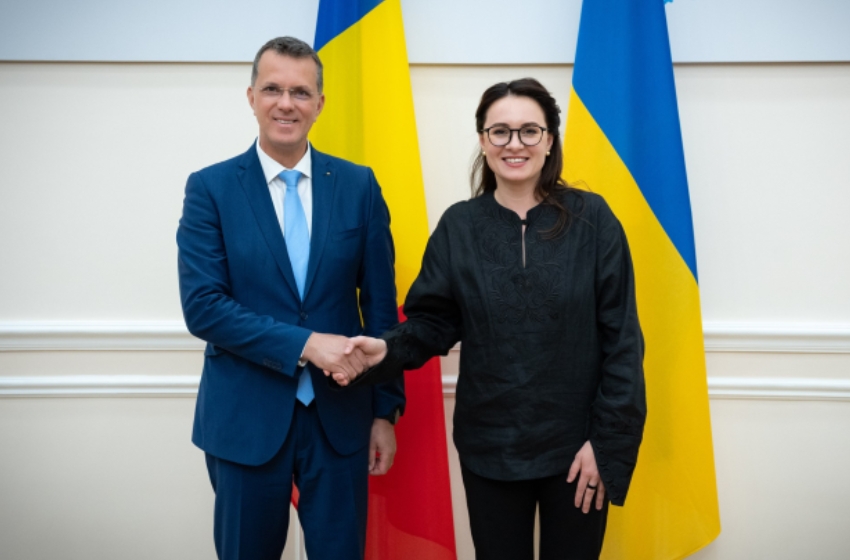
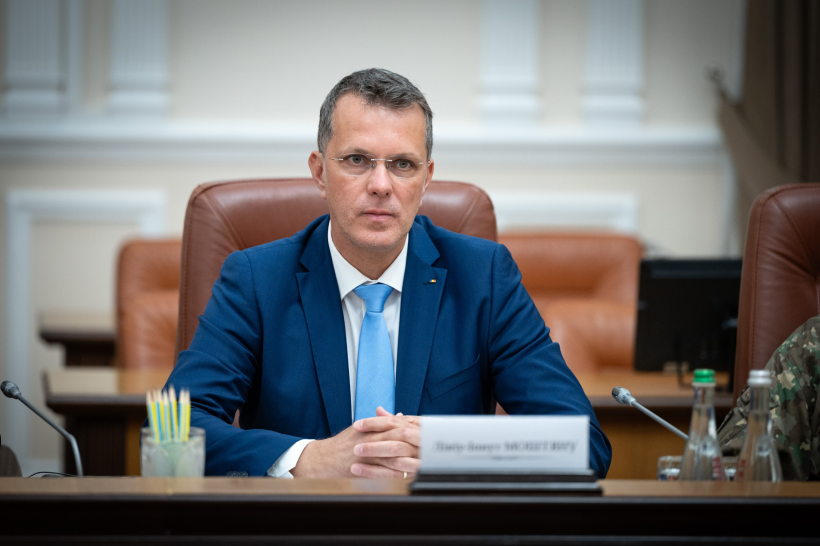
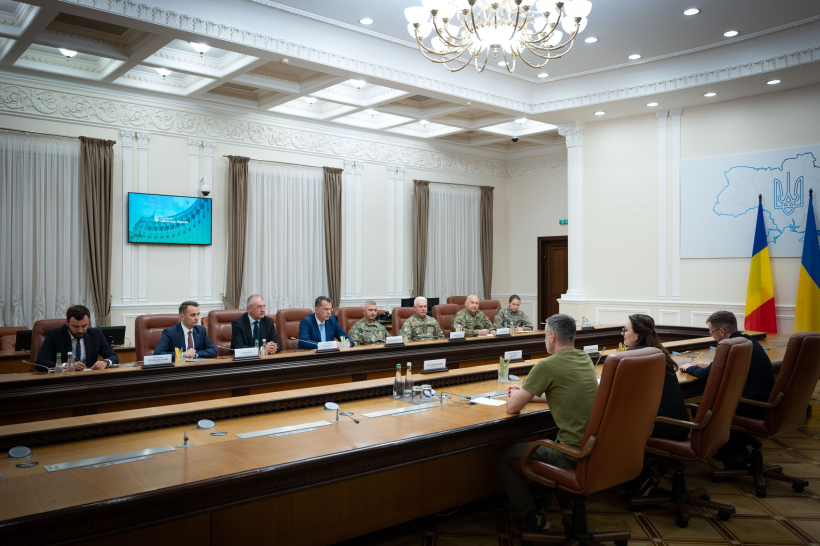
From June 2 to 6, a team of World Bank experts, together with representatives of the Ministry of Finance and the Government of Ukraine, is working on agreeing on the key parameters of a new agreement regarding the “Foundations of Growth” Development Policy Loan. The agreement envisages attracting a loan from the International Bank for Reconstruction and Development (IBRD) in the amount of at least $1 billion in 2025.
“The World Bank is one of Ukraine’s key strategic partners in promoting systemic reforms. We continue our joint work on a new Development Policy Operation (DPO), thanks to which we will not only be able to attract the necessary resources to support the state budget, but also stimulate recovery and economic development. Last year, within this mechanism, $3.5 billion was received into the state budget. This made it possible to cover priority expenses, support financial stability, and implement important reforms, particularly those related to customs and tax policy, state-owned enterprises, the energy sector, the banking sector, and the development of the private sector,” noted Deputy Minister Olga Zykova.
The DPO is a systemic project aimed at supporting reforms in Ukraine. The funds provided by the project will be allocated to the general fund of the state budget upon the fulfillment of specific conditions.
The key reforms concern strengthening the foundations of economic policy aimed at ensuring sustainable growth.
In particular, the parties discussed reform measures in the social sphere, which will be included among the conditions of the new DPO.
“Starting July 1, 2025, Ukraine will launch a pilot programme to introduce basic social assistance. This is a new type of support that will combine several existing social payments into one. Basic assistance will be provided to Ukrainian citizens who meet the eligibility criteria. The base amount will be 4,500 hryvnias.”
It is expected that Ukraine will receive at least $1 billion under the project by the end of 2025. The parties agreed to continue the necessary work on implementing the DPO programme.
Efforts to overcome the negative consequences of Russia’s armed aggression against Ukraine and to restore investment and material-technical support for agricultural production should begin immediately, said Oleksandr Zakharchuk, Head of the Investment and Material-Technical Support Department at the National Scientific Center “Institute of Agrarian Economics” and corresponding member of the National Academy of Agrarian Sciences (NAAS). He made the statement during a Bureau meeting of the NAAS Presidium.
According to calculations by the institute’s researchers, the direct losses suffered by Ukrainian agriculture due to Russia’s full-scale invasion and temporary occupation amounted to $11.2 billion as of early 2025. These include:
$6.5 billion (58%) in destroyed or damaged agricultural machinery;
$1.9 billion (17%) in destroyed or disabled grain storage facilities;
$1.9 billion (17%) in stolen or lost production assets and finished goods;
$0.9 billion (8%) in other forms of damage.
By type of equipment, the largest machinery losses are as follows:
Tractors: approx. 30,000 units
Combines: 2,500 units
Seeders: 11,000 units
Ploughs: 8,700 units
The Institute of Agrarian Economics has identified key strategies for the post-war recovery of agricultural investment and equipment capacity. These include:
Creating an attractive investment climate for rebuilding domestic machinery production and establishing joint ventures to manufacture innovative, high-performance, and eco-friendly equipment;
Simplifying business operations and reducing red tape;
Implementing protectionist policies to limit imports of low-quality, underpriced equipment through quotas and higher tariffs;
Reviving state programs to finance the recovery and development of Ukraine’s agricultural machinery industry;
Encouraging increased production of small-scale machinery;
Involving households and small farms in targeted state programs for agricultural development;
Easing taxation on critical equipment imports to ensure priority access;
Relocating agricultural machinery enterprises and their staff from combat zones and training new specialists.
Zakharchuk concluded that implementing these measures will help agricultural enterprises function and grow effectively, thereby boosting the sector’s performance and strengthening Ukraine’s food security.
On 19 June 2025, the Ukrainian Parliament adopted a new Law “On Public-Private Partnership” (the “PPP Law”), replacing the outdated 2010 legislation. The new Law aligns Ukraine’s PPP framework with international standards (including UNECE PIERS) and offers a simplified, more flexible and investororiented approach.
The PPP Law is currently awaiting the President’s signature and will enter into force three months after its official publication. Additional secondary legislation will be required to implement the new rules in full.
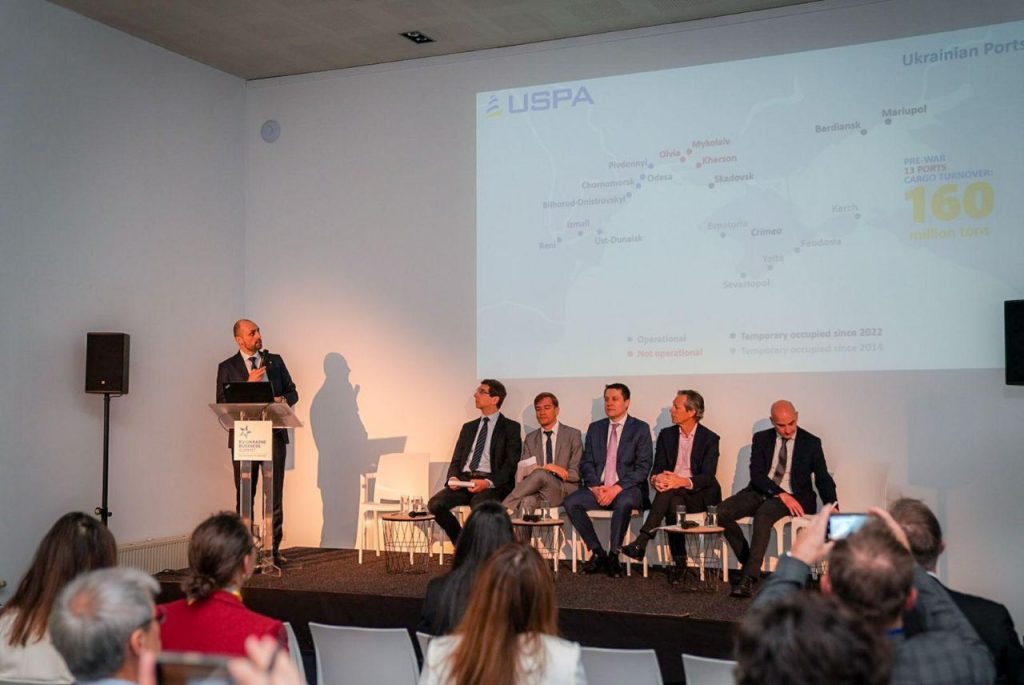
Russian attacks on Ukrainian ports have killed over 30 workers and caused billions of dollars in damage, yet most terminals remain operational.
Edgar Martin of Infospectrum, part of Lloyd’s List Intelligence, provides a brief summary and background of the Ukrainian shipping sector in wartime.
THE full-scale Russian invasion of Ukraine in February 2022 has radically altered Ukrainian shipping.
War has rerouted its trade flows, but it has also displaced a once thriving maritime sector that has had to rapidly adapt to operations, often carried out in exile.
The impact of Russia’s naval blockade at the start of the war was perhaps the most visible aspect of this enforced sectoral transformation.
The closure of Black Sea ports meant that Ukraine’s hitherto largely ignored Danube terminals came into their own and started handling more cargo than most had previously assumed possible.
A seven-metre draught restriction limits these facilities to small vessels (typically no more than 10,000 dwt) and resulted in significant levels of congestion. But while other countries talked theoretically about supply chain resilience, Ukraine delivered it.
A UN- and Turkey-brokered Grain Initiative initially got things moving, but since September 2023, a Ukrainian-managed Safe Corridor has enabled the transport of over 120m tonnes (76m of which is agricultural products), according to government figures. This, in part, has come via the widespread support of Ukrainian operators.
According to Lloyd’s List Intelligence vessel tracking data, an average of 198 grain-carrying vessels called at Ukraine’s Black Sea ports each month in 2024.
Intensive and frequent aerial bombardment by Russia of Ukrainian Black Sea and Danube port facilities has had a devastating impact. Due to limited reporting on damage to strategic infrastructure, only certain details have been revealed, but at least 30 port workers have been killed, and estimates of the cost and timescale to repair or rebuild terminal facilities is in the several billion US dollars, over at least five years. Nevertheless, most terminals continue to operate.
But it is not just the loss of life and damage to infrastructure that has changed Ukrainian shipping.
Prior to the war, Ukrainian shipping was dominated by charter operators based in Odesa. Most now, however, operate “in exile” from Glyfada and other suburbs of Athens.
Many had branches in Greece long before the war, but since the fighting began much of Ukraine’s shipping operations have decamped to Athens on a semi-permanent basis.
These companies are acclimatising and have started to employ more Greek and international staff; they are firmly regarded as Ukrainian for the time being, but it is unclear how long this will last.
Will they return to Ukraine after the war? Many believe that they will return to Odesa, although with most men prohibited from leaving Ukraine during wartime, there may be some resentment when those who did leave go back.
Meanwhile, during the war two major Ukrainian grain trading groups (Kernel and Agroprosperis) decided to invest in their own tonnage, a major (although small scale at present) new development flagged by many Ukrainian shipping observers as a hopeful step potentially towards a major new fleet for the country.
Shipping out of the Soviet shadow
Dramatic changes have been witnessed over the course of the war, some for the better and Ukrainian shipping is far different from where it stood at its exit from the USSR 34 years ago.
The Soviet-era Odesa-based Black Sea Shipping Company (Blasco) was supposedly the largest shipping company in Europe by the late 1980s, but its fleet quickly and suspiciously dispersed in the early-to-mid 1990s.
Some of the fleet remained managed by “apartment companies” based in Ukrainian ports for a little longer, but were eventually sold on or scrapped. Despite the limited continuation of the US drinks giant’s Soviet era “Pepsi for Ships” scheme, which planned to build tankers in Ukrainian shipyards, there was no serious fleet replacement.
Nevertheless, world-class seafarer training centres remained (and remain today). This has led to the almost continuous expansion of Ukraine’s crewing agency sector. Today, Ukraine is widely estimated to have around 150,000 active seafarers, ranking the country in the top five or six seafaring nations globally.
By the late 1990s, many shipping managers had moved to the chartering departments of Ukrainian industrial producers and grain traders, groups that by then had to charter from the global shipping market. Other shipping professionals established or were employed by newly formed charter operators, principally aimed at serving the aforementioned two huge sectors. Initially, Industrial Carriers Inc. (ICI), dominated the local market; it was registered in the Marshall Islands in 1999, operated from Odesa, but collapsed in 2008, reportedly with substantial debts.
Newly incorporated Odesa-based charter operators from the mid-to-late 2000s started to change the market for the better. Aquavita and the group of companies initially led by Phaethon International Company SA (Phaethon) of Panama from 2009 led the way with open and professional operations, with both rapidly expanding in the 2010s. Odesa became well-known for being the centre of a large charter operator sector, behind which were mainly local shipping professionals mostly supported by local money (large business groups or “oligarchs” are not known to have been involved). Whilst not registered in Ukraine, most charter operators have local administrative subsidiaries.
Aquavita continues to dominate the market. Newer companies, such as BPG Shipping Company DMCC (BPG) of the United Arab Emirates (incorporated in 2017) have also grown rapidly. Aquavita and BPG were both originally managed from Odesa, but they had offices in Athens from before 2022. These and many other companies strictly have no Russian dealings, although, to the surprise of many, certain Ukrainian charter operators continue to handle Russian cargoes.
Reputation reclaimed
Despite the sometimes-troubled reputation of the Ukrainian shipping sector, which may stem from the rapid break-up of Blasco, and later ICI, the majority of professional and open Odesa-based companies were largely successful in turning the reputation of Ukrainian shipping around by the late 2010s.
By operating professionally and competitively, certain companies have seen considerable financial success. The principals of several Ukrainian charter operators have invested in their own tonnage in recent years, although the owned units are often managed entirely separately from the group’s operation of third-party tonnage. Meanwhile, other charter operators have moved into the provision of commercial and technical management services for third-party clients. More traditional shipowning and management structures have also existed in Ukraine for several years, such as the 12-strong fleet of the Intresco group.
From the Wild West of the 1990s and later the failure of ICI, dependable charter operators and vessel managers have expanded in scope and size. Perhaps most critically, their reputation has improved. Many of these companies have proved themselves over many years to be reliable partners. For many companies this has continued despite the Russian invasion.
Rogue elements remain, but for those who undertake suitable due diligence, even during wartime they will find world-leading charter operators, vessel managers, professional charterers at grain trading groups, and top-quality seafarers and officers in Ukraine.
Edgar Martin is Infospectrum head for Central & Eastern Europe
The We Build Ukraine think tank develops systemic solutions for the restoration and development of key sectors of the Ukrainian economy, including transport infrastructure and logistics.
In the short and medium term, our goal is to prepare an action plan and recommendations to strengthen cooperation with international partners, as well as to create conditions for attracting large-scale investments in the country’s recovery and modernization.
This policy brief outlines the key challenges and opportunities in the field of logistics and transport infrastructure, summarizes relevant analytical data, and draws on the results of a sectoral conference on logistics held by the We Build Ukraine team.
INTRODUCTION
The Economic Growth Strategy of Ukraine, developed jointly by the Boston Consulting Group and the We Build Ukraine think tank, identifies logistics as one of the four key drivers of growth, along with access to finance, labor, and telecom infrastructure. Logistics has become a critical pillar for the resilience of the Ukrainian economy since the start of the full-scale invasion in 2022: it has helped to maintain export channels, ensure defense capabilities, and support critical imports.
However, during the first decades of independence, the transportation system remained chronically underfunded. And the war led to large-scale destruction, further complicating the development of logistics and deepening structural challenges.
In this context, European integration is of key importance. The opening of EU accession negotiations in 2024 means that Ukraine needs to adapt its transport policy and logistics routes to EU standards on a large scale. In particular, Ukraine needs to implement the acquis communautaire directives in the transport sector, modernize its infrastructure in line with TEN-T requirements, and ensure long-term integration into the European transportation market. The development of connectivity through Solidarity Lanes is only the first step in this direction.
To effectively transform the infrastructure sector, Ukraine needs strategic program planning at both the central and local levels. Such programs should be integrated into the overall economic strategy and based on a clear system for evaluating, prioritizing, and monitoring investment projects.
As of March 2025, Ukraine has updated its National Transport Strategy until 2030, is preparing roadmaps as part of the negotiation process with the EU, and is developing strategic projects in the logistics sector under the Ukraine Facility Program. Some communities have already approved mobility plans, including the development and consideration of multimodal hub concepts, but there is currently no unified approach or guidelines for the local level.
Updating the legal framework should be an integral part of the reform. We are talking about:
the Law on Railway Transport;
a law on the specifics of privatization of port infrastructure facilities;
updating legislation on concessions and public-private partnerships;
reforms in the area of tariff setting (railroad, port, and airline fees);
strengthening the capacity of regulators.
High-quality preparation of investment projects is impossible without legal certainty and institutional capacity. It is necessary to ensure a link between the scale of an infrastructure project and the real economic prospects of the region. To do this, it is important to assess the match between infrastructure supply and projected demand for logistics services, production clusters, agricultural or industrial activity in the project’s area of influence.
According to the EBRD, it is impossible to evaluate a logistics center in isolation from the overall infrastructure. Each logistics facility must be considered in conjunction with the rail, road, sea and air transport network, as well as trade flows, access roads and the geo-economic perspective of the region.
Today, it is not just about physical restoration; the goal should be to create a new quality of logistics: digital, multimodal, EU-oriented, energy efficient, and open to private capital. This requires the simultaneous modernization of assets, updating the regulatory framework, adjusting tariff policy, and launching tools to attract large-scale private investment, including in the form of public-private partnerships.
RAILWAY TRANSPORTATION
Transformation of Ukrzaliznytsia and new regulation
The railway industry remains strategic for Ukraine, both in the defense sector and in the context of European integration and sustainable exports. As part of the Ukraine Facility program, Ukraine’s key commitment is to adopt the Law on Railway Transport in the third quarter of 2025. This law should become the basis for gradual liberalization of the market, opening access for private traction, establishing an independent regulator, and introducing fair and transparent rules for access to infrastructure. As of March 2025, the draft law was registered by the Government of Ukraine in the Verkhovna Rada of Ukraine.
The law sets out the framework for market liberalization, tariff regulation, transport safety guarantees, and conditions for investment in the industry, as well as the separation of passenger and freight transportation into separate legal entities, and the creation of an infrastructure company.
Tariff policy and efficiency
The current tariff model does not encourage the efficient use of rail transport. This is especially true for transportation to ports, where delivery costs are often uncompetitive. A step-by-step adjustment of the tariff policy is needed, which should be based on:
the real cost of transportation,
the needs of export-oriented industries,
competitiveness with alternative logistics routes.
Asset optimization
UZ needs a systemic transformation of its asset management model. It should focus on the development of key operating segments (infrastructure, traction, freight rolling stock, logistics hubs) and gradually withdraw non-core assets from the balance sheet. This will allow the company to focus financial and management resources on modernization and improving the quality of services.
1435 mm projects: interoperability with the EU
The development of 1435 mm railway infrastructure is a prerequisite for Ukraine’s integration into the European transportation market. Projects of this type help to reduce border crossing time, minimize transshipment costs and ensure the continuity of logistics chains.
Example: Mostyska II – Nyzhankovychi – State Border – Khyriv project. As part of this pilot project, preparations are already underway for the construction of infrastructure for a 1435 mm gauge, including the modernization of border sections. This will directly connect Ukraine with the TEN-T corridors of Poland, which will have a significant effect on agricultural exports, container transportation, and freight transit.
SEAPORTS
Challenges and reserves
Ukraine’s seaports remain the main channel for exports of agricultural, metallurgical, and other products, but their capacity has been significantly reduced due to the hostilities and security risks. RDNA4 estimates that direct losses of port infrastructure amount to about $0.6 billion. Due to the blockade of the Greater Odesa ports, part of the cargo flows were redirected to alternative routes, in particular to the ports of the Danube cluster.
The Danube ports of Izmail, Reni, and Ust-Dunaisk have become a critical reserve for exports, including grain, oil, containers, and steel products. In 2023, transshipment through the Danube exceeded 14 million tons, almost twice the pre-war volume. At the same time, the cluster’s capacity is almost exhausted, requiring intensive investment in expansion, dredging, logistics, and railway infrastructure.
Support for the Danube Cluster
In order to ensure the functioning of the Danube cluster ports in the event of partial or full opening of the Black Sea ports in the territories controlled by the Government of Ukraine, it is necessary to take urgent measures to stimulate the competitiveness of the Danube ports, which can always serve as a kind of plan B for access to the Black Sea, to maintain their financial and operational stability, it is proposed to introduce a program to support these ports, including:
optimization of the level of port dues by amending the regulatory documents of the body that forms the policy in this area, which will allow for the creation of incentive conditions for transshipment;
introducing separate tariff regulation for rail transportation for the directions serving the cluster’s ports.
Financial autonomy for ports
State-owned enterprises that manage port infrastructure should be given the financial flexibility to invest in rehabilitation. After years of underfunding and significant war damage, the Black Sea ports’ infrastructure is in critical condition: worn-out berths, insufficient capacity, need for dredging and upgrading of access logistics.
To return the ports to pre-war levels of operational efficiency, it is necessary to implement a set of capital projects, ranging from the reconstruction of hydraulic structures to the modernization of logistics approaches. Approximately, in the ports of Mykolaiv, Kherson, Odesa, and Chornomorsk, the total investment needs could reach $200 million.
In this context, it is advisable to provide a mechanism for releasing the internal resources of state-owned enterprises by exempting USPA and other water companies from the obligation to pay part of their net profit to the state budget for 5 years after the end of the war, or limiting this amount to 20%. Provided that the freed-up funds are used exclusively for capital investments in strategic facilities, this will create an effective model for the restoration and development of port infrastructure.
Institutional steps
To ensure long-term attraction of private investment, the legal framework needs to be updated.
The law on the peculiarities of privatization of port infrastructure facilities should regulate the procedures for transferring hydraulic structures, berths and terminals to private use on transparent and predictable terms.
The Cabinet of Ministers should approve a unified procedure for allocating water fund land for the reconstruction and construction of port and hydraulic structures. This will accelerate the implementation of projects in the Danube and Black Sea clusters, as well as increase the confidence of donors and private investors.
AVIATION
Role in the logistics system
Ukraine’s aviation sector is of strategic importance for both population mobility and high-value logistics. We are talking about critical cargo: medicines, electronics, spare parts for high-tech production, and defense products.
As of the end of 2024, some airports are completely destroyed, while others are mothballed or in need of major repairs. This requires careful assessment, prioritization, and coordination with the post-war civilian airport network to avoid a fragmented approach to recovery.
Given the possible conclusion of peace agreements and a ceasefire in 2025, the opening of some airports to civil aviation may become a reality. Priority will be given to Boryspil, Lviv, Kyiv (Zhuliany), and Odesa airports. At the same time, full recovery of the industry is impossible without a comprehensive vision of its role in the country’s new logistics system.
The infrastructure of many key airports is in critical or deteriorated condition and requires significant investment to improve. The reconstruction of runways and other infrastructure at other airports in Ukraine will require a more detailed study and prioritization of projects in accordance with the defined post-war civilian airport network.
The post-war model of aviation infrastructure can be based on the development of regional airports with cargo functions integrated into multimodal chains. The priority is to create logistics hubs with high cargo handling speeds, convenient access to road and rail infrastructure, and modern navigation and security systems.
Support tools
Suggested:
create a special fund within the state budget (for a period of 5 years after the end of the war) to finance the war:
restoration and development of airport infrastructure,
covering sustainable capital (CAPEX) and operational (OPEX) expenditures for operational airports;
develop a mechanism for compensating operating costs for selected regional airports (on a competitive basis) that are ready to accept civilian flights or create cargo services;
involve the private sector in the management of passenger and cargo terminals, in particular through concessions, management contracts, and public-private partnerships.
MULTIMODALITY
The development of modern logistics in Ukraine is impossible without a transition to multimodal solutions. This means integrating rail, water, road and air transport into a single transportation system with a focus on efficiency, environmental friendliness and business convenience.
Ukraine should synchronize infrastructure development with the requirements of TEN-T and the EU’s DG MOVE strategies, in particular in terms of:
development of domestic and border logistics hubs;
connecting ports, airports and railway junctions to the TEN-T network;
digitalization of logistics routes.
RDNA4 estimates the need to restore multimodal infrastructure at more than $3.6 billion, including hub stations, combined transport terminals, rail approaches to ports, and logistics centers. Some of these facilities are already included in the Ukraine Facility’s project portfolio.
Roads
Road transport remains critically important for internal mobility, humanitarian logistics, border crossing services, and connections to multimodal hubs.
Restoring the operation of the State Road Fund (SRF) and ensuring proper financing of road infrastructure are critically important for Ukraine.
According to the World Bank’s RDNA4 report, about $30 billion is needed to restore state roads over the next 10 years. An important part of this will be spent on restoring bridges and municipal roads.
Stable funding from the State Road Fund, which consists of the excise tax on fuel and other sources, will not only restore the existing road infrastructure but also maintain it in good condition, which, in turn, will stimulate economic development and improve the quality of transportation services in Ukraine.
The economic impact of road rehabilitation will be manifested in the creation of new jobs, attraction of private investment, and increased competitiveness of transport corridors. Improving the condition of roads and bridges will help reduce transportation costs, increase logistics efficiency, and facilitate market access for local producers.
Green transport and digitalization
New logistics should be energy efficient, digital, and transparent. It is suggested, if possible:
stimulate the use of electric traction, the purchase of zero-emission locomotives, and support for green port terminals;
to ensure the introduction of electronic consignment notes (e-CN) and unified digital solutions in customs clearance that are compatible with the EU;
use analytical platforms to manage cargo flows, monitor congestion, and optimize routes.
Particular attention should be paid to the deployment of digital services at border crossings, including automation of clearance and synchronization with data from foreign customs services.
CONCLUSIONS
A single strategy for recovery
Ukraine needs a consolidated, integrated strategy for the post-war reconstruction of its transportation and logistics infrastructure. Such a strategy should include:
railway infrastructure and interoperability projects;
restoration of ports, including the Danube cluster;
development of multimodal logistics hubs;
digital transformation of logistics;
rebuilding roads and bridges;
resuscitating the aviation industry as part of high-value cargo logistics.
This document should become not just a framework, but a practical tool for programming investments (including for the purposes of the Ukraine Facility), setting priorities for international partners, and synchronizing the actions of all levels of government.
The strategy should not focus on creating new institutions but on strengthening the capacity of existing structures to implement projects. The focus should be on:
transparent mechanisms for project selection and implementation;
reforming tariff policy;
deregulation and legal predictability for investors;
creating conditions for long-term attraction of private capital.
All infrastructure decisions should be made on the basis of an assessment of the economic potential of the regions, forecasted cargo flow, realistic models of operation and integration into European transport corridors.
Only such a holistic model will allow not only to restore what has been destroyed, but also to create a competitive, sustainable and strategically oriented new generation of logistics.
Maintaining and improving the efficiency of Ukraine’s transport system for international trade is vital in supporting the competitiveness of the country in global markets, especially since most of Ukraine’s exports are low-profit-margin commodities that are sensitive to transport costs. While the sector’s resilience has been remarkable in adapting to the challenges experienced since February 2022, the existing infrastructure is being stressed by these new trade dynamics for which the system was not initially designed to serve in full. Congestion at land border crossing points, downscaled operations at the ports, and a lack of specialized equipment, to name three factors, have driven up transport costs and reduced operational efficiency. Besides such current challenges, in the medium term, Ukraine’s reconstruction and economic recovery will require transport services and infrastructure that support its growth and competitiveness in the region and internationally. Responding to this context, the objective of this Report is twofold: to present the major developments in Ukraine’s transport sector for international trade since February 2022, elucidating how alterations in trade structure and the changing availability of road, rail and port infrastructure have affected freight volumes, how freight is moved, and the costs of moving it; and more forward-looking, to identify high-level strategic actions that can not only make the transport sector more efficient in responding to current trading challenges but also enhance its operational capacity in the medium term, based on expected developments in freight transport.
The We Build Ukraine think tank develops systemic solutions for the restoration and development of key sectors of the Ukrainian economy, including transport infrastructure and logistics.
In the short and medium term, our goal is to prepare an action plan and recommendations to strengthen cooperation with international partners, as well as to create conditions for attracting large-scale investments in the country’s recovery and modernization.
This policy brief outlines the key challenges and opportunities in the field of logistics and transport infrastructure, summarizes relevant analytical data, and draws on the results of a sectoral conference on logistics held by the We Build Ukraine team.
INTRODUCTION
The Economic Growth Strategy of Ukraine, developed jointly by the Boston Consulting Group and the We Build Ukraine think tank, identifies logistics as one of the four key drivers of growth, along with access to finance, labor, and telecom infrastructure. Logistics has become a critical pillar for the resilience of the Ukrainian economy since the start of the full-scale invasion in 2022: it has helped to maintain export channels, ensure defense capabilities, and support critical imports.
However, during the first decades of independence, the transportation system remained chronically underfunded. And the war led to large-scale destruction, further complicating the development of logistics and deepening structural challenges.
In this context, European integration is of key importance. The opening of EU accession negotiations in 2024 means that Ukraine needs to adapt its transport policy and logistics routes to EU standards on a large scale. In particular, Ukraine needs to implement the acquis communautaire directives in the transport sector, modernize its infrastructure in line with TEN-T requirements, and ensure long-term integration into the European transportation market. The development of connectivity through Solidarity Lanes is only the first step in this direction.
To effectively transform the infrastructure sector, Ukraine needs strategic program planning at both the central and local levels. Such programs should be integrated into the overall economic strategy and based on a clear system for evaluating, prioritizing, and monitoring investment projects.
As of March 2025, Ukraine has updated its National Transport Strategy until 2030, is preparing roadmaps as part of the negotiation process with the EU, and is developing strategic projects in the logistics sector under the Ukraine Facility Program. Some communities have already approved mobility plans, including the development and consideration of multimodal hub concepts, but there is currently no unified approach or guidelines for the local level.
Updating the legal framework should be an integral part of the reform. We are talking about:
● the Law on Railway Transport;
● a law on the specifics of privatization of port infrastructure facilities;
● updating legislation on concessions and public-private partnerships;
● reforms in the area of tariff setting (railroad, port, and airline fees);
● strengthening the capacity of regulators.
High-quality preparation of investment projects is impossible without legal certainty and institutional capacity. It is necessary to ensure a link between the scale of an infrastructure project and the real economic prospects of the region. To do this, it is important to assess the match between infrastructure supply and projected demand for logistics services, production clusters, agricultural or industrial activity in the project’s area of influence.
According to the EBRD, it is impossible to evaluate a logistics center in isolation from the overall infrastructure. Each logistics facility must be considered in conjunction with the rail, road, sea and air transport network, as well as trade flows, access roads and the geo-economic perspective of the region.
Today, it is not just about physical restoration; the goal should be to create a new quality of logistics: digital, multimodal, EU-oriented, energy efficient, and open to private capital. This requires the simultaneous modernization of assets, updating the regulatory framework, adjusting tariff policy, and launching tools to attract large-scale private investment, including in the form of public-private partnerships.
RAILWAY TRANSPORTATION
Transformation of Ukrzaliznytsia and new regulation
The railway industry remains strategic for Ukraine, both in the defense sector and in the context of European integration and sustainable exports. As part of the Ukraine Facility program, Ukraine’s key commitment is to adopt the Law on Railway Transport in the third quarter of 2025. This law should become the basis for gradual liberalization of the market, opening access for private traction, establishing an independent regulator, and introducing fair and transparent rules for access to infrastructure. As of March 2025, the draft law was registered by the Government of Ukraine in the Verkhovna Rada of Ukraine.
The law sets out the framework for market liberalization, tariff regulation, transport safety guarantees, and conditions for investment in the industry, as well as the separation of passenger and freight transportation into separate legal entities, and the creation of an infrastructure company.
Tariff policy and efficiency
The current tariff model does not encourage the efficient use of rail transport. This is especially true for transportation to ports, where delivery costs are often uncompetitive. A step-by-step adjustment of the tariff policy is needed, which should be based on:
● the real cost of transportation,
● the needs of export-oriented industries,
● competitiveness with alternative logistics routes.
Asset optimization
UZ needs a systemic transformation of its asset management model. It should focus on the development of key operating segments (infrastructure, traction, freight rolling stock, logistics hubs) and gradually withdraw non-core assets from the balance sheet. This will allow the company to focus financial and management resources on modernization and improving the quality of services.
1435 mm projects: interoperability with the EU
The development of 1435 mm railway infrastructure is a prerequisite for Ukraine’s integration into the European transportation market. Projects of this type help to reduce border crossing time, minimize transshipment costs and ensure the continuity of logistics chains.
Example: Mostyska II – Nyzhankovychi – State Border – Khyriv project. As part of this pilot project, preparations are already underway for the construction of infrastructure for a 1435 mm gauge, including the modernization of border sections. This will directly connect Ukraine with the TEN-T corridors of Poland, which will have a significant effect on agricultural exports, container transportation, and freight transit.
SEAPORTS
Challenges and reserves
Ukraine’s seaports remain the main channel for exports of agricultural, metallurgical, and other products, but their capacity has been significantly reduced due to the hostilities and security risks. RDNA4 estimates that direct losses of port infrastructure amount to about $0.6 billion. Due to the blockade of the Greater Odesa ports, part of the cargo flows were redirected to alternative routes, in particular to the ports of the Danube cluster.
The Danube ports of Izmail, Reni, and Ust-Dunaisk have become a critical reserve for exports, including grain, oil, containers, and steel products. In 2023, transshipment through the Danube exceeded 14 million tons, almost twice the pre-war volume. At the same time, the cluster’s capacity is almost exhausted, requiring intensive investment in expansion, dredging, logistics, and railway infrastructure.
Support for the Danube Cluster
In order to ensure the functioning of the Danube cluster ports in the event of partial or full opening of the Black Sea ports in the territories controlled by the Government of Ukraine, it is necessary to take urgent measures to stimulate the competitiveness of the Danube ports, which can always serve as a kind of plan B for access to the Black Sea, to maintain their financial and operational stability, it is proposed to introduce a program to support these ports, including:
● optimization of the level of port dues by amending the regulatory documents of the body that forms the policy in this area, which will allow for the creation of incentive conditions for transshipment;
● introducing separate tariff regulation for rail transportation for the directions serving the cluster’s ports.
Financial autonomy for ports
State-owned enterprises that manage port infrastructure should be given the financial flexibility to invest in rehabilitation. After years of underfunding and significant war damage, the Black Sea ports’ infrastructure is in critical condition: worn-out berths, insufficient capacity, need for dredging and upgrading of access logistics.
To return the ports to pre-war levels of operational efficiency, it is necessary to implement a set of capital projects, ranging from the reconstruction of hydraulic structures to the modernization of logistics approaches. Approximately, in the ports of Mykolaiv, Kherson, Odesa, and Chornomorsk, the total investment needs could reach $200 million.
In this context, it is advisable to provide a mechanism for releasing the internal resources of state-owned enterprises by exempting USPA and other water companies from the obligation to pay part of their net profit to the state budget for 5 years after the end of the war, or limiting this amount to 20%. Provided that the freed-up funds are used exclusively for capital investments in strategic facilities, this will create an effective model for the restoration and development of port infrastructure.
Institutional steps
To ensure long-term attraction of private investment, the legal framework needs to be updated.
● The law on the peculiarities of privatization of port infrastructure facilities should regulate the procedures for transferring hydraulic structures, berths and terminals to private use on transparent and predictable terms.
● The Cabinet of Ministers should approve a unified procedure for allocating water fund land for the reconstruction and construction of port and hydraulic structures. This will accelerate the implementation of projects in the Danube and Black Sea clusters, as well as increase the confidence of donors and private investors.
AVIATION
Role in the logistics system
Ukraine’s aviation sector is of strategic importance for both population mobility and high-value logistics. We are talking about critical cargo: medicines, electronics, spare parts for high-tech production, and defense products.
As of the end of 2024, some airports are completely destroyed, while others are mothballed or in need of major repairs. This requires careful assessment, prioritization, and coordination with the post-war civilian airport network to avoid a fragmented approach to recovery.
Given the possible conclusion of peace agreements and a ceasefire in 2025, the opening of some airports to civil aviation may become a reality. Priority will be given to Boryspil, Lviv, Kyiv (Zhuliany), and Odesa airports. At the same time, full recovery of the industry is impossible without a comprehensive vision of its role in the country’s new logistics system.
The infrastructure of many key airports is in critical or deteriorated condition and requires significant investment to improve. The reconstruction of runways and other infrastructure at other airports in Ukraine will require a more detailed study and prioritization of projects in accordance with the defined post-war civilian airport network.
The post-war model of aviation infrastructure can be based on the development of regional airports with cargo functions integrated into multimodal chains. The priority is to create logistics hubs with high cargo handling speeds, convenient access to road and rail infrastructure, and modern navigation and security systems.
Support tools
Suggested:
create a special fund within the state budget (for a period of 5 years after the end of the war) to finance the war:
restoration and development of airport infrastructure,
covering sustainable capital (CAPEX) and operational (OPEX) expenditures for operational airports;
develop a mechanism for compensating operating costs for selected regional airports (on a competitive basis) that are ready to accept civilian flights or create cargo services;
Involve the private sector in the management of passenger and cargo terminals, in particular through concessions, management contracts, and public-private partnerships.
MULTIMODALITY
The development of modern logistics in Ukraine is impossible without a transition to multimodal solutions. This means integrating rail, water, road and air transport into a single transportation system with a focus on efficiency, environmental friendliness and business convenience.
Ukraine should synchronize infrastructure development with the requirements of TEN-T and the EU’s DG MOVE strategies, in particular in terms of:
development of domestic and border logistics hubs;
connecting ports, airports and railway junctions to the TEN-T network;
digitalization of logistics routes.
RDNA4 estimates the need to restore multimodal infrastructure at more than $3.6 billion, including hub stations, combined transport terminals, rail approaches to ports, and logistics centers. Some of these facilities are already included in the Ukraine Facility’s project portfolio.
Roads
Road transport remains critically important for internal mobility, humanitarian logistics, border crossing services, and connections to multimodal hubs.
Restoring the operation of the State Road Fund (SRF) and ensuring proper financing of road infrastructure are critically important for Ukraine.
According to the World Bank’s RDNA4 report, about $30 billion is needed to restore state roads over the next 10 years. An important part of this will be spent on restoring bridges and municipal roads.
Stable funding from the State Road Fund, which consists of the excise tax on fuel and other sources, will not only restore the existing road infrastructure but also maintain it in good condition, which, in turn, will stimulate economic development and improve the quality of transportation services in Ukraine.
The economic impact of road rehabilitation will be manifested in the creation of new jobs, attraction of private investment, and increased competitiveness of transport corridors. Improving the condition of roads and bridges will help reduce transportation costs, increase logistics efficiency, and facilitate market access for local producers.
Green transport and digitalization
New logistics should be energy efficient, digital, and transparent. It is suggested, if possible:
● stimulate the use of electric traction, the purchase of zero-emission locomotives, and support for green port terminals;
● to ensure the introduction of electronic consignment notes (e-CN) and unified digital solutions in customs clearance that are compatible with the EU;
● use analytical platforms to manage cargo flows, monitor congestion, and optimize routes.
Particular attention should be paid to the deployment of digital services at border crossings, including automation of clearance and synchronization with data from foreign customs services.
CONCLUSIONS
A single strategy for recovery
Ukraine needs a consolidated, integrated strategy for the post-war reconstruction of its transportation and logistics infrastructure. Such a strategy should include:
● railway infrastructure and interoperability projects;
● restoration of ports, including the Danube cluster;
● development of multimodal logistics hubs;
● digital transformation of logistics;
● rebuilding roads and bridges;
● resuscitating the aviation industry as part of high-value cargo logistics.
This document should become not just a framework, but a practical tool for programming investments (including for the purposes of the Ukraine Facility), setting priorities for international partners, and synchronizing the actions of all levels of government.
The strategy should not focus on creating new institutions but on strengthening the capacity of existing structures to implement projects. The focus should be on:
● transparent mechanisms for project selection and implementation;
● reforming tariff policy;
● deregulation and legal predictability for investors;
● creating conditions for long-term attraction of private capital.
All infrastructure decisions should be made on the basis of an assessment of the economic potential of the regions, forecasted cargo flow, realistic models of operation and integration into European transport corridors.
Only such a holistic model will allow not only to restore what has been destroyed, but also to create a competitive, sustainable and strategically oriented new generation of logistics.
Three years into Russia’s invasion, the toll on Ukraine’s economy and its people is devastating. The country will need at least $524 billion over the next decade to repair and rebuild.
Context
Ukraine Remains Resilient
Three years into Russia’s invasion, the toll on Ukraine’s economy and its people is devastating.
Russia’s invasion of Ukraine continues to cause staggering losses to people and the economy. Poverty in Ukraine has increased by at least 1.8 million people since the start of 2022, rising to 9 million.
While many are suffering, the government and the people of Ukraine continue to show remarkable resilience in the face of extensive devastation. Children are attending school and Ukraine has kept critical social and health services and business running.
Ukraine’s private sector has also demonstrated incredible durability yet faces considerable challenges as it navigates the ongoing disruption and its economic aftermath. While exports have resumed, financial fragility persists, particularly for small businesses.
The country will need at least $524 billion over the next decade to repair and rebuild the country, which is approximately 2.8 times the estimated nominal GDP for 2024, according to the February 2025 Rapid Damage and Needs Assessment (RDNA4).
Substantial infrastructure damage and extensive electricity disruptions are likely to slow economic growth to 3.2% in 2024 and 2% in 2025.
In the energy sector, there has been a 70% increase in damaged or destroyed assets in the last year, including power generation, transmission, distribution infrastructure, and district heating, according to RDNA4. Also, 13% of the total housing stock has been damaged or destroyed, affecting more than 2.5 million households.
Reconstruction and recovery needs are the highest in the housing sector (almost $84 billion) followed by the transport sector (almost $78 billion), the energy and extractives sector (almost $68 billion), the commerce and industry sector (over $64 billion), and the agriculture sector (over $55 billion). Across all sectors, the cost of debris clearance and management alone reaches almost $13 billion.
Prioritizing investments in recovery and reconstruction will be critical for Ukraine’s EU Accession and long-term resilience. These efforts aim to rebuild the country’s infrastructure, revive its economy, and strengthen its institutional framework in alignment with EU standards. Recovery provides an opportunity to address the destruction caused by the ongoing invasion and also to build back better by adopting innovative solutions and reforms that meet the expectations of EU membership.
Mobilizing the private sector remains critical to Ukraine’s successful recovery and reconstruction. Many firms have started to invest in repairs and resilience, including through distributed energy solutions such as gas power plants, solar panels, and biogas. Based on earlier IFC estimates, the private sector could potentially cover a third of total needs, providing an essential complement to public investment.
Strategy
Donor Support
Donor contributions channeled through Bank projects are helping to sustain public services, repair infrastructure, and support agriculture.
These commitments and pledges leverage innovative instruments, such as IBRD and IDA loans, IBRD loans guaranteed by partners, donor grants and equity, IFC blended finance and MIGA guarantees.
The World Bank Group’s Role
The World Bank Group is uniquely positioned to help rebuild Ukraine as it brings strong oversight practices and expertise in reconstruction, particularly in agriculture, energy, infrastructure/transport and social sectors, as well as global experience in supporting development-oriented reforms.
We have expanded existing projects, established multi-donor trust funds, and channeled guarantees and parallel financing from donor countries. We routinely monitor our Ukraine portfolio for evidence of fraud and corruption and have robust mechanisms in place to swiftly deal with any reports of irregularities.
We primarily work in areas where other organizations are not present, such as in Ukraine’s social sectors, including health, social protection, and education. We collaborate with bilateral and other multilateral development banks including the IMF and EU (on reforms), EBRD and EIB (on investment). We are harmonizing procurement practices in Ukraine with other MDBs.
With support from a dedicated group of Ukraine’s partners, we are supporting the needs of 20 million Ukrainians.
The World Bank Group (IBRD, IFC, and MIGA) is working with the Ukrainian government and partners to identify opportunities for private financing of Ukraine’s reconstruction. Reforms that prepare Ukraine to rebuild and improve the investment climate are critical. The government has asked the World Bank Group for advice on reforms and investments to prepare the country for EU accession (many of which have been included in the “Ukraine Plan” with the EU).
World Bank
PEACE Project. Donor support has been channeled through the World Bank’s Public Expenditures for Administrative Capacity Enhancement (PEACE) project to help Ukraine’s government meet urgent needs and maintain public services. PEACE has helped the government continue to function by providing budgetary support and sustaining its capacity to deliver essential public services. Our support for Ukraine includes additional protections and oversight measures, including audits, to make sure financing reaches its intended recipients. For example, the PEACE Project retroactively funds basic, eligible expenditures only after a verification process confirms payments have gone to the intended beneficiaries. After the government pays its civil servants, teachers, and other emergency workers, we verify the payments and then reimburse the government. This helps to ensure the money is going to the intended recipients.
This support has reached 15 million Ukrainians providing wages for government and school employees, pensions for the elderly, salaries for public servants, and funding social programs for the vulnerable.
The World Bank also launched framework projects to respond to priority needs, support recovery and build capacity for reconstruction in health, energy, transport, housing, agriculture and education. These emergency operations mobilize partner resources through an innovative and flexible design that allows funds to be disbursed quickly, scaled as necessary, and able to absorb additional financing. The projects include appropriate fiduciary, environmental and social safeguards. IBRD funding is secured through bilateral guarantees provided by development partners.
The Bank is also supporting development policy and investment operations needed to strengthen the country’s economic policy framework and enhance its macro-financial stability as well as provide urgent relief to households, support reforms of public resources expenditures and help markets function better.
IFC
With enabling reforms, the private sector can cover 1/3 of reconstruction needs and remains key to economic resilience. IFC, with its focus on the private sector, has stood by Ukraine since the first day of the invasion and continues to provide support. Initially focused on short-term support such as guarantees and liquidity, IFC has shifted toward longer-term financing, including capital investment in areas, such as food production, telecom, technology, construction, and energy. We are leveraging our advisory services and financing to support key sectors, including energy, transport and logistics, housing, agribusiness, and financial institutions, to ensure comprehensive support for Ukraine’s private sector. Since February 2022, IFC has delivered $2.2 billion to support Ukraine’s private sector, including $760 million mobilized, as part of its Economic Resilience Action program. Concessional finance from partners continues to be critical to derisking and scaling private sector investments. Development partners also continue to fund IFC’s advisory and upstream (pre-investment) programs in Ukraine – supporting private sector resilience, conducting sector analysis, and building capacity for reconstruction.
MIGA
Since Russia’s invasion, MIGA has issued six guarantees in Ukraine. MIGA also established the SURE Trust Fund to help deploy a two-fold strategy in the country: (a) enable private investment by providing guarantees – political risk insurance (PRI), trade finance guarantees, and credit enhancement – to investors and lenders; (b) ensure that projects are implemented in accordance with global best practices on integrity, environmental, social, and climate standards.
Amid limited availability of private reinsurance, the SURE Trust Fund enables MIGA’s guarantee issuance in Ukraine by sharing up to 75% of the risk. In the immediate term, MIGA is providing guarantees to support trade in essential goods, continued bank lending to firms including SMEs, as well real sector projects that have clear demonstration effects. Once peace returns, MIGA expects to use the reinsurance market to provide PRI guarantees for real sector projects at scale.
URTF
To swiftly mobilize efforts for reconstruction, the World Bank has established the Ukraine Relief, Recovery, Reconstruction and Reform Trust Fund (URTF), a multi-donor fund to channel grant contributions from donor partners.The URTF’s objectives are to help sustain the country’s administrative and service delivery capacity, conduct relief efforts, as well as to support the planning and implementation of Ukraine’s recovery, resilient reconstruction, and reform agenda.
The URTF supports the World Bank’s Framework Projects and ensures that the Ukrainian authorities can quickly and effectively utilize these critical investments and leverage the multiple sources of financing efficiently and at scale.
Partners
Donor governments: Austria, Belgium, Canada, Denmark, Finland, Germany, Italy, Japan, Latvia, Lithuania, Iceland, Indonesia, Ireland, the Netherlands, Norway, the Republic of Korea, Sweden, Switzerland, Spain, the United Kingdom, and the United States.
The We Build Ukraine think tank develops systemic solutions for the accelerated recovery of key sectors of Ukraine’s economy. These sectors include construction and infrastructure, which are crucial for the sustainable development of the state, attracting investment, and creating a new quality of life and business environment.
This white paper is based on the results of the sectoral conference “Construction and Infrastructure: Key Sectors for Economic Growth,” which was held in Kyiv on April 24, 2025, by the We Build Ukraine think tank with the participation of a wide range of businesses, Ukrainian parliamentarians, representatives of Ukraine’s donors and partners, and international financial institutions. This white paper contains general analytical conclusions on the transformation of these sectors in the context of post-war reconstruction. The paper aims to formulate a common vision, reform priorities, and practical mechanisms for interaction between the state, business, and international partners.
INTRODUCTION
The construction sector in Ukraine is entering a phase of strategic importance, both in terms of expected investment volumes and its impact on the country’s economic model. The focus is not only on eliminating the consequences of destruction, but also on building systemic capacity to implement long-term, complex, and large-scale infrastructure projects in conditions of war and recovery.
According to analytical estimates, construction has the potential to grow from 3–4% to over 10% of GDP and become one of the main sources of multiplier effect: development of materials production, formation of new clusters, stimulation of employment and localization. At the same time, the sector needs a restart — both in terms of investment confidence and the efficiency of procedures, the capacity and readiness of personnel, the existence of clear and understandable rules for business and transparent government planning.
During the conference, speakers and participants confirmed that a window of opportunity is open for Ukraine: international partners are demonstrating their readiness to invest, production capacities have been partially preserved, and a vision has been formulated. At the same time, without a decisive change in institutional approaches and a transition to a unified strategy for action, this chance may be lost.
This document is based on a strategic study by the Boston Consulting Group, which was developed in close cooperation with the We Build Ukraine think tank and identifies construction as one of the key sectors for GDP growth in the post-war period. In addition, the paper summarizes the results of the conference “Construction and Infrastructure: Key Sectors for Economic Growth.” A survey of participants was conducted during the event on key points of corruption pressure and systemic barriers in the field of urban development. The data obtained confirm the business demand for deregulation, transparency in the issuance of permits through digital tools, and the updating of market surveillance tools.
The white paper formulates a consolidated vision for the sector’s development and practical recommendations for the government, investors, and businesses, with a focus on reform, building trust, and creating domestic production and logistics capacities as a basis for extensive capital raising.
Thus, it is not just a matter of rebuilding what has been destroyed — the goal must be to develop a modern construction industry that meets EU requirements: sustainable, transparent, technically advanced, and open to competition. This requires alignment with European standards in planning, licensing, materials, and approaches to project management. At the same time, it is necessary to update the regulatory framework, simplify licensing procedures, harmonize market conditions for national and international players, and introduce predictable mechanisms for partnership between business and the state.
RECOVERY.
PARTNERSHIP FOR DEVELOPMENT
Institutional Weakness — a Key Barrier to Large-Scale Reconstruction
Despite the political will to implement infrastructure projects, the sector remains fragmented at both the national and local levels. State institutions are losing their ability to make quick and considered decisions due to frequent staff changes, weak interagency coordination, and a low level of institutional memory. In most cases, local communities do not have up-to-date spatial plans, which makes it impossible to develop transparent investment proposals.
This situation is complicated by the fact that key stakeholders in the process — businesses and international donors and partners — don’t have enough confidence in the predictability of the regulatory environment. Their interaction with government institutions often breaks down into isolated initiatives instead of working within a consistent policy framework.
A survey conducted among conference participants confirmed systemic barriers: almost 50% of respondents consider the lack of clear permits and procedures to be the main problem, and over 20% consider the instability of the rules of the game to be the main problem.
Business and international partners constantly emphasize that without clear conditions and institutional stability, it is impossible to launch large-scale recovery programs.
Business is Ready to Invest — But Demands Predictability
The private sector experience presented at the conference demonstrates the readiness of businesses to invest in construction, logistics, local production of materials, and housing. At the same time, the lack of tools for interaction with the state was highlighted: the absence of standard contracts, the complexity of obtaining permits, and the lack of transparent state investment packages.
Some companies are already implementing projects or preparing to do so (particularly in the areas of wind energy, bioethanol, and logistics hubs), but all emphasize the importance of institutional support—predictable regulatory decisions, access to up-to-date planning, and simplified approval procedures. Analytical findings show that without an active role for the state as a catalyst — in the form of stable regulation, clear conditions, and practical mechanisms for promotion and interaction — investors will not be able to scale up projects to industrial level.
The Service State as a Condition for Scaling Up. Coordination and Accountability
The construction industry will not be able to realize its potential without changing the philosophy of public administration — from manual administration to a service model of interaction with customers, investors, and communities. This requires the introduction of digital spatial planning registers, transparent project evaluation and selection procedures, and the prioritization of investments based on unified criteria.
During the discussions, the need to create a single point of entry to ensure strategic planning, coordination of decisions, and effective allocation of resources in the field of reconstruction was repeatedly emphasized. Such a tool should not only work with central authorities but also provide practical support to communities, including documentation templates, model projects, methodological materials, and technical support at all stages of project implementation.
The successful implementation of large-scale reconstruction programs requires not only managerial discipline, but also the formation of a sustainable coordination mechanism between all levels of government, business, and international partners. This refers to a permanent platform that will allow for the coordination of priorities, the consolidation of resources, and the assignment of responsibility for results. Providing communities with access to planning tools, model solutions, and technical support is critical to ensuring that reconstruction is not concentrated in large cities but becomes a comprehensive process across the country.
SUMMARY
Large-scale recovery in Ukraine is impossible without a reboot of approaches to institutional interaction. National and local levels of public administration need a change in philosophy — from fragmented and reactive to service-oriented and coordinated. Businesses and international partners are ready to invest in the construction industry, but they
expect transparent procedures, stable rules, and clear formats for cooperation. Communities, meanwhile, are left without the tools to transform plans into projects, and without this, national ambitions cannot be realized. Central to this process is the formation of a platform where the state not only regulates but also acts as a provider of strategic decisions, a coordinator, and a partner.
BARRIERS AND SYSTEMIC OBSTACLES
TO THE IMPLEMENTATION
OF INFRASTRUCTURE PROJECTS
Large-scale infrastructure recovery is impossible without the actual launch of projects on the ground — from technical and economic feasibility studies to the signing of contracts, completion of construction, and commissioning. However, the project cycle in Ukraine is currently burdened by a significant number of barriers, which relate not only to complex procedures but also to structural mistrust between participants. The licensing system, contract management, planning, accountability, and control all function not as a single system but as fragmented and often contradictory mechanisms.
Conference participants and analytical documents unanimously point to deep gaps between investor expectations and actual market conditions. The situation is complicated by a lack of transparent technical standards, overlapping authorities, unpredictable regulatory decisions, and a lack of support for customers and contractors at all levels. This section describes the most critical issues holding back the implementation of infrastructure projects and outlines the changes needed to overcome them.
The Gap Between Investor Expectations and National Procedures
There is a persistent gap between the expectations of the private sector, both national and international, and the actual practices of project implementation in Ukraine. Conference participants repeatedly pointed to the complexity and non-transparency of licensing procedures, the lack of standardized contract forms, and significant fluctuations in approaches to project planning. In many cases, companies are forced to adapt technical documentation on their own, adjusting to an uncompetitive and archaic regulatory framework. The lack of a unified list of source data for spatial planning creates additional uncertainty and opens the door to abuse during the approval process. In particular, the not-so-clear process for approving deviations from building codes often becomes a place for informal pressure or corruption.
These barriers significantly slow down the preparation of investment projects and create risks for international partners. In particular, there is a mismatch between the approaches commonly used in the EU (e.g., contracts based on FIDIC, NEC, or EPC formats) and Ukrainian requirements, which often come down to unpredictable demands from regulators.
It should be emphasized that a large number of market participants note the critical situation with the issue of “Soviet” methods of cost estimation, which is common for both the construction industry as a whole and public procurement: the difference between the resource-element method of pricing in construction in Ukraine, which is based on normative and estimated indicators and normative prices for labor and material and technical resources (rather than actual market prices), and European and international methods of estimating costs using aggregate prices per unit of measurement at all stages of an infrastructure project. The market notes that this practice creates opportunities for corruption in Ukraine, as market changes are not taken into account and the cost of individual works is deliberately underestimated or overestimated.
This gap is widened by the lack of publicly available tools and templates: even large companies note that they are forced to negotiate with each authority separately, without being able to rely on transparent logic or an open regulatory framework. As a result, investors postpone or scale back projects, and in some cases withdraw altogether.
Conflict of Powers and Responsibilities: Fragmentation Instead of Governance
One of the key systemic problems that was the subject of particular attention at the conference is the conflict of responsibility between different institutions involved in the implementation of infrastructure projects. Different levels of government — from central ministries to local administrations and self-government bodies — often have unclear or overlapping powers, leading to decision-making paralysis. Coordination processes take weeks or months, and legal responsibility is often not linked to actual control over the process.
Participants in the discussion noted that even when there is political will to implement a project, interagency barriers block progress in practice. Formal powers are not backed up by real resources or instruments of influence. As a result, instead of a vertical implementation structure, a horizontal conflict zone emerges, where each body makes decisions within its own narrow comfort zone, regardless of the common goal.
This fragmentation of management directly affects project timelines, costs, and the efficiency of resource use. As a result, investors and donors face not only corruption risks, but also operational risks: adoption of changes to the feasibility study/design documentation, replacement of technical solutions, revision of the order of implementation, or refusal to accept certain works due to formal restrictions on the powers of a particular authority or contractor.
Transparency Without Trust: How Permits and Controls Block Projects
Despite the availability of electronic tools and declared openness, the system of permits and supervision in the construction sector remains non-transparent, overregulated, and vulnerable to abuse. This not only creates risks of corruption but also breeds persistent mistrust between the state and business. Even formally transparent procedures are often accompanied by informal restrictions, significant human influence in the issuance of permits, double interpretation of requirements, or unexpected blockages at the final stages of approval.
The conference repeatedly raised the issue that transparency does not guarantee predictability: market participants cannot calculate the duration of procedures, and regulators retain the ability to halt the process without clear grounds. Some speakers directly pointed to situations where licensing authorities do not formally refuse but delay approval or return documents for formal reasons.
The existence of an electronic system does not eliminate the human factor if there are no standard templates for decisions, deadlines, and accountability mechanisms. Entrepreneurs and investors are often forced to bend the rules, negotiate through other channels, or lose opportunities due to delays in decision-making. In the long run, this blocks the entry of new players, especially international ones.
Failure After Signing the Contract:
Lack of Support and Implementation Capacity
Even successful completion of the selection procedures and signing of the contract does not guarantee that the infrastructure project will be implemented on time, in full, and in line with expectations. During implementation, it often turns out that institutional support is limited or non-existent. The structures that should accompany implementation either do not function properly or do not have sufficient powers to manage the process effectively after the contract is signed.
This creates a systemic gap between planning and implementation: customers and contractors face inconsistencies, delays in decision-making, changes in input data, and the absence of a responsible entity capable of ensuring the integrity of implementation. Decisions are often made anew, and technical or organizational issues trigger a chain reaction of repeated approvals. This loss of management continuity leads to delays, revisions of work volumes and, in some cases, conflicts and disputes.
This is most noticeable at the local customer level. Communities don’t have access to standard control formats, methodological support, or professional guidance. Problems are particularly critical at the final stage: non-transparent registration of readiness for operation, unjustified delays or disregard for commissioning, and the absence of a single supervisory body to verify the facility’s compliance with the approved project documentation. In some cases, commissioning takes place in violation of the rules, and refusal may be based on a subjective interpretation of the requirements.
A Life Cycle Without Logic:
Project as a Sum of Fragments
Most of the barriers hindering the implementation of infrastructure projects are not just procedural — they are rooted in the lack of a single logic for managing the entire life cycle. In Ukraine, projects are often not viewed as a holistic process: planning, permitting, financing, implementation, monitoring, and completion all exist as separate segments operating in different legal and institutional spheres.
This fragmentation creates chaos in which it is impossible to ensure either rhythmic execution or control over changes. Each stage has its own stakeholders, its own procedures, and is practically unrelated to the previous one. As a result, responsibility for the outcome is lost, and the effectiveness of the system depends not on rules but on the personal efforts of individual performers. This approach is critically inconsistent with the scale and complexity of the tasks facing the reconstruction of Ukraine.
SUMMARY
The key conclusion is that barriers to project implementation are systemic in nature. They arise not only from individual regulatory flaws but also from fragmented powers, a lack of managerial continuity, and the absence of a service-oriented approach at all stages. Mistrust between participants, a lack of standard solutions, and uncertainty after contract signing reduce the effectiveness of even well-prepared and structured projects.
CHALLENGES OF THE WAR
AND POST-WAR PERIOD
Reconstruction in Wartime:
Instability, Risks and Distorted Priorities
Infrastructure restoration in conditions of full-scale war has a fundamentally different dynamic than in peacetime. Wartime logic influences all stages, from planning to implementation. Needs are shaped by the pressure of an emergency situation, and decisions are often made without full justification and with a short-term perspective. Conference participants repeatedly noted that in such conditions it is difficult to ensure the sustainability of projects, planning that considers future needs, or coordination between sectors.
Instead of systemic priorities, decisions are made based on the immediate availability of resources or political considerations. This distorts the logic of strategic planning: projects are built according to administrative orders, without considering spatial plans or effectiveness assessments. At the same time, contractors are forced to work without guarantees of safety, insurance, or compensation, which significantly increases the cost of work and reduces investor interest.
The lack of specialized risk assessment mechanisms for projects in potentially dangerous areas (in particular, those close to the front line or critical infrastructure) makes it impossible to form portfolios suitable for financing. This limits the range of participants, makes it impossible to attract credit funds, and encourages “point solutions” that are poorly integrated into the long-term reconstruction model.
One of the critical challenges that distinguishes the post-war period is the lack of an effective mechanism for insuring infrastructure projects in risk areas. Business remains virtually the only party responsible for the physical safety of facilities, completion deadlines, and financial losses in the event of repeated destruction. While government agencies operate with concepts of force majeure, private contractors have no access to any protection instruments that would reduce implementation risks.
This situation leads to selectivity in participation: companies prefer projects in relatively safe regions or demand higher safety coefficients, which affects budgets, competition, and deadlines. For many foreign companies, the lack of insurance mechanisms or state guarantees is the main factor deterring them from entering the Ukrainian market. The absence of precedents, compensation cases, or a clear role for the state in risk distribution creates an atmosphere of high uncertainty.
Conference participants repeatedly emphasized that without a systematic insurance mechanism for projects in the potential disaster zone, reconstruction will remain sporadic, focusing on “low-risk” projects, and will not be able to cover the entire territory of the country in a comprehensive manner.
International Trust Under Pressure:
the Need for a New Model of Interaction
After three years of full-scale war, international partners expect not only new projects, but also a change in the model of interaction. Funding is no longer provided automatically — donors are increasingly demanding clear reporting, transparency of procedures, and real accountability for results. Representatives of business and foreign agencies have repeatedly emphasized that further support for reconstruction is only possible if trust is demonstrated through actions, not declarations.
At the same time, the international community’s fatigue is manifested in reduced flexibility — more and more funding programs require standard competitive selection, linkage to specific indicators, or proven impact. In such conditions, Ukraine’s main asset is its ability to create conditions for transparent competition, minimize corruption risks, and increase the predictability of decisions at all stages of the project cycle.
It is no longer a question of adapting to an emergency, but of transitioning to a stable governance regime capable of ensuring a new level of trust. Otherwise, the risk of losing investment support will increase even in the most critical sectors.
High Corruption Risks at Every Stage
of a Construction Project Implementation
Outdated Urban Planning Documentation
Any construction project implemented within the community must comply with the requirements set out in urban planning documentation (spatial development plans).
Much of the existing urban planning documentation is outdated and needs to be updated, amended, or completely revised and redeveloped. At the local level, it is usually limited to areas within settlements and does not include areas outside their boundaries. Outdated urban planning documentation results in numerous obstacles for economic operators who intend to build legally.
Market participants draw attention to the fact that previously adopted decisions in the field of spatial planning are being revoked after investors have already invested funds in the implementation of relevant projects. Given the lack of compensation as a result of such decisions, this situation has an extremely negative impact on the willingness of potential investors to invest in the development of the relevant territories.
Obtaining Initial Data: Urban Planning
Conditions and Restrictions
According to market participants, one of the most vulnerable procedures to abuse in the construction sector remains the issuance of urban planning conditions and restrictions. A document that should be issued automatically as an extract from urban planning documentation has become a tool for local officials to extort bribes. Typical practices include delays in consideration, demands for documents not required by current legislation, and unfounded and arbitrary refusals to issue urban planning conditions and restrictions. This leads to the formation of an informal market for intermediary services, without which the implementation of most construction projects is virtually impossible
There is no extrajudicial procedure for appealing urban planning conditions and restrictions, and the judicial procedure is very time-consuming. An analysis of court practice shows that there are numerous cases where courts have ordered urban planning authorities to issue urban planning conditions and restrictions, which indicates that this is a systemic problem.
Permit to Start Construction Work
The procedure for obtaining construction permits in Ukraine remains complex and vulnerable to abuse. The lack of an automated decision-making system — with verification of submitted information through state registers — leads to the preservation of the “human factor,” which is often used to create obstacles.
Typical problems include deliberate delays, unreasonable demands, and refusal to issue permits without clear grounds. At the same time, there are currently no effective mechanisms for holding officials accountable for violations of the procedure for providing administrative services.
The State Architecture and Urban Planning Inspectorate of Ukraine (DIAM), which was established in December 2020 and has established itself as a service body free of corruption, issues permits only for high-impact facilities, which account for no more than 20% of all permits. As a result, some construction clients are forced to inflate the impact class of a facility in order to avoid interaction with local licensing authorities and fall under the jurisdiction of the DIAM.
Commissioning of an Object
During the process of commissioning completed construction projects, corrupt practices have developed involving officials creating artificial obstacles for the customer in order to obtain bribes for issuing certificates confirming the commissioning of the completed projects. Most abuses occur at the stage of on-site inspection of the facility, when its compliance with the submitted documents, approved project documentation, and construction standards is assessed. At the same time, according to market participants, similar abuses are not observed in cases where commissioning is carried out directly by DIAM.
Architectural and Construction Control and Supervision
The procedures for implementing state architectural and construction control and supervision measures contain a significant number of discretionary powers for architectural and construction control and supervision bodies. This includes, in particular, the possibility to selectively conduct or not conduct inspections, make decisions to suspend work or avoid responding, and issue unfounded orders to suspend preparatory or construction work. This situation creates a breeding ground for administrative pressure and corruption.
Market participants draw particular attention to the problem of monopolization of the market for accreditation of consulting engineers authorized to perform technical supervision. The limited number of accredited specialists and the lack of transparent rules for market entry distort competition and may affect the impartiality of control.
In addition, imperfect regulation of author and technical supervision procedures opens up opportunities for informal influence on the results of inspections. Market participants point to cases of obtaining undue benefits for providing so-called “positive” conclusions of author and/or technical supervision.
Technical Regulation Defects
Current legislation requires compliance with building regulations, including during major repairs and reconstruction, which in practice is not always technically possible, because the building was constructed according to other (previous) building regulations. This prompts construction customers to obtain an additional administrative service — approval of justified deviations from building regulations.
At the same time, the imperfections of the current approach to pricing in construction lead to the development of poor-quality cost estimates in project documentation, particularly in terms of overestimating construction costs.
SUMMARY
Recovery in wartime and transition to post-war development require qualitatively new approaches to risk management, institutional accountability, and models of interaction with partners. Today, infrastructure decisions are often made in emergency mode, without strategic justification, leading to inefficient use of resources, loss of trust, and inability to scale up. At the same time, businesses and international donors do not have sufficient guarantees regarding investment protection, procedural transparency, and the state’s implementation capacity. Rethinking the insurance system, the role of the state as a guarantor of stability, and creating new formats of trust are key to recovery that will be systemic rather than piecemeal.
FURTHER STEPS TO STRENGTHEN THE STRATEGIC FRAMEWORK FOR RECONSTRUCTION
Despite the systemic challenges and priorities outlined above, further policy development in the construction and infrastructure sector requires a deeper analysis of a number of issues highlighted in the BCG strategic study and during professional discussions at the conference.
CONCLUSIONS
The restoration of Ukraine is not just a technical reconstruction process, but an opportunity for a profound transformation of the entire system of governance, the investment environment, and the interaction between the state, business, and international partners. The construction industry and related infrastructure have the potential to become drivers of long-term economic growth. However, this potential will not be realized without removing key systemic barriers: fragmented responsibility, non-transparent procedures, lack of institutional capacity, inconsistent priorities, and lack of risk sharing.
Conference participants clearly outlined the demand — for stability, predictability, practical support, and a new model of public administration. This applies to the central level as well as to communities, businesses, the expert community, and donors. Without a change in approach — from manual reactions to systematic coordination — even the best-prepared, structured, and funded programs will remain isolated.
Recovery must move from crisis response mode — where decisions are made urgently, without long-term logic — to stable, managed development policies. Only through common rules of the game, the distribution of responsibilities, and the strengthening of trust can reconstruction become large-scale modernization, rather than a collection of isolated decisions.
Hamburger Hafen und Logistik AG (HHLA) is purchasing 60% of the shares of Intermodal Terminal Eurobridge LLC in Batiovo, western Ukraine.
This was reported by CTS citing NDR.
The terminal will operate under the name HHLA Eurobridge Batiovo as a joint venture between HHLA International GmbH and the Ukrainian investment company Fortior Capital LLC.
“HHLA has been operating in Ukraine for over 20 years. Ukraine remains an important growth market with great potential for intermodal freight transport. Our goal is to create a strong intermodal corridor between the EU and Ukraine, thereby promoting economic integration,” said HHLA CEO Angela Titzrat.”
HHLA will acquire a controlling stake and continue to develop the terminal together with its rail subsidiary METRANS.
“The Eurobridge terminal is currently undergoing a large-scale modernization — transforming the bulk cargo terminal into an intermodal hub for container transport. Container operations are planned for Q4 2025,” added Philip Swins, Managing Director of HHLA International GmbH.”
HHLA Eurobridge Batiovo is located near the EU border at the intersection of international rail corridors, making it an important hub for freight traffic between Ukraine, Hungary, and Slovakia.