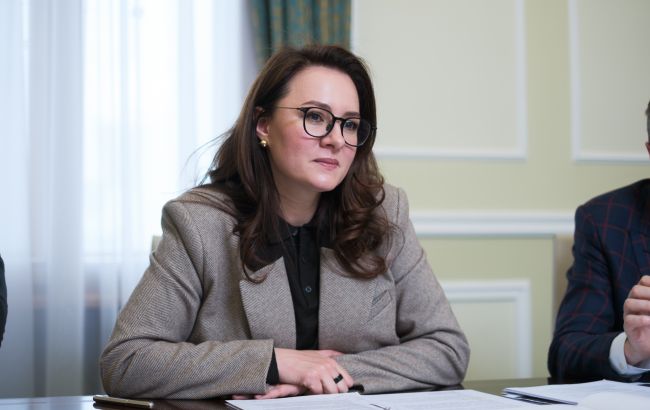
Yuliia Svyrydenko, the Minister of Economy of Ukraine, in an interview with RBK-Ukraine (jointly with other members of the negotiating team that worked on the agreement), explained how the Investment Fund would work in the framework of the Minerals Agreement between Ukraine and the US.
She notes that over the next 10 years, the Fund will invest in Ukraine in projects related to critical materials, oil, gas, as well as infrastructure (ports and terminals).
In Washington, Yuliia Svyrydenko signed just one agreement on the creation of the Fund. It is to be ratified on Thursday, May 8. The remaining agreements will be commercial in nature and will no longer be signed by the government. On the Ukrainian part, the signatory is the Agency for the Support of Public-Private Partnerships (PPP), on the US part, the signatory is the International Development Finance Corporation (DFC).
The document provides profit distribution only after 10 years; until that moment, there will be only investments and only in Ukraine. At the moment of signing, shares in the Fund in Ukraine and the United States are the same: 50/50. Further, there is an opportunity to make additional contributions.
On April 30, Ukraine and the United States signed an agreement on economic cooperation, which provides for the creation of the Investment Fund. To launch it, it will be necessary to sign two more documents, the drafts of which are still being prepared. Just on May 8, the text of the agreement is expected to be ratified by the Supreme Council of Ukraine.
Previously, USM reported that in the framework of the old agreement on minerals, Donald Trump wanted full control over Ukrainian ports.
Poland has launched a program worth 250 million zlotys to support business projects of its companies in Ukraine. The Ministry of Economy of Ukraine reports that Poland has allocated 250 million PLN (ca. 58.25 million EUR) for preferential loans for companies that will be involved in projects on the restoration of Ukraine. The program started on April 22, 2025.
The maximum amount of one loan makes up 10 million PLN (2.33 million EUR), the interest rate is 2% and the repayment period is 12 years. Three partner companies of the Polish Bank Gospodarstwa Krajowego have started accepting applications.
The loans can be used for investments, working capital, export and import development, as well as cooperation between Polish and Ukrainian enterprises.
The program “Credit for Participation in Reconstruction of Ukraine” provides that preferential loans will be used for transportation, logistics, storage of goods and construction materials, development of infrastructure, including roads, railways, energy, water supply, public and housing construction.
In addition, financing is provided for drafting feasibility studies, research and investment projects, as well as activities of medical companies, including manufacturing products such as prostheses and dressings intended for Ukraine.
Terms of preferential loans include the import of services and products from the counterparties from Ukraine and providing goods and services to companies engaged in the reconstruction of the Ukrainian economy, directly supporting their activities.
In addition, loans can be used to purchase real estate in Poland for the construction of warehouses, factories, or plants, if any, related to investment purposes. Some industries have additional preferences.
In early March 2025, the European Commission and EIB signed guarantees for 2 billion EUR for Ukraine’s reconstruction.
At the same time, Ukraine and France agreed on 19 reconstruction projects for 200 million EUR.
In early April, Prime Minister Denys Shmyhal said that in 2025, the total financing gap for Ukraine’s reconstruction needs would be almost 10 billion USD.
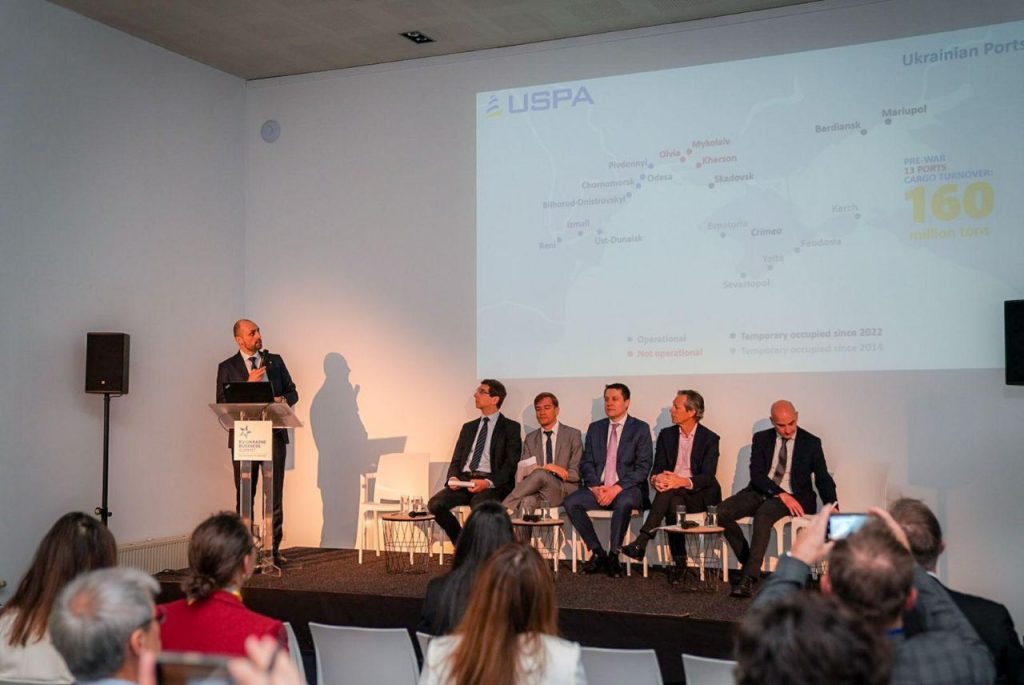
The Ukrainian Sea Ports Authority reports that the Ukraine-EU business summit discussed the restoration of Ukraine through the prism of European reindustrialization.
At the panel discussion dedicated to the port industry development, USPA Chairman Oleksandr Semyrga presented a vision for restoration and modernization of Ukrainian port infrastructure both in wartime and in the long-term perspective.
He focused on the development of the Danube ports as strategic multimodal hubs, as well as the need to restore the damaged infrastructure of the Greater Odesa ports.
Oleksandr Semyrga emphasized, “Today, it is important to build up sustainable partnerships and to strengthen cooperation with the international community. Jointly with the restoration of infrastructure, we are creating a foundation for a modern, competitive, and innovative port system of Ukraine”.
In particular, the USPA confirmed its readiness to implement investment projects in the framework of public-private partnerships, concession mechanisms, and with the support of international financial organizations.
Special attention was drawn to integration of Ukrainian ports into the TEN-T network aimed to strengthen transport sustainability of Europe.
It should be noted that at the seminar “Investments in Ukrainian Ports: Strengthening the Role as Intermodal Hubs” the delegates presented a list of specific initiatives with a high degree of preparation that can be implemented in the short-term prospect.
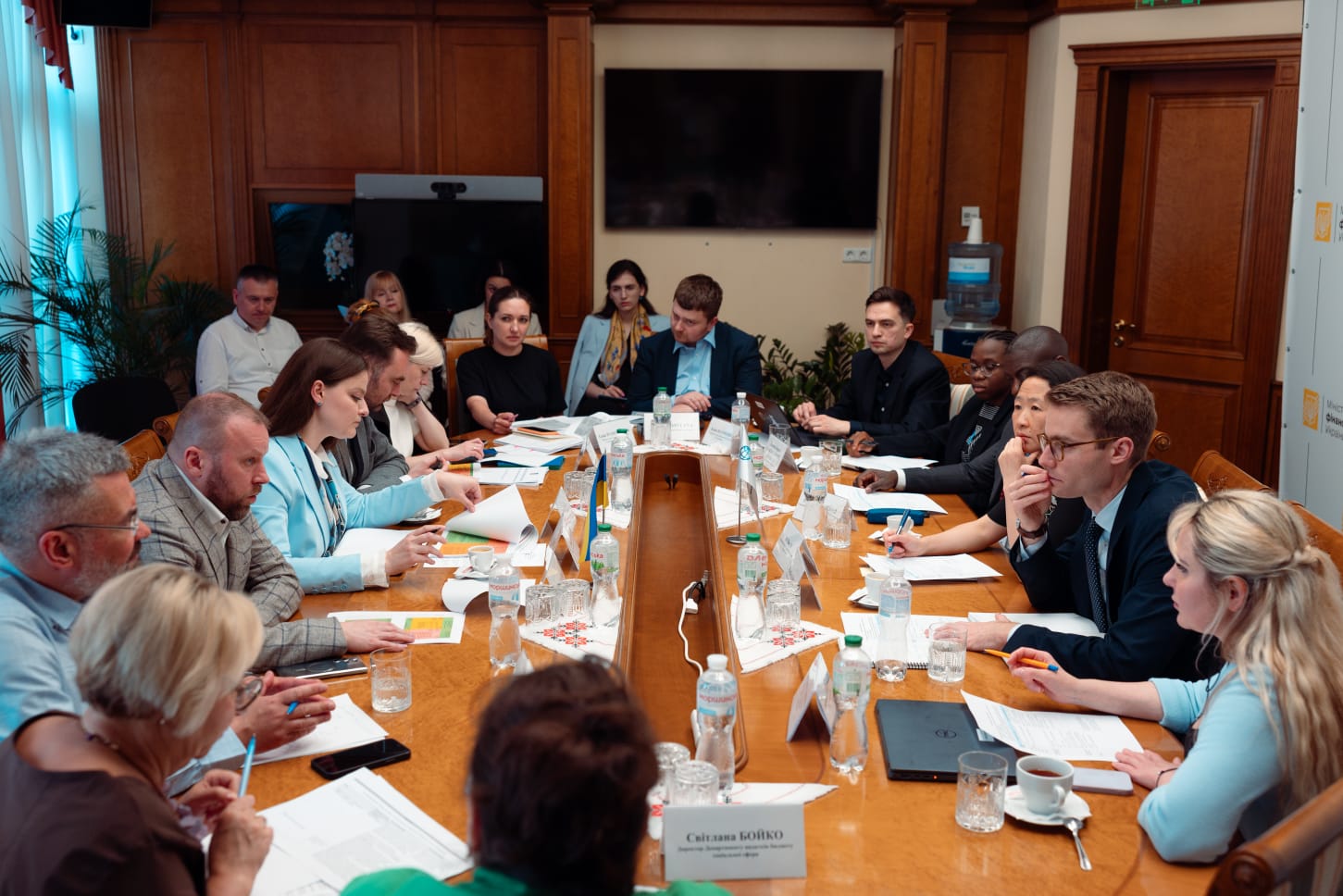
From June 2 to 6, a team of World Bank experts, together with representatives of the Ministry of Finance and the Government of Ukraine, is working on agreeing on the key parameters of a new agreement regarding the “Foundations of Growth” Development Policy Loan. The agreement envisages attracting a loan from the International Bank for Reconstruction and Development (IBRD) in the amount of at least $1 billion in 2025.
“The World Bank is one of Ukraine’s key strategic partners in promoting systemic reforms. We continue our joint work on a new Development Policy Operation (DPO), thanks to which we will not only be able to attract the necessary resources to support the state budget, but also stimulate recovery and economic development. Last year, within this mechanism, $3.5 billion was received into the state budget. This made it possible to cover priority expenses, support financial stability, and implement important reforms, particularly those related to customs and tax policy, state-owned enterprises, the energy sector, the banking sector, and the development of the private sector,” noted Deputy Minister Olga Zykova.
The DPO is a systemic project aimed at supporting reforms in Ukraine. The funds provided by the project will be allocated to the general fund of the state budget upon the fulfillment of specific conditions.
The key reforms concern strengthening the foundations of economic policy aimed at ensuring sustainable growth.
In particular, the parties discussed reform measures in the social sphere, which will be included among the conditions of the new DPO.
“Starting July 1, 2025, Ukraine will launch a pilot programme to introduce basic social assistance. This is a new type of support that will combine several existing social payments into one. Basic assistance will be provided to Ukrainian citizens who meet the eligibility criteria. The base amount will be 4,500 hryvnias.”
It is expected that Ukraine will receive at least $1 billion under the project by the end of 2025. The parties agreed to continue the necessary work on implementing the DPO programme.
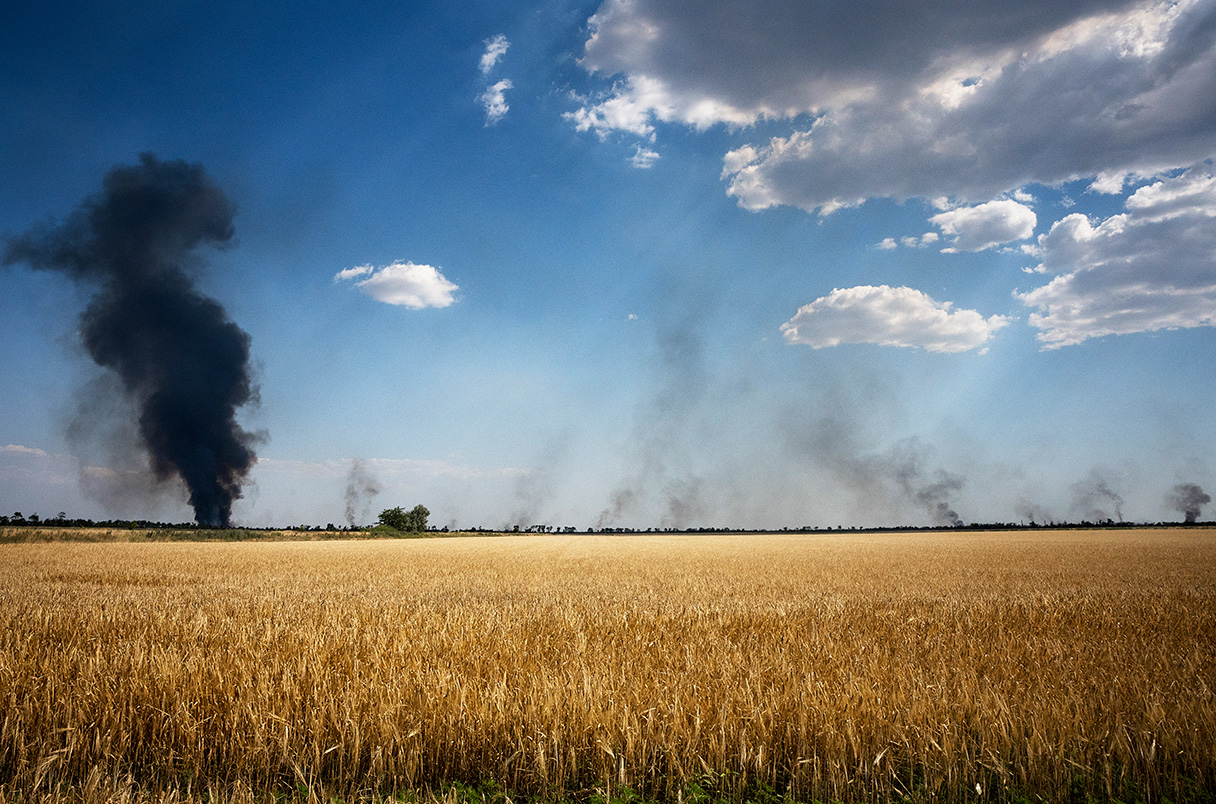
Efforts to overcome the negative consequences of Russia’s armed aggression against Ukraine and to restore investment and material-technical support for agricultural production should begin immediately, said Oleksandr Zakharchuk, Head of the Investment and Material-Technical Support Department at the National Scientific Center “Institute of Agrarian Economics” and corresponding member of the National Academy of Agrarian Sciences (NAAS). He made the statement during a Bureau meeting of the NAAS Presidium.
According to calculations by the institute’s researchers, the direct losses suffered by Ukrainian agriculture due to Russia’s full-scale invasion and temporary occupation amounted to $11.2 billion as of early 2025. These include:
$6.5 billion (58%) in destroyed or damaged agricultural machinery;
$1.9 billion (17%) in destroyed or disabled grain storage facilities;
$1.9 billion (17%) in stolen or lost production assets and finished goods;
$0.9 billion (8%) in other forms of damage.
By type of equipment, the largest machinery losses are as follows:
Tractors: approx. 30,000 units
Combines: 2,500 units
Seeders: 11,000 units
Ploughs: 8,700 units
The Institute of Agrarian Economics has identified key strategies for the post-war recovery of agricultural investment and equipment capacity. These include:
Creating an attractive investment climate for rebuilding domestic machinery production and establishing joint ventures to manufacture innovative, high-performance, and eco-friendly equipment;
Simplifying business operations and reducing red tape;
Implementing protectionist policies to limit imports of low-quality, underpriced equipment through quotas and higher tariffs;
Reviving state programs to finance the recovery and development of Ukraine’s agricultural machinery industry;
Encouraging increased production of small-scale machinery;
Involving households and small farms in targeted state programs for agricultural development;
Easing taxation on critical equipment imports to ensure priority access;
Relocating agricultural machinery enterprises and their staff from combat zones and training new specialists.
Zakharchuk concluded that implementing these measures will help agricultural enterprises function and grow effectively, thereby boosting the sector’s performance and strengthening Ukraine’s food security.
Russian attacks on Ukrainian ports have killed over 30 workers and caused billions of dollars in damage, yet most terminals remain operational.
Edgar Martin of Infospectrum, part of Lloyd’s List Intelligence, provides a brief summary and background of the Ukrainian shipping sector in wartime.
THE full-scale Russian invasion of Ukraine in February 2022 has radically altered Ukrainian shipping.
War has rerouted its trade flows, but it has also displaced a once thriving maritime sector that has had to rapidly adapt to operations, often carried out in exile.
The impact of Russia’s naval blockade at the start of the war was perhaps the most visible aspect of this enforced sectoral transformation.
The closure of Black Sea ports meant that Ukraine’s hitherto largely ignored Danube terminals came into their own and started handling more cargo than most had previously assumed possible.
A seven-metre draught restriction limits these facilities to small vessels (typically no more than 10,000 dwt) and resulted in significant levels of congestion. But while other countries talked theoretically about supply chain resilience, Ukraine delivered it.
A UN- and Turkey-brokered Grain Initiative initially got things moving, but since September 2023, a Ukrainian-managed Safe Corridor has enabled the transport of over 120m tonnes (76m of which is agricultural products), according to government figures. This, in part, has come via the widespread support of Ukrainian operators.
According to Lloyd’s List Intelligence vessel tracking data, an average of 198 grain-carrying vessels called at Ukraine’s Black Sea ports each month in 2024.
Intensive and frequent aerial bombardment by Russia of Ukrainian Black Sea and Danube port facilities has had a devastating impact. Due to limited reporting on damage to strategic infrastructure, only certain details have been revealed, but at least 30 port workers have been killed, and estimates of the cost and timescale to repair or rebuild terminal facilities is in the several billion US dollars, over at least five years. Nevertheless, most terminals continue to operate.
But it is not just the loss of life and damage to infrastructure that has changed Ukrainian shipping.
Prior to the war, Ukrainian shipping was dominated by charter operators based in Odesa. Most now, however, operate “in exile” from Glyfada and other suburbs of Athens.
Many had branches in Greece long before the war, but since the fighting began much of Ukraine’s shipping operations have decamped to Athens on a semi-permanent basis.
These companies are acclimatising and have started to employ more Greek and international staff; they are firmly regarded as Ukrainian for the time being, but it is unclear how long this will last.
Will they return to Ukraine after the war? Many believe that they will return to Odesa, although with most men prohibited from leaving Ukraine during wartime, there may be some resentment when those who did leave go back.
Meanwhile, during the war two major Ukrainian grain trading groups (Kernel and Agroprosperis) decided to invest in their own tonnage, a major (although small scale at present) new development flagged by many Ukrainian shipping observers as a hopeful step potentially towards a major new fleet for the country.
Shipping out of the Soviet shadow
Dramatic changes have been witnessed over the course of the war, some for the better and Ukrainian shipping is far different from where it stood at its exit from the USSR 34 years ago.
The Soviet-era Odesa-based Black Sea Shipping Company (Blasco) was supposedly the largest shipping company in Europe by the late 1980s, but its fleet quickly and suspiciously dispersed in the early-to-mid 1990s.
Some of the fleet remained managed by “apartment companies” based in Ukrainian ports for a little longer, but were eventually sold on or scrapped. Despite the limited continuation of the US drinks giant’s Soviet era “Pepsi for Ships” scheme, which planned to build tankers in Ukrainian shipyards, there was no serious fleet replacement.
Nevertheless, world-class seafarer training centres remained (and remain today). This has led to the almost continuous expansion of Ukraine’s crewing agency sector. Today, Ukraine is widely estimated to have around 150,000 active seafarers, ranking the country in the top five or six seafaring nations globally.
By the late 1990s, many shipping managers had moved to the chartering departments of Ukrainian industrial producers and grain traders, groups that by then had to charter from the global shipping market. Other shipping professionals established or were employed by newly formed charter operators, principally aimed at serving the aforementioned two huge sectors. Initially, Industrial Carriers Inc. (ICI), dominated the local market; it was registered in the Marshall Islands in 1999, operated from Odesa, but collapsed in 2008, reportedly with substantial debts.
Newly incorporated Odesa-based charter operators from the mid-to-late 2000s started to change the market for the better. Aquavita and the group of companies initially led by Phaethon International Company SA (Phaethon) of Panama from 2009 led the way with open and professional operations, with both rapidly expanding in the 2010s. Odesa became well-known for being the centre of a large charter operator sector, behind which were mainly local shipping professionals mostly supported by local money (large business groups or “oligarchs” are not known to have been involved). Whilst not registered in Ukraine, most charter operators have local administrative subsidiaries.
Aquavita continues to dominate the market. Newer companies, such as BPG Shipping Company DMCC (BPG) of the United Arab Emirates (incorporated in 2017) have also grown rapidly. Aquavita and BPG were both originally managed from Odesa, but they had offices in Athens from before 2022. These and many other companies strictly have no Russian dealings, although, to the surprise of many, certain Ukrainian charter operators continue to handle Russian cargoes.
Reputation reclaimed
Despite the sometimes-troubled reputation of the Ukrainian shipping sector, which may stem from the rapid break-up of Blasco, and later ICI, the majority of professional and open Odesa-based companies were largely successful in turning the reputation of Ukrainian shipping around by the late 2010s.
By operating professionally and competitively, certain companies have seen considerable financial success. The principals of several Ukrainian charter operators have invested in their own tonnage in recent years, although the owned units are often managed entirely separately from the group’s operation of third-party tonnage. Meanwhile, other charter operators have moved into the provision of commercial and technical management services for third-party clients. More traditional shipowning and management structures have also existed in Ukraine for several years, such as the 12-strong fleet of the Intresco group.
From the Wild West of the 1990s and later the failure of ICI, dependable charter operators and vessel managers have expanded in scope and size. Perhaps most critically, their reputation has improved. Many of these companies have proved themselves over many years to be reliable partners. For many companies this has continued despite the Russian invasion.
Rogue elements remain, but for those who undertake suitable due diligence, even during wartime they will find world-leading charter operators, vessel managers, professional charterers at grain trading groups, and top-quality seafarers and officers in Ukraine.
Edgar Martin is Infospectrum head for Central & Eastern Europe
Hamburger Hafen und Logistik AG (HHLA) is purchasing 60% of the shares of Intermodal Terminal Eurobridge LLC in Batiovo, western Ukraine.
This was reported by CTS citing NDR.
The terminal will operate under the name HHLA Eurobridge Batiovo as a joint venture between HHLA International GmbH and the Ukrainian investment company Fortior Capital LLC.
“HHLA has been operating in Ukraine for over 20 years. Ukraine remains an important growth market with great potential for intermodal freight transport. Our goal is to create a strong intermodal corridor between the EU and Ukraine, thereby promoting economic integration,” said HHLA CEO Angela Titzrat.”
HHLA will acquire a controlling stake and continue to develop the terminal together with its rail subsidiary METRANS.
“The Eurobridge terminal is currently undergoing a large-scale modernization — transforming the bulk cargo terminal into an intermodal hub for container transport. Container operations are planned for Q4 2025,” added Philip Swins, Managing Director of HHLA International GmbH.”
HHLA Eurobridge Batiovo is located near the EU border at the intersection of international rail corridors, making it an important hub for freight traffic between Ukraine, Hungary, and Slovakia.
Minister of Economy Yulia Svyrydenko explained how the Investment Fund will work within the framework of the “minerals agreement” between Ukraine and the United States.
Svyrydenko and members of the negotiating team that worked on the agreement spoke about this in an interview with RBC-Ukraine.
According to Svyrydenko, over the next 10 years, the Fund will invest in Ukraine in projects related to critical materials, oil, gas, as well as infrastructure (ports and terminals).
In Washington, Yulia Svyrydenko signed one agreement – on the establishment of the Fund. It is this one that is to be ratified on Thursday, May 8. The remaining agreements will be of a commercial nature and will no longer be signed by the government. The signatory on the Ukrainian side is the Agency for the Support of Public-Private Partnerships (PPP), on the US side – the International Development Finance Corporation (DFC).
The document provides for the distribution of profits only after 10 years, until then – only investments and only in Ukraine. At the time of signing, the shares in the Fund in Ukraine and the United States are the same – 50/50. Further, there is an opportunity to make additional contributions.
On April 30, Ukraine and the United States signed an agreement on economic cooperation, which provides for the creation of an investment Fund. To launch it, it will be necessary to sign two more documents, the drafts of which are still being prepared. As early as May 8, the text of the agreement is expected to be ratified by the Verkhovna Rada.
On February 12 in Bern, the Swiss Federal Council approved the Program of Cooperation with Ukraine for 2025-2028. It will be the first stage of long-term 12-year support for Ukraine in reconstruction, reforms, and sustainable development. In the framework of such a program, 1.5 billion CHF will be allocated for economic recovery, protection of the civilian population, and strengthening institutions.
Yuliia Svyrydenko, First Deputy Prime Minister & Minister of Economy of Ukraine, noted, “Swiss government declared its readiness for long-term support for Ukraine back in April 2024, announcing the allocation of 5 billion francs over the next 12 years. The approved Support Program for 2025-2028 is just the first stage of the implementation of intergovernmental agreements. During 2029-2036, the Swiss party will provide more than 3.5 billion francs for Ukraine”.
The cooperation program between Switzerland and Ukraine for 2025-2028 focuses on three main areas:
Economic recovery, which includes support for small and medium enterprises (SMEs), agricultural development, and infrastructure reconstruction, in particular in regions affected by hostilities.
Modernization of public services, including healthcare and education systems, development of public transport, power and water supply systems.
Protection of the civilian population, which includes humanitarian demining, documentation of war crimes, assistance in searching for missing persons, and strengthening human rights mechanisms.
In order to launch successfully the Program, Switzerland will cooperate with Ukrainian state authorities, the private sector, scientific institutions, and public organizations. It is planned that a third of the Program’s budget – ca. 500 million CHF – will be directed to the reconstruction of Ukraine in cooperation with Swiss companies. At the World Economic Forum in Davos, Ukraine, and Switzerland signed a Memorandum on the first 50 million CHF that Switzerland will allocate to its companies in order to support projects in Ukraine. Bids from business entities are currently being accepted. Implementation of selected projects is planned for July 2025.
Click here for details on the acceptance of proposals for reconstruction projects in Ukraine.
NJJ Holding (“NJJ”), the investment firm founded and owned by Xavier Niel, the founder of leading European telco group iliad, obtained regulatory approval in March 2024 to acquire Datagroup-Volia, Ukraine’s leading fixed telecom and pay TV provider
Datagroup-Volia is 96.13% owned by a fund managed by U.S. private equity firm Horizon Capital, led by Lenna Koszarny, and 3.87% by Datagroup-Volia CEO Mykhaylo Shelemba.
Once the transaction has closed, the consortium led by NJJ intends to merge Datagroup-Volia with Lifecell, the country’s #3 and fastest-growing mobile operator. This would take place after regulatory approvals are obtained, resulting in 100% ownership of these Ukraine-domiciled assets.
The group plans to launch a significant investment program upon the completion of the transaction in Ukraine, with investments in network, licenses, equipment and expansion of fixed and mobile infrastructure in the country to accelerate future growth.
Post-closing, a fund managed by Horizon Capital and Mykhaylo Shelemba will invest in the combined entity to retain a minority position and be the local partner of NJJ in Ukraine.
The combined Datagroup-Volia-Lifecell entity will be led by Mykhaylo Shelemba, current Datagroup CEO, as Group CEO. Pierre Danon, Chair of the Supervisory Board, Datagroup-Volia, will serve in the same capacity for the merged entity.
This historic transaction is the first major investment by a new market entrant since the full-fledged invasion, as well as a significant investment in domestic infrastructure in Ukraine.
It is a landmark deal aimed at acquiring existing Ukraine-based telecom players and subsequently combining these into a platform for expansion, growth and investment, demonstrating that Ukraine can attract high quality investments regardless of the prevailing situation.
Transaction closing is subject to remaining regulatory approvals and other customary closing conditions.
NJJ, the investment firm founded and fully-owned by French tech and telecoms entrepreneur Xavier Niel, and Horizon Capital, led by Lenna Koszarny, a U.S. private equity firm investing primarily in fast-growing tech companies in Ukraine and Moldova via dedicated funds, and Mykhaylo Shelemba, Datagroup-Volia CEO and shareholder (together, the “parties”), have announced that regulatory approvals were granted in March 2024 for NJJ to acquire Datagroup–Volia, Ukraine’s leading fixed connectivity and pay TV provider. Once remaining conditions are met for the acquisition of mobile assets in Ukraine, trading under the Lifecell brand, the parties intend to create a national telecom champion, with the highest growth profile among peers, and the “operator of choice” for safe, secure and reliable telecom services in Ukraine.
The combined entity will provide mobile connectivity to nearly 10 million Ukrainians, while its fixed network will cover more than 4 million residences across Ukraine. The merger of Datagroup-Volia and Lifecell will also enable consumers to benefit from a triple play offer, bundling mobile, fixed connectivity and pay TV, improving quality of service, pricing and furthering the integration of European standards.
Xavier Niel, Founder of NJJ Holding, said: “I am pleased that we have achieved this major milestone with the regulatory approval for the acquisition of Datagroup-Volia, a significant step towards the creation of a national Ukrainian telecom champion, providing Ukrainians with safe, secure and reliable telecom services. Ukraine is home to an impressive tech sector with innovation in artificial intelligence, a high degree of digitalization and technological affinity. We are confident that our landmark transaction will serve as a signal to others that the time to invest in Ukraine is now, to support the rebuilding of the country and realize its potential. We look forward to working in the country and we are confident that our global telecoms activities, dedicated team and sector expertise, from France to Poland, from Italy to Sweden and the Baltics, will bring value to all stakeholders, including employees and customers, and to Ukraine as we work together to further develop the telecom offering, tech, artificial intelligence and other strategic areas of cooperation.”
Lenna Koszarny, Founding Partner and CEO of Horizon Capital, added: “We are delighted to attract Xavier Niel and NJJ to Ukraine, paving the way for a significant investment by a high-quality Western strategic in Ukraine’s infrastructure sector during historic times. Horizon Capital’s journey began in 2010 with the acquisition of a minority stake in Datagroup, then took a bold leap forward in 2016 after acquiring majority control. People make the difference at Horizon Capital and this deal is no exception. Attracting Mykhaylo Shelemba from McKinsey Dubai, recruited by Dmytro Boroday, Partner and beating out 17 candidates to assume the helm as Datagroup CEO in 2016, was truly game-changing. Under Mykhaylo’s leadership, Datagroup increased revenues 3.8 times and EBITDA 4.8 times in USD terms over five years, underpinning our confidence to raise our ownership to over 96%, and together with Mykhaylo Shelemba, fully control Datagroup’s destiny. Our vision to pursue a triple play, bringing fixed, pay TV and mobile together, was born in 2018 with the first meetings with Volia and Lifecell, and inspired by Xavier Niel, who is renowned as the French pioneer and visionary who over 20 years ago invented the Freebox – the world’s first triple-play box – bringing Internet to many households and mobile usage within reach. We completed the acquisition of Volia in June 2021, followed by a historic meeting with Xavier Niel and his team in Paris in December 2021, that has now culminated in this landmark transaction. To lead a deal of this magnitude and importance is the honor of a lifetime, and we are truly grateful to Xavier Niel and the NJJ team for their trust and partnership, and to the Datagroup-Volia and Lifecell leadership and teams for their excellence. We look forward to partnering with Xavier Niel and NJJ in the future, and are confident that this transaction will serve as a critical market signal, attracting new investments into Ukraine’s infrastructure and technology sectors and contributing to the country’s ongoing resilience, digitalization and growth.”
Mykhaylo Shelemba, CEO of Datagroup-Volia, added: “The merger of Datagroup-Volia and Lifecell will create a new champion in Ukraine’s telecom industry, combining two stellar assets with vast synergy potential. Expansion of the triple-play offering is expected to result in clear, tangible benefits for consumers in cost, convenience, and quality of service. Mutual integration of customer bases, improvements in cost-efficiency and business processes, as well as strengthening of network investment will allow us to offer even more attractive and competitive packages to our subscribers than both companies were able to provide on a standalone basis. This opportunity is only made possible through the bravery of Ukraine’s courageous defenders, protecting the country at this pivotal time, and the over 5,000 talented and dedicated management team and employees of Datagroup-Volia and Lifecell, who have demonstrated the utmost resilience and commitment to continuing to deliver high-quality services to Ukrainians every day, despite challenging circumstances. I thank Horizon Capital for their vision, trust and backing for the past eight years and look forward to embarking on this new, exciting chapter led by Xavier Niel and NJJ, undoubtedly one of the most visionary, experienced and trailblazing telecom investors globally. We are confident that this deal will start a new page in Ukraine’s telecom market and inspire others considering investing in Ukraine.”
***
About NJJ Holding
NJJ Holding is the personal investment vehicle of Xavier Niel, a recognised entrepreneur and major long-term investor in the telecoms sector across the world.
He is also the owner of Iliad founded in 2002, which revolutionized the telecom market in France, ensuring that French consumers enjoy some of the lowest broadband rates in the developed world with its “Freebox”. In 2012, he launched Free Mobile offering no-strings-attached SIM card services. Iliad now being a leading telecoms provider present in France, Italy and Poland.
Overall, Xavier Niel has telecoms investments in more than 20 countries across the world, delivering mobile services to over a hundred million subscribers.
About Horizon Capital
Horizon Capital is the leading private equity firm in Emerging Europe with $1.6 billion in assets under management, from investors with a capital base of over $700 billion, raising over $800 million in growth capital in six years, including its latest fund, $350 million Horizon Capital Growth Fund IV, L.P. The firm’s investment strategy focuses on backing visionary entrepreneurs leading fast-growing, primarily tech and export-oriented businesses in Ukraine and Moldova. Horizon Capital-managed funds have invested in over 172 companies employing more than 80,000 people. Horizon Capital’s investment in Datagroup-Volia is held by Horizon Capital Growth Fund II, L.P.
About Datagroup – Volia
Datagroup and Volia is the national fixed line leader across key customer segments – B2C, B2B, and wholesale. The Company’s network covers over 4 million Ukrainian households in more than 100 cities, with over 35,000 kilometers of fiber infrastructure making it one of the largest networks in the country. The Company also offers a broad portfolio of value-add services to its clients, including cloud and cybersecurity for B2B customers, and IoT and OTT solutions for retail customers. With more than 2,000 institutional clients, the group is also a key partner of the public sector, collaborating with state bodies and agencies in the fields of finance, defense, and communications.