According to operational data, from January to November 2025, Ukrzaliznytsia transported 26.44 million tons of grain, of which 23.3 million tons were for export.
Valeriy Tkachov, Deputy Director of the Commercial Department of Ukrzaliznytsia, reported to Rail.insider:
“Over the first 11 months of this year, a total of 26.445 million tons of grain were transported (28% less than the same period last year). Of this, 23.3047 million tons were sent for export, 26% lower than last year,” the statement said.
In November alone, 2.91 million tons of grain were transported, 16% more than in October, but 1.4% less than in November 2024. In the export direction, 2.57 million tons were shipped, 23% more than in October, but 0.3% less than in November 2024.
Grain shipments to ports accounted for 92% of the total.
The Ukrainian Sea Ports Authority reports, Ukraine-EU business summit discussed restoration of Ukraine through the prism of European reindustrialization.
At the panel discussion dedicated to the port industry development, USPA Chairman Oleksandr Semyrga presented a vision for restoration and modernization of Ukrainian port infrastructure both in wartime and in the long-term prospect.
He focused on development of the Danube ports as strategic multimodal hubs, as well as the need to restore damaged infrastructure of the Greater Odesa ports.
Oleksandr Semyrga emphasized, “Today, it is important to build-up sustainable partnership and to strengthen cooperation with the international community. Jointly with restoration of infrastructure, we are creating foundation for a modern, competitive and innovative port system of Ukraine”.
In particular, the USPA confirmed its readiness to implement investment projects in the framework of public-private partnerships, concession mechanisms and with the support of international financial organizations.
Special attention was drawn to integration of Ukrainian ports into the TEN-T network aimed to strengthen transport sustainability of Europe.
It should be noted that at the seminar “Investments in Ukrainian Ports: Strengthening the Role as Intermodal Hubs” the delegates presented a list of specific initiatives with high degree of preparation that can be implemented in the short-term prospect.
According to the official page of the Ministry of Finance of Ukraine, Olga Zykova, Deputy Minister of Finance of Ukraine, met with representatives of the French Development Agency (AFD): the Regional Director for European Enlargement and Neighbourhood Mathieu Vasseur, and the Head of the AFD Office in Ukraine Axelle Nos.
The parties reviewed the agency’s current portfolio in Ukraine and priorities for further financing. Olga Zykova expressed gratitude to AFD for supporting the restoration of critically important sectors of the Ukrainian economy, particularly for projects aimed at municipal development.
Currently, AFD is focused on supporting projects for municipal and state-owned enterprises’ development, providing technical assistance, and plans to increase support to the private sector. The key sectors of activity include: health care, water supply, urban mobility, housing and utilities, energy, and transport.
According to the official page of the Ministry of Finance of Ukraine, Olga Zykova, Deputy Minister of Finance of Ukraine, met with representatives of the French Development Agency (AFD): the Regional Director for European Enlargement and Neighbourhood Mathieu Vasseur, and the Head of the AFD Office in Ukraine Axelle Nos.
The parties reviewed the agency’s current portfolio in Ukraine and priorities for further financing. Olga Zykova expressed gratitude to AFD for supporting the restoration of critically important sectors of the Ukrainian economy, particularly for projects aimed at municipal development.
Currently, AFD is focused on supporting projects for municipal and state-owned enterprises’ development, providing technical assistance, and plans to increase support to the private sector. The key sectors of activity include: health care, water supply, urban mobility, housing and utilities, energy, and transport.
Additionally, the parties exchanged views on coordinating AFD’s efforts with other international financial institutions – notably the European Investment Bank (EIB) and the European Bank for Reconstruction and Development (EBRD), which are already implementing support and recovery projects in Ukraine.
The Representation of the French Development Agency began its work in Ukraine in 2024. To facilitate the activities of the Representation, an agreement was concluded between the Governments of Ukraine and France. Currently, 10 national and 3 regional projects are being implemented with a total cost of over EUR 45 million across 6 economic sectors. In 2024-2027, AFD plans to implement projects in Ukraine for a total amount of EUR 450 million – including EUR 50 million in grants and EUR 400 million in loan funds.
On 8 December, the Minister of Economy, Environment and Agriculture of Ukraine met with the Ambassador of the Czech Republic to Ukraine, Luboš Veselý, who has held his post since this autumn. Deputy Ministers Andriy Teliupa and Dariia Marchak also took part in the meeting, while the foreign side was represented by officials of the Embassy of the Czech Republic in Ukraine.
The participants discussed possible financial instruments to encourage Czech investors in Ukraine, which could be made available through cooperation under an intergovernmental agreement mechanism. Czech companies are already active in Ukraine’s energy sector and are interested in participating in various projects, including nuclear energy, gas and oil extraction. Among the promising areas is privatization, including partial privatization.
“Czechia has successful experience managing energy assets in which the state remains the owner but attracts private capital. Czech partners are ready to provide Ukraine with technical expertise on this matter. In addition, we expect a visit from a Czech government delegation next year. We hope to deepen cooperation, which is already practical and substantial,” noted Oleksii Sobolev.
Representatives of major Czech businesses will also visit Ukraine. In particular, a visit to the Dnipropetrovsk region, which is supported by Czechia, is being planned.
The parties also discussed the possibility of launching a mechanism for direct financing of reconstruction projects in Ukraine through the Czech Development Bank (NRB). The creation of a tool similar to the one that already exists with Poland’s BGK is being considered.
Another important topic discussed during the meeting was industrial recovery. Czech manufacturers have strong expertise in hydropower and mechanical engineering and are ready to supply necessary equipment for repairing Ukrainian hydropower plants and thermal power stations. They also discussed the format of an “Industrial Ramstein” – a cooperation model that would not only provide equipment to Ukrainian enterprises but also create joint production chains.
One of the next steps will be Ukraine’s participation in the MSV industrial exhibition in Brno, which may result in contracts in this sector. MSV is an annual technology exhibition for mechanical engineering in Central Europe. It showcases all key sectors of mechanical engineering and electrical engineering, with a primary focus on manufacturing and production digitalization. The exhibition also includes a business program featuring specialized conferences, seminars and workshops on current technical, commercial and economic topics.
The Norwegian Investment Fund for Ukraine, managed by Norfund, is investing $15 million in the Rebuild Ukraine Fund (REBUF), which is managed by Dragon Capital and planned at $250 million, according to a press release.
The release notes that Norfund’s investment will be part of the fund’s first closing, alongside commitments from other European development financial institutions, including the International Finance Corporation (IFC) of the World Bank Group and the European Bank for Reconstruction and Development (EBRD).
Earlier, IFC and EBRD announced they would each invest $25 million in the REBUF fund.
“As in Norway, small and medium-sized enterprises are the backbone of Ukraine’s economy. This investment will strengthen such companies, help create jobs, and support reconstruction even during wartime,” said Norway’s Minister of International Development, Åsmund Aukrust, in the press release.
The REBUF fund is expected to provide long-term injections of equity and quasi-equity capital to Ukrainian small and medium-sized enterprises (SMEs) and mid-cap companies in sectors such as retail and services, healthcare, financial services, construction materials, and agriculture-related industries.
“The fund will provide businesses with the capital needed for growth, innovation, and the restoration of critical supply chains. With a local team and a strategy adapted to wartime conditions, REBUF will support companies with strong Ukrainian roots and growth potential,” said Norfund CEO Tellef Thorleifsson.
According to Dragon Capital founder Tomas Fiala, the partnership with Norfund allows Dragon Capital to direct more capital into businesses that create new products, expand production, and strengthen Ukrainian industries.
This is Norfund’s second investment under its Ukraine support mandate: in November, it announced an investment of about 100 million Norwegian kroner (€8.5 million) to expand the M10 industrial park in Lviv, developed by Dragon Capital in partnership with EBRD.
The Investment Fund for Ukraine was established in December 2024 and is managed by the Norwegian investment fund Norfund. Its aim is to support sustainable businesses and job creation in Ukraine. The fund invests in high-risk projects that might otherwise not be realized and attracts private capital by encouraging co-investment.
Pivdennyi Industrial Park created in Odesa region to provide 1500 jobs
The Government has decided to include the Pivdennyi Eco-Industrial Park in Podilsk, Odesa Oblast, in the Register of Industrial Parks. About it said press service of the Ministry of Economy, Environment and Agriculture.
According to Deputy Minister Vitaliy Kindrativ, the park will boost the development of the processing industry and attract investment to the region.
The industrial park is expected to create about 1,500 jobs in the food industry, machine building, furniture and finished metal products, non-metallic mineral products, and research and development.
The total area of the park is 37.39 hectares, and the volume of investments in its development is estimated at UAH 3.7 billion (about $83 million).
Funding is planned to be raised from the management company, park participants, investors, international technical assistance, as well as from the state and local budgets.
The park was initiated by the Podil City Council and managed by Eco Solutions LLC.
Including Pivdennyi, there are 105 industrial parks registered in Ukraine, including 14 this year.
Poland has launched a program worth 250 million zlotys to support business projects of its companies in Ukraine. The Ministry of Economy of Ukraine reports that Poland has allocated 250 million PLN (ca. 58.25 million EUR) for preferential loans for companies that will be involved in projects on restoration of Ukraine. The program started on April 22, 2025.
Maximum amount of one loan makes up 10 million PLN (2.33 million EUR), the interest rate is 2% and the repayment period is 12 years. Three partner companies of the Polish Bank Gospodarstwa Krajowego have started accepting applications.
The loans can be used for investments, working capital, export and import development, as well as cooperation between Polish and Ukrainian enterprises.
The program “Credit for Participation in Reconstruction of Ukraine” provides that preferential loans will be used for transportation, logistics, storage of goods and construction materials, development of infrastructure, including roads, railways, energy, water supply, public and housing construction.
In addition, financing is provided for drafting feasibility studies, research and investment projects, as well as activities of medical companies, including manufacturing products such as prostheses and dressings intended for Ukraine.
Terms of preferential loan include import of services and products from the counterparties from Ukraine and providing goods and services to companies engaged in reconstruction of the Ukrainian economy, directly supporting their activities.
In addition, loans can be used to purchase real estate in Poland for construction of warehouses, factories or plants, if any related to investment purposes. Some industries have additional preferences.
In early March 2025, the European Commission and EIB signed guarantees for 2 billion EUR for Ukraine reconstruction.
At the same time, Ukraine and France agreed on 19 reconstruction projects for 200 million EUR.
In early April, Prime Minister Denys Shmyhal said that in 2025, total financing gap for Ukraine reconstruction needs made up almost 10 billion USD.
The European Business Association has published the first twenty businesses included in the «Investment Leaders» list.
«Investment Leaders» is an open list of the EBA member companies that have been implementing large-scale investment projects – valued at USD 10 million or more – since the full-scale invasion. By their example, these companies demonstrate that Ukraine remains an attractive country for investment despite the war and its associated challenges.
Since 2022, the EBA member companies have announced more than USD 3 billion in large-scale investments. Of this total, USD 287 million represents completed projects, USD 2.57 billion is currently under implementation, and USD 172 million is planned.
In particular, the following projects and companies have been included in the list:
ArcelorMittal Kryvyi Rih – Mining, steel operations and infrastructure investments as part of company efforts to support competitiveness and H&S improvement of labor conditions during the war – USD 325 million
Bayer – Seed Plant Expansion – EUR 60 million
Biosphere Corporation –Acquisition of the Alufix brand – USD 10,6 million
Cersanit Invest – Reconstruction and expansion of production workshops – USD 16 million
City One Development – Float glass production plant – USD 140 million
DTEK – Tyligulska wind power plant – EUR 650 million
Elementum Energy – Dnistrovska Wind Farm (Phase 2) – USD 110,5 million
EPAM Systems – Office complex – USD 50,8 million
Knauf Gips Kyiv – Building materials production plant – EUR 150 million
Kyivstar – Investments in the development and restoration of Ukraine’s digital infrastructure 2023-2027 – USD 1 billion
McDonald’s Ukraine – Opening of new and renovation of existing McDonald’s restaurants – USD 85,6 million
NEQSOL HOLDING – Privatization of theJCS United Mining and Chemical Company – USD 96 million
Nestlé Ukraine – New instant noodle production plant – USD 45 million
Philip Morris International – Launch of a new production facility – USD 30 million
Podilskyi Cement JSC (CEMARK) – Сomplex for the shipment of cement – USD 34 million
Saint-Gobain Construction Products Ukraine – Rigips Plant – EUR 11 million
Ukrtelecom – Modernization/replacement of copper infrastructure with modern optical infrastructure – USD 20 million
Unilever – Personal care products manufacturing factory – EUR 20 million
Ventilation System (VENTS) – Expansion of production capacities and product range – USD 13,2 million
ZAMMLER UKRAINE – Development of a class-A logistics complex – USD 34 million
The first companies on the list were announced as part of a special European Business Association event held on the occasion of Europe Day. Ukraine’s European movement opens new opportunities for business in Ukraine and enhances our country’s investment attractiveness. By investing in Ukraine, you are investing in a future EU member.
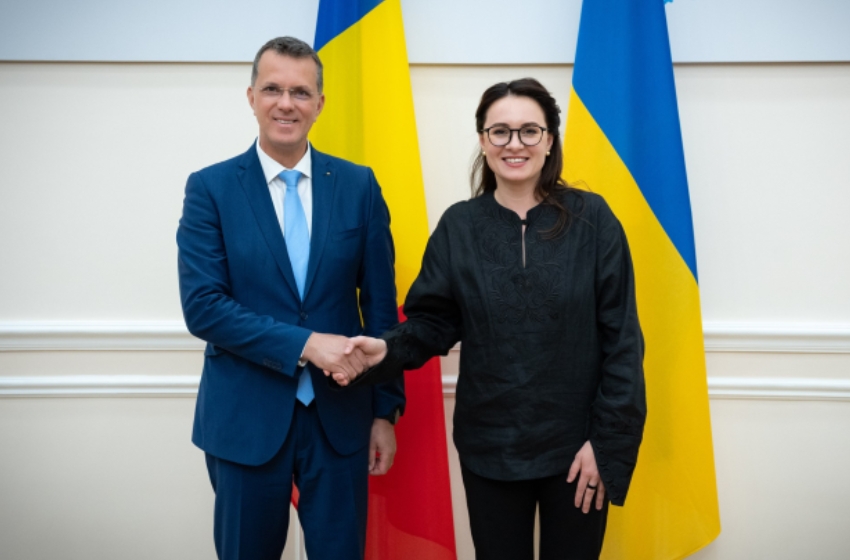
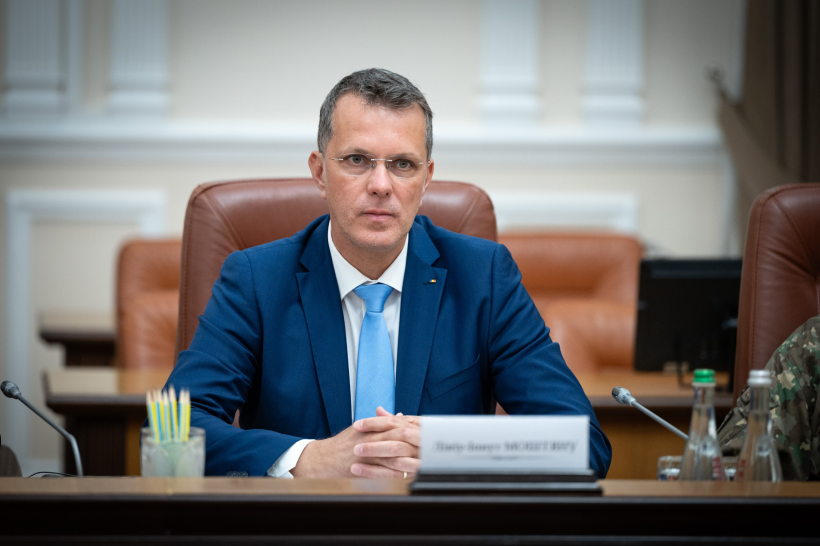
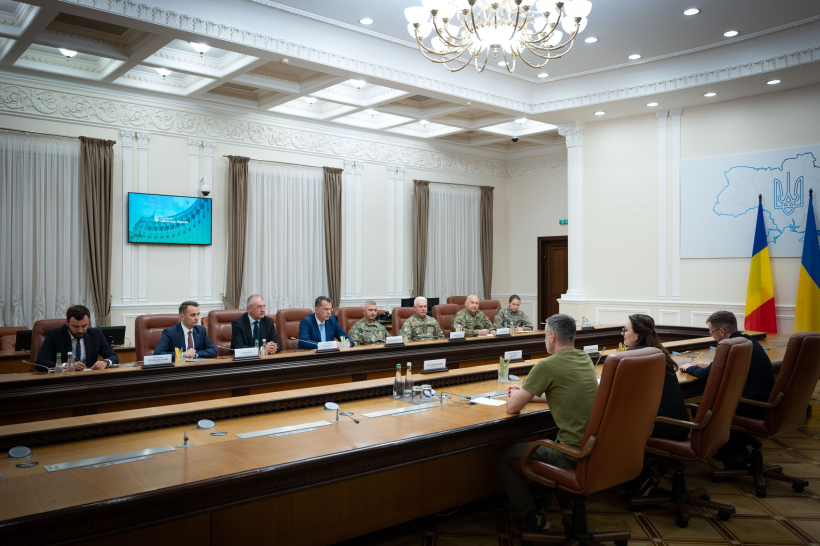
Ukrainian Prime Minister Yuliya Svyrydenko held a meeting with a Romanian delegation led by Deputy Prime Minister and Minister of National Defense Liviu-Ionut Moștianu.
During the meeting, the parties discussed key areas of cooperation between Ukraine and Romania:
Defense and Security: Ukraine highly values Romania’s assistance, including prospects for joint production of drones and weaponry.
Reconstruction: Romanian partners expressed interest in projects in transport and energy sectors, development of border infrastructure, and financing of small and medium-sized businesses.
EU Fund Experience: Both sides agreed to enhance cooperation to attract European funding.
Border Management: Modernization of existing and opening of new checkpoints was discussed in coordination with Moldova.
An important topic was Ukraine’s European integration.
Prime Minister Svyrydenko emphasized:
“Ukraine is technically ready to open the first three negotiation clusters and counts on Romania’s support to ensure Ukraine and Moldova advance together on this path.”
President Volodymyr Zelensky has signed a law introducing a number of tools to simplify the operation of the public-private partnership (PPP) mechanism.
This was reported by Ukrinform, citing the bill’s card on the parliament’s website.
The document provides for attracting private investment to accelerate the restoration of infrastructure and the construction of new facilities.
The purpose of the law is to simplify the procedure for preparing and implementing PPP projects. In particular, it proposes the introduction of an “infrastructure installment payment” mechanism, simplifies project preparation (without feasibility studies and efficiency analyses), and allows the implementation of small projects worth up to €5.3 million.
The law also introduces an electronic tendering system, standard qualification requirements for investors, and expands the powers of local authorities.
As reported by Ukrinform, on June 19, the Verkhovna Rada adopted in the second reading and as a whole the law (bill No. 7508), which introduces a number of tools to simplify the operation of the public-private partnership mechanism.