Ukraine offers special regimes for major real estate and other investments

Ukraine offers several special legal regimes to facilitate investments
activity and future recovery as follows:

Significant investment projects

construction (including upgrades and re-equipment, etc.) and/or supply
projects in certain business areas and subject to specific (preferred)
terms and conditions, commonly known from “law on investment nannies”
(Law of Ukraine “On State Support of Investment Projects with Significant
Investments in Ukraine” No. 1116-IX dated 17 December 2020).

Industrial parks

territories which are designated for industrial park development in
accordance with the local zoning documentation and equipped with
the relevant infrastructure, and where participants of industrial park
may carry out certain business activities on preferential terms. (Law of Ukraine “On Industrial Parks” No. 5018-VI dated 21 June 2012).

Immediate recovery projects

a set of exemptions and simplified procedures, which serve as fast-track
solution for constructions and other activities addressing immediate
humanitarian and industrial needs (social/temporary housing, recovery of
critical infrastructure, construction of industrial and energy objects, etc.),
subject to certain exceptions within the period of martial law and certain
additional period following its termination Law of Ukraine “On Amendments
to Certain Legislative Acts of Ukraine Regarding the Peculiarities of
Regulation of Land Relations under Martial Law” No. 2247-IX dated 12 May
2022 (the “Law No. 2247”); Law of Ukraine “On Amendments to Certain
Legislative Acts of Ukraine to Simplify the Procedure for Changing Land Use
Designation to Attract Investments for the Purpose of Immediate Recovery of
Ukraine” No. 3563-IX dated 06 February 2024 (the “Law No. 3563”), coming
into effect on 28 May 2024).

Full information – https://www.asterslaw.com/content/uploads/investments%20in%20Ukraine.pdf

Source – https://www.asterslaw.com/ua/press_center/legal_alerts/ukraine_offers_special_regimes_for_major_real_estate_and_other_investments/

RUSSIA: INVESTMENT PROTECTION AND ARBITRATION | PART 1

In its recent business advisory, dated 23 February 2024, the United States (“US”) Government warns businesses and individuals of serious legal, financial, and reputational risks entailed in maintaining operations in Russia (the “Advisory”).1 It highlights that by staying in Russia, foreign investors may face penalties – including economic sanctions, export controls and import restrictions – imposed by the US and its allies and partners, and risk becoming involved in Russia’s military actions against Ukraine and violations of international law.

In light of this Advisory, it is important for foreign investors with assets and operations in Russia to know the options available to them and how different options may impact their investment protection and chances of bringing credible arbitration claims. This theme is the focus of Part 1 of this new Series entitled “Russia: Investment Protection and Arbitration”.

While appreciating that the choice of whether and how to continue operations in Russia, suspend such operations, or exit the Russian market is ultimately up to the businesses, individuals and organizations, through the Advisory the US Government seeks to (i) highlight the operational, legal, economic, and reputational risks associated with their Russian business operations and relationships and (ii) urges them to undertake heightened compliance due diligence and human rights due diligence to evaluate potential involvement in violations and identify ways to mitigate associated risks.

The Advisory acknowledges that while the “serious risks” stemming from operating in Russia may be mitigated by rigorous due diligence, “substantial risk is likely to remain.”  Key legal risks which investors should be aware of include:

  • Russian legislation (post-invasion) allowing regional governments to nationalize assets of businesses from “unfriendly states2;
  • a decree by the Russian President of 3 March 2023 enabling external management by the Russian State in businesses failing to perform State defence contracts during martial law, essentially leading to partial nationalization; and
  • ·other recently enacted legislation restricting dividend payments, fund transfers, and sales of interests in fuel and energy sectors for businesses affiliated with “unfriendly states”.

Non-resident businesses selling their assets in Russia face further burdensome rules, including a requirement for approval from a government commission and an imposition of a discount on assets sold to Russian investors. Recent regulations also require a mandatory asset valuation, a 50% discount on sales, and a 10% contribution to the State budget from the sale proceeds. In the circumstances, foreign businesses are expected to rarely sell Russian assets to third-country investors as investors have been, and will continue to be, cautious in light of tightening sanctions and rising geopolitical tensions.

There has been a notable increase in new and prospective cross-border commercial and investment disputes involving Russia and foreign investors, including in the banking, food and beverage, oil and gas, manufacturing, technology and  transport sectors (amongst others).   In the current unpredictable legal landscape, and with Russia being bound by over 60 Bilateral Investment Treaties (“BITs”), including with what the Russian authorities describe as “unfriendly states” (such as the US and European Union Member States, as well as Japan, Canada, Switzerland, Republic of Korea, Ukraine and the UK), foreign businesses and individuals operating in Russia should carefully consider the manner in which they conduct business in Russia and assess its impact on their investment protection prospects. 

At a high level, foreign investors with assets and operations in Russia currently have three primary options open to them. They could:

  1. Maintain operations in Russia and fully comply with the existing regime.
  2. Opt to sell their business under the imposed rules, for example, to Russian investors.
  3. Refuse to participate in the existing regime and explore the possibility of selling their business to third-country (non-Russian) investors.

The path chosen by businesses may not only have major commercial, financial and reputational implications, but could significantly influence their prospects of safeguarding property rights in potential investment arbitration against Russia, as well as the level of compensation payable in any arbitration.

In the first scenario, if a business opts to remain in the Russian market and continue operations under the existing regime, its grounds to claim a violation by Russia of substantive protections under the applicable BIT could be severely weakened. While engaging with the existing legal regime does not entirely preclude the possibility of initiating investment arbitration, it significantly constrains the basis for future investment claims. It may be difficult to pursue investment claims incircumstances where the wronged party ostensibly agreed to operate within the very legal and business framework which it would argue had the effect of infringing its rights. It is noteworthy that the Advisory states that such businesses could also be perceived as directly or indirectly supporting Russia’s war effort due to legislation which forces them to directly support Russia’s military and are hence “at risk of being implicated in Russia’s violations of international law and human rights abuses”.

In the second scenario, when a business sells its assets under Russian regulations, the prospects for protecting its investment are slightly higher. At the same time, adhering to the legal framework and the restrictions currently in effect in Russia (thus arguably providing implied consent to their application) could diminish the likelihood of obtaining compensation in an investment claim. However, companies that comply with the regime imposed by Russia might nevertheless argue that they acquiesced under pressure and are challenging the regime’s compatibility with the international investment protection standards outlined in the applicable BITs.

In the third scenario, where businesses refuse to comply with the Russian regime, or if third-country investors take over the assets, the likelihood of successfully protecting investments through arbitration rises significantly. However, this comes at a cost of facing an increased risk of (i) retaliatory State action and/or (ii) asset expropriation by the Russian authorities. A credible claim of expropriation may arise if  Russia either denies the transfer of shares to non-Russian investors or fails to provide fair market value (or any) compensation when expropriating the foreign company’s assets. Further, since Russia discriminates between investors from “friendly” or “unfriendly” states and its regulations specifically target “unfriendly states” and associated organisations, investors could argue that this is contrary to the fair and equitable treatment (“FET”) standard found in the almost all of Russia’s BITs. Other types of BIT claims are also foreseeable in the circumstances, but the precise nature of the claims will depend on the provisions of the relevant BIT.

Whether international businesses choose to maintain operations in Russia, sell to Russian investors, or explore a transfer of assets to non-Russian entities, these decisions (and their timing) will materially impact their ability to safeguard investment rights in potential international arbitration (or other) proceedings involving Russia.

Mayer Brown can provide expert guidance in navigating these challenges and assessing the prospects for protecting investments in Russia through a variety of mechanisms and approaches, including investor-state dispute settlement, factoring in specific circumstances of the business or individual involved, as well as the terms of any applicable BITs. For more information or advice, please contact any of the authors, or your usual Mayer Brown contact.


1 The Advisory has been issued by the US Department of State, the US Department of the Treasury, the US Department of Commerce and the US Department of Labor. In addition to Russia, the Advisory covers the Russia-occupied territories of Ukraine.

2 According to the Federal Law No. 127-F3, dated 4 June 2018 “On Measures to Influence (Oppose) Unfriendly Acts by the United States of America and other foreign States”, the “unfriendly states” are defined as foreign States “committing unfriendly actions against Russian Federation, citizens of Russian Federation or Russian legal entities”.

Source – https://www.mayerbrown.com/en/insights/publications/2024/03/russia-investment-protection-and-arbitration-part-1

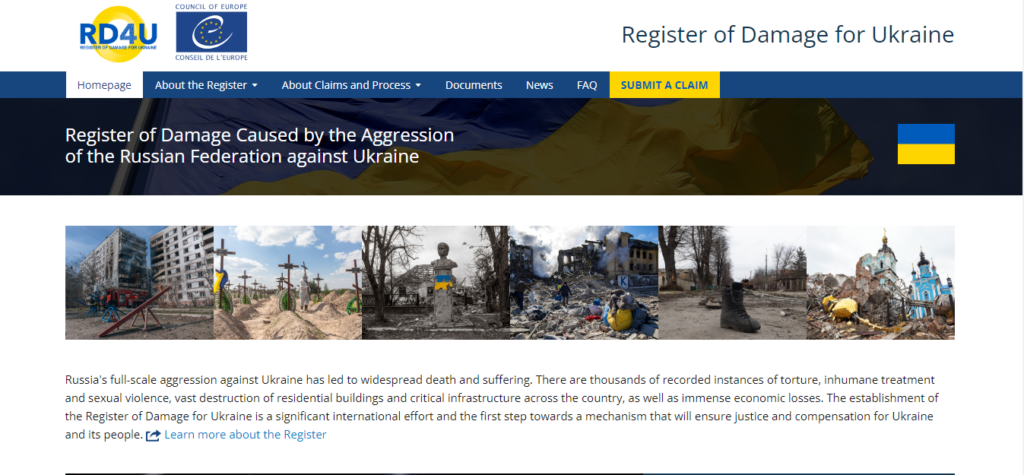
Ukraine launches official website of the Register of Damage

On 4 March 2024, the official website of the Register of Damage for Ukraine was launched. The website sheds light on the forthcoming modes of operation of the Register of Damage and outlines the general requirements for claims to be accepted.

The Register of Damage will record claims filed by individuals, entities, and the Ukrainian state for compensation for damage, loss, and injury resulting from aggression by the Russian Federation. The Register will also receive and keep the supporting evidence of these claims.

The Register of Damage will only accept claims filed digitally through the Ukrainian application Diia. Claims must be filed in the Ukrainian language, although the ability to submit claims in English may be introduced later. There will be no charge for filing claims. The official procedure for submitting, processing, and recording claims is currently under development and will be published soon.

While the categories of eligible claims have not yet been finalised, the following types of claims are expected to be covered:

  • loss of life, torture, sexual violence, and personal injury;
  • involuntary displacement and forced relocation of individuals;
  • loss of property and revenue, and other forms of economic loss;
  • damage to critical infrastructure and other governmental facilities;
  • damage to historic and cultural heritage;
  • environmental damage;
  • other categories as determined by the Board.

In all instances, eligible claims are those pertaining to damage, loss, or injury that have occurred: 

  • on or after 24 February 2022;
  • in the territory of Ukraine, within its internationally recognised borders including its territorial waters; and
  • as a result of the internationally wrongful acts of the Russian Federation in or against Ukraine.

The Register’s Secretariat will review claims and prepare recommendations to the Register’s Board, which will act as the ultimate authority in determining the eligibility of claims. The Board’s decisions will not be subject to appeal.

The Board may reject claims in two ways: “with prejudice”, indicating they are ineligible and cannot be resubmitted; or “without prejudice”, meaning that they lack evidential substantiation and can be resubmitted in due course.

Claims deemed eligible by the Board will be recorded in the Register of Damage for further examination and evaluation by a future international compensation mechanism. The Register will categorise, classify, and organise the claims according to various criteria, but will not examine or evaluate the merits of any claims it receives, assess their value, or order any payments on its own. 

The Register of Damage is scheduled to commence accepting claims in April 2024. The exact date will be announced shortly. Initially, the submission process will be limited to a single category of claims: damage and destruction of residential immovable property. Additional categories of claims will be introduced and made available for submission in the near future.

The Register is expected to receive up to ten million claims.

Source – https://cms-lawnow.com/en/ealerts/2024/03/ukraine-launches-official-website-of-the-register-of-damage

REGISTER OF DAMAGE FOR UKRAINE: OFFICIAL WEBSITE STARTUP

March 4, 2024: startup of official website of the International Register of Damage caused by military aggression of the Russian Federation against Ukraine. Such register was created by Resolution of the Committee of Ministers of the Council of Europe on Expanded Partial Agreement on the Register of Damage caused by military aggression of the Russian Federation against Ukraine, CM/Res(2023)3 dated May 12, 2023.

Reported by: Iryna Mudra, Deputy Minister of Justice of Ukraine.This resource was created in order to highlight activities of the Register of Damage in public. Website contains available information about the Register of Damage, the latest news and events related to its functioning. Potential claimants will be able to find answers to frequently asked questions, as well as detailed information about initiation and procedure for filing claims on damage recovery, etc.

Website is available in Ukrainian and English. French version of the website will be available later.

Website of the Register of Damage is available by link.

Iryna Mudra notes that the Register of Damage is the first component of international recovery mechanism with the following components: Register of Damage, Application Review Commission and Compensation Fund.

Deputy Minister of Justice reminds, “The Register of Damage serves as a documentary form for accounting evidence and information regarding claims for the recovery of losses/damages caused on February 24, 2022, or later in Ukraine within its internationally recognized borders, including its territorial waters, to all natural persons and legal entities concerned, as well as to the state of Ukraine, including its regional and local authorities, state-owned or subordinated institutions, by internationally illegal actions of the Russian Federation in Ukraine or against Ukraine”.

Register of Damage is located in The Hague, Kingdom of the Netherlands. Currently, Ukraine, jointly with other participating states and associated members of the Register of Damage, is actively taking measures aimed at full-scale launch of the Register of Damage as soon as possible. Register of Damage is expected to start accepting the first applications in April 2024, whereon one will be notified additionally.

Source – https://yur-gazeta.com/golovna/-zapushcheno-oficiyniy-vebsayt-mizhnarodnogo-reestru-zbitkiv.html

EBRD NOTES: PRIVATE SECTOR SERVES AS BASIS FOR RESTORATION OF UKRAINE

Appropriate support from one of the most powerful donors and grant-makers in Ukraine can be quickly deployed in two areas in this field.

The European Bank for Reconstruction and Development (EBRD) provides active assistance to Ukraine, focusing on resourcefulness and assistance to the private sector.

The corresponding projects aroused the interest of EBRD partners in restoration of Kherson and Mykolaiv regions, as reported at the meeting in London held between Yuliia Svyrydenko, First Deputy Prime Minister of Ukraine – Minister of Economy of Ukraine, and Odile Renaud-Basso, President of the EBRD.

The EBRD provided for Ukraine assistance for two years amounting to EUR 3.8 billion: what are the priority areas

Yuliia Svyrydenko noted at the meeting, “The EBRD is concerned in the private sector serving as basis for recovery of Ukraine. This year, the Bank will continue to support Ukrainian business: some specific projects have already been developed in power supply, production, logistics, agricultural sector and many others. Since the private sector will serve as basis for recovery of Ukraine, it is important for us to coordinate our efforts of international financial institutions for a more effective and large-scale reconstruction of Ukraine with an emphasis on the private sector”.

Discussion at the meeting concerned a practical algorithm for launching business insurance against war risks, in particular, tools for vessel and cargo insurance either en route or at the warehouses.

The European Bank for Reconstruction and Development (EBRD) provided to Ukraine EUR 2.1 billion in 2023, as compared to EUR 1.7 billion in 2022. The EBRD, as the largest institutional investor in Ukraine, has significantly increased its investments since the large-scale Russian invasion in February 2022: just in October 2023 the Bank exceeded its goal of investing EUR 3 billion in Ukraine during 2022-2023.

In 2023, the EBRD management decided to increase the Bank’s paid-up capital by EUR 4 billion up to EUR 34 billion in order to provide further support to Ukraine. Investments in Ukraine during the war are planned to keep the level of EUR 1.5 billion per year.

During 2022-2023, the EBRD managed to mobilize ca. EUR 1.6 billion of donor funds for Ukraine, including unfunded guarantees. Of  this amount, over EUR 409 million were allocated in 2023. Almost half of the donor resources were provided by the European Union. Individual donors also made significant contributions, such as Canada, Norway, Spain and the Netherlands.

Odile Renaud-Basso, President of the European Bank for Reconstruction and Development (EBRD), highlighted the fact of enormous support of Ukraine from the West. She notes, it overshadows the Marshall Plan (the US plan to rebuild Europe after the Second World War). Her statement came in response to critics who say that Kyiv’s allies have not done enough to support it, as well as amid talk of the need to seize frozen Russian assets in favor of Ukraine.

Source – https://zn.ua/ukr/business/jebrr-vvazhaje-privatnij-sektor-osnovoju-vidnovlennja-ukrajini.html

2024: business expectations, forecasts, and warnings

Yesterday, the European Business Association held its traditional Global Outlook event, where the business community discussed plans for 2024, the macroeconomic stability of the country, defense industry and development prospects, and Ukrainian-Polish cooperation.

Macroeconomic and macrofinancial stability of the country

Andriy Pyshnyy, Governor of the National Bank of Ukraine, emphasized that in 2023 Ukraine managed to achieve significant economic results and build up a certain margin of safety. This resource makes it possible to hold out until the rhythm of international assistance is restored. The NBU remains within the baseline scenario of its macroeconomic forecast and expects that external financing (its rhythmicity and sufficiency) will be restored soon. Mr. Pyshnyy emphasized that the regulator understands the difficulties for business due to the currency restrictions imposed, which were a necessary step to stabilize the situation at the beginning of the full-scale invasion. The NBU is actively working to create systemic preconditions for further currency liberalization. The first stage is almost complete, while the second stage will include the liberalization of trade finance, management of currency risks of banks, and the possibility of the repatriation of interest on “old” debt obligations. Progress on the currency liberalization roadmap depends, among other things, on the state of international reserves, which are replenished through international assistance and timely receipt of export earnings. Andriy Pyshnyy emphasized the need for companies to meet the deadlines for its return. Careful compliance with all the rules will bring the moment of further currency easing closer for everyone.

Tomas Fiala, CEO of Dragon Capital, supported the words of the NBU Governor. The banking sector is experiencing a much better situation than in the 2014 crisis, when there was a serious outflow of deposits, some banks had to close, etc. He also remains optimistic about the current situation and predicts a 4% growth in gross domestic product (GDP) if security risks remain at the same level. It is expected that this year Ukraine will receive $37 billion in loans and grants to the budget, including €18 billion from the EU, $5 billion from the IMF, $8 billion from the US, plus assistance from Canada, Japan, and Norway (although this is less than last year, when it was $42 million). This will bring the GDP to $203 billion in dollars, which is the highest GDP in dollars in the history of independent Ukraine. Of course, there are also risks of irregularity of assistance, and not receiving sufficient assistance from the US, but there is hope that even in this case, these risks can be covered by assistance from other countries, as well as if the country begins to work actively to combat the shadow economy. Mr. Fiala also emphasized that Dragon Capital analysts forecast the dollar exchange rate at 39 UAH/USD and inflation at 8%. At the same time, he noted that it is still important to systematically address the rule of law and fight against corruption, as selective justice has no positive impact on business or the country’s investment climate.

Crispin Ellison, Partner, Oliver Wyman, Marsh McLennan, shared the situation with the insurance market in Ukraine. He mentioned that the market suffered major losses connected to Ukraine over the past 5 years and the big providers of (re)insurance capital were reluctant to engage. Moreover, providing war risk insurance at any scale was not something that the insurance market had done before. Currently, the situation is even more challenging because most stakeholders lack data on the actual situation, many imagining that the whole of Ukraine is like Bakhmut.

Marsh McLennan had worked with Ukraine government to develop a war risk data platform to address this.  It gives granular historic data in a user-friendly unclassified form to allow investors and insurers to make accurate risk assessments. It demonstrates the huge variation in risk by geography across the country and that, for example, that 2/3 of Ukrainian communities had not had a single explosive event since the February 2022 invasion.

Insurance is crucial for Ukrainian economic development, and global partners understand this. For war-risk cover, the infant insurance market needs support from public funds. Marsh McLennan is therefore focused on developing facilities based on public/private partnerships. The firm worked with the Government of Ukraine to put in place such a facility to insure shipping carrying cargo in the Black Sea at premiums less than half those available on the open market. Marsh McLennan is now working with the government on a new facility to cover cargo as well as the ships already covered, and also to develop an aviation insurance facility to allow the opening of Ukraine airspace to commercial traffic. Another current project is to provide affordable travel insurance for all business people visiting Ukraine. Currently the lack of such insurance discourages investors from overseas. 

Crispin Ellison concluded by emphasising the importance of building confidence in the nascent war-risk insurance market. This would create the conditions to allow large scale (re)insurance capital to re enter the country once violence diminishes. 

Larysa Bondarieva, Deputy Chairman of the Board of Raiffeisen Bank Ukraine, for her part, emphasized that Raiffeisen Bank is interested in finding a solution to cover war risks in the implementation of investment projects as soon as possible. In 2023, the bank actively lent to corporate clients, significantly supporting the Ukrainian economy. Since the second half of last year, the bank has begun to feel the willingness of companies to implement investment projects worth tens of millions of euros, so the bank continues to develop lending, including to small and medium-sized businesses, and sees great potential in the areas of logistics, agricultural production, processing, pharmaceuticals, and bioenergy. Ms. Larysa also emphasized that she would develop Raif and its portfolio of risk-sharing programs to support Ukrainian entrepreneurs: last year, the bank extended and attracted more than EUR 330 million in financing under risk coverage programs from the EBRD, DFC with the support of USAID, the European Investment Bank, and the European Investment Fund, MIGA, and implemented two large projects with the state Export Credit Agency to guarantee export contracts.

In 2023, the Ukrainian financial and insurance market will face challenges in terms of additional asset revaluations, bringing it closer to international regulatory standards.

“But based on my private experience, I am skeptical that European supervisors will give the green light to their shareholders to invest in Ukraine right now, in a period of uncertainty. In the face of open military aggression, we must resolve all financial nuances at the local level between the market and the regulator.

Corporate business is solvent and can give impetus to the development of the financial segment through long-term savings programs for its employees, additionally providing social protection and support. I believe that we must develop a strategy for the development of long-term insurance, as it is a resource for investments that can restore our post-war economy and help citizens create additional savings for the future,” said Natalia Bazilevska, Head of the Board of GRAWE Ukraine.

Prospects for the defense and military industry in Ukraine

Anna Gvozdiar, Deputy Minister for Strategic Industries of Ukraine, outlined the trajectory of the country’s defense industry in her speech. Thus, there is a significant growth in the defense industry – in 2023, the production of weapons and military equipment tripled compared to 2022. The Ministry has an ambitious vision of further strengthening this growth – today, private and state-owned manufacturers can produce six times more than last year. But to do so, they need orders and long-term contracts, primarily from the state. Increasing arms procurement is also critical for national defense.

Accordingly, the Ministry is making efforts to establish the practice of concluding long-term contracts with Ukrainian businesses and to find new sources of funding for these contracts to ensure stability and predictability in the supply chain and meet the needs of the Armed Forces of Ukraine. Ms. Gvozdiar reiterated her zero tolerance for corrupt practices and encouraged businesses to participate in the development of the defense industry. Finally, the deputy minister emphasized that it is important to retain capital and create jobs within the country to make Ukraine self-sufficient in critical defense technologies.

Dmytro Shymkiv, Co-founder of AeroDrone, discussed the challenges and opportunities for engaging the Ukrainian drone industry in the development of the defense sector. He highlighted such problems as lack of funding, complicated customs procedures, and unpredictability of orders. Shymkiv called on the relevant ministries to support Ukrainian producers as opposed to foreign ones, citing regulatory issues and the importance of fair competition. He also touched on profitability, regulatory issues, and the presence of ESG principles in the banks’ policies on financing arms development. Mr. Shymkiv emphasized the need for policy reforms to promote the growth and competitiveness of Ukraine’s defense industry.

Anton Skrypnyk, Founder of Roboneers, continued with a list of obstacles facing Ukrainian businesses seeking to engage in the defense industry. In addition to bureaucracy, he noted outdated legislation in Ukraine’s defense sector, excessive accounting requirements, and procedural issues. Skrypnyk also discussed broader issues of the business environment in Ukraine, including difficulties with access to financial instruments and the need for industry-wide changes. Nevertheless, Skrypnyk emphasized that his team has not encountered any cases of corruption, which is a positive aspect of their interaction with the government. The speaker emphasized cooperation with ministries to achieve common goals and called for systemic reforms to optimize processes in the defense industry.

Kateryna MykhalkoExecutive Director of Tech Force in UA, whose company started operating in August 2023, spoke about the process of uniting leading private enterprises that provide defenders with high military technologies and seek to address key challenges in the Ukrainian defense industry. These include budget redistribution, export restrictions, and long production cycles. In addition, Ms. Mykhalko emphasized the problems with human resources, in particular, the irreplaceability of certain specialists. The speaker also supported regulated technical requirements and a dialog between the Ministry of Defense and business.

Andriy FialkovskyiCEO of Skyeton, highlighted the challenges faced by companies in cooperating with the government for the defense industry. He emphasized the importance of financial forecasting, predictability in production, the critical role of exports in financing the company’s development, and noted obstacles such as the need to increase the length of contracts for procurement and customs clearance, as well as difficulties in securing credit due to lack of collateral. Implementing reforms and promoting more effective cooperation between the defense industry and the government will help to solve these problems.

Christian Seear, Senior Director of BAE Systems in Ukraine, noted the company’s commitment to the country. Thus, the opening of a representative office of the company, which is one of the largest suppliers of artillery equipment from different countries, including Sweden, the UK, and the US confirms BAE Systems’ commitment to working with the Ukrainian government to continue supporting the country’s current needs and to explore future requirements. Mr. Seear discussed the company’s strategy for Ukraine, which is initially focused on the repair and maintenance of vital artillery systems being operated by the Armed Forces of Ukraine inside Ukrainian borders. BAE Systems is open to working with local partners and engaging with the Ministry to build the local industrial base.

Dan Hallett, Director Ukraine, Central and Eastern Europe at Babcock International Group, emphasized Babcock’s commitment to working with Ukrainian industry based on partnership rather than competition and their cooperation with the British government and industrial partners such as BAE Systems. He called for bringing together the supply and demand for defense capabilities and outlined Babcock’s approach to doing business in Ukraine, which includes complying with British and Ukrainian law and focusing on creating economic and social value. Dan mentioned UK export credits to facilitate deals and emphasized the importance of the capacity for success in defense programs. He also praised efforts to fight corruption and noted the recent extension of the UK-Ukraine tariff-free trade agreement as an opportunity for increased cooperation.

Strategic cooperation between Ukraine and Poland

According to Yuriy MushkaAmbassador-at-large at the Ministry of Foreign Affairs of Ukraine, Poland is a strategic partner of Ukraine and the largest trading partner among the EU countries with a trade turnover of about $13-14 billion, and important logistics routes run through Poland. The current situation with the blockade on the Polish-Ukrainian border is unfortunate in the context of the long and fruitful cooperation between the two countries. At the same time, such a blockade has a negative impact not only on the Ukrainian but also on the Polish economy. According to Mr. Mushka, such cases need to be addressed, in particular through legal means and at the level of Kyiv-Warsaw-Brussels dialogue.

Serhiy DerkachDeputy Minister for Communities, Territories, and Infrastructure Development of Ukraine, noted that the issue of the blockade of the Polish-Ukrainian border is of particular concern to the President and Prime Minister of Ukraine. In addition, the team of the Ukrainian Ministry is in constant contact with colleagues from the Polish Ministry of Infrastructure. According to Mr. Derkach, they have a consensus on the necessary steps to avoid the resumption of the border blockade by Polish carriers and agree that the agreement on freight liberalization (abolition of road permits for international freight transportation) should be extended.

At the same time, there have been attempts to block the border not only by Poland but also by other neighboring countries, even if the strikers’ demands were exclusively domestic. Therefore, this issue is a key one in the negotiations with the European Commission, and the Ukrainian side insists on recognizing the roads to the checkpoints as critical to prevent their blocking, as this harms both the Ukrainian economy and the economies of the EU countries. Otherwise, there is a risk that the border may be permanently blocked by entrepreneurs from any sector and for any reason.

Tymofiy MurakhovskyyDirector of Commerce and Logistics at JSC “Ukrainian Railways”, said that last year Ukrainian Railways introduced a container train and has already tested its movement between Ukraine and Poland. Such trains can be used as an alternative to road transportation in times of heavy traffic on the roads. Negotiations are currently underway with the Polish side to optimize the cost of such transportation. Ukrainian Railways can send 4 trains per week, with a transit time of two days in both directions. In addition, Ukrainian Railways has opened a branch of Ukrainian Railways Cargo Poland, which has been operating since October 2023. The company is currently running freight trains from Kyiv, Dnipro, and Odesa to the port of Gdansk.

According to Oleksandr TkachukDirector of Terminal Network Development at Levada Cargo, blockades and strikes on the Ukrainian-Polish border may continue until Ukraine becomes an EU member. At the same time, the queues of vehicles encourage the development of railroad traffic, in particular, containerized transportation.

Dariusz SzymczychaVice President of the Polish-Ukrainian Chamber of Commerce, commented that the Chamber is in favor of restoring unimpeded traffic on the Polish-Ukrainian border. The current blockade has a significant negative impact on business ties between the two countries, although the Ukrainian economy is the one that suffers the most. The Chamber’s position is that it is necessary to restore the free movement of goods, as the Ukrainian economy relies heavily on revenues from agricultural exports, so the ways of solidarity must work.

Mr. Szymczycha expressed hope that the new Polish Government will pay attention to this issue and make concrete efforts to resolve it. This blockade has a political basis, as Polish farmers are protesting against the new Green Deal requirements and demanding subsidies as part of broader actions in the EU. The protests may likely end after certain conditions are met, such as compensation for the cost of grain.

Marcin NowackiVice President of the Union of Entrepreneurs and Employers of Poland (ZPP), noted that the protests of Polish farmers have both a domestic and European focus, in particular because of grain prices and new ambitious climate targets for farmers. Farmers also have reservations about future EU regulations on Ukrainian agricultural exports. According to Mr. Nowacki, a predictable trade policy between Ukraine and Poland is needed, as well as a balanced position of the European Commission on trade with Ukraine. Mr. Nowacki suggested that the carriers’ protests may also resume on March 1, as it does not seem that all the carriers’ demands will be resolved by then.

We would like to thank the speakers and all participants for this event and, of course, our partners Raiffeisen Bank Ukraine and GRAWE Ukraine for their cooperation!

Source – https://eba.com.ua/en/2024-ochikuvannya-prognozy-ta-perestorogy-biznesu/
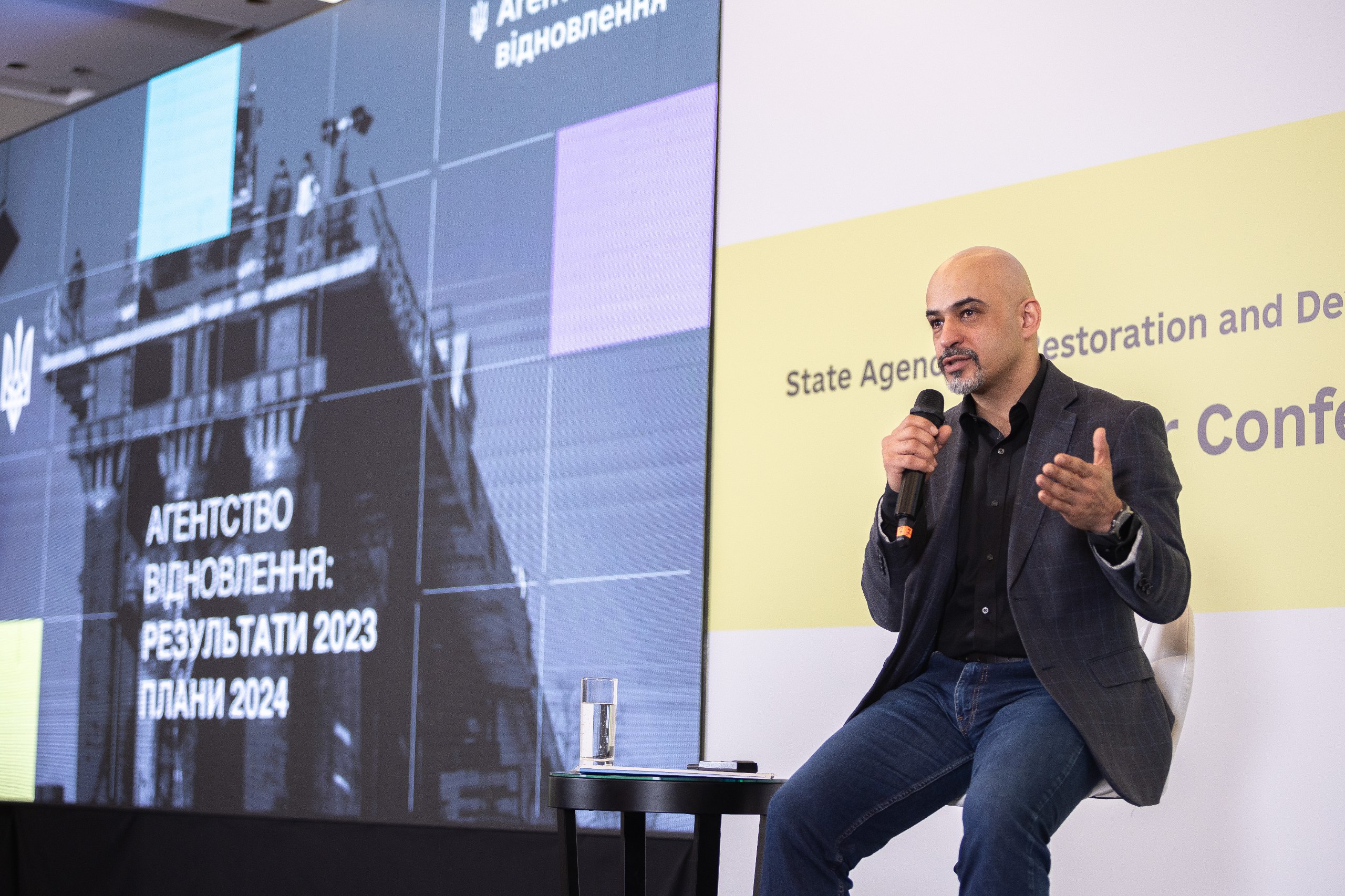
THE STATE AGENCY FOR RESTORE AND DEVELOPMENT OF INFRASTRUCTURE OF UKRAINE PRESENTED THE RESULTS OF WORK FOR 2023 AND PLANS FOR 2024 TO INTERNATIONAL PARTNERS

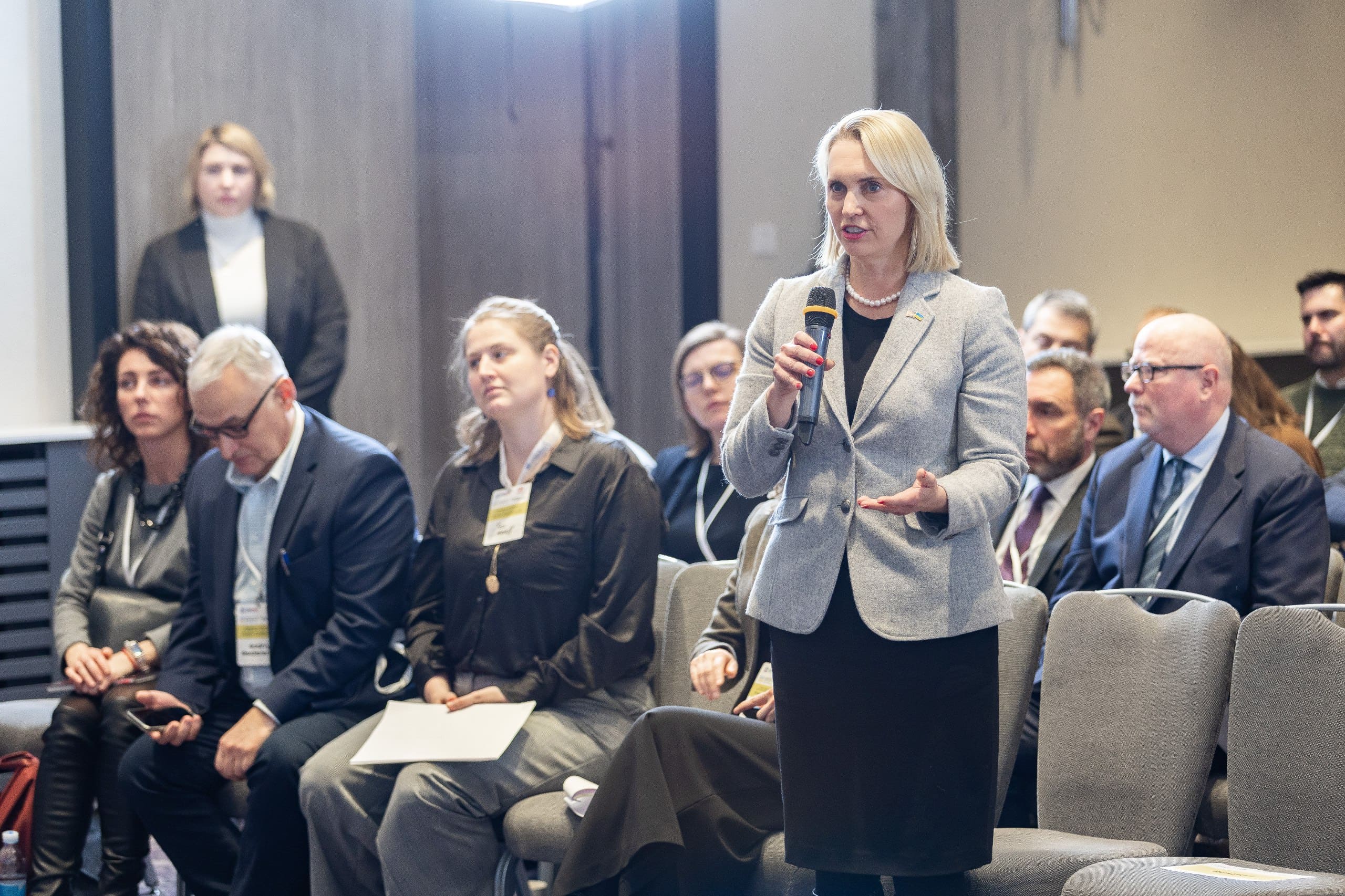
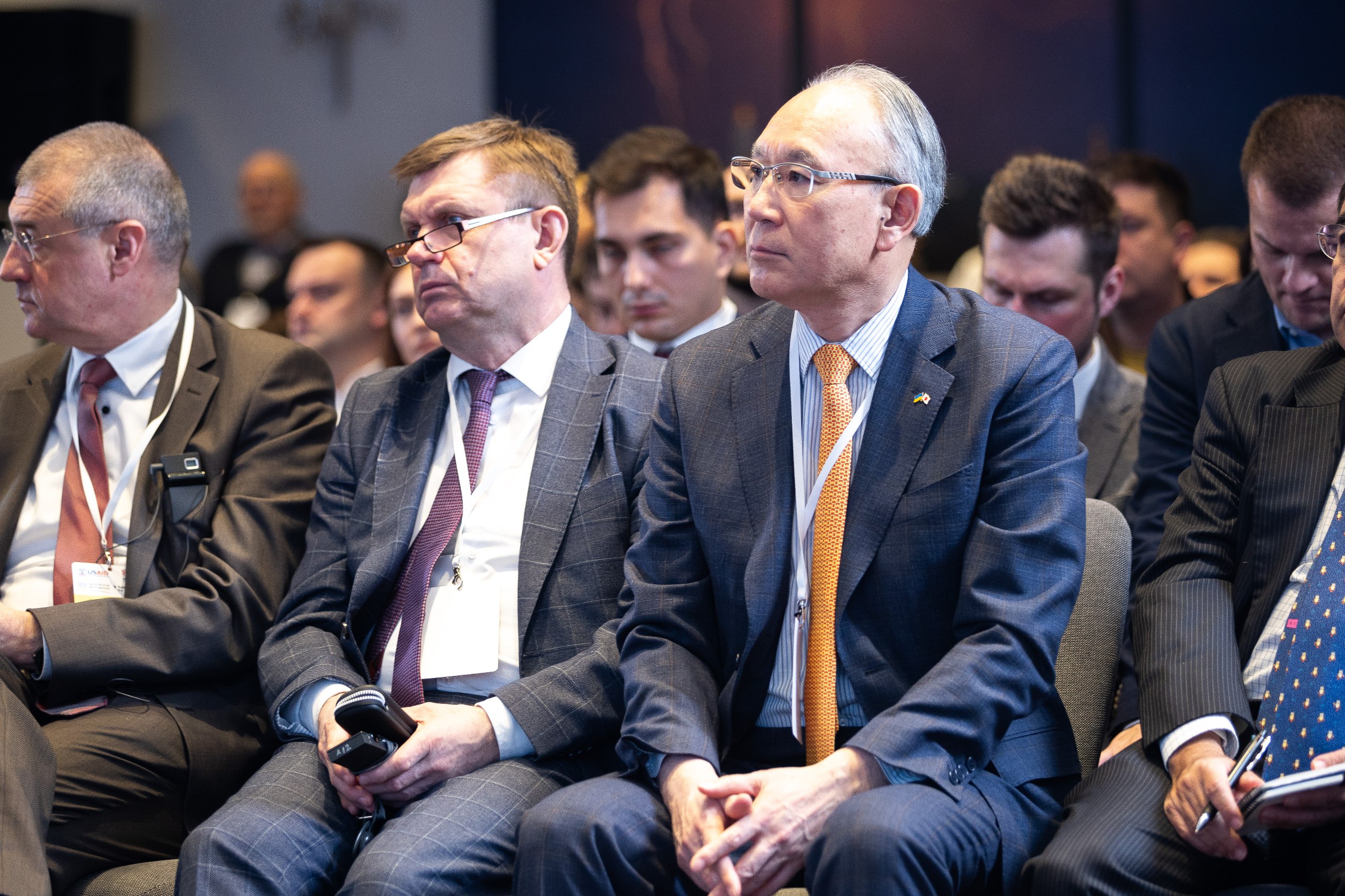
The Ukrainian State Agency for Restoration and Development of Infrastructure presented its 2023 achievements and 2024 plans to international partners. The event featured the Head of the Restoration Agency, Mustafa-Masi Nayyem, alongside ambassadors and representatives from foreign embassies, international financial organizations, and global companies. Supported by the USAID/UKaid project “State-Owned Enterprise Reform Activity” (SOERA), the event highlighted Ukraine’s resilience and commitment to rebuilding its infrastructure.

Mustafa Nayyem, presenting the 2023 outcomes, stressed the Agency’s robust and capable nature, adept at implementing projects across housing, energy security, road infrastructure, and ensuring export, military, and humanitarian logistics. 

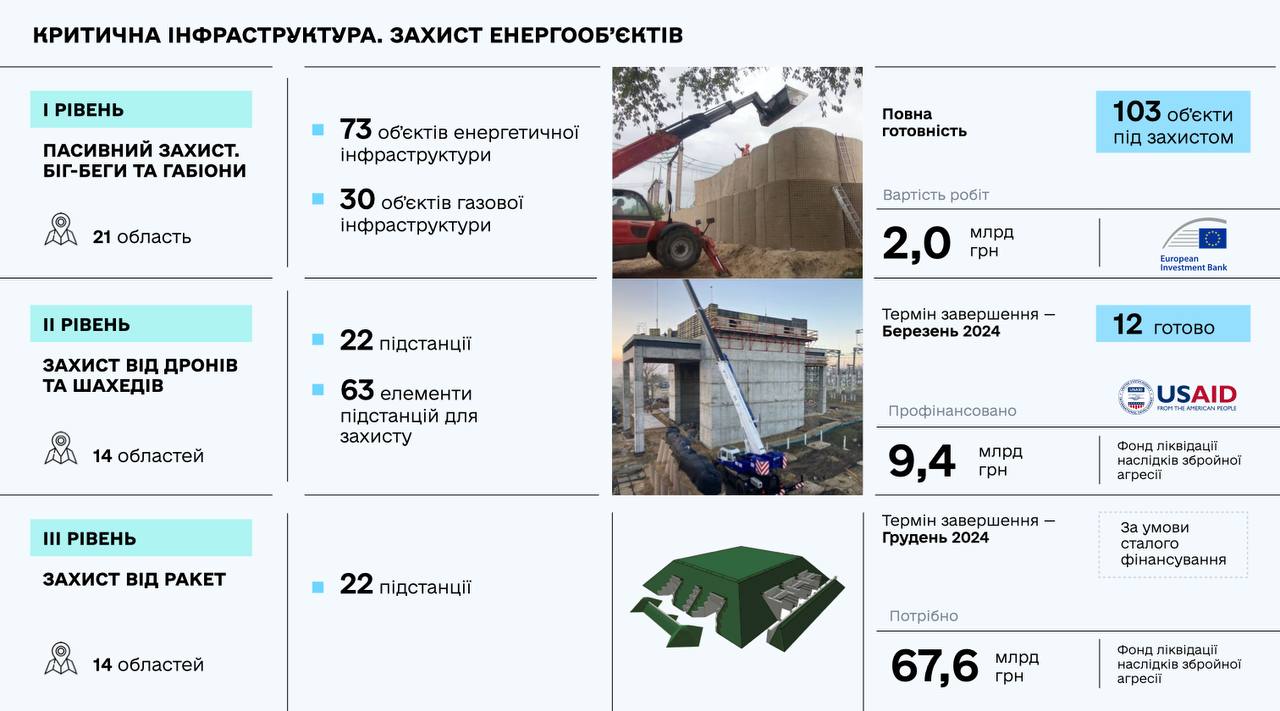
One of the Agency’s major 2023 initiatives was a three-tiered energy infrastructure protection system: using big bags and gabions to safeguard 103 facilities in 21 regions; drone and rocket defense for 22 substations, with 12 already secured; and a plan to protect additional substations by the end of 2024, contingent on continued funding. Mr Nayyem expressed gratitude to partners from the USA, Germany, the UK, and Japan for their cooperation in these endeavors.

Another significant project undertaken by the Agency is the construction of a main water pipeline to supply 1.5 million people with drinking water, following the destruction of the Kakhovka Hydroelectric Station by Russian forces. This project, which began in June 2023, spans 145 kilometers and involves the oversight of engineering consultants and independent technical supervision, supported by USAID ERA “Economic Support to Ukraine.” A comprehensive technical audit of project documentation will also be conducted with the assistance of USAID ERA, and all reports and audit results, along with estimates, will be made public after the assessment process.

The Restoration Agency places a significant focus on the reconstruction of social facilities. Currently, reconstruction efforts are underway in settlements affected by armed conflicts, including Borodyanka (Kyiv region), Yahidne (Chernihiv region), Trostianets (Sumy region), Tsyrkuny (Kharkiv region), and Posad-Pokrovske (Kherson region). In total, the Agency is reconstructing 352 facilities, including 292 residential buildings, 31 social infrastructure objects, 16 street and road infrastructure facilities, 8 administrative buildings, and 5 housing and communal services objects.

Between 2022 and 2023, the Agency successfully repaired 330 bridges, many of which are crucial for export logistics, transportation of military and humanitarian cargo, and the evacuation of the wounded.

Additionally, a significant aspect of the Agency’s work is the provision of military logistics and the reconstruction of territories that have been de-occupied. In 2023, over 1,200 kilometers of roads were cleared and 89 bridges that had been damaged due to combat actions were reconstructed. Czechia, the United States, France, Sweden, and Norway provided artificial bridges and structures.

Following the onset of full-scale warfare, 70% of exports are transported by road. To enhance export routes, the Agency has already taken control of 23 border-crossing checkpoints on the western and southern borders, with an additional 6 checkpoints in the process of transfer. Repair work has commenced on 11 of these checkpoints.

Nayyem highlighted reforms to reduce procurement abuses, increase transparency, and prevent corruption, including adopting unified civil construction procurement methodologies and CIPS certification. The Agency received the Prozorro Awards for transparent procurement approaches and signed a memorandum with NABU to combat criminal corruption.

The Agency administers nationwide digital systems developed with international support, like DREAM – Digital Restoration Ecosystem for Accountable Management, E-queue – an electronic border crossing system, and GIS RR – a regional development geoinformation system.

Mr Nayyem underscored the need to transform the Agency, including creating a centralized procurement organization (CPO) to increase efficiency, transparency, accountability, and public and international procurement expertise. The CPO will also centralize price monitoring and competitive salaries.

In conclusion, Mr. Nayyem thanked Deputy Prime Minister for Restoration of Ukraine Oleksandr Kubrakov, and international partners for their comprehensive support and looked forward to continued successful collaboration.

Türkiye, Ukraine set up reconstruction task force

Türkiye and Ukraine have signed a document to set up the Turkish-Ukrainian Reconstruction Task Force that will allow Turkish companies to take part in the infrastructure projects in Ukraine.

The deal was inked during the forum on the reconstruction of Ukraine, organized in Istanbul on Jan. 31.

Trade Minister Ömer Bolat, Transport and Infrastructure Minister Abdulkadir Uraloğlu, and Ukrainian Vice Prime Minister for Restoration Oleksandr Kubrakov attended the event.

At the forum, they discussed the role Türkiye will undertake in the reconstruction of Ukraine with the participation of public and private institutions from both countries, Bolat wrote on X.

“We established the ‘Task Force’ to evaluate projects in Ukraine and mutually address financing conditions and other processes on this platform. We believe that this agreement will contribute to further strengthening the strategic relations between Türkiye and Ukraine,” he said.

Turkish officials will travel to Ukraine together with Turkish contractors in the coming months, and the first meeting of the task force will take place in Ukraine, Bolat noted.

Ukraine and Türkiye started a new path of cooperation by signing terms of reference for the Reconstruction Task Force, Kubrakov said.

“Together with Bolat, we established a platform for determining cooperation areas and the infrastructure projects for the recovery of Ukraine for sharing experiences and realization projects of infrastructure reconstruction.”

It is mainly related to projects for the restoration and development of water transport infrastructure and the reconstruction of roads, the building of temporary bridges and overpasses to secure transportation on the key routes, Kubrakov said.

Bolat also said that the Türkiye-Ukraine Free Trade Agreement will enter into force after the official approval procedures are completed in the coming months.

Source: https://www.hurriyetdailynews.com/turkiye-ukraine-set-up-reconstruction-task-force-190281

До України приїхав голова МЗС Данії, анонсував мільйонну підтримку для боротьби з корупцією

До України з візитом прибув голова Міністерства закордонних справ Данії Ларс Люкке Расмуссен. Анонсував фінансову підтримку для боротьби з корупцією в країні.

Про це повідомляє РБК-Україна з посиланням на пресслужбу Міністерства закордонних справ Данії.

Як нагадує МЗС, Данія з 2016 року очолює антикорупційну програму ЄС в Україні (EUACI). Під час сьогоднішнього візиту Расмуссен оголосив про підтримку третього етапу програми.

“Ще до незаконного вторгнення Росії Україна досягла значного прогресу в боротьбі з корупцією, і навіть під час війни в країні вдалося продовжити позитивний розвиток. Але є ще сфери для вдосконалення, і для мрій України про ЄС дуже важливо, щоб ми допомогли їй досягти своїх цілей”, – заявив міністр.

Зазначається, що Європейський союз виділяє більше 70 мільйонів данських крон (10,21 млн доларів) на наступний етап програми, а Данія, зі свого боку, трохи менше 60 млн (8,75 млн доларів).

“Серед іншого, програма зосереджена на сприянні прозорості та доброчесності у відновленні Миколаєва через тісну співпрацю з міським головою та його командою”, – пише пресслужба.

Зокрема планується розробити найкращі практики щодо реконструкції Миколаєва, які, в майбутньому, можуть бути використані й в інших містах України.

Зустріч з Кулебою й відкриття офісу посольства

Про програму Расмуссен проінформував українського колегу Дмитра Кулебу. Міністри зустрілись в Миколаєві, щоб офіційно відкрити новий офіс посольства Данії.

Зокрема вони обговорили, як Данія та Україна можуть надалі розвивати співпрацю щодо Миколаєва і як Копенгаген може продовжувати підтримувати Київ у боротьбі з російською агресією.

“Україна все ще бореться за свободу і безпеку всієї Європи. Ми повинні підтримати її в цьому, саме тому ми є однією з країн, які надають найбільшу підтримку Україні порівняно з нашими розмірами. Ми несемо особливу відповідальність за відбудову Миколаєва, і з відкриттям посольського офісу в місті ми можемо зробити зусилля з відбудови більш ефективними”, – заявив голова МЗС Данії.

Допомога Данії для України

Копенгаген уже надав українській стороні після широкомасштабного вторгнення Росії оборонну допомогу на суму близько 2,8 мільярда євро. Зокрема передав також гуманітарну допомогу на 378 мільйонів євро.

Нещодавно уряд Данії вирішив надати Україні новий пакет підтримки на загальну суму 1 мільярд євро, а також 13,3 млн доларів на проєкти з підтримки розвитку кібербезпеки.

Джерело – https://www.rbc.ua/rus/news/volini-viyavili-pidpilniy-tseh-obrobki-burshtinu-1706275550.html

Danish MFA’s head visits Ukraine, announces million-dollar support for anti-corruption efforts

The head of the Ministry of Foreign Affairs of Denmark, Lars Løkke Rasmussen, has arrived in Ukraine on a visit. He announced financial support for the fight against corruption in the country, according to the press service of the Ministry of Foreign Affairs of Denmark.

The Ministry of Foreign Affairs reminds that Denmark has been leading the EU Anti-Corruption Initiative (EUACI) in Ukraine since 2016. During today’s visit, Rasmussen announced support for the third stage of the program.

“Even before the illegal invasion by Russia, Ukraine achieved significant progress in combating corruption, and even during the war in the country, positive development was successfully continued. However, there are still areas for improvement, and for Ukraine’s aspirations towards the EU, it is crucial that we help them achieve their goals,” the minister stated.

It is noted that the European Union allocates more than 70 million Danish crowns (10.21 million dollars) for the next stage of the program, and Denmark, in turn, contributes slightly less – 60 million crowns (8.75 million dollars).

“Among other things, the program focuses on promoting transparency and integrity in the reconstruction of Mykolaiv through close cooperation with the mayor and his team,” the press service writes.

In particular, the plan is to develop best practices for the reconstruction of Mykolaiv, which can be used in the future in other cities in Ukraine.

Meeting with Kuleba and embassy office opening

Rasmussen informed his Ukrainian counterpart, Dmytro Kuleba, about the program. The ministers met in Mykolaiv to officially open the new embassy office of Denmark.

They discussed how Denmark and Ukraine can further develop cooperation regarding Mykolaiv and how Copenhagen can continue to support Kyiv in the fight against Russian aggression.

“Ukraine is still fighting for the freedom and security of all of Europe. We must support it in this, which is why we are one of the countries providing the most support to Ukraine given our size. We bear a special responsibility for the reconstruction of Mykolaiv, and with the opening of the embassy office in the city, we can make reconstruction efforts more effective,” said the head of the Danish Ministry of Foreign Affairs.

Denmark’s assistance to Ukraine

Copenhagen has already provided Ukraine with defense assistance of around 2.8 billion euros after Russia’s large-scale invasion. It also delivered humanitarian aid worth 378 million euros.

Recently, the Danish government decided to provide Ukraine with a new support package totaling 1 billion euros and an additional 13.3 million dollars for cybersecurity development projects.

Source – https://newsukraine.rbc.ua/news/ukraine-seeks-to-get-china-on-its-side-xi-1706279107.html