Insurance of investments in Ukraine against war and political risks 

By the results of the meeting of the Committee of the European Business Association on the restoration of Ukraine with the deputy head of the ECA (Export Credit Agency of Ukraine) Oksana Ocheretyana (January 25, 2023). 

From January 1, 2024, the Law of Ukraine No. 3497-IX (22.11.2023) (On Amendments to the Law of Ukraine “On Financial Mechanisms for Stimulating Export Activity” regarding the insurance of investments in Ukraine against war risks) entered into force, hereinafter referred to as the Law

The ultimate goal of the Law is to regulate insurance and reinsurance by the Export Credit Agency of Ukraine (ECA):  

  1. export loans, as well as insurance and reinsurance against war and/or political risks of loans of Ukrainian companies related to investments in facilities and infrastructure for processing industry and the export of goods (works, services) of Ukrainian origin. 
  1. direct investments from/to Ukraine against war and/or political risks.  

The deputy head of EKA, Ms. Oksana Ocheretyana, provided an approximate list that can be approved by the Cabinet of Ministers of Ukraine. For example, war risks: occupation, hostilities, annexation, bombing, etc. Political risks: expropriation, nationalization, forced alienation, moratoriums, bans, etc.  

There is hope that the Law can really start working in 5-6 months (June-July 2024). Firstly, the Cabinet of Ministers of Ukraine has to determine the list of war and political risks, as well as the conditions and procedure for insurance (reinsurance) of such risks (agreed by the National Bank of Ukraine) until the end of March 2024. And then the Ministry of Economy, ECA and other ministries must bring their regulatory acts into compliance with the Law (we hope that it will take no more than 2-3 months).   

One of the problematic issues that must be resolved by state bodies is that ECA is limited in providing insurance guarantees with its own capital, which currently is about UAH 2 billion and from which insurance guarantees for about UAH 700 million have already been provided. The Ministry of Economy should solve this issue either by recapitalization, or by selling shares (up to 49%), or raising capital in another way.  

Interlegal Law firm will carefully monitor and inform our clients about further steps taken by the state in the implementation of this Law, very important both from the point of view of attracting investments and from the positions of strengthening Ukraine’s export opportunities.  

If you have questions for both our lawyers and/or the management of the Export Credit Agency of Ukraine (ECA), please, do not hesitate to contact us.

Denys Stadnichenko, business development manager at Interlegal

INDUSTRIAL PARKS IN UKRAINE. RESULTS OF 2023. “BOOM” OF REGISTRATIONS… WHY?

  1. FIRST INSURANCE AGAINST WAR RISKS FOR PRIVATE INVESTORS IN UKRAINE

In 2023 (September) the World Bank’s MIGA (International Investment Guarantee Agency of the World Bank) provided the first investment guarantee for private investors of Ukraine against war risks. Insurance in the amount of up to $9.1 million was provided for the M10 Industrial Park project in Lviv. The guarantee is provided for financing the construction and operation of the warehouse complex and related infrastructure in the M10 industrial park. The insurance covers military risks for 10 years.

The MIGA guarantee gives an important signal to international investors regarding the activation of war risk insurance in Ukraine. “Many Ukrainian and foreign companies will be able to apply and receive new guarantees” commented Economy Minister Yulia Svyridenko.

So, the first insurance for private sector and for an Industrial Park. Why?

2. INDUSTRIAL PARK IN UKRAINE. WHAT IS IT? INCENTIVES

Industrial Park (IP) in Ukraine is the registered in the State IP Register special industrial zone (from 10 till 1000 hectares) with state and local authorities’ incentives, provided by the law, such as:

  • Exemption from import VAT and customs duties when importing new equipment into Ukraine;
  • Exemption from income tax for 10 years in case of activity within the IP;
  • Exemption from property tax and minimum land charges from local authorities;
  • Compensation for connecting to engineering facilities;
  • Compensation of interests for the loans, obtained for arranging the IP*

*Some of the aforementioned incentives have their implementing peculiarities, which must be discussed in each certain case and are not the subject of the present Article.

Economists have calculated that due to these incentives, if you build the plant in Ukraine, about 25% of the investment can be saved on the construction on the territory of the industrial park. That is, a quarter of the investment compared to building the plant in Ukraine on a normal land plot not in an industrial park. Not to mention the neighbouring EU countries, where the amount of investment will be 30-40% higher due to the cost of works and materials.

Besides the economic incentives, the IP can serve for:

  1. Investment subsidies. Investors in IP might be eligible for various investment subsidies or grants to support their capital expenditure.
  2. Transportation Infrastructure. Improved transportation infrastructure, including roads and logistics, may be a focus to enhance connectivity.
  3. Educational and Research Collaboration. R&D Collaborations. IPs may be encouraged to collaborate with educational and research institutions, fostering innovation and technology transfer.
  4. Customized Support Programs. Industry-Specific Support. Some IPs may receive additional support tailored to the specific industries they host.

It is obvious that the location of production in industrial parks near the borders with the European Union countries will give advantages both to the owners and at the state level – export-oriented enterprises will appear competitive in our country.

Shared infrastructure and industrial networking are what help businesses grow if they are located in an industrial park.

3.“BOOM” OF SETTING UP INDUSTRIAL PARKS IN UKRAINE?

Yes, comparing to the other years the answer is affirmative.  And this trend has been continuing. Formally, the main thing is how many plants will be eventually constructed and what amount of investment is involved. Nevertheless, there is a belief that in the future, a critical number of industrial parks will lead to increased competition between communities for investments. The most progressive community leaders are already returning from abroad with prior agreements with investors who have experience in developing private equity in their countries.

Here are just several examples of recent developments on Industrial parks:

  • The Mykolaiv City Council has begun developing the concept of a new industrial park. On a plot of 190 hectares between the Kherson and Bashtan highways, it is planned to attract investments in a dry port and a logistics center, production in the field of shipbuilding, electronics and light industry, premises for the processing and storage of fruits and vegetables, a customs terminal and a waste processing plant. It is planned to place solar panels with a total capacity of 100 megawatts on the roofs of all premises.
  • Bucha Mayor’s Office of the Kyiv region announced plans to create the Bucha Techno Garden industrial park together with the Korean state company K-water. This company has experience in building industrial parks in South Korea.
  • The Nedoboiv community of Chernivtsi region has started developing the concept of an industrial park. It is planned to create 500 jobs. The industrial park will be built on the territory of the former sugar factory in the village of Zarozhany on the territory of 25 hectares. Processing industry and the creation of a digital town for the IT sector were chosen as the main direction.
  • The Municipality of Brovary allocated a plot of land with an area of 15.4 hectares for a new industrial park. The profile commission of the city council approved the technical documentation on land management.
  • Mayor of Lviv Andriy Sadovy announced his intention to build a powerful industrial park in the city for South Korean investments in industrial production.
  • In the Lviv region, Novorozdilskyi Industrial Park announced that the Center for Investment and Industrial Development consortium had acquired the status of a management company. The park is located on a plot of 46.4 hectares on the border with Poland. 200 m from the border there are 2 transformer substations of 20 and 6.3 MW.
  • Construction of the road to the future industrial park has started in Khmelnytskyi.
  • Work has begun on the preparation of the site for the industrial park “Vugletsevo neutral eco-agro-hub “Podillia-Horodok”. In the industrial park, it is planned to create a plant for the production of unrefined and purified medical alcohol from corn, a plant for the production of oils, as well as a waste processing plant.
  • Building materials group Kingspan says it is moving ahead with plans to build a new €280 million manufacturing facility in Ukraine. It is the biggest manufacturing investment yet promised to Ukraine.

    4. THINK OF SETTING UP AN INDUSTRIAL PARK IN UKRAINE?

The period of time, required for the preparatory works (from the idea and via feasibility study, searching of the location and proper land plot, negotiations with state and local authorities, financial and insurance institutions, etc. to the working out of IP concept and registration of IP) can take from 6 months to 1,5 years. So, in case of having interest to IP, the certain actions have to be started beforehand and taking into consideration increasing competition, in the nearest future. As far as a lot of procedures and incentives depend on local authorities, they could hardly bear a lot of supportive investment obligations to many Industrial parks within their territories. 

Having our wide and deep experience in legal support to different businesses in Ukraine, cooperation with international and local institutions assisting foreign investors in Ukraine, network of partners in different places in Ukraine and our reliable reputation; the Law Firm “Interlegal” is always ready to help you with your fair business in Ukraine and, in particular, to give you all the required legal assistance in preparatory works and final registration of your Industrial Park in Ukraine.

Stadnichenko Denys

Business Development Manager at Interlegal Law Firm     

References:

https://me.gov.ua/News/Detail?lang=uk-UA&id=f135e7b2-f070-4b6f-9418-5b9dd0945ad7&title=MigaInvestitsii

https://dailylviv.com/news/ekonomika/koreitsi-zbuduyut-u-lvovi-potuzhnyi-industrialnyi-park-dlya-svoho-biznesu-sadovyi-117655

515 vessels have already passed the Ukrainian Black Sea Corridor

16.5 million tons of cargo have been delivered to global markets

CTS notes, 515 vessels have already left Ukrainian sea ports from the commencement of Black Sea Corridor functioning, as reported by Bridget A. Brink, the US Ambassador to Ukraine.

16.5 million tons of cargo have been exported to global markets.

Mrs. Brink notes, “As of January 17, 2024, 515 vessels have passed Black Sea Humanitarian Corridor and have delivered 16.5 million tons of grain and other cargos to global markets. This is the great achievement – to help business and employees and to give a chance for growth of the Ukrainian economy, despite terrible war outbroken by the Russian federation”.

Starting from August and till the end of December 2023, nearly 13 million tons of products have been exported to 24 countries through the Ukrainian temporary sea corridor.

Dmytro Ochkolias, associate attorney, advocate at Interlegal:

In view of intensive hostilities and obstacles caused by martial law, the most vital issue concerns renewal and functioning of the Ukrainian infrastructure. In accordance with national and international law, the state is entitled to take measures aimed to defend its interests and to secure national infrastructure safety. Therefore, the Black Sea Humanitarian Corridors is a crucial step aimed to facilitate safe and effective vessel traffic and cargo delivery through the Black Sea.

However, the state of war may also cause serious risks for investments and business activities. In this context, the current and adopted governmental guarantees regarding loss of investments may serve as an important tool aimed to encourage investors under indefinite conditions and war risks.

As of a certain legal support for port and adjacent infrastructure projects, that is quite a reasonable solution to apply to Interlegal law firm. Interlegal has vast experience in shipping & maritime law, being competent in settlement of issues related to port infrastructure functioning.In general, risk management, adoption of governmental guarantees and legal advice – that’s what may help business entities and investors to get adapted to complicated conditions of martial law and to keep economy stable.

Source – https://cfts.org.ua/news/2024/01/18/cherez_ukranskiy_koridor_u_chornomu_mori_proyshli_vzhe_515_suden_77878

Ukraine is planning to create Reconstruction Bank jointly with BlackRock and JP Morgan with a capital of 1 billion USD

The President’s Office states that the bank can be ready for launch in five-six months

Kyiv involved in creation of the Bank for Reconstruction of Ukraine the largest investment companies, such as BlackRock and JPMorgan Chase. Reuters writes that the bank may be ready for launch within a year, while its capital will make up ca. 1 billion USD.

BlackRock Vice Chairman Philip Hildebrand said that the company helped Ukraine in negotiations to find funds from development banks or major donor countries in order to reduce risks for private investments.

BlackRock is an international investment company headquartered in New York, USA, one of the largest investment companies worldwide and the largest in terms of assets under management.

JPMorgan Chase is the largest US bank holding by assets. It is included in Big Four of the largest US banks. It carries out activities upon investments, financial services, private capital management.

Hildebrand says, “We want to be ready to deploy at least with soft commitments from donor countries”.

He notes, in order to mobilize BlackRock assets consisting of pension funds, it will be necessary to reduce the risk up to the level of the Organization for Economic Cooperation and Development (OECD).

Hildebrand explains. “This money cannot be invested in very high-risk businesses”.

Rostislav Shurma, Deputy Head of the President’s Office, believes that the bank may be ready for launch just in five or six months.

Shurma notes, “We have at least 500 million USD in allocated capital; I think it will make up ca. 1 billion USD of liabilities”.

He adds also, among nearly 280 projects that applied to the fund, BlackRock and JPMorgan identified 25-30 projects as worthy of serious consideration.

Penny Pritzker, the US Special Representative for Ukraine’s Economic Recovery, who attended a meeting with Ukrainian President Volodymyr Zelenskyi in Davos, said there are still many questions concerning “what is possible today and what is definitely possible in the post-war period”. Mrs. Pritzker especially highlighted the fund created by JPMorgan and BlackRock. They indicated they had “early interest from some forward-thinking investors who may be willing to take on more risk than, say, a pension fund,” she said.

Earlier, President Volodymyr Zelenskyi held a meeting in Davos with the largest financial funds worldwide, including JPMorgan CEO Jamie Dimon and other senior JPMorgan executives, BlackRock top management, Bridgewater Associates, Carlyle Group, Blackstone, Dell and ArcelorMittal executives.

President expressed hope that global financial funds will help attract a large number of global investors and corporations to the Ukrainian economy.

Zelenskyi said, “This is where we see your direct role right now. I know you are actively cooperating with our team. I am looking forward to a certain result”.

In November 2022, the Ministry of Economy signed a memorandum with BlackRock on creation of a special platform to attract private capital for reconstruction of Ukraine.

Ministry of Economy assesses investments in the amount of 70-80 billion USD per year that Ukraine needs for the economic miracle.

Source – https://finance.liga.net/ua/bank/novosti/ukraina-planuie-stvoryty-bank-rekonstruktsii-z-blackrock-ta-jp-morgan-ta-kapitalom-1-mlrd

UKRAINE PLANS TO CREATE FAVOURABLE CONDITIONS FOR PPPS DURING RECONSTRUCTION

Ukraine is actively gearing up for the imminent post-war reconstruction, a major undertaking to restore the infrastructure destroyed by hostilities. An integral aspect of the preparatory measures involves enhancing the legal framework to establish favourable conditions for attracting private investments into the extensive reconstruction.

The government has consistently voiced its commitment to ramping up efforts in the realm of public-private partnerships (PPP), recognizing this collaborative approach as an effective tool in the post-war reconstruction process. Notably, there are imminent expectations for the Parliament’s adoption of Draft Law No. 7508 to simplify and enhance the PPP procedures. It is anticipated that the following changes will be adopted in the regulation of PPP:

  1. New forms of financing

The government acknowledges that a significant portion of PPP projects will be implemented with funding from foreign partners. Therefore, it proposes to introduce the concept of a donor into legislation – an entity providing a grant either directly to the private partner or through the state and local budgets of the government partner. Donors may include the EU, foreign states, international organizations, foreign municipalities, and other institutions and organizations.

  1. New forms of state support for PPP

Anticipated legislative amendments include a comprehensive review and expansion of the range of state support mechanisms available for PPP projects. In addition, the draft law proposes to enhance the support mechanism pursuant to which the public partner would be able to provide backing to the private partner through the assurance of payment for goods or services essential for project execution. This support will serve to offset the disparity between the projected and actual levels of demand for the goods or services.

  1. Simplification and streamlining of PPP project preparation procedures 

A pivotal innovation eagerly anticipated within the framework of this PPP reform is the introduction of the concept of a “small” PPP project, which is set to undergo a simplified preparation procedure. It is planned that a project will be considered “small” if its expected value is less than the equivalent of EUR 5,382,000.

The simplification entails the elimination of the requirement for the preparation of technical and economic justification for projects, as well as a reduction in the decision-making period for implementing PPP and preparing for the tender. In such cases, the decision to proceed with the PPP will be made based solely on the preparation and detailed analysis of the conceptual note.

  1. Infrastructure and economic recovery projects

The proposed legislation outlines a specialized procedure for the preparation, selection, and conduct of tender to identify a private partner for the construction or reconstruction of infrastructure that has been destroyed or damaged due to military aggression against Ukraine. These projects will be formulated and executed at the state and local levels.

The distinctive feature of this specialized procedure is that conceptual notes, technical and economic justifications, and efficiency analyses are not required. This approach aims to reduce the preparation time for PPPs by 10-12 months. Additionally, model sets of competition documentation, estimated budgets, and other templates will be prepared for such projects. This special procedure is planned for implementation only for a limited period – during the martial law and five years after its conclusion.

The purpose and rationale behind this special procedure are to streamline and expedite the mechanism for engaging private partners in the reconstruction of devastated infrastructure.

  1. “Infrastructure on installments”

The reform drafters intend to enhance a form of PPP that relies on government payments to a private partner, essentially characterized as “infrastructure by installments,” to meet the needs of future post-war reconstruction. This collaborative approach has the potential to be highly effective and efficient.

  1. Expansion of the list of public partners

The government aims to streamline the process of involving state-owned companies in PPP, thereby facilitating the attraction of additional private investments for infrastructure development.

  1. Digital system for PPP

The introduction of a unified digital system for conducting tender to select private partners is envisaged. This system will enable the creation, posting, disclosure, and exchange of information and documents in electronic format, facilitating the entire tender process. Additionally, it will facilitate interaction with the digital project preparation and management platform.

The Ministry of Economy of Ukraine is already developing such an electronic system and plans to launch it in 2025.

The suggested legislative amendments establish favorable conditions for the efficient implementation of the PPP mechanism in the post-war reconstruction of Ukraine. Streamlined procedures for engaging private partners, novel forms of collaboration, and various types of guarantees indicate that PPPs can emerge as a robust tool for attracting investments in the rehabilitation of infrastructure devastated by war.
We are optimistic that the Parliament will expeditiously adopt Draft Law No. 7508, initiating the process of attracting investments into reconstruction process.

Source – https://www.asterslaw.com/press_center/legal_alerts/ukraine_plans_to_create_favourable_conditions_for_ppps_during_reconstruction/

MINISTRY OF ECONOMY OF UKRAINE PREDICTS THAT FREE TRADE AGREEMENT WITH TURKEY WILL ENTER INTO FORCE SOON

Ukraine and Turkey will ratify the Free Trade Agreement (FTA) in the near future, and after the ratification procedure is completed, the document will enter into force in early 2024, the Economy Ministry said on Wednesday following a meeting between First Deputy Prime Minister and Economy Minister Yulia Svyrydenko and the new Turkish Ambassador Mustafa Levent Bilgen the day before.

“The free trade agreement will also simplify logistics issues, promote the development of Ukrainian business in wartime, and open new prospects in Ukraine for our partners from Turkey,” Svyrydenko was quoted as saying in a press release.

She added that a working group on grain will be set up to discuss global and bilateral trade in this market.

“Ukraine highly appreciates Turkey’s participation in protecting the grain export initiative, which is an important factor in ensuring global food security,” the First Deputy Prime Minister said.

It is noted that the parties are also ready for a constructive dialogue on expanding economic cooperation, in particular, the creation of joint projects in priority sectors of the economy. Strategically important sectors for restoring and attracting private investment are defense, agricultural production and processing, renewable energy, gas production and storage, green metallurgy, environmentally friendly transport, healthcare, and pharmaceuticals.

Svyrydenko added that Ukrainian entrepreneurs are ready to establish joint business with international partners, so the government is using every opportunity to attract additional resources, including for the post-war reconstruction of Ukraine.

“Humanitarian demining is another important area. We need heavy demining vehicles, training for sappers, everything that will help us clear our land as soon as possible. We are open for cooperation and encourage international business to enter Ukraine,” the First Deputy Prime Minister said.

As reported, following 12 rounds of negotiations and a series of expert consultations in 2011-2022, Prime Minister of Ukraine Denys Shmyhal and Turkish Trade Minister Mehmet Mush signed an FTA between the two countries in Kyiv on February 3, 2022. The document will enter into force after ratification by the parliaments of both countries and the exchange of instruments of ratification.

Romania intends to play key role in Ukraine’s recovery – PM

Romania intends to play a key role in the reconstruction of Ukraine following the conclusion of the war instigated by Russia, according to the Prime Minister of Romania, Marcel Ciolacu, during a meeting with U.S. Secretary of State Antony Blinken.

Ciolacu said that Romania’s strengths in this context include security, geographical proximity, maritime, river, railway, and road connections. These opportunities may attract American companies interested in participating in the reconstruction of Ukraine.

The Romanian Prime Minister underscored that his country will continue to support Ukraine for as long as necessary, taking into account the reconstruction process.

In turn, U.S. Secretary of State Antony Blinken thanked the Romanian Prime Minister for Romania’s assistance to Ukraine and for cooperation in the Black Sea region.

“Romania is and has been a very close partner and a very valued ally, and we are working more closely together than ever to meet some of the most important challenges of our time,” Blinken said.

Romania’s assistance to Ukraine

Recently, Ukraine and Romania signed a memorandum of understanding and cooperation, foreseeing an increase in defense production capacities and the expansion of ammunition production.

It was previously reported that during Ukrainian President Volodymyr Zelenskyy’s visit to Romania on October 10, a bilateral declaration was signed between the two countries.

Zelenskyy also discussed the strengthening of air defense, the development of aviation and other defense coalitions, and the situation in the Black Sea region with his Romanian counterpart, Klaus Iohannis, in Bucharest.

https://newsukraine.rbc.ua/news/romania-intends-to-play-key-role-in-ukraine-1701773713.html

FIT FOR UKRAINE: ANNUAL MEETING BROUGHT TOGETHER OVER 500 INTERNATIONAL DELEGATES

This year, the largest investment forum FIT for Ukraine: Annual Meeting.

The goal of the forum is to attract private investment to rebuild Ukraine.

Everyone who wants to invest in Ukraine and take part in its reconstruction received the most up-to-date analytical data on investment incentives, regulatory changes, practical aspects of project implementation, and discussed the most important issues facing investors in Ukraine.

On the agenda

Private sector financing for the transformation of the Ukrainian economy
Restoration of Ukrainian regions and industry with the participation of the private sector: government support and incentives
Successful cases, investment plans for 2024
The event was held as part of ReBuild Ukraine, the largest exhibition for the reconstruction of Ukraine.

FIT for Ukraine is a series of investment forums for businesses interested in rebuilding Ukraine. In 2023, more than 7,000 people from 65 countries attended FIT for Ukraine events.

Key messages of the speakers

– the war is not an obstacle to investment activity in Ukraine, on the contrary, those businesses that start planning their projects now will be among the first to start implementing them after the victory – David Arakhamia – Member of Parliament of Ukraine (faction leader); Chairman of the Supervisory Board of UkraineInvest

– Italy wants to see Ukraine become an EU member as soon as possible, and in 2025 it wants to host the Ukraine Recovery Conference – David La Cecilia – Special Envoy for Ukraine’s recovery; Ambassador Extraordinary and Plenipotentiary of Italy to Ukraine 2016-2021

– Norway plans to provide long-term support for Ukraine’s recovery and reforms. Recently, the Government of Norway made a grant contribution to the World Bank’s Ukraine Recovery, Rehabilitation and Transformation Trust Fund (URTF) in the amount of $190 million to support Ukraine’s capacity to rebuild and reform. Christian Søse – Special Representative for Ukraine, Ministry of Foreign Affairs of Norway, to support the Government of Ukraine’s capacity to deliver services, including investments in repairing damaged infrastructure

– The EBRD cannot finance the state budget, but we can and should support the real economy of Ukraine. Since the beginning of the full-scale Russian aggression, together with international donors, we have created a program that envisages investments of three billion euros in Ukraine this year and next year – Matteo Patrone, EBRD Director for Eastern Europe and the Caucasus

– The U.S. Corporation for International Development (DFC) is helping the government of Ukraine attract public and private investment to rebuild the country. To provide support, DFC uses several instruments at once: direct lending, risk coverage, and war risk coverage. Currently, DFC is interested in financing and insurance in key sectors of Ukraine’s economy, including energy projects – Agnes Dasiewicz, Chief Operating Officer, DFC

– IFC’s Board of Directors has approved a $2 billion financing program to help strengthen the resilience of Ukraine’s private sector. The response package includes financing from IFC’s own account and leveraged funds from donor governments over the years 2023 and 2024 – Marcelo Castellanos, Senior Sector Manager, Europe, IFC

– BlackRock is advising on the creation of a special fund for economic recovery in Ukraine. The fund aims to attract billions of dollars of private investment to help with the reconstruction. It will serve as a risk mitigation mechanism and create the potential for large-scale private capital mobilization,” said Matthias Wirwall, Managing Director, Financial Markets Advisory (FMA) Group, BlackRock

– Oschadbank is expanding its business support. 15% of the Ukrainian economy is currently financed by Oschadbank. Examples of international cooperation include the guarantee program with the European Investment Bank and the grant program of the German government company Deutsche Gesellschaft für Internationale Zusammenarbeit (GIZ) GmbH – Serhiy Naumov, Chairman of the Management Board of Oschadbank

– Ukraine can count on full international support in its reconstruction efforts. Investments will go hand in hand with reforms that will support Ukraine on its European path – Adrian Stone – Head of Private Finance, Ukraine’s Early Recovery and Reconstruction Department (UERRD)

– CSIS initiated the creation of the Commission for Economic Reconstruction of Ukraine. The main goal is to attract private sector investment. To this end, CSIS is convening a number of working groups that will address specific issues critical to the modernization of the Ukrainian economy, including agriculture, energy, transportation and logistics – Daniel Rand – Senior Vice President, Center for Strategic and International Studies (CSIS)

– Ukraine needs at least USD 400 billion for recovery and reconstruction. To accelerate the access of private capital to rebuild infrastructure, we are developing an effective legal mechanism, following the example of the existing British PPP model – Ihor Marchuk, Member of Parliament of Ukraine

– Attracting investment and energy-efficient technologies to Ukraine should be the basis for reconstruction. We are talking about saving millions of hryvnias in community budgets, competitive business, new jobs, and the well-being of every family – Hanna Zamazeyeva, Head of the State Agency on Energy Efficiency and Energy Saving of Ukraine

– PPPs are perhaps the only tool for attracting large companies to reconstruct cities to perform socially important functions. It would be more interesting for investors to invest in projects such as heat generation and distribution, and waste recycling. PPPs in the development of industrial parks are also promising. Dnipro is a city that will accompany every investor and provide all possible conditions in its industrial parks, allocate land plots, and connect to city communications – Volodymyr Miller, Deputy Mayor of Dnipro

– The Business Ombudsman Council is designed to ensure an open and transparent dialog between business and the state. We need formal and informal incentives to be the same, so that development opportunities are a priority – Roman Vashchuk, Business Ombudsman in Ukraine

– Poland has created a program to restore Ukraine with the participation of Polish business. The insurance covers a wide range of risks, in particular, it protects Polish companies from losses caused by non-payment for goods delivered or services rendered. It also includes reinsurance of transport insurance and a guarantee that protects banks issuing letters of credit – Dariusz Szymczykha, First Vice President of the Polish-Ukrainian Chamber of Commerce

– France has allocated €40 million in recovery assistance to Ukraine in 2023. France’s goal, in addition to bank guarantees and support for initiatives, is to help the private sector and build partnerships with Ukrainian companies. We have also committed ourselves to assisting in the reconstruction of Chernihiv region. We are very pleased to have been able to provide support for several specific projects: six bridges and assistance in demining the territories – Matilde Arjakovski, Deputy Head of the Financial Department, French Treasury

– We see a renewed interest from the French commercial sector in working in Ukraine, so France’s decision to provide guarantees for companies interested in rebuilding Ukraine is a signal that it is worth entering the Ukrainian market more actively. The insurance covers up to 95% of the loss of investor’s assets or receivables – Emma Hooper, Head of Export Development in the International Expertise Coordination Department, Bpifrance Assurance Export

– Among the advantages for investors who will come to Ukraine even before our victory are cheaper entry, which is associated with undervalued assets and a larger selection of investment objects; greater openness and flexibility of local partners; systemic support from the authorities and maximum assistance in work; lower operating costs; the opportunity to take a significant market share and increase their presence before other players come,” said Sergiy Gaidachuk, founder and president of CEO Club Ukraine and CEO Club London.

– Kingspan, with the support of UkraineInvest, is implementing a large investment project in Ukraine worth more than USD 300 million, in accordance with the law on state support for investment projects with significant investments. An important element of the project is the creation of more than 700 jobs. Kingspan is a world leader in the production of high-tech energy-efficient building materials. Ukraine will need them to rebuild destroyed housing, industrial facilities, and other infrastructure. This will also help raise the standards of production processes in Ukraine to the level of the best international practices,” says Anthony Dougherty, Kingspan’s In-House Legal Counsel

– For Ukraine, the woodworking and furniture industry is an engine of revival. We did not stop our investment activities during the war. We built and launched a logistics center in Kalynivka, Kyiv region, worth more than EUR 20 million. We invested over EUR 100 million in a plant in Rivne region. We are also developing the first private industrial park in the region. As part of our long-term goals, we are working to develop Ukrainian woodworking as one of the leading clusters for the production of furniture and building structures in Ukraine. Ukraine should become one of the world leaders in the production of high value-added wood products and furniture – Natalia Pokinska, CEO of Kronospan Ukraine

– Long before the full-scale war, Bayer invested about 200 million euros to set up corn seed production at a plant in Zhytomyr region. With its plant, Bayer is one of the largest investors in the region, with taxes accounting for about 25% of the local community’s budget. During 2022, our company decided to continue investing in the expansion of seed production, and in April 2023 announced its decision to increase it to 60 million euros,” Oliver Hirlichs, CEO of Bayer Ukraine

– “Astarta will resume construction of an additional deep soybean processing line at its Globinsky processing plant in Poltava region. The project was announced in 2021 at a cost of USD 50 million, and is now estimated at around USD 60 million, adjusted for inflation. The investment will be spread over three years. The plant is capable of producing approximately 160,000 tons of high-protein soybean meal, 40,000 tons of soybean oil and 9,000 tons of pelletized shell annually – Yulia Bereshchenko, Director of Sustainable Business Development and Investor Relations, Astarta-Kyiv Agro Holding

– Our Chicago Atlantic impact investing strategy supports international efforts to rebuild a prosperous Ukraine. The strategy invests in projects, companies, and organizations that create measurable social impact and promote development, focusing on residential and industrial real estate. Chicago Atlantic plans to implement a number of investment projects aimed at rebuilding Ukraine. UkraineInvest supports these projects under a bilateral Memorandum of Understanding,” says Matthew Taylor, Partner and CEO of Chicago Atlantic Trident

– Even during the war, retailers EVA and Varus have ambitious business development plans – a large project to build 1 million square meters. These are four hubs in Ukraine – Lviv, Odesa, Dnipro, and Kyiv. Their construction is scheduled to be completed in 2028. Approximately 200,000 square meters of logistics sites are currently under construction. At the same time, we are negotiating with Western investors who want to enter the project as partners,” says Olena Zubarieva, Director of Strategic Communications and Development, TerWin Group

– In 2003, Studiopack was the first company in the Ukrainian market to launch aluminum foil packaging, an environmentally friendly packaging that is 100% recyclable. Since the beginning of Russia’s full-scale invasion of Ukraine, the company has withdrawn from the Russian and Belarusian markets. Recently, the company was approved for a grant from the Ministry of Economy of Ukraine to purchase equipment to expand into a new market niche – the production of biodegradable packaging – the equipment has been purchased and partially commissioned,” says Vadym Gurzhos, Chairman of the Board of Directors, co-founder of StudioPack Group, Chairman of the Association of Ukrainian Aluminum Producers “Ukraluminiy”

– Ukrainian business is leading by example and encouraging foreign partners to invest in the Ukrainian economy. Total modernization of the infrastructure after the war, free and fast connection to electricity and gas networks when investing in new production, conditions for fair competition and business cooperation, and investment attraction are the fundamental principles of the new state economic policy of Ukraine – Andriy Dligach, Doctor of Economics, Founder and Chairman of Advanter Group, Founder of the international business community Board, Chairman of the Board of the Coalition of Business Communities for the Modernization of Ukraine

https://open4business.com.ua/en/fit-for-ukraine-annual-meeting-brought-together-over-500-international-delegates/

Ukraine Investors — Benefits Despite the Risks

Battles are won by armies, but wars are won by a strong economy. This is clearly understood in Kyiv, and Ukraine is working to woo investors who can help it rebuild and flourish.

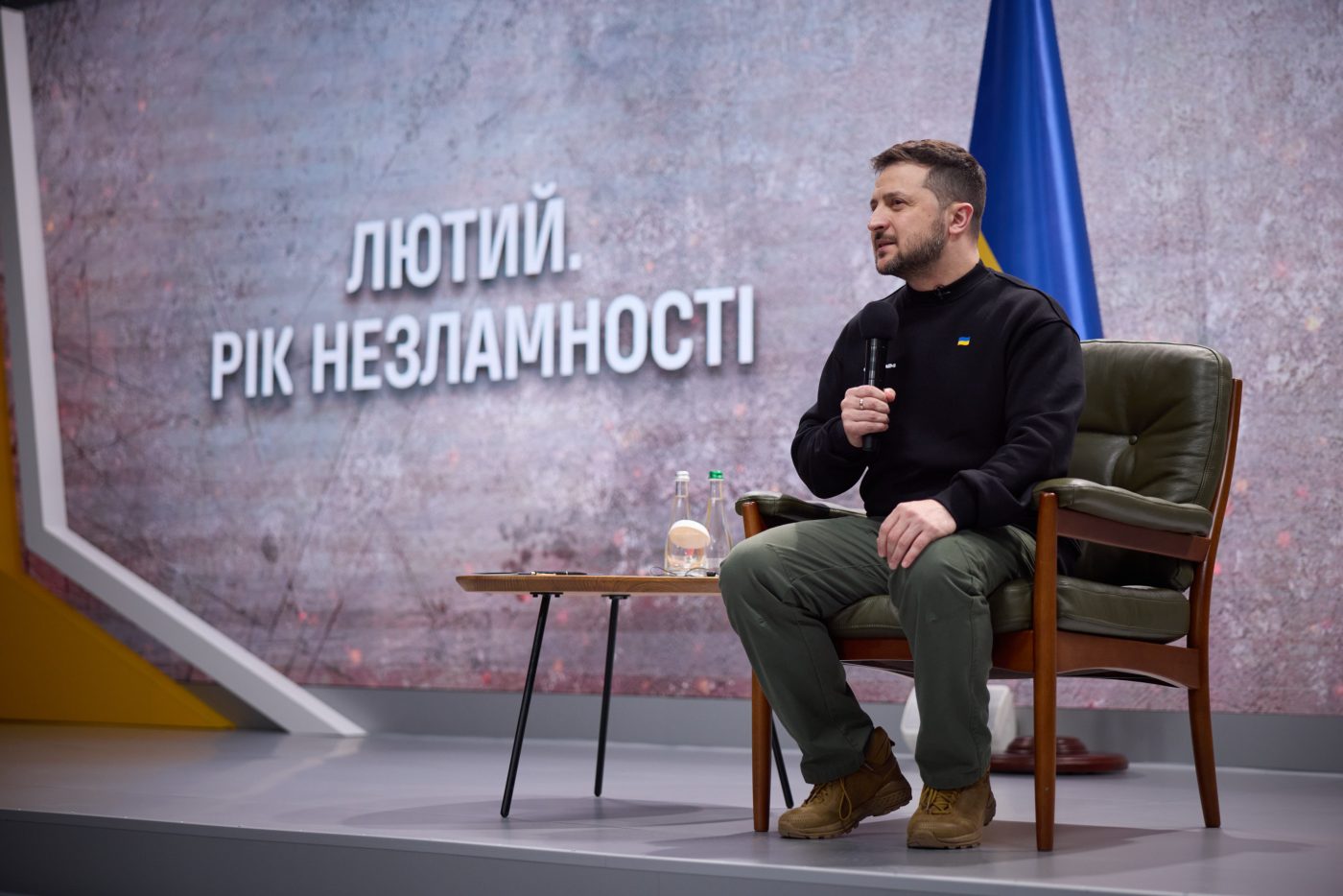
Photo: President Of Ukraine Volodymyr Zelenskyy holds Press conference of the President of Ukraine for Ukrainian and foreign media "February. The year of invincibility"Credit: President of Ukraine via Flickr https://flic.kr/p/2oiJo6w

There’s no question that the risks caused by Russia’s aggression are substantial, including the possible destruction of assets, challenges with logistics, supply chain disruption, and constant threats to critical infrastructure.  

So why should investors consider Ukraine? 

Among the country’s obvious advantages are its strategic position and European Union (EU) candidacy, the most battle-hardened and capable army on the continent, a large consumer market, and abundant natural resources. Other assets include its agricultural sector, which is growing despite attacks, a thriving IT sector, well-educated and skilled human capital, and a relatively inexpensive workforce.  

If these pitches sound familiar to experienced investors, there’s more. It seems that however, and whenever, the war ends, there will be very substantial Western aid and possibly seized Russian assets to help rebuild. The sums are unknowable, but given the horrendous damage wrought by Russian aggression, something in the hundreds of billions of dollars will be required. In other words, there will be contracts galore. 

The government in Kyiv is seeking to create a much better investment climate. Since 2014 a series of agencies and commissions have been established to smooth the process. These include a National Investment Council under the control of the President, UkraineInvest, a promotion agency that works as a one-stop-shop to attract and support foreign direct investment (FDI), the Business Ombudsman Council, which deals with complaints about unfair treatment, and a parliamentary commission on the Protection of Investors’ Rights

The Ukrainian parliament is working on a law on public-private partnership (PPP). The adoption of this draft law will allow the introduction of a new PPP model based on a readiness fee, which will allow the use of different sources of funding for restoration work, as well as the simplification and standardization of procedures for the preparation of PPP projects, and the introduction of an e-procurement system for such projects in accordance with EU standards.  

There have been amendments on transparency, tax reductions, import duty exemptions, and preferential land ownership, as well as measures to improve the rule of law, simplify regulatory procedures, offer tax credits, and cancel more than 500 permits of various types.  

National Strategy to increase FDI by 2030 and an “investment nanny” law have been adopted, while the “de-oligarchization” law is opening new opportunities. The cleansing of the judicial system is also ongoing and progress is being made in the fight against corruption.  

Ukraine is offering favorable tax conditions for IT, and research and development, and President Volodymyr Zelenskyy has referred to the possibilities in sectors like metallurgy, energy, agriculture, natural resources, technology, and military manufacturing as “the greatest opportunity in Europe since World War II”.  

Kyiv has negotiated political risk insurance (PRI) with governments and leading insurance agencies in the US, UK, Germany, and Poland. Some agencies, like the US International Development Finance Corporation (DFC) and the Multilateral Investment Guarantee Agency (MIGA), also cover military-related risks for foreign investors in Ukraine.   

https://cepa.org/article/ukraine-investors-benefits-despite-the-risks/?fbclid=IwAR0v0OPlNUM26cZbtERVtjjAci2Ymr9d2Ou4gYAIGAqkGX4bTctHX9P6_Tg_aem_Af9m7JnD08E90_j07toL4uje7L3B6NnkhscVdVj4ElGlxuP3IZ6wYxhzQ83JEyM-jmM

Ukraine and Ukrainians need to believe in our strengths more than ever. Results of the EBA Annual General Membership Meeting

On November 15, the European Business Association held its 24th general membership meeting in Kyiv. Representatives from Ukrainian and global companies, the government, the Verkhovna Rada, international partners, media, etc., joined the meeting. EBA Executive Director Anna Derevyanko congratulated all members, sharing the first results of the year. Thus, in times of crisis, we feel an even greater trend of businesses coming together in communities, as entrepreneurs are better heard in this way. This is also reflected in advocacy effectiveness data. The business in the Western region has become even stronger. Additionally, there is a strengthened commitment to education, development, and reskilling because new skills are crucial for the country’s recovery.

Key trends in digitalization, euro integration, military and defense sectors, the global vector, and perceptions of Ukraine, which were discussed in panel discussions, we welcome you to read in the follow up below.

Digitalization, Innovation, Education

During the event, Mykhailo Fedorov, Deputy Prime Minister for Innovation, Education, Science, and Technology Development – Minister of Digital Transformation of Ukraine, noted that the issue of trust from global partners towards Ukraine is crucial today. Therefore, the Ministry of Digital Transformation pays a lot of attention to communication on the global stage. In this aspect, Ukraine finds the experience of Israel interesting – cases highlighting the importance of international communication, state marketing, attracting venture funds, etc. From Ukraine’s perspective, it is essential to communicate more about companies continuing to operate in Ukraine, particularly in IT, meeting deadlines despite shelling or blackouts. At the same time, the Minister hinted at some plans – the Ministry is currently working on a project similar to Upwork (to unite businesses needing orders on one platform and provide guarantees from the state to foreign partners that obligations will be fulfilled). This project will complement other Ministry projects, such as the Innovation Development Fund, the defense cluster to stimulate the development of defense innovations (Brave 1), and the special regime Diia City. Additionally, a new country’s innovation development strategy will be presented this winter. It will be a clear guide on what to do for innovation development – how to stimulate the development of science and education, launch venture funds, manage intellectual property, etc. The strategy, analyzed based on innovation strategies from various countries, will be designed for 10 years.

Eurointegration

Olivér VárhelyiEuropean Commissioner for Neighbourhood and Enlargement, highly praised Ukraine’s efforts in supporting macroeconomic stability, a functional banking sector, government services, and simultaneous mobilization of resources to overcome the consequences of unprovoked Russian aggression. He acknowledged positive trends in Ukraine’s business activity, noting a 5% economic growth in 2023. The Commissioner also announced a proposal to provide Ukraine with a special financial instrument of 80 million euros aimed at supporting economic stability and implementing reforms, contributing to European integration.

Olha Stefanishyna, Deputy Prime Minister for European and Euro-Atlantic Integration of Ukraine, discussed Ukraine’s progress towards EU membership. Tus, the European Commission recommended starting accession negotiations for Ukraine. Importantly, this thesis was unconditionally supported in the report, and all recommendations concern only the next steps. Yes, there is still work to be done, and a strategy for each area, aimed at solving problems and advancing in the negotiation process exists. As moving towards the EU means moving towards stability in unstable conditions. And by the beginning of 2024, the negotiation framework will be clear. Ms. Stefanishyna emphasized the importance of unity and strong ties between the state and business, especially in the face of russian aggression. In response to challenges related to the war, there are plans for targeted investments in the development of border and customs communication through Romania. The goal is to open freight routes and find solutions to ensure the stability of Ukrainian businesses. In conclusion, she noted that, in the context of the budget, we as a country know the volume of commitments, so can calculate the needs.

Ivanna Klympush-Tsintsadze, Chairperson of the Committee of the Verkhovna Rada on Ukraine’s Integration into the European Union, also acknowledged the progress achieved by Ukraine since 2014 in the context of European integration. However, she noted the need to develop institutional capacity in Ukraine. While not all ministries are considered ready for EU accession, there is a need for a qualified workforce to facilitate the integration process. At the same time, Ukraine should focus on effective communication and take responsibility for the accession process, prioritizing key democratic principles, such as the rule of law.

Andrii Gerus, Chairman of the Committee of the Verkhovna Rada of Ukraine on Energy and Housing and Communal Services, informed participants about the progress and plans for the Eurointegration of Ukraine’s energy sector. On March 16, 2022, the synchronization of the Ukrainian energy system with the European one took place in a unique experimental mode. The path that we were supposed to cover in years was overcome in months. The Verkhovna Rada of Ukraine continues to work on key decisions that would contribute to the development and Eurointegration of Ukrainian energy markets, particularly the prospective biomethane and bioethanol markets. Export and import of electricity to the EU are open, and European companies have access to Ukrainian gas storage facilities. Currently, dozens of European traders use them to store gas. This speaks to the predictability and trust in our state. At the same time, the construction of new energy capacities continues. This includes approximately 500 MW of solar power stations, 300 MW of wind power stations, and 100 MW of gas power stations. Even in such a challenging year, there is room for new projects and investments in Ukraine.

The EU’s climate agenda is quite demanding, but Ukraine continues efforts to align as closely as possible with European environmental and climate policy standards. Oleh Bondarenko, Chairperson of the Committee of the Verkhovna Rada of Ukraine on Environmental Policy and Nature Management, shared this information with the event participants. Even during the war, Ukraine is implementing systemic reforms and undertaking commitments under the Green Course, the Paris Agreement, and similar initiatives. But businesses also need to be ready to work towards achieving EU environmental standards, which are cross-cutting for various industries. For enterprises willing to modernize, this can be a stimulus for growth, a competitive advantage, and simplify access to funds and investments.

The integration of Ukraine’s agricultural market into the European one will be a real challenge for both Ukraine and the EU. According to Mykola Solskyi, Minister of Agrarian Policy and Food of Ukraine, the government does not expect any concessions from European colleagues and understands that the conditions will be stringent. Even during the war, we faced significant pressure on the export of Ukrainian agricultural products. Ukraine’s agriculture is very different from European agriculture, primarily because it does not exist on subsidies. This means that the EU will have to make several changes to integrate our agro-sector, and this can significantly impact even the social structure in some countries.

Logistics and Recovery Issues

Yurii Vaskov, Deputy Minister for Communities, Territories and Infrastructure Development of Ukraine, informed the attendees about the situation at the Ukrainian-Polish border. As of the event date, the strike by Polish carriers continued. However, the demands of the carriers are addressed not to Ukraine but to the European Commission, while Ukraine remains an active participant in negotiations to unblock border movement. Since the start of the protests, the number of freight transport leaving Ukraine has decreased by about 20-25%. Meanwhile, efforts continue to improve communication with Ukraine, including for passenger transport, as well as projects for recovery. The priority is the restoration of housing, energy, and transportation infrastructure, as well as local and social infrastructure. The state electronic ecosystem DREAM has been introduced to enhance transparency in post-war recovery. Work is underway to restore and develop facilities in the ports of Odesa. Together with the business sector, the Ministry will continue to address key issues in the transportation and logistics industry.

Defense and Strategic Industries Sector

Rustem Umerov, Minister of Defense of Ukraine, noted that Ukraine is currently restoring capabilities to return to the 1991 borders. The Ministry pays special attention to localizing the lethal and non-lethal components of defense needs, encouraging business participation, particularly in auctions, to localize defense requirements, as technology is crucial for the country. The Minister also identified tackling corruption as one of his key tasks. Additionally, communication support from the business sector is needed to ensure global partners understand that Ukraine is open for business and that long-term contracts are viable. A question was raised about reserving workers, and Rustem Umerov mentioned plans for a meeting with the Ministry of Economy to discuss this issue. Overall, the Minister called for everything to be done for Ukraine’s Victory, urging cooperation and the pooling of efforts to move forward.

On his part, Oleksandr Kamyshin, Minister for Strategic Industries of Ukraine, called for the development of arms and military equipment production in Ukraine, as the high-tech defense industry should become the main driver of national economic recovery. Mr. Kamyshin urged businesses to find niches, attract qualified personnel, and fund defense projects. The Minister acknowledged corruption issues in the state defense industry but stated that Ukroboronprom already has a short-term anti-corruption strategy to overcome opaque practices related to the appointment of plant directors, property distribution, and procurement. The first results include transparent competition for the position of the head of one of the enterprises, saving 50 million UAH on centralized purchases of energy resources, and the suspension of two directors from their duties on suspicion of corruption actions. Additionally, Mr. Kamyshin noted the rapid growth of the private sector’s share in the defense industry.

Financial Block

Andrii Pyshnyi, Governor of the National Bank of Ukraine (NBU), shared the results of recent negotiations with the International Monetary Fund (IMF). During the annual meetings of the IMF and the World Bank, Ukraine was discussed in a very positive context. Economic growth, despite the war, exceeded initial forecasts. The country entered a stable deflationary trend, and a reduction in the discount rate began earlier than predicted. Despite the war, Ukraine transitioned from a fixed exchange rate to managed flexibility. An essential element is the Currency Liberalization Strategy, which is currently being implemented. The first stage, including the transition from a fixed to a managed exchange rate, has been operating successfully for six weeks. NBU is working on the second stage of currency liberalization. Mr. Pyshnyi addressed the issue of the bank sector’s windfall profit tax, predicting its likely introduction (as banks earned 110 billion UAH in profit in 9 months). The discussion on this is ongoing in the Verkhovna Rada Committee. However, he assured that financial stability would be maintained. The diagnostics of the largest banks’ resilience (covering 90% of the market) showed that the banks are in good shape.

Inga Andreieva, General Manager of Mastercard in Ukraine and Moldova, highlighted the resilience and adaptability of Ukraine’s financial sector in the face of challenges, emphasizing the effectiveness of digital solutions in times of war. In terms of the volume of contactless payments with digital cards from smartphones and other gadgets, Ukraine is among the leading countries on the world stage, which reflects the country’s digital progress and innovativeness. Tokenization, which is the basis of digital payments, and the evolution of digital wallets into universal superwallets with wide functionality are identified as future trends in the field of financial technologies. In terms of changing customer attitudes, the emphasis on meaningful finances and shopping, coupled with a desire to understand their impact on the country and the planet, reflects a growing sense of responsibility among consumers. According to Inga, small and medium-sized businesses play a key role in the country’s economy, so the company supports entrepreneurs on their way to growth. At Mastercard, the Ministry of Digital Transformation acts as a long-term partner in the development of the Diya.Business portal, and also actively supports Diya.Business centers throughout Ukraine and abroad. The company’s research says that digital channels for entrepreneurs play a significant role in business growth, so the potential for further digitalization is obvious, and Ukrainian SMEs see this as an important condition for their recovery.

Oleksandr Pysaruk, Chairman of the Board of Raiffeisen Bank, spoke about the economic recovery of Ukraine and the role of international aid. Pysaruk agreed with the NBU’s forecast of actual economic growth of 5%, acknowledging that maintaining this growth, approximately 4-5%, over the next 2-3 years will depend on avoiding additional shocks and maintaining international aid. At the same time, he noted that although the reduction in international aid will affect growth, macroeconomic stability can still be maintained, given the record high foreign exchange reserves of the NBU and the stability of the banking system. Pysaruk noted a decrease in solvent demand for loans, especially during the crisis, but expects its recovery. He mentioned the recent revival of demand, especially for investment projects in the central and western parts of the country. Raiffeisen Bank actively issues new loans, including such critical sectors as agriculture, food industry, medicine and energy. Taking into account the NBU’s latest decisions on lowering the key rate and changing the operational design of monetary policy, interest rates on loans are expected to decrease by several percentage points next year. Oleksandr Pysaruk also noted that the banking sector works cyclically, often experiencing losses during crises. Therefore, taxation of the banking sector should take into account its profitability during the full economic cycle. He highlighted that the growth of tax revenues should be primarily due to the expansion of the number of taxpayers, and not solely due to the increase in the tax burden on transparent taxpayers.

Global view 

Pedro Serret Salvat, President and General Counsel, PPG EMEA greeted the participants and shared what challenges he perceived on global and Ukrainian business landscapes. He mentioned that business and the world enter a new phase of sustainability and that should be taken into account while working. Besides, worth making sure that everything (EU policies and local policies) is in line with the European market. Speaking about plans for Ukraine Mr Salvar mentioned that PPG is already on the market, for example under the Tikkurila brand and, yes, to be honest, the group is concerned about compliance, nevertheless, plans to increase expansion. According to Pedro, Ukraine every day shows enormous agility, and, therefore, has only admiration from the world.  

Marco Settembri, Executive Vice President, Chief Executive Officer Zone Europe, Nestle, obviously, highlighted on the war as the biggest challenge in Ukraine. But also, inflation, energy, very complex regulations. However, now Ukraine is shaping the future, as a part of the EU. Nevertheless, Nestle has a clear vision of what they do and must continue doing – make organic investments, have KPSs on quality, create an environment to help farmers, customers to transit to more sustainability.

Gunter Deuber, Managing Director, Head of Raiffeisen Research, Raiffeisen Bank International shared his macroeconomic forecasts. He expects a weak global economic growth, and this fact will stay up to 2025. This will, most probably, mean fewer policy space in the Western world, incl. Ukraine support. That said, Ukraine must be prepared for more discourse on economic support. However, we shall not allow the Kremlin’s calculus that we are only concerned about our short-term prosperity in the Western world to prove true in the end, as Gunter Deuber stressed. Otherwise, Gunter shared his view on the resilience of the Ukrainian economy and service sector, including banking. With positive GDP numbers in 2023 in Ukraine, this resilience gets more and more tangible for outsiders, which may finally support more business opportunities.

A view on the geopolitical situation was shared by Risto E. J. Penttilä, CEO of Nordic West Office, policy expert, former member of the Finnish parliament, and Secretary General of the European Business Leaders’ Convention. According to his forecasts, 4 geopolitical scenarios are possible. Among the possible shocks are oil at $200, a regional war in the Middle East, no climate cooperation, US cutting support for Ukraine, and the Taiwan crisis escalating in 2024. All these would lead to a “Polycrises” scenario. Other possible scenarios include “Orderly Decoupling” which is characterised by the US-China ‘divorce’, “Sleepwalking” which includes going back to quantitative easing and “Tech Boom” which sees significant technological advancements in all areas. 

We sincerely thank the speakers and all the participants for the event! It was a great pleasure to see our large business community.

https://eba.com.ua/en/my-yak-krayina-mayemo-navchytys-viryty-v-svoyi-syly-pidsumky-zagalnyh-zboriv-eva/?fbclid=IwAR1ZNp7ZzY5WtMCKCha81ALERa3nj4yx1N9PyX876otXmUacWEG-e438rFE