These funds will be directed to key sectors of the economy where Swiss businesses are active.
Ukraine and Switzerland have signed a Memorandum of Understanding, under which the Swiss government will allocate 55 million USD to finance recovery projects via local companies. These funds will be directed to key sectors of the economy where Swiss businesses are active, as reported by the press service of the Ministry of Economy on January 23.
Details:
The Swiss State Secretariat for Economic Affairs (SECO) will provide funding. Project selection will start in late January 2025, and implementation of the first initiatives will begin in July 2025. The Government of Ukraine, SECO, and the Embassy of Switzerland will participate in the selection process.
The memorandum creates the basis for further signing an intergovernmental agreement on technical and financial cooperation, as reported by the Ministry of Economy. The agreement will cover launching public projects from the Unified Public Investment Portfolio approved by the Strategic Investment Council.
Context:
Switzerland is launching programs to support Ukraine in decentralization, recovery, joint projects with Ukrzaliznytsia, and preparation for the heating season.
In April, the Swiss Federal Council decided to allocate 5 billion CHF (equal to 5.5 billion USD) for humanitarian aid, economic development, and long-term recovery of Ukraine until 2036.
Assistance will be implemented step by step: 1.5 billion CHF will be allocated for international cooperation till 2028, while in 2029-2036 the government will explore other sources of funding to allocate the remaining 3.5 billion CHF.
On 12 February in Bern, the Swiss Federal Council adopted the Cooperation Programme with Ukraine for 2025-2028. It will be the first stage of a long-term 12-year support programme for Ukraine’s recovery, reforms and sustainable development. Under this programme, CHF 1.5 billion will be allocated for economic recovery, protection of civilians and strengthening of institutions.
“The Swiss Government declared its readiness to provide long-term support to Ukraine back in April 2024, announcing the allocation of CHF 5 billion over the next 12 years. The approved Support Programme for 2025-2028 is only the first stage of implementation of the intergovernmental agreements. In 2029-2036, the Swiss side will provide another CHF 3.5 billion for Ukraine,” said Yuliia Svyrydenko, First Deputy Prime Minister of Ukraine and Minister of Economy of Ukraine.
The cooperation programme between Switzerland and Ukraine for 2025-2028 focuses on three main areas:
Economic recovery, including support for small and medium-sized enterprises (SMEs), agricultural development and infrastructure reconstruction, including in regions affected by the hostilities.
Modernisation of public services, including healthcare and education, public transport, energy and water supply.
Protection of civilians, including humanitarian demining, documentation of war crimes, assistance in the search for missing persons and strengthening of human rights mechanisms.
To ensure the successful implementation of the Programme, Switzerland will cooperate with Ukrainian government agencies, the private sector, academic institutions and NGOs. It is planned that one third of the Programme’s budget – about CHF 500 million – will be spent on rebuilding Ukraine in cooperation with Swiss companies. During the World Economic Forum in Davos, Ukraine and Switzerland signed a memorandum on the first CHF 50 million that Switzerland intends to allocate for its companies to support projects in Ukraine. Applications from businesses are now being accepted. Implementation of the selected projects is scheduled for July 2025.
Ukraine’s evolving market offers a wide spectrum of opportunities for foreign investors, but choosing the right city can be as critical as selecting the right industry
From thriving tech hubs to industrial powerhouses, each major urban center has its unique strengths—often proven by the success of top international companies already operating there. This guide provides a comparative overview to help you decide where to establish your business in Ukraine in 2025.
Proximity to Government Institutions: As Ukraine’s capital, Kyiv houses key regulatory bodies and ministry offices, making it ideal for ventures requiring frequent official engagements (e.g., finance, legal, and consulting firms).
International Companies in Kyiv:
Procter & Gamble (P&G): Leverages Kyiv’s consumer market and robust distribution channels.
Ernst & Young (EY): Manages audit and advisory services for local and multinational clients.
Who Should Locate Here:
Corporations seeking a strategic command center for national operations.
Consultancy, banking, and consumer goods firms that benefit from direct access to governmental and corporate clients.
Lviv: The IT and Creative Hub
Primary Industries: IT Outsourcing, Software Development, Creative Services Why Lviv?
Tech Ecosystem: Renowned for tech talent and startup culture, supported by universities focusing on computer science and engineering.
European Orientation: Its western location and cultural ties facilitate collaboration with EU partners, especially in nearshoring models.
International Companies in Lviv:
GlobalLogic and N-iX: Serve global tech clients, demonstrating Lviv’s capacity for high-end software projects.
EPAM Systems: A major IT services provider capitalizing on local engineering talent.
Who Should Locate Here:
Startups seeking top-tier developers at competitive costs.
Creative agencies, design studios, and any enterprise wanting swift access to European markets.
Kharkiv: Engineering, R&D, and Advanced Manufacturing
Primary Industries: Engineering, Aerospace, Scientific Research, IT Why Kharkiv?
Academic Excellence: Home to multiple technical universities and research institutes, fueling a strong pipeline of engineers and scientists.
Industrial Legacy: Kharkiv has a long history in machinery, aerospace, and defense, making it a prime location for advanced manufacturing.
International Companies in Kharkiv:
Siemens: Implements large-scale infrastructure and industrial automation solutions.
International IT Firms: Outsourcing and R&D centers focusing on complex software and hardware projects.
Who Should Locate Here:
Businesses that rely on specialized R&D or require a steady stream of engineering talent.
Tech-driven companies needing advanced prototyping or product testing facilities.
Dnipro: The Industrial and High-Tech Manufacturing Powerhouse
Import-export businesses, tourism, shipping & distribution
Considerations for Starting Business in Ukraine by Location
Local Labor Market
Kyiv: Access to a broad range of talent, albeit with higher salary expectations.
Lviv & Kharkiv: Specialized IT and engineering skill sets at competitive costs.
Dnipro & Odesa: Strong workforce for manufacturing and logistics but may require sector-specific training.
Infrastructure & Connectivity
Kyiv & Lviv: Well-developed road and rail systems plus air connectivity.
Dnipro: Industrial transport networks and cargo-friendly railway lines.
Odesa: Direct port access crucial for global trade.
Operational Costs
Kyiv: Higher office and living expenses but excellent networking potential.
Regional Cities: Typically lower real estate and labor costs, though sector-specific fees (e.g., shipping costs in Odesa) should be factored in.
Local Incentives
Industrial Parks & Special Economic Zones: In cities like Dnipro, offering tax breaks or simplified customs procedures.
Tech Clusters: Lviv and Kharkiv often have supportive startup ecosystems with coworking spaces and incubators.
Market Access & Networking
Kyiv: Corporations, government agencies, and financial institutions.
Regional Hubs: Industry-focused communities, local business associations, and academic partnerships.
Conclusion
Choosing the best Ukrainian city to establish your business in 2025 depends largely on your industry focus and growth strategy. Kyiv remains a prime choice for corporate headquarters and financial services, while Lviv stands out for tech and creative endeavors. Kharkiv offers unmatched engineering and R&D potential, whereas Dnipro excels at industrial-scale manufacturing. Odesa, on the other hand, is the go-to location for maritime logistics and trading.
By aligning your operational needs with each city’s established strengths—and taking cues from the top foreign companies succeeding there—you can make an informed decision that sets your venture up for sustainable growth in Ukraine’s evolving economic landscape.
1. What is a representative office of a foreign non-profit under Ukrainian law?
Representative office of a foreign non-profit entity – a subdivision of a foreign legal entity (NGO or foundation) which got officially registered in Ukraine. Although such a rep office is inserted in the Unified State Register of Legal Entities and Individual Entrepreneurs of Ukraine, it does not possess the status of a separate legal entity.
2. What types of rep offices are available to foreign non-profits in Ukraine?
A foreign non-profit legal entity may register its representative office in Ukraine in the following forms:
representative office of a foreign non-governmental organization (NGO);
representative office of a foreign charitable organization.
The choice depends on the scope of activities conducted by the parent non-profit entity pursuant to its Charter. If the parent entity does charitable work, it should opt for a rep office of a foreign charitable organization. On the other hand, if the foreign entity is focused on promoting a certain public agenda, a rep office of a foreign NGO will be a more suitable option.
The registration procedure and fundamental principles of functioning are practically the same for both types of rep offices. Hence, the answers to the questions below are applicable to both of them.
3. Which documents govern the activities of a rep office?
In Ukraine, representative offices of foreign non-profits are regulated by the following acts:
Civil Code of Ukraine;
Tax Code of Ukraine;
Law of Ukraine “On Non-Governmental Organization” (for NGOs);
Law of Ukraine “On Charitable Activities and Charitable Organizations” (for charities).
The main internal document that governs the activities of a Ukrainian rep office is the “Regulations of the representative office”. The Regulations contain basic provisions on the functioning of the rep office in Ukraine and must comply with Ukrainian law.
4. What is the difference between a rep office and a separate NGO / foundation?
A foreign non-profit can establish its presence in Ukraine in two ways: by registering a representative office or by creating a separate NGO / foundation under Ukrainian law.
While an NGO / foundation is a full-fledged legal entity, a rep office does not have the status of a legal entity and possesses no separate civil capacity. This means that the rep office enters into contracts on behalf of the foreign parent entity, and the foreign entity bears full reposponsibility for the legal actions of its subdivision. Meanwhile, a separate NGO / foundation established under Ukrainian law acts in its own name, has its own separate assests and bears civil liability for its own actions.
Apart from these basic differences, there is also a set of labor, tax and internal governance distinctions between a rep office and an NGO / foundation.
5. Who is considered the founder of a rep office?
Under Ukrainian law, a representative office is established by the resolution of the foreign parent entity. Such foreign entity is the sole founder of the rep office; no other founders (participants, shareholders) may join at a later date.
6. Who can be the head of a rep office?
The head of a representative office is appointed by the foreign parent entity and inserted in the Ukrainian public Register. The head exercises his powers in Ukraine based on a power of attorney issued by the foreign parent entity.
Any person regardless of citizenship may be appointed as the head of a Ukrainian representative office. However, a foreign citizen must obtain a Ukrainian tax ID number before registering as head of the rep office.
7. Is it obligatory to employ the head of the rep office under Ukrainian labor law?
If the head of the rep office is a Ukrainian citizen, it is advisable to employ him under labor law and pay him at least a minimum monthly salary of UAH 8,000 (» EUR 180). The head may be employed either full-time or part-time. In the latter case, the head’s monthly salary may be even lower, i.e. proportionate to his hourly workload.
If the head of the rep office is a foreign citizen, you may choose one of the following options:
to employ him in the rep office under Ukrainian labor law and pay him a salary in Ukraine; in this case, it is not required to obtain a labor permit for foreigners in Ukraine;
to employ him directly in the parent entity under foreign labor law and pay him a salary abroad; no Ukrainian labor permit is required here as well.
8. Does a rep office need to rent property in Ukraine to use it as a legal address?
When filing for registration, a rep office must indicate a legal address which will be shown in the Ukrainian public Register. This address determines where all official correspondence from counterparties and state authorities will be sent.
The law does not require to provide the Ukrainian registrar with ownership title documents or lease agreements on the property stated as the rep office’s legal address.
9. Are rep offices obliged to have an official seal?
A seal is not mandatory for a rep office under Ukrainian law. However, some rep offices voluntarily choose to use a seal in their activities. A rep office may order a seal from any seal-manufacturing company; no special permits are required.
10. Documents required to register a rep office
As a rule, the following documents are required to file for registration of a rep office:
filled-in application form;
resolution of the foreign entity on setting up a representative office in Ukraine;
regulations of the representative office;
an up-to-date excerpt on the foreign parent entity from its national commercial, banking, court or other register;
ownership structure;
copy of UBO passport(s);
power of attorney for registration purpuses.
Some of the above documents may require additional notarization & apostille/legalization, depending on the circumstances.
11. Who can file documents for registration of the rep office in Ukraine?
Under Ukrainian law, only two categories of people may act as representatives of a foreign entity for the purposes of registering a rep office:
an attorney who is admitted to the Ukrainian bar and practices law individually;
a person registered as a Ukrainian individual entrepreneur, whose main type of activity, according to the public Register, is the provision of legal services.
12. What is the timeline for official registration of a rep office?
The state registration of a representative office in Ukraine takes up to 5 business days from the date of filing. However, the registrar may refuse to register the rep office if certain documents are missing, incorrect or contradict Ukrainian law.
After the rep office is successfully registered, the foreign parent entity must also file for registration with the Tax Office of Ukraine. This is a separate procedure that usually lasts several days.
13. Can the rep office open a bank account in Ukraine?
Once the rep office is officially registered, it may open a bank accounts in Ukrainian banks. Usually, the head of the office personally visits a bank branch where he undergoes identification and signs various banking papers.
The scope of KYC documents requested by the bank varies depending on the particular bank’s compliance policy. We recommend checking KYC requirements in advance with your bank of choice.
Join EY Law Denmark and EY Law Ukraine on February 25, 2025 for an insightful online webinar on the opportunities and challenges of doing business in Ukraine.
This webinar will be particularly engaging for Danish businesses looking to enter the Ukrainian market or expand their existing operations, and Danish investment bankers seeking insights into investment opportunities and trends in Ukraine.
Webinar topics and speakers include:
Peder A. Larsen, Associated Director, The Export and Investment Fund of Denmark (EIFO): “Overview of the Danish governmental program supporting investments in Ukraine” moderated by Susanne Scott Levinsen, Partner, Country and Transaction Law Leader, EY Law Denmark;
Troels Libak Stollberg, Vice President and Head of Legal & Compliance for Carlsberg’s CEE and India Region, Carlsberg Group : “Insights from Danish businesses with firsthand experience in the Ukrainian market” moderated by Bogdan Malniev, Partner, Tax&Law practice, EY Law Ukraine;
Bogdan Malniev, Partner, and Olena Dreval, Director, Tax&Law practice, EY Law Ukraine: “Understanding the Ukrainian legal framework and strategies for market entry during wartime”;
Borys Lobovyk, Partner, Law Leader, and Olena Dreval, Director, Tax&Law practice, EY Law Ukraine, Ninel Lugivska, General Manager, 3Shape Ukraine: “Key sectors of interest for investors: IT and energy”;
An interactive Q&A session to address your queries.
Date and time: February 25, 2025, from 10:00 to 11:30 (Kyiv time) / 9:00 to 10:30 (Copenhagen time).
Format: online.
Duration: 1.5 hours.
This webcast is free of charge but requires prior registration.
In a recent statement, former U.S. President Donald Trump identified Ukraine—specifically Odessa—as a prime location for real estate development
From hotel ventures to large-scale construction, Trump believes that Ukraine presents lucrative opportunities for investors looking to expand their portfolios in emerging markets.
Odessa in the Spotlight
During an autumn conversation with Ukrainian President Volodymyr Zelensky, Trump mentioned Odessa as a standout city for hotel investments, according to a report by the Wall Street Journal. Trump’s endorsement underscores the city’s strategic position as a port hub on the Black Sea, which could attract growing numbers of tourists and business travelers in the coming years.
Gaza Strip: A Potential “Middle Eastern Riviera”?
Interestingly, Trump also suggested a real estate development idea to Israeli Prime Minister Benjamin Netanyahu: building hotels in the Gaza Strip. According to members of Trump’s team, the vision includes transforming Gaza into a “Middle Eastern Riviera,” offering enhanced opportunities and financial prospects for local Palestinians.
US Envoy Steve Witkoff stated that Trump aims for transparency with the Palestinians, highlighting that improving living conditions and economic prospects in the region aligns with broader peace efforts. Witkoff noted that Gaza could become uninhabitable in the next 10–15 years without significant investment and infrastructure improvements.
What This Means for Investors
Emerging Markets: Both Odessa and the Gaza Strip represent frontiers for hospitality and real estate development. Despite political complexities, early involvement may yield high returns.
Strategic Port Locations: Odessa’s status as a key Black Sea port could drive tourism and commerce, making it a magnet for international investors.
Political Will and Support: Trump’s vocal support, as well as backing from political leaders in the region, signals potential momentum for infrastructure upgrades and policy incentives.
Key Takeaways
Odessa: Trump highlights it as a prime opportunity for hotel investments in Ukraine.
Gaza Strip: Long-term vision to develop hotels, turning it into a “Middle Eastern Riviera” for improved economic growth and living standards.
Investor Outlook: While political and security factors remain crucial to consider, these regions may offer significant long-term potential for the real estate sector.
For those looking to diversify their portfolio and venture into new real estate markets, both Odessa and the Gaza Strip could become high-reward investments—if approached with careful due diligence and an eye on geopolitical developments.
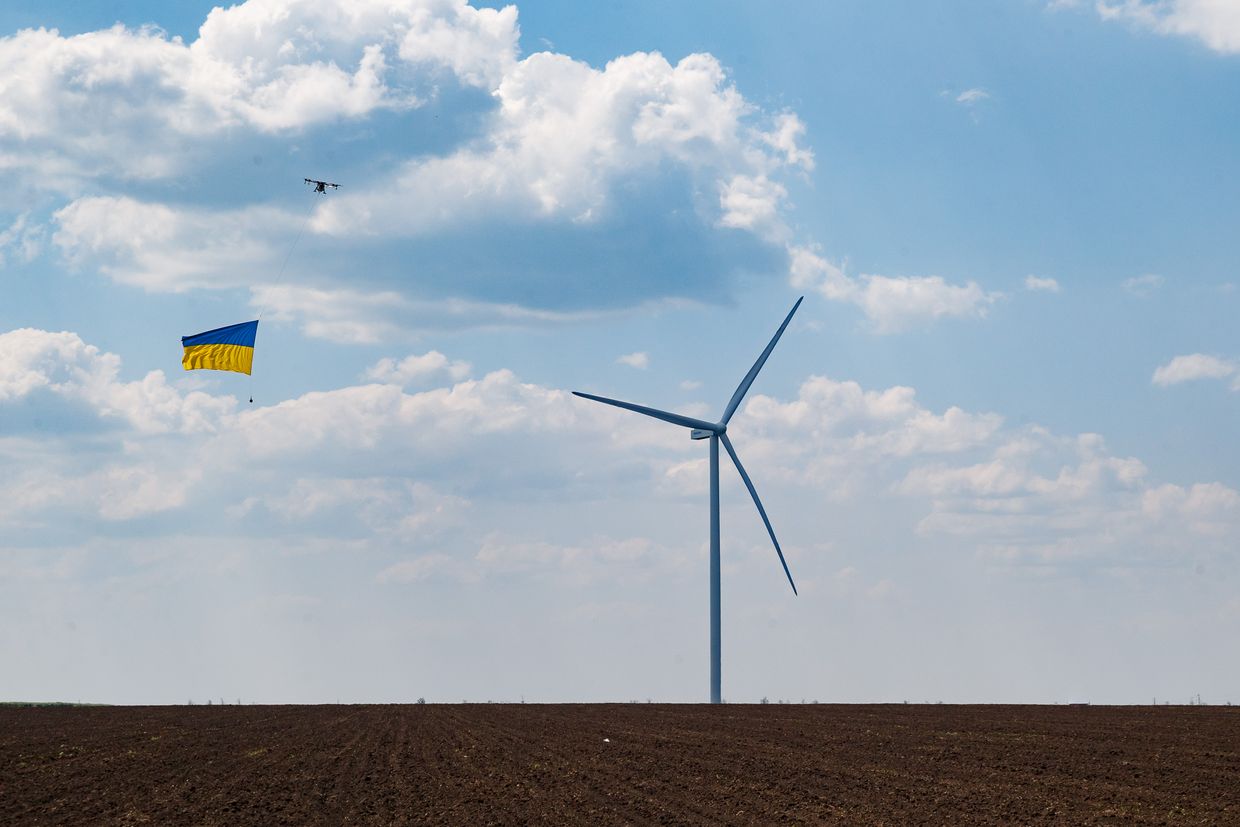
Ukraine’s largest private energy company, DTEK, announced plans on Jan. 22 to invest 450 million euros ($468 million) in expanding the Tyligulska Wind Power Plant near the Black Sea coast.
“The commitment is the largest private sector investment in Ukraine since Russia’s full-scale invasion in 2022 and the biggest ever private investment in Ukraine’s energy sector,” DTEK said in a press release.
DTEK, owned by Ukraine’s richest man Rinat Akhmetov, said it had reached a deal with lenders to purchase 64 wind turbines from Danish manufacturer Vestas, a world leader in turbine production.
Of the 450-million-euro investment, 370 million euros ($385 million) will be financed through bank loans guaranteed by Denmark’s state-owned Export and Investment Fund (EIFO), with the remainder funded by DTEK.
The project is expected to be completed by late 2026 and generate 1.7 terawatt-hours (TWh) of electricity annually, enough to power 900,000 Ukrainian homes.
The big picture: DTEK lost nearly 90% of its generation capacity in 2024 due to Russia’s aerial attacks targeting Ukraine’s energy infrastructure. Wind turbines are harder to target than DTEK’s large thermal power generation plants.
The company has also largely been shut out from financing from large institutional investors wary of its owner, Akhmetov. EIFO lending to DTEK could be a signal to other would-be investors.
A big sale in the making
Kyivstar — Ukraine’s leading mobile operator that’s been in the news lately over its parent company VEON’s plans to list Kyivstar on Nasdaq — is looking to buy Ukraine’s favorite ride-hailing service Uklon.
Forbes Ukraine reported on Jan. 27 that Kyivstar had filed an application with Ukraine’s antitrust regulator to purchase Uklon. The deal could be valued at anywhere from $40–80 million, according to Forbes’s analysis.
What’s in it for the two companies? Uklon has had trouble expanding into other markets, unable to compete with ride-hailing giants like Uber and Bolt. The company launched in Georgia, Moldova, Azerbaijan, and Uzbekistan, but exited each market except for Uzbekistan.
Veon, Kyivstar’s parent company, has capital, expertise, and access to other markets where it also operates, one market insider told Forbes. The company also owns mobile operators in Kazakhstan, Uzbekistan, Pakistan, and Bangladesh.
Uklon ended the first three quarters with Hr 1.2 billion in revenue, or $28 million, twice as much for the same period of 2023. Kyivstar would get a growing company, and be able to offer its 23 million subscribers special offers and discounts on trips, Vitaliy Laptenok from Flyer One Ventures told Forbes — potentially incentivizing even more people to use the app.
A Sense Bank branch in Kyiv, Ukraine
Back on the market?
After being nationalized at the start of Russia’s full-scale invasion over their Russian ownership, Ukraine is preparing to sell Sense Bank and Ukrnafta, Economy Minister Yuliia Svyrydenko told Forbes Ukraine in an interview published last week.
“We are ready to privatize Sense Bank, as well as consider the possibility of selling a stake in Ukrnafta, which is in dire need of modernization,” Svyrydenko said. Discussions on Ukrnafta are still in their infancy, she said.
The Ukrainian government took control of Sense Bank in the summer of 2023 after its owner, Mikhail Fridman, was placed under sanctions in response to Russia’s full-scale invasion.
Ukraine’s government nationalized oil producer Ukrnafta in November 2022, seizing it from its shareholders, infamous oligarch and former PrivatBank owner Ihor Kolomoisky and his business partner Hennadiy Boholyubov.
What’s next? It’s unclear. Selling Ukrnafta’s stakes or Sense Bank quickly is another story, as there are no reported serious buyers. Privatization has also been a historically slow process in Ukraine, where many of the country’s biggest banks are state-owned, and also in “dire need” of being privatized.
Wesley Jordan, Chief Executive Officer of VisionFund Ukraine.
Foreign investor spotlight
Ukraine’s Central Bank gave the green light to VisionFund Ukraine to operate as a non-bank financial institution, allowing it to start lending in the country, the company said in a statement last week.
VisionFund Ukraine is part of the global VisionFund network, which provides financial inclusion services in 28 countries across four continents, including loans, savings, insurance, and financial education.
Over the past 21 years, VisionFund has lent $12.2 billion through 21.5 million loans. It works mostly with small businesses and entrepreneurs, especially in rural areas.
“I look forward to working with entrepreneurs and partners in the financial inclusion ecosystem. We plan to enhance entrepreneurship in Ukraine by financing small businesses to support economic recovery and capacity building of communities and help families achieve financial stability,” said Wesley Jordan, Chief Executive Officer of VisionFund Ukraine.
“We start now as we understand how important fast recovery is and how timely and vital access to capital and inclusive finance is for small businesses in Ukraine,” he added.
The big picture: Small and medium-sized businesses are the backbone of Ukraine’s economy. But access to capital to grow businesses in Ukraine, where borrowing money is expensive, remains a big barrier for many entrepreneurs.
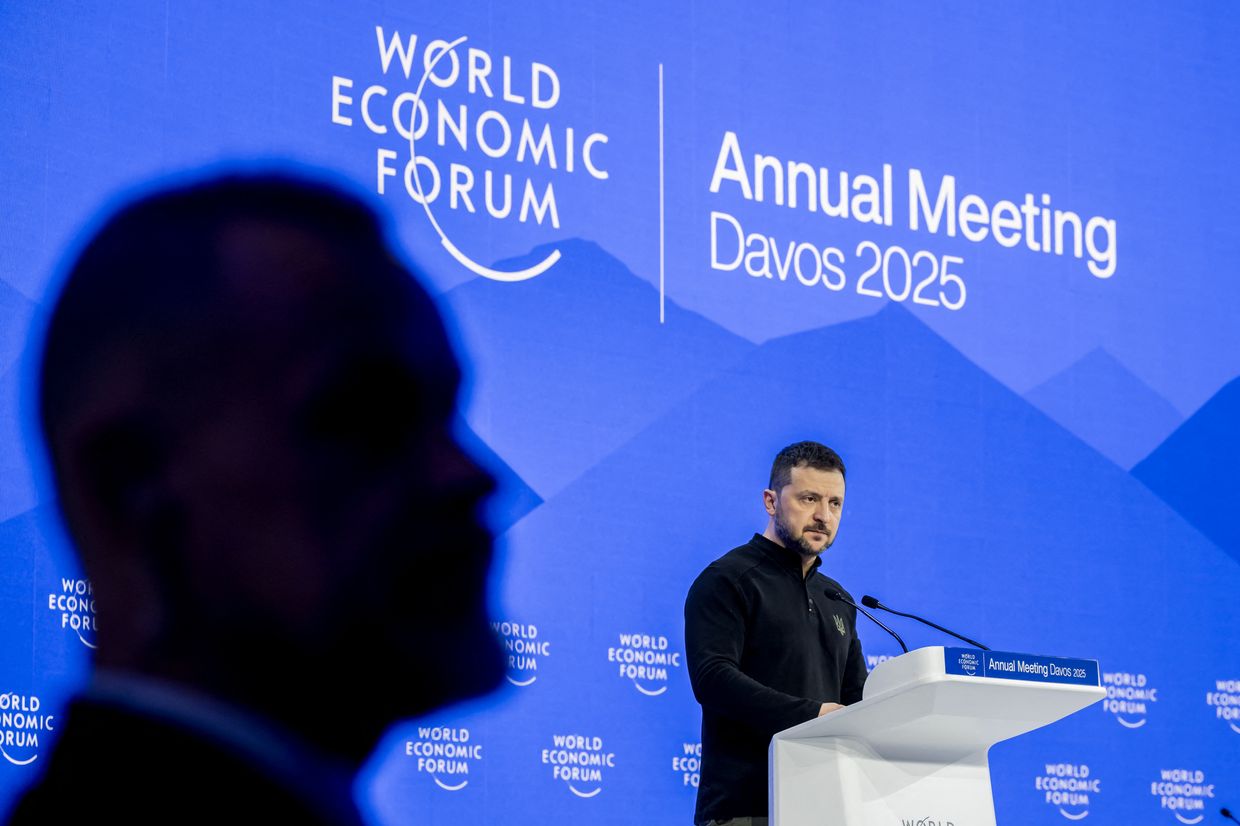
Ukrainian President Volodymyr Zelensky speaks at the World Economic Forum in Davos, Switzerland, on Jan. 21, 2025.
Davos Digest
The World Economic Forum in Davos, Switzerland is over and it’s safe to say that in addition to the inauguration of Donald Trump, Ukraine captured a lot of the spotlight this year as talks to end the war gain momentum.
An end to the fighting could usher in a gold rush of investment into Ukraine, piquing the interest — or at least curiosity — of foreign investors.
The Kyiv Independent has lots of interesting insights from the forum this year, including an op-ed from Ukraine’s Economy Minister Yuliia Svyrydenko, and an interview with Ukraine House Davos’s director, Ulyana Khromyak.
Interpipe invests $16 million in its front-line Nikopol plant since start of full-scale invasion
Steel pipe and railway wheel producer Interpipe, owned by Ukrainian oligarch Viktor Pinchuk, has invested $16 million in the development of its assets and new equipment at the plant in Nikopol, Oleksandr Garkavy, director of the Interpipe railway products division said in Davos. Russian forces are located just across the Dnipro River from Nikopol and the city is subject to near-daily attacks.
Ukraine’s poultry producer giant MHP experiences ‘largest hack in history of company.’
MHP wrote on its official Facebook page on Jan. 22 that the hack brought down its IT infrastructure, affecting shipments. The company is Ukraine’s largest poultry producer, has over 30,000 employees, and finished 2023 with a revenue of over $3 billion. The hack follows a large-scale Russian hack on Ukrainian government databases in December of last year.
Nova Poshta delivers a record 480 million packages and cargo in 2024
Ukraine’s leading private postal service Nova Poshta also reported that it delivered 19 million international parcels, an 86% increase from the year before, as it continues its expansion across the European continent. The company recently announced it had opened its first branch in Manchester, England, adding to its two London locations in the country. Nova Poshta, known abroad as Nova Post, is now active in 15 countries in Europe.
Ukraine’s central bank raises key policy rate to 14.5% due to inflation
“In order to maintain the stability of the foreign exchange market, keep expectations under control, and gradually bring inflation to the 5% target on the policy horizon, the (central bank) board decided to raise the key policy rate by 1% to 14.5%,” the bank’s Chairman Andrii Pyshnyi said in a press briefing on Jan. 24.
Ukrainian business association calls on government to implement ‘targeted air raid sirens’ to limit disruptions to business activity
Air raid alerts warning of Russian attacks in Ukraine by oblast, with the exception of the city of Kyiv, which has its own alerts separate from Kyiv Oblast, “leads to unjustified work interruptions even when there is no immediate threat in the area where the business is located,” the European Business Association said. According to the association’s members, downtime at enterprises can reach up to 50% of working time, causing disruptions to production plans and increased operating costs, undermining export capabilities. It’s unclear how Ukraine’s Air Force would even be able to change the alert system to target specific regions instead of entire oblasts.
Nearly two hectares of land near Odesa Commercial Sea Port have been allocated for an industrial park.
Ukrinform reports it has been disclosed during the Odesa Economic Revival Forum.
Odessa Mayor Gennady Trukhanov noted that now it is important to attract investments in the development of the city’s economic potential.
First of all, it concerns port infrastructure, since Odesa is of strategic importance for global food security.
The city authorities have already identified territories for the development of industrial parks. One of them is located next to the port and is its only development territory: it only needs to bring up the infrastructure.
The mayor noted, “This is an industrial park and a priority development zone. We studied the experience of our European partners, looked at it, and made such a model for our region. We are allocating nearly 2 hectares of land so that business entities may see what can be built here. Near the port, there are all the conditions for business development”. Hereby we remind that an industrial park will be built based on the UDSC Ship Repair Yard. The project upon the creation of a modern industrial park in Kiliya was presented at the Ukraine Recovery Conference (URC2024) in Berlin.
The Ministry of Economy of Ukraine spoke about key work trends and ways to overcome challenges caused by the full-scale invasion of the Russian Federation, at the forum “Economic Policy of Ukraine: Recovery in the Wartime” held on September 16, 2024.
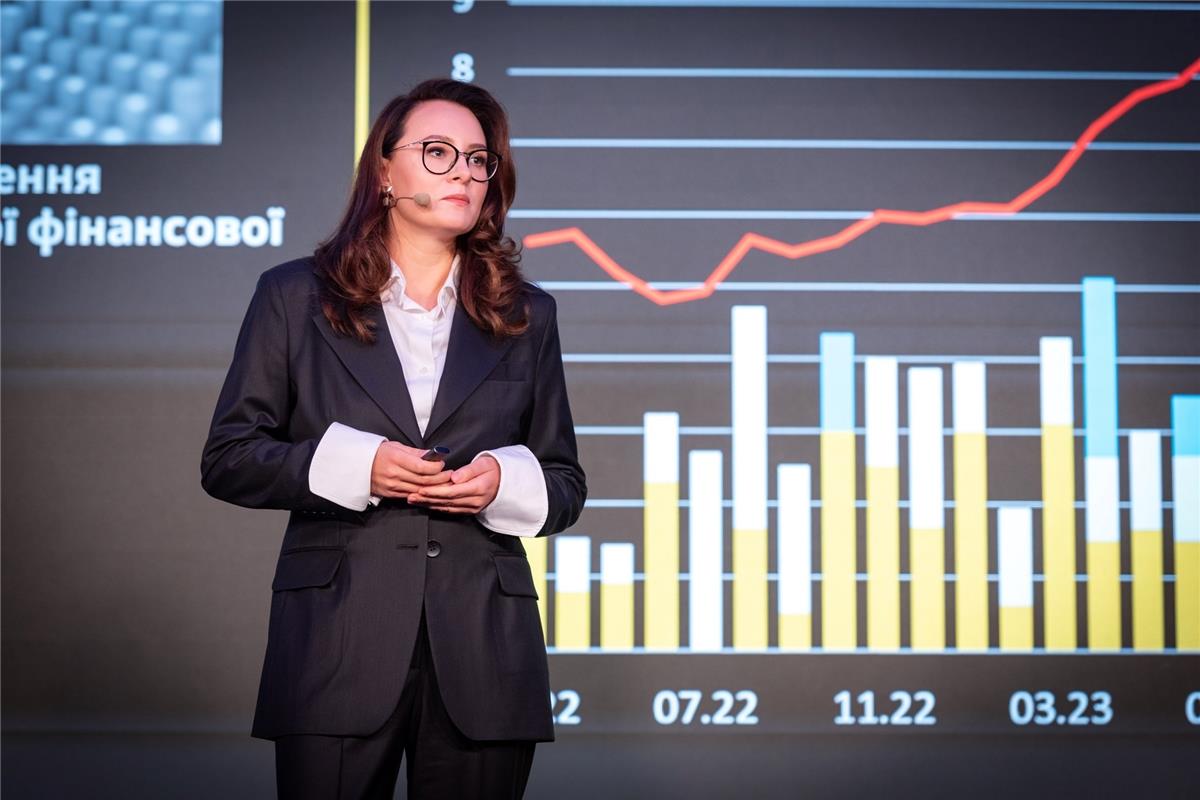
Yulia Svyrydenko, First Deputy Prime Minister – Minister of Economy of Ukraine, noted at the presentation, “One of the key tasks of the Government is to maintain the GDP growth rate and to achieve economic self-sufficiency. Therefore, we are moving towards our strategic goals: attracting investment in the real sector, increasing non-raw material exports, changing the complexity of the economy by increasing the share of processing in GDP, and improving the situation in the labor market. For each of these priorities, we have a very clear set of tools that work to achieve these goals”.
She noted, that today, the priorities of the Ministry of Economy include the digitalization of state services in order to facilitate business work.
Yulia Svyrydenko says, “This week, we are starting work on digitizing state services via eDozvil service. Since September 18, the first digital service in this framework has been available for entrepreneurs, and their number will only grow in the future. In particular, since October, it will be possible via eDozvil to obtain a conclusion that gives the right to extend the deadline for settlements for export and import transactions. This is what business has long been waiting for and asking for”.Oleksiy Sobolev, First Deputy Minister of Economy, presented at the forum the Strategy for Restoration of Small and Medium-Sized Enterprises (SMEs) by 2027. The document approved by the Government defines key directions of state policy in SMEs, including restoration of destroyed enterprises based on the build-back better principle. Special attention has been drawn to green transition, digital transformation, innovative development, and business inclusiveness, namely: engagement of women, people with disabilities, internally displaced persons (IDPs), and veterans. The document complies with the OECD recommendations, complies with the content of the Association Agreement between Ukraine and the EU, as well as complies with the Plan for the Ukraine Facility.
Oleksiy Sobolev noted, “Support for SMEs is one of the key priorities of the Ministry of Economy and the state as a whole. The principal task of the Strategy is to facilitate conditions for the development of SMEs and to give partners an understanding of where to invest now and after the end of the war. The new strategy is inclusive and will promote the business activity of women, people with disabilities, and veterans. It is coordinated with businesses, the public sector, and experts. It has already been supported by our international partners. Now we have the result: we launched the SME Resilience Alliance in cooperation with Germany”.
Stefan Kossoff, Director of Development Programs at the British Embassy in Ukraine, highlighted, “Small and medium-sized businesses have shown extraordinary resilience in difficult times. Ukrainian businesses are still operating, entering new markets, and seeking investment opportunities. We are glad to be involved in creating the Strategy since it is a holistic and practical approach to business recovery. The UK remains committed to supporting the Government of Ukraine in reforming SME policy to better meet the needs of businesses and promote inclusivity and innovation. Practical support for inclusive policies is also important, therefore, we have launched in the framework of the Good Governance Fund project Zrostai 2.0 educational program for women looking to start or scale their business or to learn a new profession”.
Teodora Dell, Deputy Director of the USAID Mission in Ukraine, mentioned, “USAID has a long history of supporting small and medium-sized enterprises in Ukraine. We do this by helping the Government of Ukraine to improve the business environment by expanding access to finance, attracting joint investments to increase efficiency, and organizing trade missions to find new markets. Overall, USAID has supported over 28,000 small and medium-sized enterprises in key sectors across Ukraine. Jointly with our partners at UKAid, we are proud to have supported the launch of digital platforms, such as the Pulse and eDozvil, which will help make business registration and feedback from government services simpler and more transparent, making it easier for thousands of SMEs to do business every year”.
Oleksandr Tsybort, Deputy Minister of Economy for Digital Development, Transformations, and Digitalization presented the work of digital platforms for business.
He said, “Our task is to minimize the human factor wherever possible by digitizing bureaucratic processes and automating tasks, in particular, by integrating artificial intelligence into government services. We believe that everything that can be done online should be digitized. This will help us to mitigate corruption risks and to increase the efficiency of government services. Meantime, it is important to support the institutional capacity of state authorities by providing thereto convenient tools for big data analysis and decision-making”.
Oleksandr Tsybort noted also, “The Ministry of Economy is not just a regulatory ministry, we provide services for business. Over one-half of the Ministry’s officers are involved in processing applications. The center of any service should be the client, in our case, the entrepreneur, around whom the service is formed. Our goal is to facilitate a convenient and open process for business: a few clicks – and the service is provided. Both the Pulse and eDozvil projects are steps towards a digital state with transparent communications between business and government”.
He noted that the Pulse platform has been created in order to strengthen interaction between the state and business. Any entrepreneur can use it for feedback on the work of state authorities: vote for problems that need to be solved by state authorities in the first place, evaluate their work, or ask for help in solving problems if any arise. The platform should broadcast the voice of business and become an applied tool that will allow entrepreneurs to actively influence decision-making by state authorities.
For reference: The Pulse platform was developed through the Supporting Digital Transformation project with support by USAID and UK Dev. The project partner is the Office of Effective Regulation (BRDO). The creation and support of this platform for its further development have become possible due to the generous support of the American people through the United States Agency for International Development (USAID). Its content is the sole responsibility of the Ministry of Economy of Ukraine and does not always reflect the views of USAID or the US Government. This platform was created with financial support from the International Development Assistance Program of the UK Government. However, the expressed views do not always reflect the UK official policy.
eDozvil project is being implemented by the Ministry of Economy of Ukraine in partnership with the Ministry of Digital Transformation of Ukraine, funded by the EU in the framework of the EU4DigitalUA project implemented by FIIAPP. Advisory support for the development of regulatory acts for the system has been provided by EU4Business: SME Policies and Institutions Support (SMEPIS) project implemented by Ecorys in a consortium with GIZ, BRDO, and Civitta with financial support from the European Union. Technical requirements for the second stage were developed with the support of the EBRD. The project Support to Digital Transformation, funded by USAID and UK Dev, provides the full cycle of launching eDozvil. Partner upon implementation is the Office of Effective Regulation of BRDO. The principal beneficiary of the eDozvil system from the government is the Ministry of Economy of Ukraine. eDozvil system has been created, inter Elia, in accordance with the Action Plan for Implementation of the State Anti-Corruption Program for 2023-2025 and is a Component I of the Plan for the Ukraine Facility. SME Recovery Strategy till 2027 has been developed with expert support engaged in the framework of the Good Governance Fund Project Business Revitalization for Sustainable Growth funded by the UK International Development from the UK Government. The project has been implemented by Abt Global and the Kyiv School of Economics.
From Reni, downstream the Danube We know that a river port in Reni covers an area of nearly 95 hectares, and its berthing line is ca. four kilometers long. Despite such a powerful state-owned enterprise, after the outbreak of the large-scale war, a series of cargo owners arrived on the Danube, intending to build handling complexes.
Just in spring 2023, the company “Development Reni Terminal”, a member of the large Ukrainian group of companies “Kernel”, leased 11 hectares of land from Reni River Port downstream the Danube for 49 years. The investor announced its intention to build two berths and a complex for grain receiving, storage, and shipment next to the port. The estimated capacity will make up 60 thousand tons per month.
Further downstream, a handling complex of the company “Potoki” has already been built and is operating, followed by opening “Pivdenna” branch in the region. The estimated capacity of the terminal allows it to handle nearly two thousand tons of oil per day.
Even further downstream, one can see that the once-abandoned pier near the Viketu Strait has been reanimated, and cargo traffic also flows through such a complex. Of course, it is worth mentioning that a river port has appeared near the Orlivka-Isaccea ferry line. In total, to the left of Reni River Port, there are four more transshipment complexes.
From Reni, upstream the Danube.
Upstream, “Agro-Reni” is planning to build a universal handling complex. This enterprise has been operating on the territory of the port for over ten years. Its founder is the largest company in Moldova, SRL Rusagro-Prim, engaged in grain production and export. Moldovan grain through Reni River Port goes to Turkey, Italy, Greece, Egypt, and other countries. Before the outbreak of the Great War, Agro-Reni built additional warehouses for grain storage on the port territory. Now the investor has decided to build a new multifunctional handling complex outside the port in order to work not only with grain but also with general cargo.
Recently, three more enterprises, previously mentioned at the beginning of this publication, have leased land in the same area. If all the plans become a reality, four more handling complexes will appear to the right of Reni. Although investors are already using more up-to-date high-tech equipment, someone aptly called such a phenomenon as reed ports.
A state-owned enterprise is not flexible.
The company “SK Acord” has been cooperating with Reni River Port for many years. Why did the company decide to invest considerable funds in the construction of its transshipment complex – “from scratch” and outside the port?
Oleksandr Stroya, CEO of “SK Acord”, notes, “Unfortunately, logistics are such that most often handling through Reni River Port is expensive, especially considering the cost of the port infrastructure. The state is not flexible in this regard. We have repeatedly said that tariffs need to be reviewed and reduced so that clients cannot leave. But it takes half a year to resolve such issues. Therefore, we have to develop in parallel our own terminal designated for dry cargo handling, both bulk and packaged, tared. We want to be more flexible in pricing, in order to offer the client acceptable conditions. Although we are still working in Reni River Port, the existing conditions do not suit us”.
“We are just killing the state-owned port”
Valentina Yepitrop, a member of Reni City Council, believes that reed ports are treated as an additional environmental burden on the river, which is not clean anyway, while private complexes are a direct threat to the state-owned port.
She says, “We all talk about the need to help Reni River Port as a city-forming enterprise, but we ourselves, by allocating land, contribute to reducing cargo traffic. We are just killing the state-owned port. I myself have worked in the port all my life, recently in a freight forwarding company, and we give an opportunity for the port to gain income. We are thinking about ways to earn salary and bonus by the dockers. Companies working in the port and wishing to leave it say that the services of the state enterprise are expensive. But there is a Port Council, which could, in my opinion, send a joint letter of port operators to the Ministry of Infrastructure with a proposal to reduce tariffs so that Reni River Port could become competitive with other Ukrainian ports.