Report on recovery of Ukraine economy calls for more targeted assistance and greater cooperation among aid groups
How do you rebuild a country ravaged by war? It’s not usually something the European Investment Bank has to do. But the EU bank’s big commitment to support Ukraine after the Russian invasion meant that the question had to be answered.
“We are usually focused on financial transactions, and we don’t develop strategies for helping countries during a war,” says Jean-Erik de Zagon, head of the Kyiv office for the European Investment Bank. “But we needed a plan for the huge amount of money we’re investing to reconstruct Ukraine.”
Working with the Boston Consulting Group, the European Investment Bank reviewed public documents on the war in Ukraine, especially findings from the international conference in Lugano, Switzerland, held in July 2022 to raise money for Ukraine’s recovery. More than 30 loan officers, engineers and other experts at the European Investment Bank contributed to the resulting report.
The final publication, released in February 2023 and called A Study on Potential Recovery Strategies for Ukraine,offers a blunt assessment of the country’s needs. Yearly gross domestic product in Ukraine is expected to shrink more than 30% because of the war with Russia, the report says. All economic sectors are struggling, but especially heavy industry, energy supply, and foreign trade.
The survival of Ukraine as a sovereign state is a prerequisite for future recovery and long-term modernization, the report says.
“If Ukraine can’t survive now, nothing will work,” de Zagon says. “They have to win the war, that is already difficult, and then we also have to keep people in Ukraine, keep the economy going.”
Here are some of the headline problems facing Ukraine:
The war has caused six million people to leave their homes.
There is a bottleneck in the process to review, approve and implement recovery and reconstruction loans and grants in Ukraine. Providing loans and technical assistance directly to the appropriate office, town, city or region, under creative investment plans to spread the risk, will be key to effectively rebuilding the country.
Years of economic progress have been reversed. There has been a significant decrease in the monthly value of goods exported compared to before the war (down 62%).
Small and medium-size companies have an average fall in revenue of nearly 80%. Nearly a third of these companies have relocated to safer areas and 66% can’t pay employees.
Solutions for Ukraine rebuilding
The Ukraine recovery report outlines the ways that the European Investment Bank and other organisations can help the country survive and recover.
1) Offer more help right now
“If we don’t do more work now during the crisis, we will be so far behind when we finally start that everything will be more difficult,” de Zagon says. “People in Ukraine need help now — food, medication, shelters, schools, hospitals.”
The so-call solidarity lanes that improve roads between Ukraine and border countries are playing a big role in keeping the economy alive and meeting basic needs.
2) Assist key areas of the country
Investment needs to be aimed where it can do the most work for the economic recovery. Ukraine’s needs far outstrip available funds, so international financial institutions must focus on the most important investments that can keep the economy functioning and lay the foundations for a long-term recovery.
“You have to make very difficult choices when deciding where to put the money,” de Zagon says. “Which projects do you need to finance first, which roads need to be repaired first, what infrastructure is needed today, what shelters should be built, what food do we need? And all this work needs to be sustainable and generate taxes, so the government can pay its bills.”
3) Closer cooperation with the European Union
The future of Ukraine is tied to integration with other democracies, especially those closest to the country. Improving cooperation and integration with the European Union is good for Ukraine and Europe, good for global trade, and good for the entire democratic world, the report says.
4) Let Ukraine lead the recovery
Ukraine must own the reconstruction effort, as this strengthens the country’s sovereignty and accountability. While international organizations need to advise and monitor the recovery process, Ukraine will have to become independent from international aid at some point after the war ends.
“We can come with our ideas and experience, but we should give the power to the government and the people,” de Zagon says. “We should let them have their way with planning the reconstruction.”
5) Work together
Hundreds of organizations are helping Ukraine. International financial institutions should find out how they can offer the most value by working together and then tightening these partnerships.
“There are so many needs and not enough resources, so we have to be sure we work together and coordinate,” says de Zagon, who meets weekly with Ukrainians, EU institutions and aid organisations around the world to make sure every possibility is being exploited to help Ukraine. “We can play like a team.”
The Royal Society and the Universities Policy Engagement Network (UPEN), together with the Fund of the President of Ukraine for Education, Science and Sports and the Embassy of Ukraine, are planning a conference to support Ukraine’s reconstruction and recovery. This conference is being funded by Universities UK International and Research England and supported by the Academy of Medical Sciences, British Academy, and the Royal Academy of Engineering.
Research evidence and expertise has a vital role to play in supporting policy makers to tackle the complex and urgent challenges related to the reconstruction and recovery of a resilient Ukraine. In consultation with researchers and policymakers in and outside Ukraine, the Royal Society and Universities Policy Engagement Network (UPEN) are therefore planning a conference aimed at supporting Ukraine’s reconstruction and recovery by improving policymakers’ access to the most relevant and best available research evidence and expertise, identifying and prioritising evidence gaps and research needs, and providing a forum to broaden and deepen research and policy networks.
Ukraine’s recovery: rebuilding with research will bring together researchers from the Ukrainian and UK universities and policy makers to explore how research can help to tackle some of the many challenges facing policymakers, from rebuilding Ukraine’s economy, to addressing the complex needs related to health and wellbeing, re-imagining regional security and partnerships, and planning for a green recovery. The conference outcomes will be captured in a conference report and shared with policymakers ahead of the UK government hosted Ukraine Recovery Conference, which is taking place in June 2023.
Ukraine’s Recovery: Rebuilding with Research is an invite only event that will take place at the Royal Society from 15-16 May 2023.
Ahead of the conference, the Royal Society and UPEN called for researchers who may have relevant evidence and expertise, and who may be interested in contributing to, or taking part in, the conference. Thank you to everyone who took part in this survey.
If you are interested in finding out more about the conference, please get in touch with international@royalsociety.org.
Ukraine’s ministry of economy speaks of first international investments in the country, and how the state helps businesses
Ukraine’s recovery is impossible without private investment, its top officials have said more than once.
The primary responsibility for attracting investors in Ukraine rests with its ministry of economy. Or perhaps, more precisely, one man, deputy economy minister Oleksandr Hryban, and one tool, Advantage Ukraine.
Despite the active phase of war in Ukraine, the platform is working on sixty projects worth about USD 9 billion, including in the agricultural sector, woodworking, building materials, and wind energy.
LIGA.net spoke to Mr Hryban about the Ukrainian government’s role in attracting investment and the projects that have the best chance of being implemented. Below is a brief summary of our conversation.
What do investors want in Ukraine?
Despite the “positive emotions and sentiments towards Ukraine,” investors have a pragmatic capitalist approach – a project must meet a certain set of criteria, Mr Hryban says.
The first criterion is financial hygiene, that is having an international financial audit for the last three years, previous experience with international financial institutions and commercial banks, and having passed the “know your customer” procedure.
The next step is economic feasibility, whereby the investor assesses whether the applicant’s claims correspond to reality – for instance, what the situation with electrical grid connection is, whether all cost elements are sufficient, how they affect the final cost of the product, and so on.
The potential lender first wants to understand whether everything is in place to reach the KPIs [key performance indicators] that have been set.
What has the war changed?
Prior to the full-scale invasion, Ukrainian businesses seeking to attract foreign investment usually turned to investment banks for assistance. Those helped prepare an application, the necessary audit, and other similar procedures.
However, after Russia’s invasion of Ukraine, all international financial and credit institutions suspended operations in Ukraine because of force majeure clauses in their capital raising agreements.
Therefore, even those Ukrainian businesses that meet the requirements of financial hygiene and investment feasibility have ended up having very few opportunities to raise funds.
That is why Ukraine’s economy ministry launched the Advantage Ukraine project to promote Ukrainian businesses last year. Started as a purely marketing platform, its role has grown over time.
Advantage Ukraine founders believed that there was a great risk of arousing foreign investors’ interest in Ukraine – helped in particular by the global attention and good attitude to Ukraine – only to find them not satisfied when it came to the practical implementation of projects.
How does Advantage Ukraine work?
The platform receives applications from both those seeking investment and those looking for projects.
A team of experts in investment analysis verifies the applicants and communicates with them to sort out what they need. Then Advantage Ukraine experts decide whether to give the green light to a particular request.
To take an example, right now Ukrainian businesses are sending many requests for war risk insurance. Advantage Ukraine helps draft applications, prepare teasers for potential investors, explain what is missing in their request, etc.
On the other hand, the platform’s members convince foreign investors that it is possible to do business in Ukraine even in times of war.
Currently, the United States International Development Finance Corporation (DFC) is the most active in helping Ukraine, having committed USD 1 billion in various financial instruments, including war and credit risk insurance, loan guarantees, and direct loans.
Joint projects with DFC, therefore, are used as a guide. Ukraine’s ministry of economy expects them to be implemented as soon as possible to show that the country can attract and implement investments.
What are the first investments in Ukraine?
The projects are being developed through two instruments.
The first is war risk insurance. One of the projects within this instrument is in the woodworking industry in the Zhytomyr region, with a total investment of up to USD 300 million, which is about MDF and HDF [medium and high density fibreboard].
Ukraine’s economy ministry highlights the importance of this project: Since such products used to be imported, in particular from Russia, the project’s success will make it possible to “finally knock Russian producers out of the European market.”
Other projects include a building material production plant to be set up in western Ukraine, and an expansion of an oil extraction plant in central Ukraine. Those are all Ukrainian companies looking for foreign investment.
There is also a project exclusively by a foreign company that is looking for opportunities to insure against war risks to build a vegetable protein production plant. Another foreign company from Austria plans to build a building material production plant in Ukraine.
The other investment instrument is USD 600 million in direct lending, which is also carried out with DFC. Ukraine’s economy ministry expects that the lending will help mobilise more than USD 1.3 billion into the economy. The projects include:
Woodworking, with a plant for the production of sheet glass
The agro-processing sector, namely the expansion of an agricultural farm, “a fairly large poultry farm” (a company with a foreign investor, Mr Hryban clarified)
Another plant for the production of building materials
Construction of a specialised warehouse for a major retailer
A private Ukrainian postal operator that plans to build a distribution centre and buy out logistics centres
A project to build housing in western Ukraine, to be allocated to internally displaced people
In total, Advantage Ukraine has more than 60 projects in the pipeline, totalling about USD 9 billion.
The specific projects listed above are at a more advanced stage, but there are others as well, including a request from a large foreign investor in the renewable energy sector that has already invested in Ukraine.
It provides for building a new phase of a wind farm, with USD 1.3 billion in investment, and the company is now looking for funds to insure against war risks.
Unfortunately, the institutions that are currently helping attract investment for insurance do not have enough capacity to cover the required amount, so the economy ministry wants to use donor funding to be put into a separate insurance trust fund.
What are the biggest obstacles to attracting investment in Ukraine?
The first is the war – in fact, the already mentioned war risk insurance.
Potential foreign investors are also “starting to remember our traditional chronic problems” with the rule of law and domestic corruption.
There are now fewer questions about corruption, Mr Hryban says, because there is an anti-corruption system, a business ombudsman, and assistance from the government office UkraineInvest.
While VAT refunds were a big problem, the situation has improved, the deputy economy minister assures.
Therefore, the key issues for foreign investment in Ukraine are the rule of law and the judiciary. While Ukraine’s economy ministry is not directly responsible for this, it sees its task as bringing this issue to the Ukrainian leadership.
What is the UkraineInvest government office?
Alongside Advantage Ukraine, there is a government office called UkraineInvest, but they have different tasks.
What Advantage Ukraine does is select projects and communicate with international lenders and investors who are yet to make up their minds on entering the Ukrainian market until they do.
Once investors and lenders agree and work in Ukraine on a specific project, they are handed over to UkraineInvest for support. In particular, the office ensures communication with local authorities, tax authorities, etc.
International companies that already operate in Ukraine, like Bayer or Carlsberg, and decide to expand production do not need to turn to Advantage Ukraine; they work directly with UkraineInvest, which provides B2G communication.
The post-war reconstruction of Ukraine has drawn immense attention and a number of proposals have been put forward to outline a way forward. Contributions from CEPR, German Marshall Fund (GMF), CASE, CASE Ukraine and Anders Aslund and Andrius Kubilius (A&K), a collection of essays by CESifo, and several others have been released over the past months, each with a specific view or recommendations.
Given the uncertainty associated with the duration and intensity of the war and how it will eventually conclude, these publications generally outline a series of main strategic principles which are independent of the way in which the war ends. To help ongoing discussions on how the reconstruction should look, we have taken stock of these proposals and highlighted commonalities and differences across them. We are advantaged by the fact that the proposals have much in common. Although the devil is in the details, keeping in mind “the big picture” and agreeing on the main principles before diving into these details is always useful.
Note: in this op-ed we use the terms “reconstruction” and “recovery” interchangeably implying that reconstruction/recovery is not a return to the previous state but it is “building back better”.
What are common principles for reconstruction?
First and foremost, there is a consensus among proposals that minimizing the damage done by Russia today will help reconstruction in the future. Therefore, faster and more intense provision of weapons to Ukraine and strengthening sanctions on Russia are prerequisites for successful reconstruction. No less important is financial support to keep the Ukrainian economy running. At the same time, there is an understanding that some reforms enabling future recovery can be implemented even during the war, as suggested, for example, by the Memorandum of Understanding on provision of the EU macro financial support or the IMF program. The proposals also generally agree that at least in the early stages of Ukraine’s reconstruction a military insurance or other forms of government support are needed to de-risk private investments.
This reference to EU support underlines another key point, as all of the proposals agree that Ukraine’s reconstruction should be aligned with EU accession. This implies that Ukraine needs to preserve democracy and implement principles of market economy, the most fundamental of which is the rule of law. Similarly, and although not always mentioned explicitly, Ukraine’s NATO membership is no less important than entering the EU, as NATO membership or equivalent security guarantees are essential for lowering the probability of another Russian attack on Ukraine.
At the same time, the reconstruction should be owned by Ukraine so that Ukrainian players have an impact on reconstruction and have “skin in the game”. This can be realized by the creation of a specialized technocratic agency responsible for reconstruction and EU integration at the same time. The exact design, governance, structure, and spheres of responsibility of this agency are subject to discussion (e.g., the GMF proposal suggests a platform led by G7). While every proposal recognizes the necessity to involve non-EU players into reconstruction, its coupling with the EU accession naturally suggests that the EU will be heavily involved in a number of issues, such as business and trade regulation, energy sector, taxation and other legislation related to the acquis, as well as (re)construction of some infrastructure, such as border crossing points or railroads. Therefore, the presence of EU experts in the agency is highly desirable. At the same time, the Agency should be responsible for coordination of donors so that their funds are used the most efficiently.
Judicial reform (more broadly, law enforcement reform which includes not only courts but also prosecution and security services) is also noted as the fundamental priority for reconstruction. The necessary steps for implementation are quite clear but there is great resistance within the existing system, and therefore close monitoring of reform progress by donors is needed. Moreover, the Ukrainian government has a capacity constraint: it does not have thousands of honest judges to fill the existing vacancies. A solution could be hiring “outsiders” (lawyers who do not have experience as judges), but they need to be trained to international standards, and Ukraine would require support for this training.
Along these lines, there is a consensus that Ukraine needs public administration reform. This reform will enable all other changes, such as deregulation (economic liberalization), continuation of healthcare and education reforms, and reforms of other public services. In general, a high-quality bureaucracy is essential for an efficient (yet smaller) state which will be needed for the reconstruction and EU integration. In the previous years there were multiple attempts to reform the public service using, for example, project-based technical assistance and/or a dual-track approach such as introduction of directorates. Because of the great inertia of the system, these attempts had little impact. In an ideal world, Ukraine needs a highly professional and targeted corps of public servants whose integrity is beyond doubt and who are able to develop policies based on data and their professional judgment and take responsibility for implementation of these policies. In practice, however, positions in public offices are hardly attractive for high-quality people. This calls for a rationalization of salaries, along with the law enforcement reform – so that an official is not afraid that he/she will be put in jail for his/her policy choices.
The proposals on reconstruction also underline the importance of continuing reforms which have shown good results – most notably decentralization but also education, healthcare reform, and deregulation. Strengthening competition is also mentioned as a fundamental reform for increasing economic efficiency and lowering the impact of oligarchs. However, taking a closer look at these reforms, we can identify a few questions that need thorough discussion. For decentralization, the key issue is the distribution of powers between rayon and oblast councils and state administrations (and consequently between the President and Cabinet of Ministers). The logic of the reform suggests that most powers should go to local councils and their executive committees, while local administrations should become regional representatives of the central government and thus be appointed by the Cabinet of Ministers. However, this suggestion will likely face strong opposition from incumbents (reluctant to give away powers) and thus needs a wide social consensus. Likewise, optimization of school or hospital networks, merging of universities, or closing “diploma mills” will meet resistance at many levels. These reforms will require clear roadmaps and explanation of how the provision of respective services will be organized, how their quality will be enhanced, and what compensation will be offered to those who will lose because of these reforms.
There is also a general agreement that Ukraine’s recovery should be “green”, i.e. that Ukraine should reduce energy consumption by implementing energy-saving technologies and increase production of green energy (including hydrogen). In the mid-term, Ukraine can increase production of natural gas to replace gas previously supplied to the EU by Russia. The necessity to integrate Ukrainian and European energy markets is also unanimously recommended. At the same time, there is a question about the degree of decentralization in energy production (e.g. whether to leave central heating in multi-flat buildings or install individual heating systems there, and in the latter case, if an individual heating system employs renewable energy, how to sell the excess energy to the grid, and similar issues). These questions require rigorous consideration by experts and the government.
All of the papers surveyed here also agree that the reform of state-owned enterprises should continue because these enterprises are often ineffectively managed and a source of corruption. The majority of enterprises need to be privatized, and here the questions are (1) which enterprises to privatize and (2) what to set as the purpose of privatization – maximization of revenues from privatization? Speed? Something else? Enterprises that remain in the state property should receive proper corporate governance (some enterprises such as Naftogaz, Ukroboronprom, or Ukrainian railroads will require an individualized approach). While it is clear that government entities should not be managing SOEs to avoid conflicts of interest, the implementation of this principle – whether these SOEs will become independent entities or a part of a holding company (a National Wealth Fund) – is subject to further discussion.
Additionally, the need for social support (for veterans, people with disabilities, internally displaced people, returning refugees, and others) has greatly increased because of the war. The Ministry of Social Policy intends to change the approach to the provision of support, from a complicated system of privileges and (small) monetary payments to tailored support for a household aimed at making it self-sufficient. To implement this reform, the Ministry and local governments will require, among other, a large number of trained social workers and psychologists.
Finally, the considered papers support the idea of confiscating Russian assets to at least partially pay for the recovery of Ukraine. It is important to have a social and political consensus that the aggressor must pay and also a clear plan on how these monies will be utilized.
The consensus among these points is striking, but there are also divergences and several controversial issues which need to be highlighted.
Questions for discussion
The key priority in tax reform should be the simplification of tax procedures, as it is essential to address the main impediment for development – the discretion that tax authorities can apply to taxpayers amid a non-functional legal regime. While tax rates are not as critical, concentrating on reforming tax administration, which includes minimizing corruption opportunities and streamlining processes, can effectively address these issues. This also applies to customs, where eliminating tax privileges as well as harmonizing data exchange with the EU countries are necessary to create a level playing field.
Two other issues that inspire heated debate are pension reform and labour market reform. Given the large number of refugees and internally displaced people, these questions have become even more acute. With regard to the pension system, the main question is the introduction of the second pillar (mandatory savings). The underlying issues include funds management (centralized or decentralized, public or private, allowed investment vehicles) and financing of this pillar. The attempts to reform the labour market are usually opposed by those willing to preserve the current system with strong protection of workers (as opposed to higher flexibility). In practice this protection applies only to people employed officially and it may actually decrease employment (companies may be reluctant to hire workers whom they cannot fire). Moreover, it created two parallel labour markets – official and semi-official (contract) labour relations. In our view, greater labour market flexibility coupled with active labour market policies, such as (re)training should be a priority. They should be aimed at higher labour force participation – of women, elderly people, representatives of vulnerable groups. The question of pension reform should be postponed and considered together with tax reform since pension payments make up a large share of government expenditures.
All the papers on reconstruction agree that, despite heavy mining of land and blockade of ports, the Ukrainian agricultural sector is doing reasonably well, and when the war ends, it should recover rather quickly. However, to increase this sector’s efficiency and attract investment (including FDI), opening the land market is advised, i.e. permission to purchase land for companies and for foreigners (except Russians). There can be some limits on the area which one person or enterprise can purchase, requirements to company transparency and other market regulations which can be discussed for the continuation of land reform. Another “land-related” issue is the land market in municipalities: the reconstruction will require building new houses and social infrastructure, and intransparency or corruption in the land market should not become an impediment for that. Land market design requires both technical assistance and a wide social discussion to arrive at an acceptable solution.
Finally, two related controversial issues are political reform and media market reform. It is no secret that oligarchs often use their control of the media for political purposes. On the other hand, since Ukraine does not have an established tradition of ideological parties, media presence is a significant factor of electoral success. Some suggestions include limiting sources of party financing to the state budget only, limiting media presence of political parties, or limiting impact of certain individuals and entities on media, each of which may be controversial and all of which have trade-offs. The exact changes to regulation of political parties and the media market need a thorough stakeholder discussion.
This brief description of the various approaches to reconstruction shows that current suggestions have much in common, and while they provide general recommendations, many of them avoid specific recommendations on the issues that Ukrainian society has been discussing. Further proposals on reconstruction, bringing together all relevant stakeholders, can dive deeper into the issues covered here to develop specific policy solutions.
The summary of the above discussion is presented in the following table.
consensus questions
issues to resolve (technical assistance may be needed)
Ukraine aims at the EU and NATO and introduces necessary reforms
aid conditionality; donor coordination
Ukrainian ownership of reconstruction; one coordinating agency
agency structure, governance, spheres of responsibility
Judicial system/ law enforcement reforms are fundamental
filling in vacant positions of judgesprosecution and security service reforms
public service reform redesigned and implemented
reform design, financing and communicationpublic officials from the EU or other countries may need to work in Ukrainian government agencies (long-term contracts)
decentralization should continue
distribution of powers between local councils and administrations; between president and Cabinet of Ministers
energy sector
introduction of the EU legislationnetwork design/ extent of decentralization
SOE reform
which companies to privatize?how to structure governance of companies that remain in state property?
social support schemes
training social workers, psychologistscreating the registry of social support clients
confiscation of Russian assets
procedures for confiscating Russian assets in Ukraine and other countries
controversial questions
suggestion
tax reform
to concentrate on tax administration reform until proper forecasts become possible; reform customs administration;cancel privileges and generally aim at simplification of the system
pension system
aim at increasing labour force participation, pension age increase may be necessarydefer introduction of the second pillar until proper forecasts are possible and a proper census is implemented
labour market reform
aim at flexibility and active labour market policies (re-skilling)
land market
open market for enterprises and foreigners (except Russians) to attract investmentorganize market in municipalities
political system (parties)
party financing schemes
media
restrictions and transparency of media ownership, media market structure
The Advantage Ukraine investment platform team in partnership with the Ukrainian Economy Ministry, has prepared the first investment projects totaling $430 million and forwarded them to the United.
“The first five projects have been accepted for consideration by the DFC. In particular, these are projects of Ukrainian investors in the construction, manufacturing, e-commerce, and residential real estate sectors totaling $430 million. Each of them will be evaluated separately. There is also a lending project worth several million [U.S. dollars] for a foreign investor to manufacture construction materials,” Deputy Economy Minister Alexander Giban said.
Several projects are being reviewed at an early stage now, which Advantage Ukraine expects to forward to the DFC soon, Giban said. In particular, these include projects in the logistics, high-degree processing of agricultural products, energy, animal husbandry, and construction materials sectors, he said.
The DFC recently announced its willingness to mobilize over $1 billion in private capital to support the Ukrainian economy, the ministry said.
The Ukrainian Economy Ministry and the DFC are working together to prepare and compile a list of investment projects with assistance from Advantage Ukraine, whose project team is in charge of the initial selection of projects with support from the USAID Competitive Economy Program in Ukraine and in cooperation with applicants.
The town infamous for a massacre at hands of Russia has become a symbol of Ukraine’s reconstruction effort, but experts say the influx of money from the west will bring challenges in such a corrupt country
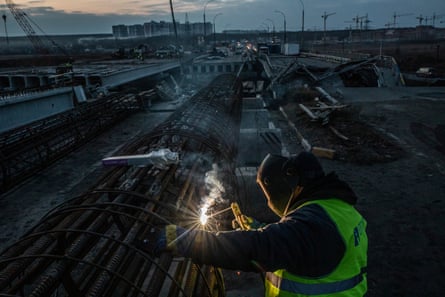
Standing on the crumbling roof of a house, dozens of workers hammer in unison. Around them, cranes, bulldozers and trucks work frantically to repair roads and buildings destroyed by Russian artillery. It is hard to believe that this noisy construction site is in Yablonska Street, in the town of Bucha, in the north of Kyiv, at the precise crossroads where a year ago the bodies of dozens of civilians, brutally killed by Russian soldiers, were strewn over almost a mile, some with their hands bound behind their backs.
Ukraine has already repaired, and in many cases fully rebuilt, many of the sites destroyed by Moscow, including bridges, roads and government buildings. It is only the beginning of what Kyiv has described as the largest rebuilding effort since the second world war and perhaps the most expensive in history, with an estimated cost of half a trillion dollars. But managing this unprecedented influx of money in a country with a long history of corruption will bring challenges, experts say.
“Under the Marshall plan, the US programme that provided economic assistance to restore the infrastructure of postwar Europe, Washington contributed $13.3bn in aid to 16 countries,” says Donald Bowser, the founder of Support to Ukrainian Recovery Initiative, an NGO focused on recovery projects in formerly occupied areas of Ukraine. “That’s approximately $150bn [£121bn] in today’s dollars. Rebuilding Ukraine could cost the west four or five times as much. Nobody has ever invested all this money for the reconstruction of a single country.”
When early in July last year Ukraine’s president, Volodymyr Zelenskiy, said the reconstruction of war-torn Ukraine would begin before the end of hostilities with Russia, many western leaders were sceptical. The idea of starting to rebuild a country while its cities continued to be devastated by Russian bombs seemed foolish as well as dangerous. And yet, Zelenskiy has been as good as his word.
One of the most iconic images of the war dates back to early March 2022. The photo featured hundreds of civilians crowded together under the remains of a key bridge that connected Irpin to the city of Bucha, which at that moment held those people suspended between life and death: on one hand, the Russian artillery advancing from the north; on the other, the safety on the road to Kyiv. A year on, dozens of workers have nearly completed its restoration.
In the last year, Ukraine has cleared debris from 2,100km of roads, of which it has repaired 120km, rebuilt 41 of 330 destroyed bridges, created 80 temporary passages and renewed 900 railway points, such as train stations and train depots.
“When we’re talking about transportation, there are a few key tasks we’re trying to achieve,” says the deputy minister of infrastructure, Oleksandra Azarkhina. “First is to prevent a humanitarian crisis inside the country, and second to prevent a global food crisis. Restoring the principal transportation routes it is also crucial to continue to supply our frontlines. Are we aware that what we have rebuilt could be destroyed again? Yes, but it is a risk that we’re forced to take. And frankly speaking, rebuilding is also part of our resistance”
As of January, Kyiv School of Economics reported a total of 149,300 residential buildings damaged, 330 hospitals, 595 administrative buildings and more than 3,000 schools and university buildings.
The building work completed so far has been paid for out of Ukraine’s cash reserves, and from an initial $600m payout from the European Investment Bank, which approved a second package of €1.59bn (£1.4bn) in July 2022.
According to the latest evaluation, Ukraine’s reconstruction and recovery needs have reached $411bn, the World Bank said. However, the estimate is constantly growing due to the continuous bombing and because no reliable data is available in the occupied territories. Ukraine’s prime minister, Denys Shmyhal, has said the cost of rebuilding could reach $750bn.
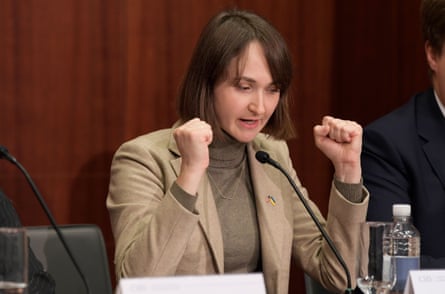
Oleksandra Azarkhina, Ukraine’s deputy minister of infrastructure. Photograph: Lenin Nolly/NurPhoto/Rex/Shutterstock
“The overall damage is terrible and not everything which was destroyed will need to be rebuilt,” says Azarkhina. “The country changed, the population moved. We need to be wise in using this money. But let’s not forget that Ukraine didn’t destroy its infrastructure, Russia did; they are the bad guys and they need to pay for that.”
International media have been asking how realistic Russian reparation payments are. In February, Poland and the Baltic states urged the EU and western governments to use Russia’s €300bn (£266bn) of frozen central bank reserves to start rebuilding the country. But experts have argued that redeploying Russian assets would breach international law.
Azarkhina says Ukraine has frozen several hundred million euros of Russian assets in the country, citing how Kyiv’s justice minister is working to settle legal issues in order to use the money to rebuild private houses.
An essential part of the reconstruction will also be paid for by private foreign investment. Many of the destroyed businesses will not be resurrected simply by repairing the buildings that housed them should Ukraine win the war, while thousands of Ukrainian soldiers returning to their cities from the frontlines will need work.
“We need to create employment,” says Sergiy Tsivkach, the CEO of UkraineInvest, Ukraine’s investment promotion office, “to transform the country from an exporter of raw materials into a prosperous European state with a developed industry.”
Tsivkach says he has already received numerous requests from foreign companies and dozens of projects are already under way, but some investors are still wary.
There is not only the issue of investing in a country still under bombardment. Another problem is the widespread corruption that has plagued Ukraine since independence. Transparency International ranked Ukraine as the second most corrupt country in Europe in 2021, behind only Russia.
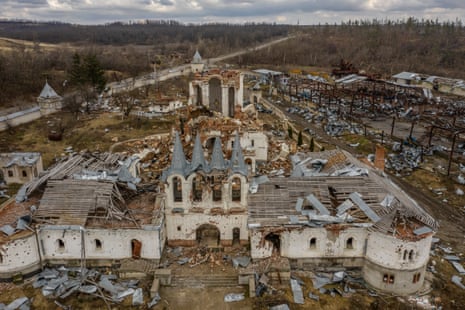
A church destroyed by the Russian forces in Dolina. Photograph: Alessio Mamo/The Guardian
“The international community should be very afraid of how corruption might compromise reconstruction, and it should begin immediately to take measures to combat it,” says Bowser, who has worked for 25 years on governance and anti-corruption programs for various donor organisations. “Corruption is still endemic there.”
With Ukraine taking its first steps to EU accession, the government is under pressure to show it has cleaned up its act. In the last few months, dozens of senior officials have been sacked and Zelenskiy has declared a zero-tolerance approach.
“Ukraine made significant steps recently,” says Tsivkach. “In the past, we had many scandals. We have seen them on TV, but we did not see proper enforcement following these scandals. What’s happening now is that we see a case of corruption and a quick reaction from thestate to press charges against those responsible.”
However, much remains to be done. “One of the lessons I have learned from being in Ukraine is that there is a new cadre of voices who are serving on the frontlines who won’t accept passively sitting by while the country is looted again,” says Bowser. “One million Ukrainian veterans returning from the war, with missing limbs, who bled for this country, are not going to accept things as they were before 2014.”
“These people,” Bowser adds, “they won’t be throwing corrupt officials into garbage cans like they did in the past, but hanging them from lamp-posts.”
And why there is little hope for explosive growth in foreign investment
Every loan agreement between Ukraine and the International Monetary Fund (IMF) is accompanied by a memorandum. It is a document that describes in detail the economic realities of the debtor (which is Ukraine), as well as the obligations that our country has undertaken to the Fund.
In general, the IMF is quite conservative about the prospects of the Ukrainian economy. The main problem is that Ukraine is deeply mired in debt and will need hundreds of billions of dollars to eliminate the consequences of the war. Although the Fund, along with other international partners, is ready to provide financial support, the Ukrainian authorities will have to make enormous efforts to mobilise domestic resources for post-war economic recovery and create fertile ground for investment.
Mind has looked into the main points of the memorandum with the IMF and what the new $15.6bn loan from the Fund obliges Ukraine to do.
Key macroeconomic forecasts from the IMF. Several dozen pages of the memorandum are devoted to the situation in the Ukrainian economy and an assessment of its key indicators. In general, the forecasting horizon covers the period up to 2030. However, since the IMF-Ukraine cooperation programme is designed for four years, we will analyse this period in detail.
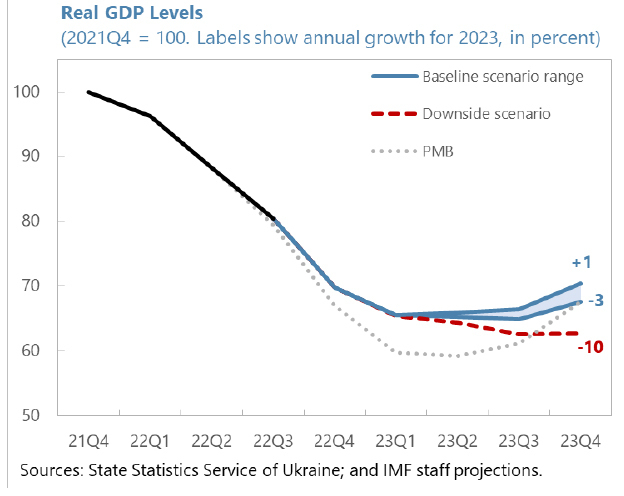
1. Economic growth will start accelerating no earlier than 2025. In 2023, according to IMF estimates, Ukraine’s GDP will fall by another 3% at worst (after falling by more than 30% in 2022), and at best it will grow symbolically by 1%. In 2024, GDP growth will be 3.2%, and in 2025-2027 – 6.5%, 5% and 4%, respectively.
Ukraine’s GDP growth forecast (baseline and adverse scenarios)
Source: IMF data
2. Inflation in 2023 (year-on-year) will be 20%, which is not much less than in 2022 (26.6%). Consumer price growth will not reach its target level of around 5% per annum until 2027.
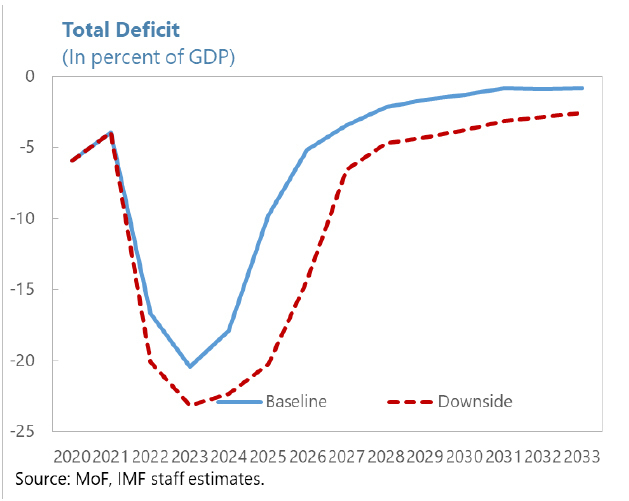
3. The state budget deficit will be significant for quite some time. For comparison, let’s take 2021 as a starting point, when the budget deficit (excluding external grants) was 4% of GDP. In 2023, the deficit to GDP will be 28.2%, in 2024 – 22%, in 2025 – 12%, and only in 2026-2027 will it be reduced to almost pre-war levels of 4.6-6.5% of GDP.
Forecast of the state budget deficit of Ukraine (baseline and adverse scenarios)
Source: IMF data
4. Due to this deficit, Ukraine will continue to be heavily dependent on external financing. In 2023, its volume to GDP will be 19.8%, in 2024 – 17.7%, and in 2026 – 9.5%. At the same time, the IMF forecasts that in 2023, Ukraine’s public debt will exceed 98% (82% in 2022), and in 2024 it will exceed 100% and remain above this limit until 2027 inclusive.
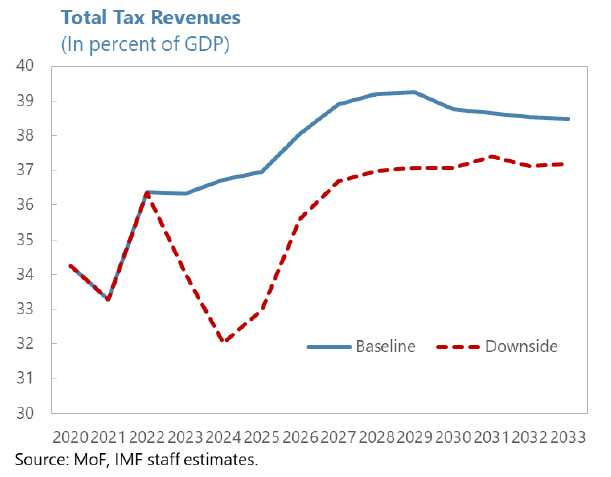
5. Tax revenues will be in the range of 36-39% of GDP in the next few years. The tax part of the state budget revenues will be made up of personal income tax and corporate income tax (10-12% of GDP), as well as consumption taxes, primarily VAT and excise taxes (13-15% of GDP).
Forecast of tax revenues to the Ukrainian state budget (baseline and adverse scenarios)
Source: IMF data
6. Foreign trade will remain deeply in deficit. The negative balance of export and import of goods will grow from $25 billion in 2023 to $35 billion in 2027. The reason is that import will grow at a rate that outpaces export growth. The reason is that it will take a lot of money and time to rebuild the destroyed industries. Therefore, according to IMF estimates, the foreign trade deficit will not be significantly reduced even by 2030.
7. According to the Fund’s calculations, Ukraine should not expect an investment boom either. Foreign direct investment in 2023-2024 will amount to 0.4% of GDP at best, 2.4% in 2025, and close to 5% in 2026-2027.
The IMF’s alternative ‘bad’ scenario indicates that the state of the Ukrainian economy directly depends on how the situation at the frontline develops. Moreover, based on the baseline scenario, on which all the above forecasts are based, the end or at least the decline in hostilities should occur in mid-2024.
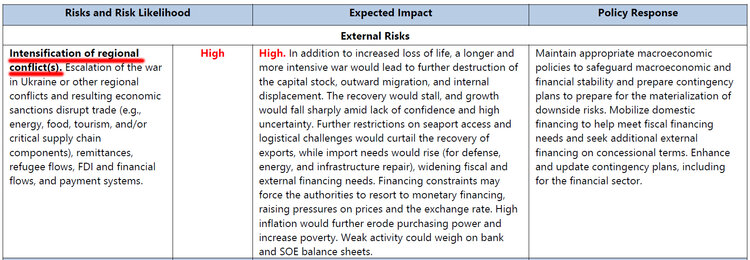
At the same time, the fund believes that the risk of further escalation of the military conflict is extremely high, which in turn will lead to a deterioration in the macroeconomic situation. These include new destruction of production facilities, disruption of supply chains, stagnation of foreign trade, another wave of refugee outflows abroad, and a complete freeze on investment (although there is none anyway).
Risk of escalation of the military conflict in Ukraine and its consequences
Source: IMF data
In this case, the second, unfavourable scenario for the Ukrainian economy could be realised. This scenario implies that the GDP decline will continue, reaching 10% in 2023 and 2% in 2024. GDP growth of at least 4% is possible no earlier than 2027. Inflation will accelerate to 32.5% in 2023 (year-on-year) and 20% in 2024.
The state budget deficit will increase to 35.4% of GDP in 2023 (excluding grant support), and will decline slightly to 32.2% in 2024. Ukraine’s external financing needs in 2023-2024 will be at 21-22% of GDP. It is twice as high as in 2022.
The total financing gap under the adverse scenario will reach about $140 billion, which is about $25 billion more than under the baseline forecast for 2023-2027. The IMF does not exclude that extraordinary measures will have to be taken in this case. These may include new types of taxes (a surcharge on the current personal income tax rate, additional excise duties, etc.), as well as administrative intervention by the NBU in the domestic debt market, which will be manifested in the obligation of banks to buy back a certain amount of domestic government bonds to finance the budget deficit.
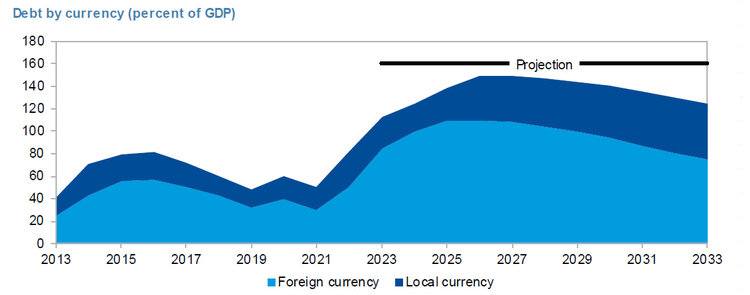
Thus, the second, unfavourable scenario could set back Ukraine’s economic recovery by at least two to three years. And its dependence on external financing would increase even further, as the level of public debt could reach 150% of GDP by 2026-2027.
Public debt forecast (adverse scenario)
Source: IMF data
The IMF’s ‘homework’ for Ukraine and its purpose. Ukraine’s commitments under the IMF’s new loan programme are largely focused on ensuring current and medium-term fiscal stability, as well as preparing the ground for post-war economic recovery.
The Ukrainian side, in particular, has committed to take measures to expand investment opportunities, strengthen the energy sector, return to a flexible exchange rate, reduce dependence on external financing, and bring Ukrainian tax legislation closer to EU legislation once active hostilities have abated. The widespread fight against corruption is also mentioned as a ‘beacon’. However, it is a traditional point that appears in every new memorandum.
By the summer, the parliament should vote on draft law No. 8401, which provides for the abolition of the 2% preferential rate for single tax payers (it was introduced in March 2022), the resumption of full-fledged tax audits and the return of fines for businesses for violations related to the use of payment transaction recorders (PTRs). The Cabinet of Ministers and MPs also need to solve the issue of accumulating tax arrears that amounted to 1.5% of GDP at the end of 2022.
At the same time, the Ukrainian authorities assured the IMF that there would be no measures aimed at “reducing and undermining tax revenues” in the coming years. In other words, no lower rates and no exemptions.
Furthermore, plans to eliminate tax avoidance practices through the simplified taxation system (the so-called salaries of individual entrepreneurs), to completely cleanse the tax and customs authorities of systemic corruption, and to strengthen the fight against tax evaders (the Bureau of Economic Security is to be rebooted) are among the priorities for filling the state budget in the post-war period. Tax reform is also planned to “balance the need to ensure the revenue base of the state budget with the interests of business and investors”.
As early as 2023, Ukraine will move to medium-term budget planning and will make a separate forecast of budget revenues and expenditures for 2025-2026 when preparing the draft state budget for 2024. A public debt management strategy should be ready by September 2023.
In short, Ukraine is committed to strengthening the domestic debt market, attracting not only banks (currently one of the main buyers of government bonds) but also non-residents. The goal is to prevent emission and reduce the state budget’s dependence on external aid, replacing it with domestic financing.
At the same time, the Ministry of Finance will prepare and submit the National Revenue Strategy for 2024-2030 to the Cabinet of Ministers for approval. It is a comprehensive document that will contain the main principles and directions of fiscal (tax, budget, debt) policy. The strategic goal is to accumulate all possible resources for post-war recovery.
We will have to do everything on our own. The main conclusion to be drawn after analysing the memorandum with the IMF is that we should not expect rapid economic growth after the war is over. At the same time, Ukraine needs to prepare for a long and difficult recovery. In more detail, the main results are as follows:
The best-case scenario is a cessation of hostilities (or their suspension) around mid-2024, while the worst-case scenario is a prolonged war that could last for years and destroy the Ukrainian economy.
Even with annual economic growth of 3-4%, by 2027, Ukraine will reach 75-80% of its GDP in 2021. Thus, we still won’t be able to return to the pre-war state in five years.
Unfortunately, we should not rely on external investors. International assistance (from the IMF in particular) is intended mainly to balance the state budget. At the same time, the volume of FDI, according to IMF estimates, will be in the range of $5-10 billion per year. It is very little, given that Ukraine’s direct losses due to the war alone, according to the Kyiv School of Economics (KSE), amount to almost $140 billion.
It all comes down to the fact that the country will have to rebuild itself largely on its own. Of course, the economy cannot be restored on government bonds alone. Consequently, the role of the state apparatus will be strengthened, on the one hand (expanding the powers of supervisory authorities), and fiscal pressure (tax increases) will increase, on the other. Moreover, it is likely that many tax innovations will be presented under the pretext of the need to reform the tax system for Ukraine’s accession to the EU.
On 29 March, the European Investment Bank (EIB) approved the ‘EU for Ukraine’ Initiative, a new scheme to finance reconstruction and recovery in Ukraine.
The initiative is conceived as a temporary scheme which will enable European Union member states, the European Commission and other countries and donors to support reconstruction and recovery in Ukraine. The EU for Ukraine Fund will provide credit enhancement to EIB loans for both public and private sector investment.
The EU for Ukraine Initiative will be accompanied by a €100 million dedicated technical assistance package. This will provide best-practice reconstruction advisory expertise in both Ukraine and Moldova and help develop priority investment projects, assisting Ukrainian and Moldovan project promoters facing challenging circumstances.
The EIB also agreed €1.8 billion in financing for sustainable transport, corporate innovation, clean energy, climate action and digitalisation across Europe and around the world.
Ukraine has already begun to rebuild its country. In order to better reflect the diverse support from Germany and to open up opportunities for interlinking, the Federal Government has launched the “Platform for Reconstruction Ukraine”. It is aimed at civil society, science, business and municipalities in Germany. The platform provides you with information about reconstruction and funding opportunities for your commitment.
The aim of the platform is to network the actors involved in reconstruction. It will contribute to greater transparency, efficiency and effectiveness of initiatives aimed at rebuilding Ukraine. In its commitment, the German Government builds on long-established german-Ukrainian relations and the reconstruction efforts of the Ukrainian Government and the donor community.
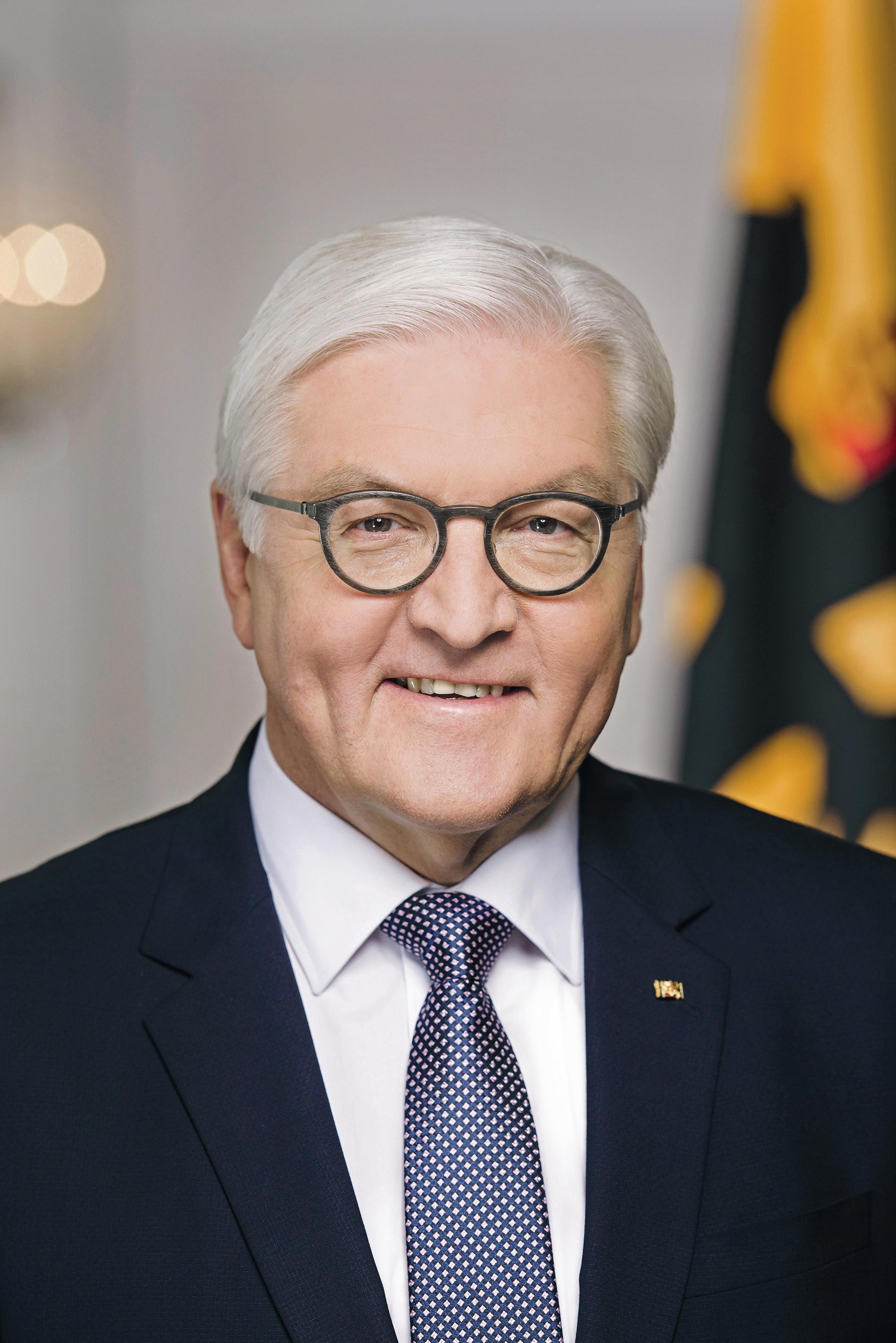
Frank-Walter Steinmeier
President of the Federal Republic of Germany
“The people of Ukraine fear and fight daily for their lives, their loved ones, their country. They do this at indescribable losses. Russian air strikes repeatedly destroy civilian infrastructure, homes are hit, people are killed. In many places, critical infrastructure, power and thermal power plants, bridges, railway stations and transport hubs have been destroyed. Russia’s war of aggression has reduced large parts of Ukraine to rubble. In view of the great destruction, reconstruction requires our full support. Germany stands in solidarity with Ukraine. The Ukraine Reconstruction Platform has created a basis for exchange and networking between and with municipalities, civil society, academia and business in order to put Germany’s contribution on a broad social basis. I would like to thank everyone who is involved with great commitment and commitment.
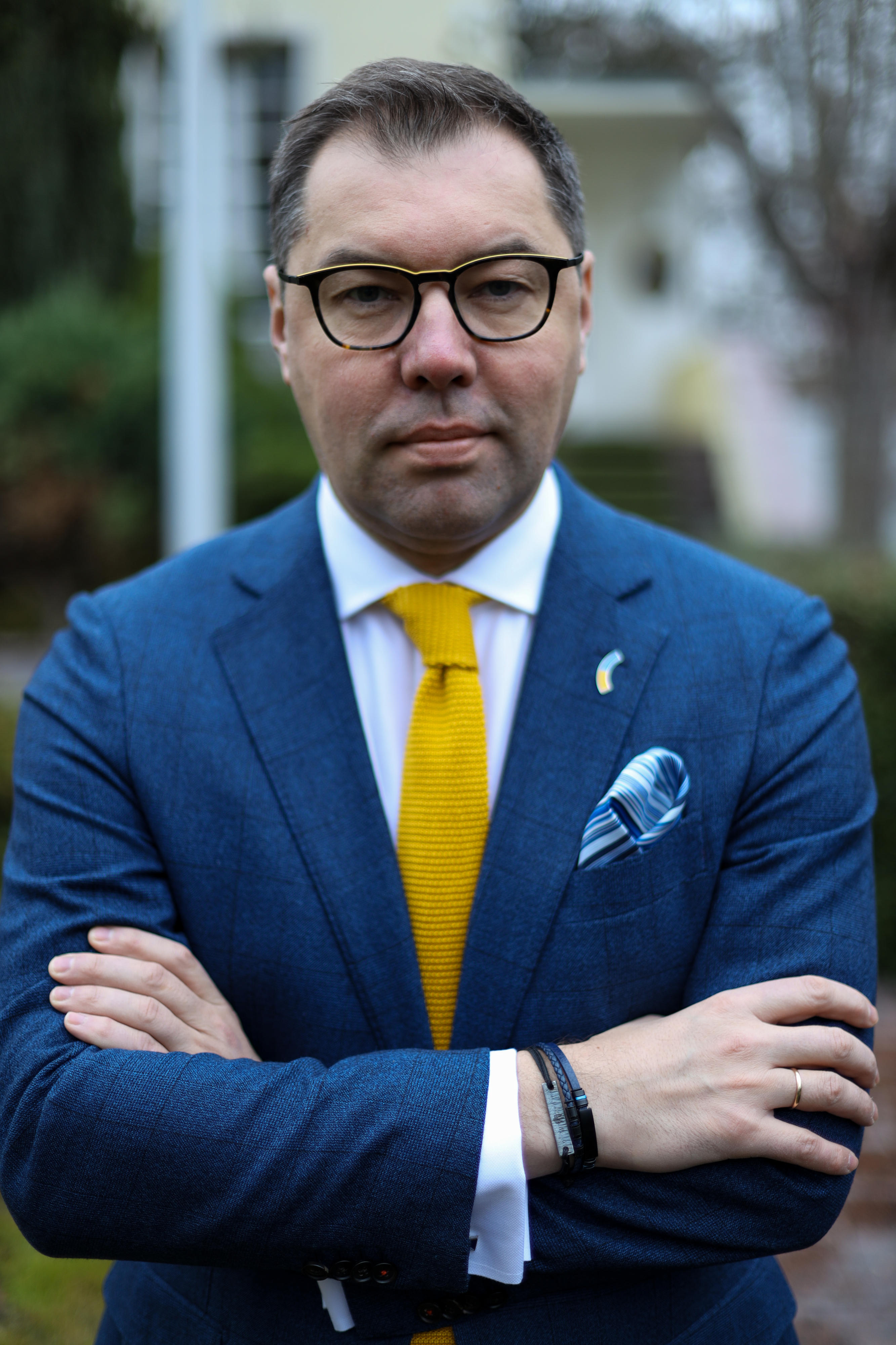
Oleksii Makeiev
Ambassador of Ukraine to Germany
“The reconstruction in Ukraine requires many forces and committed people who want to help shape the new Europe. This is a difficult task that we can only achieve together with our partners. The reconstruction of Ukraine begins now by rebuilding homes, schools, roads, energy facilities. The Ukraine Reconstruction Platform offers incredible opportunities to network at European level, exchange best practices and make contacts. After all, investing in Ukraine means contributing to a united Europe. Ukrainians greatly appreciate German solidarity. And it is gratifying that this solidarity support is now giving rise to new trusting partnerships between our people.”
Єврокомісія розглядає можливість отримання доходу у розмірі 2,6% від інвестицій у заморожені активи Центрального банку Російської Федерації.
“ЄС вивчає юридичні варіанти використання російських валютних резервів, заморожених у блоці, включаючи їхнє інвестування для отримання прибутку, який може бути використаний для фінансування відновлення України. Така безпрецедентна спроба порушує юридичні, політичні та економічні питання, і країни ЄС минулого місяця створили робочу групу для вивчення того, що можна зробити”, – йдеться у матеріалі.
Зазначається, що існує консенсус серед держав-членів ЄС у тому, що треба дуже ретельно вивчити, що можна зробити відповідно до інструкцій з цими активами.
Politico пише, що у документі Єврокомісії, який у вівторок обговорюватиметься на нараді національних експертів, роз’яснюються правові підстави для інвестування в російські активи, а також пов’язані з цим ризики та оцінки можливої прибутковості інвестицій. Єврокомісія хоче врахувати вторгнення РФ в Україну, що є рівносильним виключному та грубому порушенню міжнародного та гуманітарного права. Цим хочуть обґрунтувати свої докази на користь інвестування активів російського Центрального банку та отримання прибутку на користь України відповідно до міжнародного права.
Комісія вважає, що вкладення цих мільярдів у ліквідні активи з високим рейтингом із відносно коротким терміном погашення може принести значний річний дохід із середнім значенням близько 2,6%. Близько двох третин із 300 млрд доларів заморожених резервів ЦБ РФ перебувають у країнах G7, державах Євросоюзу та Австралії.
РБК-Україна писало про те, що, за словами прем’єр-міністра України Дениса Шмигаля, наразі потреби України на відбудову зросли до 411 млрд доларів. Водночас сума завданої шкоди не включає дані про втрати на тимчасово окупованих територіях.