Content is provided for educational and informational purposes only and is not intended and should not be construed as legal advice. This may qualify as “Attorney Advertising” requiring notice in some jurisdictions. Prior results do not guarantee similar outcomes. For more information, please visit: www.bakermckenzie.com/en/client-resource-disclaimer.
Conclusions and recommendations for the Government and Business based on the results of the First Investment Forum

The First Investment Forum organized by the Ukrainian Bar Association on June 6-7, 2024, provided a platform for discussing promising investment opportunities and addressing legal challenges in sectors vital for the sustainable development of Ukraine.
Each session of the Forum served as a venue for fruitful discussions, where interesting and valuable ideas and insights were shared. Given the importance of the information received from the event’s speakers, the UBA has prepared conclusions and recommendations for the government and business based on the outcomes of the First Investment Forum. You can review these recommendations below.
Session 1. Ukraine’s Accession to the European Union: What Does It Mean for Business?
The government should clearly regulate the interaction process between business and the authorities during the negotiations for EU accession. Specifically, it is necessary to clearly stipulate:
- How businesses are involved in the negotiation process (for example, if working groups are formed for each negotiation chapter, this should be clearly stated);
- Who from the business community will be involved in the working groups — associations (which ones — nationwide, regional, those that unite a certain percentage of enterprises in a specific industry) or individual companies (again, clear criteria for such companies should be outlined); equal access should be ensured for all associations and companies;
- The role of businesses/associations — whether it is simply to participate in the working group/submit a position or whether businesses/associations will have at least an advisory voice (obviously, the latter is essential, at least on certain strategic issues);
- The government should inform businesses/associations of our negotiation positions and the positions of the EU and agree on them with businesses.
Session 2: Reforms During Wartime — What Working Conditions Should Businesses Expect?
- Partnership Expectations: Businesses anticipate forming partnerships with authorities and seek effective interaction mechanisms to resolve issues arising during economic activities. This includes matters such as reserving employees and ensuring that rules do not change unexpectedly.
- Presumption of Innocence: Government bodies should move away from assuming business guilt or malicious intent. Instead, they should focus on prior consultations with businesses to prevent inadvertent or unintentional violations, rather than immediately imposing penalties.
- Effective Administrative Appeals: Implementing a robust administrative appeals process is crucial for fostering a partnership between business and government. Authorities should not hesitate to make decisions in favor of businesses if mistakes are found during inspections.
- National Revenue Strategy 2030: This strategy could pose an investment barrier if fully implemented. Before doing so, it’s vital to restore taxpayer trust in tax, customs, and law enforcement agencies. Only then should additional powers be considered for these entities.
- Adapting European Tax Rules: Transferring European rules and concepts (like progressive taxation and limiting simplified tax systems) into the Ukrainian tax framework must account for national specifics. Failing to do so could lead to adverse effects.
- Disproportionate Fines: Imposing excessive fines on officials of importing companies for errors in customs documentation, without the possibility of appeal in higher courts, significantly reduces the state’s investment attractiveness.
- Risk Insurance: Currently, the state does not provide accessible insurance for business risks related to war and political instability, despite ongoing efforts. Insurance costs are high and not always feasible. An effective state solution in this area would undeniably boost the country’s investment appeal.
- Law Enforcement and Investment Protection: To enhance investment protection, the state must first ensure the enforcement of laws, rather than their distortion to impose sanctions on businesses.
Session 3.1. Challenges and Opportunities in the Agricultural Sector
The session’s outcomes indicate that the industry’s issues are receiving sufficient attention overall. Notably, there are rather positive reviews regarding the start of a state program compensating farmers for 80% of the cost of demining contaminated lands. The number of mine action operators (including agro-holdings) has doubled to about 30 companies since the beginning of the year. It is recommended not to lose focus on this critical issue for many farmers. Emphasis should continue on developing and seeking new technological solutions. Support for such research from the government is expected.
Overall, there are positive reviews regarding the support of farmers in frontline zones (tax exemptions, discounts on rail transport, etc.). Experts encourage farmers to invest in bioenergy projects (bioethanol) and processing. There is significant potential for attracting both loan and strategic financing for such projects in Ukraine and abroad. This is one of the EBRD’s focus areas in Ukraine.
Understanding the need for mobilization, farmers are calling for the approval of the so-called “economic reservation,” which is critical in certain segments. Currently, there are many different support programs for enterprises in the agricultural sector, and there is a substantial demand from institutional and private investors. At the same time, there is an insufficient level of preparation of investment projects and many enterprises are not ready to attract investments.
Session 3.2. Challenges and Opportunities in the Extraction of Natural Resources
- Production Sharing Agreements (PSAs):
- Adoption of regulatory legal acts regarding the implementation of PSAs;
- Regulation of the functions of the state-authorized body regarding the oversight of PSA implementation; and
- Appointment of an authorized entity for the sale of oil and condensate under PSAs.
- Implementation of the EU Regulation on Integrity and Transparency in the Wholesale Energy Market (REMIT):
- Conducting training for businesses on REMIT; and
- Establishing a transition period during which sanctions for violations will not apply and clarifying the legislation’s terminology.
- Improving the mechanism for reserving land for subsoil users.
- Extending the application of industrial parks and benefits for projects with significant investments to the extraction sector.
- Development of a long-term strategy for the extractive industry and corresponding state support programs.
- Providing grounds for amending the work program due to changes in production volumes due to the wartime state.
- Amending the Code of Ukraine on Subsoil to include definitions of basic concepts and removing outdated provisions from the Mining Law of Ukraine.
- Regulating waste management in the extractive industry by adopting the bill “On Management of Mining Waste” and amending the Law of Ukraine “On Waste Management”.
Session 4.1. Challenges and Opportunities in the Defense Sector
Comments on Improving Legislation in the Defense Sector
- Prohibition on Exporting Military GoodsCurrently, this de facto prohibition significantly restricts the development of the Ukrainian defense industry, particularly due to the inability to attract resources from foreign client orders that could be directed towards developing new weaponry and expanding production.The export ban forces Ukrainian manufacturers to move production abroad to fully operate in the international market. This situation is undesirable for both the Ukrainian defense industry and the economy as a whole.Lifting the export ban will be a crucial step for the development of the Ukrainian defense sector, creating conditions for the defense industry to remain one of the drivers of the Ukrainian economy even after the cessation of active hostilities.
- Regulation of Employee Reservation in the Defense-Industrial ComplexRecently, the list of criteria for designating enterprises in the defense-industrial complex as those of significant importance to the national economy has been expanded. However, the list does not fully meet current needs. Specifically, there is a need to amend it to include enterprises that are at the stage of developing new weapons and military equipment but do not yet have contracts with state customers.It is also necessary to regulate the reservation of individuals whose military registration data need clarification. As of today, the practical inability to reserve such individuals creates significant obstacles to the work of defense industry enterprises.Such changes will allow defense industry enterprises to properly reserve all critical personnel, which is essential for the stability of their operations in the face of a labor shortage.
- Conclusion of Long-Term Defense Procurement ContractsThe intensity of hostilities creates the need for a systematic and timely supply of the Ukrainian military with the relevant military goods. Defense industry enterprises need predictability from state customers regarding the volume and nomenclature of procurements to consistently meet this need.Stable operations of defense enterprises require the ability to plan long-term to properly expand production, purchase necessary consumables and components, and attract a sufficient number of qualified personnel. This can be achieved only if the volume and nomenclature of procurements are agreed upon for a long-term period.Additionally, the existence of long-term obligations from state customers creates conditions under which foreign manufacturers may start setting up production in Ukraine, as a guaranteed volume of orders from the state is critical for entering the Ukrainian market.Thus, the creation of mechanisms for guaranteed long-term (at least up to three years) procurements can provide a significant impetus for the development of the Ukrainian defense sector.
Session 4.2. Challenges and Opportunities in the Energy Sector
Issue: Lack of a PPA Market
The main obstacle to the development of new power generation capacities is the lack of any state support (which was previously provided by the green tariff), and the absence of a formed market of off-takers under long-term power purchase agreements, which could fill the gap left by the green tariff. This was noted by panel participants, including representatives from Goldbeck Solar and Notus Energy.
Proposal: Initiate the creation of a fund (following Argentina’s example), which would act as a virtual off-taker. The fund should be guaranteed by international partners and financial institutions. It could be self-sustaining and profitable, as renewable energy producers would contribute a portion of their revenue to the fund. This proposal has received broad approval in preliminary discussions with international financial institutions.
Issue: Lack of State Support
Currently, the state supports industrial projects through the mechanism of industrial parks and also supports projects with significant investments (so-called investment nannies). Renewable energy projects do not fall under the scope of the laws on industrial parks or investment nannies (except for biogas and biomethane, which are considered waste processing).
With the abolition of the green tariff, energy generation projects from alternative sources do not receive any economic incentives from the state.
Proposal: Extend the scope of the law on state support for investment projects with significant investments to projects for the development of renewable energy and green hydrogen, as well as the construction of balancing capacities (storage and accumulation systems, flexible systems).
Issue: Hydrogen Strategy
Despite Ukraine’s plans to become a green hub and exporter of green electricity and green gases to the EU (the EU in its Green Deal expects half of the imported green hydrogen to come from Ukraine), very little has been done to develop hydrogen energy to date.
Proposal: Establish a separate department within the Ministry of Energy of Ukraine to implement the hydrogen strategy and coordinate this work with key partners in Ukraine.
Investment insurance

According to the Decree of the Cabinet of Ministers of Ukraine No. 388 dated April 19, 2024, the Export Credit Agency (ECA) is entitled to carry out insurance and reinsurance of military and political risks arising in the process of business activities provided by law.
Special attention should be drawn to investment insurance, an important tool for defense of investors against unforeseen events.
Insurance amount
Insurance amount shall be based on risk assessment and the investment project cost. In accordance with conditions specified in the Decree, maximum insurance amount may be restricted by certain ECA limits, in order to facilitate balance between the agency’s risks and opportunities. In addition, insurance amount can be increased depending on project specifications and additional guarantees provided by the investor.
Insurance conditions
Insurance conditions include the following:
1. Risk assessment: Before entry into insurance contract, a detailed assessment of risks associated with the investment project shall be carried out, including analysis of political and economic situation in the country where investment is made, as well as possible military threats. Risk assessment shall be based on the data received from state authorities, independent experts and international organizations.
2. Insurance premiums: The amount of insurance premiums shall be fixed on the basis of risk assessment and investment value. Premiums can be either paid once or spread over a certain period. NB: premiums may vary depending on risk degree and insurance contract validity contract.
3. Payment of insurance indemnity: In case of an insured event, insurance indemnity shall be payable in accordance with terms of the contract. It may include reimbursement of losses related to nationalization, seizure, hostilities or other political risks. The aforesaid process also includes procedure for submitting and reviewing insurance claims, to be detailed in the contract.
4. Reinsurance: To reduce risks, ECA may enter into reinsurance contracts with other insurance companies, in order to distribute risks and to secure stability of insurance payments. Reinsurance also facilitates reducing financial burden on the ECA and securing reliability of obligations to insurants.
5. Additional conditions and specifications: Insurance contracts may include additional terms, such as requirements for insurant regarding precautionary measures, risk monitoring and regular reporting. Special conditions may also be prescribed for certain types of investments, such as infrastructure projects or innovative enterprises.
Therefore, investment insurance provided by the Export Credit Agency is an important tool for protecting investors from military and political risks.
This is a new institute for Ukraine, which promotes attraction of investments and economy development in Ukraine, having facilitated reliable protection of capital investments.
It should be noted that at each stage of insurance conditions the investor will need legal assistance from local lawyers – experts in insurance and investment issues.
For legal advice upon the raised issue, we encourage all the parties concerned to contact Dmytro Ochkolias, Interlegal associate attorney.
More information at the link: https://www.kmu.gov.ua/npas/pro-zatverdzhennia-pereliku-voiennykh-ta-politychnykh-ryzykiv-ta-umov-i-poriadku-s38890424
“Bread” instead of “metal”: how Ukraine is trying to stay afloat in international commodity markets
Under the Ukraine Facility, a financial support program from the European Union, Ukraine is implementing a series of strategic economic reforms and sectoral development measures. These measures are expected to boost export volumes and strengthen the country’s position in the international market as a leading supplier of critical materials and high-quality products. We have decided to analyze the current state of Ukraine’s foreign trade, its export potential, and the possible risks that could threaten economic recovery.
To ensure stable financial support from the EU, Ukraine must implement a specific set of measures and reforms, achieve certain benchmarks, and undergo evaluation by its partners. Fulfilling these commitments is expected to help build a strong and resilient economy, bringing the country closer to the socio-economic development level of EU countries. One of the outcomes of the plan’s implementation should be an increase in exports, which will contribute to economic growth and post-war recovery.
Progress should be achieved through the development of relevant institutions, attainment of comprehensive digital transformation goals, inclusive development, and the implementation of the “green transition,” as well as the support of key economic sectors:
- Sectoral development: Ukraine will focus on developing specific economic sectors with high export potential, such as agriculture, energy, transportation, critical raw materials (including processing), and information technology. By investing in these sectors and enhancing their competitiveness, the government aims to increase exports.
- Infrastructure development: Developing transport, logistics, and trade infrastructure is crucial for facilitating exports, especially given Russia’s blockade of the Black Sea. Investments in increasing port transshipment capacities, building railway lines, and cooperating with partner countries to develop border crossing points can simplify the export process and reduce transportation costs, making Ukrainian products more competitive in international markets.
- Trade support: The Ukrainian government, in cooperation with international partners, will implement trade facilitation programs. These include providing financial support to small and medium-sized enterprises, compensating agricultural producers for demining costs, implementing mechanisms for war risk insurance, and more.
- Basic institutional reforms: Implementing structural reforms and improving the business environment are crucial for stimulating exports. These measures include reducing bureaucracy, increasing transparency in the regulatory environment, protecting intellectual property rights, and strengthening the rule of law. By creating a more favorable business climate, Ukraine can attract foreign investment and stimulate export-oriented industries.
What is Ukraine’s export potential?
Ukraine’s export potential can be considered in two main dimensions. First, there is an increase in export volumes (restoring the supply of goods to pre-invasion levels and further increasing volumes). For some goods, such as grain, export volumes have almost reached pre-war levels thanks to the operation of the “temporary transport corridor,” despite parts of Ukraine being mined and occupied. Second, there is a shift in the commodity structure toward a higher share of manufacturing and high-value-added goods. According to the aforementioned plan, the main focus is on developing five sectors, including agriculture and mining (considering the potential for mineral processing).
According to the International Trade Centre, Ukraine has an export potential of tens of billions of dollars. In absolute terms, we could demonstrate the largest volumes in the supply of ferrous metals, vegetable oils, grains, mineral resources, machinery and equipment, electricity, and more (see Figure 1). However, an important caveat is that these calculations were made considering data mostly before the full-scale war and, therefore, do not fully take its consequences into account.
For instance, the export potential in the segment of ferrous metals is estimated at $10 billion, with only 51% of this potential actually realized (meaning the actual export volume). Thus, there was significant potential for increasing exports of this product. However, Russia occupied and destroyed over a third of Ukraine’s steel production capacity. Therefore, in the foreseeable future of the next decade, the country is unlikely to restore pre-war levels of metallurgical production, let alone exceed them and realize this potential.
A more realistic scenario seems to be increasing the export of mineral resources, particularly iron ore products. On the one hand, there is demand for this product both in Europe and in distant countries like China, while domestic demand in Ukraine has significantly decreased due to the loss of production capacities. On the other hand, Ukraine has the capability to produce high-quality iron ore products that align with “green” transition plans. Implementing these plans is already on the agenda.
Additionally, the International Trade Centre calculations and the Ukraine Facility Plan highlight titanium ores and their processed products as having significant export potential.
Figure 1. Top 25 product categories with the highest export potential in Ukraine and the degree of export potential realization

The top sub-sectors with significant export potential also include agri-food sector products, which are considered promising within the Ukraine Facility framework. Specifically, these are sunflower oil, corn, wheat and meslin, and rapeseed. With proper support for the sector—investments in productivity growth, logistics development, reduction of trade barriers, and demining of territories—this potential can be realized.
Another segment with significant potential is machinery and equipment. Today, Ukraine is a manufacturer and supplier of automotive wiring harnesses with corresponding factories in the western regions. The volume of such product exports to European countries can be significantly increased.
Under equal conditions and before full-scale war, Ukraine had the potential to export a wide range of goods and services, from raw agricultural and mining products to high-tech products. However, the key items of foreign supply were and still remain raw materials and semi-finished products.
Trade results for 2023
Ukraine’s foreign trade results in 2023 continued to be influenced by factors directly related to the war on its territory, as well as the war’s indirect impacts. On the one hand, the Ukrainian economy suffered from attacks on energy and transport infrastructure and power outages at the beginning of 2023. The significant implications also came from Russia’s withdrawal from the “grain deal” until Ukraine, under the protection of its defense forces, organized its own “temporary maritime corridor.” This allowed for the revitalization of foreign economic activity.
On the other hand, the global economic slowdown observed even in Europe resulted in reduced demand for Ukrainian products. Given Ukraine’s limited ability to choose export markets, transporters’ blockade of western borders and European countries’ restrictions on the supply of agricultural products further undermined the footing of Ukrainian exporters.
Figure 2. Volumes of Ukraine’s foreign trade in 2014-2023, $ billion

Last year, Ukraine’s negative balance of foreign trade increased by 2.5 times, reaching its highest level since the beginning of Russia’s invasion in 2014. This result was driven by simultaneous growth in the value of imports and further contraction of exports. Specifically, imports almost returned to the level of 2021 when countries were recovering from the COVID-19 pandemic crisis and showing rapid restoration. It is likely that its value would have been higher if not for Polish carriers’ blockade of the western border. According to the NBU’s estimates, direct losses from imports alone in November 2023 amounted to $500 million. To illustrate, this is almost equivalent to the total value of drones imported into Ukraine last year.
Import of goods
In physical terms, imports in 2023 amounted to 26.8 million tons, which is 29% less than in 2022. However, in value terms, imports grew by 7% due to the importation of more expensive goods such as transport and electrical goods, pharmaceuticals and blood products, and food products, as well as increased purchases of drones, generators, and pipe products. This was made possible only with the financial support of our international partners, who provided grants and loans. Additionally, hidden imports, meaning goods for which neither the State Statistics Service nor the State Customs Service of Ukraine provide detailed statistics, increased manifold.
Figure 3. Commodity structure of Ukraine’s imports in 2019-2023, $ million

Traditionally, mineral fuels – oil and oil products and gas – occupied the largest share in Ukraine’s import structure. The leading suppliers of these products were Poland, Greece, India, Lithuania, and Slovakia. Ukraine halted imports of these goods from Russia and Belarus, while European countries and India had previously supplied them. Compared to 2022, the import of these products decreased by 39% in value terms due to cheaper oil and the refusal to purchase from the aggressor country.
Imports of other key commodity groups increased. Specifically, the growth in purchases of cars, mobile equipment, generators, batteries, transformers, trucks, tractors, and drones from abroad is directly related to military actions. On the one hand, this increase reflects Ukraine’s defense needs, and on the other hand, it reflects the consequences of mass rocket attacks on energy facilities, forcing the population to make emergency equipment purchases.
The increase in purchases of ferrous metals and fertilizers is linked to the decline in domestic production of these goods in Ukraine. Specifically, the occupation of metallurgical plants in Mariupol has led to a deficit of certain types of steel products, forcing Ukraine to procure them from Turkey and European countries (previously, we exported them). Although Ukraine increased its own fertilizer production by 81% last year, its volume remained almost half of what it was before the full-scale war, generating demand for imported fertilizers.
Export of goods
At the end of last year, Ukraine maintained the physical volume of exports almost unchanged, but export revenues fell by 18%. This can be explained by both a decrease in prices for a range of goods, primarily in the agricultural sector, and a change in the commodity structure of exports (see Figure 4).
Grain crops held the largest share of exports, at 23% (18% of the total export value in 2021). The decrease in revenue from grain exports is mostly due to the decline in world prices for corn, Ukraine’s main export item. Although Ukraine increased its wheat exports, this was insufficient to compensate for the decreased revenue from corn exports.
There was also a decrease in the volume of exports of oilseed crops (soybeans, rapeseed, and sunflower seeds). At the same time, a positive trend was the growth in the export of oil, i.e., processed seed products.
Revenue from the export of ferrous metals and ores decreased by over 40% last year. First, in 2022, the first two months accounted for nearly full-capacity operation of metallurgical enterprises. Second, last year, companies were forced to reduce production due to power outages, the explosion of the Kakhovka HPP, and unfavorable economic conditions in external markets. Third, companies began to utilize the opportunity for sea shipments within the framework of the “temporary corridor” closer to the end of the year.
Ukraine also reduced its exports of higher-value-added products such as electrical wiring, cables, and small kitchen appliances like electric kettles. This reduction is associated with decreased electronics imports by Hungary.
In 2023, Ukraine obtained 61% of its export revenue from selling agricultural products and foodstuffs, marking a significant portion of its exports. Following closely behind were ores, metals, and products thereof, contributing 16% of export income. Machinery, equipment, vehicles, and transportation means held the third position, accounting for 8% of exports. This marked a notable change from the pre-war year of 2021, when agriculture and metallurgy shared comparable shares at 41% and 34%, respectively. However, the export structure shifted dramatically, with the share of foodstuffs in revenue nearly quadrupling compared to that of metals.
The reasons for this situation are understandable. The territories where industrial enterprises are mostly located are either occupied or near the front line. Russia’s attacks on critical infrastructure objects have led to a reduction in production volumes, and even with a stable electricity supply, logistical difficulties such as the blockade of the Black Sea and western border prevent export growth. A shortage of human resources also limits production recovery opportunities.
Foreign trade in services
Last year, Ukraine reduced external trade volumes in services due to simultaneous decreases in imports and exports. However, since the beginning of the full-scale invasion, we have observed an atypical imbalance in favor of importing services for Ukraine.
The prevalence of service imports over exports emerged in 2022 due to a sharp increase in spending by Ukrainians abroad, associated with the outflow of refugees during the first year of full-scale war. It is precisely the expenses of Ukrainians on purchasing goods and services in recipient countries that constitute the volumes of service imports under the “Travel” category. Although this segment decreased last year, it still accounts for the lion’s share of Ukrainian spending on imported services, at 69%.
Prior to the start of the full-scale war, the Ukrainian IT industry was experiencing rapid growth, with its share in the structure of service exports increasing from 2% in 2010 to 44% in 2022. In 2023, the export of IT services decreased for the first time, which is attributed to power outages and cautiousness among foreign clients regarding ordering services from Ukrainian IT specialists (due to risks of mobilization and rocket attacks).
Figure 4. Structure of foreign trade in services in 2019-2023, $ million

The increasing share of the agricultural and food sector in exports requires attention and effective solutions. Perhaps, by implementing the Ukraine Facility Plan, we can return to increasing exports in processing industries and restore growth in the IT industry. Defense industry manufacturers also have significant export potential. The war has catalyzed the active development of the defense industry with a rapid increase in the number of arms manufacturers. However, currently, there is insufficient state funding to utilize existing capacities. A solution could be to export excess production abroad so that arms manufacturers receive working capital and investment funds, but currently, such exports are prohibited.
Limited optimism for 2024
The beginning of 2024 brings cautious optimism in terms of foreign trade (see Figure 6). After a decline in quarterly export volumes last year, Ukraine demonstrates a sharp recovery in indicators based on the results of the first three months of the current year. Moreover, according to the operational data of the Ministry of Economy, Ukraine reached pre-war levels of monthly exports in April, amounting to $3.3 billion (13 million tons).
Traditionally, key export drivers include grain (such as corn and wheat) suppliers and exporters of iron ore and ferrous metals. These companies have resumed sea exports crucial for re-entering markets in the Middle East, America, and Asia. Meanwhile, machinery exports dropped out of the top 10 commodity groups.
In the metallurgical products segment (iron ore and steel products), an increase in export volumes can be expected this year thanks to the operation of the “sea corridor” under the protection of Ukrainian defense forces. However, limiting factors to consider include weakened demand in Europe and China, reduced economic efficiency of sales due to expensive logistics, and the risk of production volume restrictions.
Expectations in the agricultural segment are less optimistic. According to experts’ estimates, the volume of the harvest may decrease in 2024 due to a reduction in the sown areas of certain crops against the backdrop of an unfavorable price situation in the international market and lower yields. According to preliminary estimates for the 2024-2025 marketing year, this will affect export volumes, which may decrease to 43.7 million tons compared to the expected 53.1 million tons in the 2023-2024 marketing year.
Even in the short term, the record volume of grain exports achieved in April 2024 (which even exceeded pre-war levels) will not be repeated in May, as the available volumes of wheat for export have already been sold, and those of corn have been contracted.
Key risks for 2024
The importance of restoring export activity is undeniable. On the one hand, exports are a source of foreign currency inflows necessary to support the exchange rate, finance defense, and reconstruction efforts. On the other hand, access to foreign markets allows producers to increase capacity utilization, expand production volumes, and enhance their influence in international markets. From this perspective, stimulating export activity reflects not only an economic but also a geopolitical aspect, providing additional means to strengthen Ukraine’s position in the world.
However, in the context of geopolitical tensions and uncertainty associated with the war with Russia, Ukraine’s export opportunities face serious challenges. The expansion of the conflict zone threatens not only physical infrastructure but also the functioning of export channels and the security of transportation routes. These circumstances, along with potential economic constraints from Western partners (such as restrictions on imports or transit of agricultural products from Ukraine), create uncertainty about the future export potential and require careful risk analysis and strategic decision-making.
Among the risks for export growth this year are:
- Escalation of hostilities and occupation of new territories. Although the Ukraine Facility Plan was developed with the assumption of the end of hostilities by the end of 2024, as of May 2024, the aggressor country continues to build up its military potential and forces for further advancement, as indicated by both Ukrainian and international sources. The occupation of new territories by Russia, including the complete seizure of the Donetsk region, could lead to further degradation of the industrial sector. Other consequences of the intensification of hostilities and occupation include the destruction of infrastructure and further population migration.
- Shelling of energy and transportation infrastructure. Mass rocket attacks on critical infrastructure objects and damage to power grids can lead to both restrictions on electricity consumption by industrial consumers and complete production shutdowns. Attacks on transportation infrastructure can lead to disruptions in raw material supplies and increased costs for recovery. Consequently, export volumes will decrease.
- Further mobilization; population migration abroad. Increasing the volumes and pace of mobilization can deepen the deficit of human capital, reduce productivity, and increase labor costs, which in turn can lead to a decrease in enterprises’ export activity. Large industrial enterprises are already facing limitations in expanding production due to a labor shortage and, in an attempt to adapt to the existing conditions, are employing more women.
- Blockade of the western border. The blockade of the border with EU countries has led to both a reduction in exports by road transport and a decrease in customs revenues to Ukraine’s state budget. Consequently, the resumption of the blockade may result in delays in deliveries of products to foreign customers, actual reduction in supply volumes, and increased transportation costs.
- Implementation of trade restrictions or cancellation of preferential trade terms. The suspension of all import duties and trade defense measures by the EU for Ukraine in the spring of 2022 proved to be a lifeline for Ukrainian exporters, who, in the conditions of the maritime blockade, could only supply goods to Europe or through European countries. The EU has already extended preferential trade terms twice, most recently in March 2024, but with conditions to protect its agricultural market. Abandoning preferential trade terms or introducing trade restrictions could lead to a reduction in export volumes due to restricted access to markets.
- Suspension of the “temporary corridor.” Closing the “temporary corridor” in the Black Sea would return Ukrainian exporters to the situation of summer 2023 when Russia withdrew from the “grain deal,” and an alternative maritime route was not yet secured. Although Ukraine has since continued to develop alternative transportation routes via the Danube or through ports in Romania and Poland, this could lead to a significant increase in delivery times and costs, as well as a restructuring of logistic chains that would be less efficient. The export of agricultural products, ores, and black metals critically depends on the ability to export by sea.
- Further weakening of the global economy, particularly in Europe. Decreased demand for goods from Ukraine due to economic hardships in Europe could lead to a reduction in export volumes and a decrease in production levels. With the ability to transport goods by sea, this risk could be mitigated by redirecting exports to markets in the Middle East, America, and Asia.
A good week for Ukraine: Berlin hosts a key milestone in Ukraine’s recovery efforts

The Ukraine Recovery Conference (URC) 2024, held in Berlin on June 11-12, marked a significant step forward in the international community’s support for Ukraine amid the ongoing war with Russia.
The conference brought together over 3,400 participants from various sectors, including national and local governments, businesses, and civil society organizations. The event aimed to consolidate sustainable international support for Ukraine’s recovery, reconstruction, reform, and modernization efforts.
Events later in the week, including the G7 summit and the Ukraine peace summit, further confirmed the international community’s commitment to assisting Ukraine in overcoming the ongoing crisis.
This year’s conference was a continuation of the 2017 Ukraine Reform Conference in London, and bilateral and multilateral events in Lugano (2022 and 2023), Toronto and Paris (2022), Rome, Berlin and Warsaw (2023) as well as last year’s Ukraine Recovery Conference in London. Lawyers from Dentons participated in most of these events.
Below is a brief summary of key announcements and agreements to aid Ukraine’s recovery based on publicly available information and insights of our lawyers who participated in the event.
Key announcements and agreements
European Bank for Reconstruction and Development (EBRD) commitments
One of the major highlights of the conference was the EBRD’s announcement of €600 million in new funding commitments and de-risking tools. This brings the total EBRD financing deployed in wartime Ukraine to €4.5 billion. Notably, the EBRD signed multiple financing agreements, including:
- €300 million in emergency support for the energy sector to address the immediate energy crisis exacerbated by Russian attacks on Ukraine’s energy infrastructure.
- €517 million from the European Union to support Ukraine’s economy and recovery through EBRD programs.
- €60 million loan for a greenfield biofuels project and equity investment in renewable energy. These projects underscore the focus on sustainable and renewable energy solutions.
- €70 million in local-currency loans and risk-sharing facilities with Ukrainian banks to boost access to finance for small and medium-sized enterprises (SMEs).
The EBRD also announced a joint venture with GOLDBECK SOLAR Investment to construct up to 500 MW of solar power plants in Ukraine over the next three to five years.
International aid and investments
The conference saw the announcement of over €16 billion in more than 110 international agreements and assistance. Significant contributions included:
- €1.4 billion in guarantee and grant agreements under the Ukraine Facility program.
- €7 billion SME Resilience Alliance to support the resilience and growth of Ukrainian SMEs.
- €700 million Skills Alliance retraining program to address structural unemployment and support workforce development in Ukraine.
- €350 million in guarantees and €17.5 million in technical assistanсe from EU via IFC to accelerate and scale-up investments in renewable energy such as wind power projects, battery energy storage systems, transport, digital sector, and industrial investments.
- €430 million program of EIB group to restore the housing sector. The first program will focus on repairing war-damaged residential buildings, and the second will be a credit program and extensive grant resources from the European Commission.
- $350 million war risk insurance program to facilitate foreign investment in Ukraine during the war. The program, in partnership with the US International Development Finance Corporation (DFC), includes US$50 million to reinsure policies issued by Ukrainian companies and US$300 million to insure military risks in the healthcare and agriculture sectors.
Focus areas of the conference
The URC 2024 extended the dimensions of Ukraine’s recovery to four key areas:
- Business development: The conference launched several initiatives to stimulate economic growth and private sector involvement by offering mechanisms to derisk investments and provide access to financing. This includes investments in renewable energy, biofuels, and significant support for SMEs.
- European integration: With Ukraine’s EU candidate status, substantial support was directed towards meeting EU accession requirements and facilitating integration processes. On June 14, 2024, the EU approved in principle the negotiating framework for the accession of Ukraine and Moldova to the EU. Huge emphasis was given to sustainable recovery of a competitive economy as well as funds to achieve these targets in various sectors.
- Municipal and regional development: Agreements were signed to improve infrastructure and essential services in cities like Mykolaiv, Lutsk, Kharkiv, Kyiv, Kryvyi Rih, and Zhytomyr. These included projects for water infrastructure, housing, district heating systems, public transport and export logistics.
- Human capital development: Initiatives such as the Human Capital Resilience Charter and the Skills Alliance for Ukraine were launched to support returnee workers and veterans and promote inclusive recovery.
High-profile support and future prospects
German Chancellor Olaf Scholz and European Commission President Ursula von der Leyen emphasized the importance of Ukraine’s reconstruction for both Ukraine and the EU. Von der Leyen announced that Ukraine would receive €1.9 billion through the Ukraine Facility by the end of June, with a significant portion directed towards urgent power system repairs and defense.
Ukrainian President Volodymyr Zelenskyy highlighted the immediate need for energy infrastructure repairs and long-term investment. He stressed that foreign investments in Ukraine’s energy sector could yield high returns and create substantial economic opportunities.
A few days later at the Ukraine peace summit in Switzerland, US Vice President Kamala Harris announced a new energy aid package, consisting of $500M in new funding for energy assistance and redirecting $324M of previously announced funds to Ukraine’s emergency energy needs.
The news from the US comes a few days after the G7 leaders adopted a declaration outlining the use of proceeds from frozen Russian assets to give Ukraine $50 billion in loans. This plan aims to ensure Ukraine can continue its defense against Russia and signals Western resolve. The funds will come from loans by G7 members and the EU, backed by interest from the frozen assets, with repayment expected from either interest or future reparations by Russia. The disbursement of funds, intended for various purposes including military and humanitarian support, is planned to start by the end of the year, although there are still unresolved details and potential risks related to the ongoing status of the frozen assets.
The weekend brought additional support for Ukraine at the Ukraine Peace Summit in Switzerland, at which representatives from 78 countries agreed that Ukraine’s territorial integrity must be the basis for any peace agreement with Russia. The conference marked a preliminary step towards diplomacy but faced challenges due to the absence of key developing nations from the final document. Despite varied participation, the summit underscored the necessity for international cooperation to resolve the conflict.
Conclusion
The main events of last week – the Ukraine Recovery Conference 2024 in Germany, the G7 summit in Italy and the Ukraine peace summit in Switzerland – demonstrated a robust international commitment to supporting Ukraine’s recovery and long-term development. The agreements and initiatives announced at the URC reflect a comprehensive approach, addressing immediate needs while laying the groundwork for sustainable growth and integration into the European Union. As Ukraine continues to navigate the challenges posed by the ongoing conflict, the support and collaboration fostered at URC 2024 – and confirmed by the participants of the G7 and the peace summit – will be crucial in building a resilient and prosperous future.
Japanese project to improve trade routes towards Europe in Southern Ukraine

Among the countries of the G7, Japan stands out as a very generous partner of Ukraine, with a discreet style of communication regarding its investment projects in the country tormented by the Russian invasion.
The important thing about the Japanese approach is an accurate preliminary study of the territory being invested in and the medium-long term strategic vision. An example of this style of work is represented by the project illustrated by the Japan-based consulting and engineering firm PADECO, during the online seminar at the end of May 2024, organised by the law firm Interlegal of Odessa and the EBA European Business Association – Southern Ukrainian Office, dedicated to investments and projects of development in southern Ukraine.
Among the speakers, Yoshi Nakagawa, Director for Infrastructure Development Division of PADECO, who worked on several infrastructure projects in Ukraine since 2004, illustrated a large project to enhance logistics between Ukraine and the European Union, investing in the trade route via Romania.
The Odessa region is strategic for Ukrainian exports to Europe, Asia and Africa, thanks to a system of 7 ports, of which the 3 largest are around Odessa, and another 3 are located on the Danube. The invasion of Ukraine with the naval blockade of the Russian Black Sea fleet has endangered maritime traffic, revealing a critical factor of weakness in Ukraine’s trade routes. In fact, the blockade of Ukrainian ports has highlighted the difficulty of alternative transport of food and mineral commodities, due to the obsolete railway network and the insufficient number of bridges over large rivers. This problem is overcome by the Japanese plan drawn up by the consultancy firm PADECO, which envisages implementation through mixed partnerships between Japanese and Ukrainian companies.
In February 2024, the Government of Japan held the Japan-Ukraine Conference for Promotion of Economic Growth and Reconstruction in Tokyo. More than 50 cooperation documents between Japanese companies, including startups, and their Ukrainian partners were exchanged as an outcome of the conference. Over 30 Japanese companies and groups, including PADECO, opened a booth for their technologies and products applicable for Ukraine. The Japanese consulting firm is dealing with 3 projects of the 50 presented:
Project 1: Connectivity Improvement between Ukraine and Romania through M15.
Project 2: Power Transmission Resiliency Solution with drone application on power transmission inspection (funding by World Bank, beneficiary UkrEnergo).
Project 3: Debris Management technology for waste treatment. An Urban Rig which was used for Tsunami disaster.
The Project 1 – M15 Connectivity Improvement, which is worth to be described with more details, is structured into two phases:
Urgent repair of the Bridge in Mayaky City (Portable Panel Bridge in construction). Currently the Mayaky Bridge on the M15 national road has been damaged by bombing and it is necessary to build a new bridge on another stretch of the Dniester River.
Improvement of National Road M15, including the project of a new bridge over Danube on the Romania-Ukraine border and a large-scale bridge across Dniester. This second bridge over the same river, but further towards the coast, would enhance wheel transport.
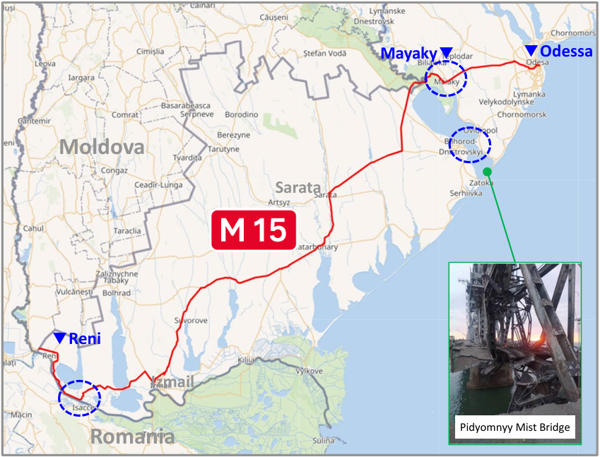
The period of works is: November 2023 – March 2024. The funding is provided by the Ministry of Economy, Trade and Industry (METI) of Japan.
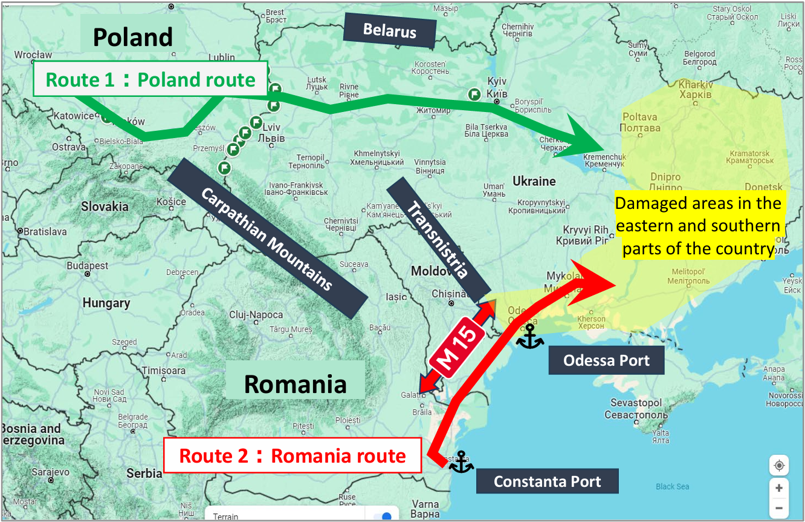
The strategic value of this infrastructure to be built is the possibility of increasing Ukrainian exports by using the Port of Constanta (Romania) as an alternative for goods arriving from Asia and Turkey. This new communication route would guarantee a safe outlet for those commodities on which the food security of many countries depends. Furthermore, in view of the accession process to the European Union, this new route would improve Ukrainian access to the Schengen area. From Odessa, alternative routes to access the EU are to Poland or Romania via Moldova. Both are longer and with transport that is still too obsolete. Furthermore, Moldova remains a country of high political risk, due to the illegal Republic of Transnistria with the presence of Russian troops.
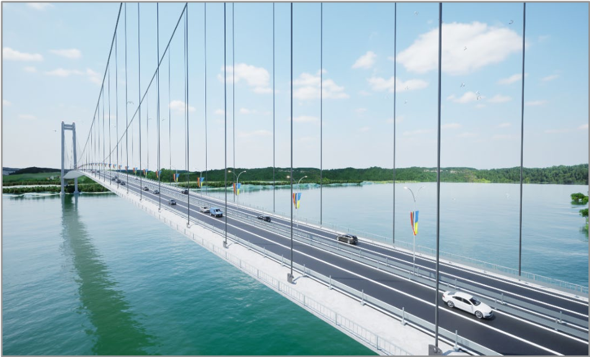
But the most ambitious work of this project is the construction of a suspension bridge to cross the Danube, of the same type as the Braila Bridge inaugurated in Romania in 2023.
The EU TEN-T Network Revision (2022 July) designated the M15 road as “Comprehensive”, and supposed to be completed by the year 2050.
With the help of the Japanese Government, Ukraine strengthens and protects export routes, moving closer to the European Union.
German company will build a wind power plant in Odesa region

nterfax-Ukraine writes that the German company Notus Energy plans to build a wind power plant with a total capacity of 300 MW in Odesa region, as reported Knud Rissel, the company’s commercial director.
Knud Rissel noted that Notus Energy has been working on this project since the spring of 2022 and now it is in the process of building a wind power plant with step-by-step launch. First stage of 120 MW should appear soon.
“We already have all the permits, in particular related to land. Banks support us, although they also take risks by supporting us. But we are all ready to work even under martial law.” Knud Rissel said.
He assumed that first stage of a wind power plant will not be launched in the coming winter, but the company is doing its best to launch the project as soon as possible.
Source: https://bzh.life/ua/plany/1718450416-nimetska-kompaniya-pobudue-vitroelektrostantsiyu/
Ukrainian South’s resilience unbroken: EUAM Ukraine’s Head visits Mykolaiv and Odesa

Even a child in Ukraine can nowadays quickly identify the air alert sound, showing you the shortest way to the shelter in the neighbourhood. This is the new “normality” since the beginning of Russia’s brutal war against Ukraine. A war against Ukraine’s state and nation, its people’s independence, democracy, and liberty.
Living in the war reality, under constant shelling, missile attacks and other threats, Ukrainians understand the value of “safety and security”. That’s why the civil security agencies of Ukraine put all their efforts into making people’s lives safer.
Being on the ground, the EU Advisory Mission (EUAM) Ukraine sees the unprecedented challenges their national partners face daily throughout Ukraine, including the liberated areas.
EUAM Ukraine’s Head of Mission (HoM), Rolf Holmboe, visited the Ukrainian South to meet counterparts from Odesa, Mykolaiv, and Kherson regions and get the latest update on challenges and developments in the area, on 9-11 January 2024.
Support in restoring Policing and Rule of Law in the Liberated Areas

When in the South, Rolf Holmboe, met partners from Mykolaiv and Kherson regions involved in restoring policing and the rule of law in the liberated territories, which is among the Mission’s priorities, including the senior management of the regional police, and the Prosecution Office and authorities.
The Head of the National Police in Kherson region, Ihor Korol, explained to the Head of Mission how difficult it is to operate in liberated Kherson city. “The police officers are heavily overloaded with work. Operating under constant shelling, they usually have no adequate rest or recuperation”. The high-risk environment in Kherson made the National Police and other civil security agencies move many facilities down to the basements of the buildings. The extremely high mine contamination of the area, considering the limited number of specialised personnel and equipment, is currently also a huge risk. Despite it all, Kherson and Mykolaiv police officers and prosecutors deal with international crimes daily and, thus, require special equipment and armoured vehicles while working at the scene.

Rolf Holmboe conveyed to the Ukrainian partners about the EU’s commitment to further support for overcoming the many challenges they face while investigating and prosecuting war crimes, and ensuring a safe environment in liberated territories. The Mission, said Holmboe, will continue providing strategic advice, specialised training, necessary equipment and engaging more international partners for the purpose.
Solidarity lanes and Integrated Border Management

The regular Russia’s attacks on the Odesa region, particularly the ports, have the effect of depleting resources and harm infrastructures as aimed at hitting Ukraine’s export potential. During a meeting, with Rear-Admiral Oleh Kostur, the Head of the Regional Marine Guard Directorate, and Oleh Kiper, the Head of the Odesa Military Administration, on 10 January, Rolf Holmboe discussed the possibilities of cooperation, as well as urgent needs to improve the counterpart’s capacity to ensure sustainable operation of Ukrainian ports in Odesa and Danube Delta.
Support for Ukrainian security future: working with police universities.
On the last day of his visit to the South, EUAM Ukraine’s Head discussed challenges and prospects of police education in Ukraine at the Odesa State University of Internal Affairs with rector, the colonel Dmytro Schvets. The сolonel highlighted how much attention is paid to creating practical skill sets for future police officers. They visited the specialised classrooms for the training on domestic violence cases, interviewing children, court hearings, tactical medicine, shooting range, mediation centre, and also the University Museum.

Rolf Holmboe and Dmytro Schvets shared their views on ongoing joint activities and plans in a friendly atmosphere. “The University professors and the students appreciate the constant support of EUAM Ukraine’s Odesa Field Office. We can see your representatives almost every day in the corridors of our University,” underlined the police colonel.
EUAM Ukraine strives to support Ukraine in raising its capacity to ensure a safe and secure state for its citizens, despite the war realities.


How G7 and EU plan to use Russia’s frozen assets to help Ukraine

BRUSSELS, June 6 (Reuters) – The Group of Seven countries and the European Union are considering how to use profits generated by Russian assets immobilised in the West to provide Ukraine with a large up-front loan now and secure Kyiv’s financing for 2025.
BASIC CONCEPT
Around 260 billion euros of Russian central bank funds are frozen worldwide, most of it in the EU. The funds generate 2.5 billion-3.5 billion euros a year in profit, which the EU says is not contractually owed to Russia and therefore represents a windfall. The idea, championed by the United States, is to use this profit as a steady revenue stream to service a large loan of $50 billion that could be raised on the market. Russia says any diversion of the profits from its frozen funds would amount to theft.
TIMING
Senior European officials say an agreement to go ahead with such a loan at a June 13-15 summit of the G7 — the U.S., Canada, Japan, Britain, France, Germany and Italy — would send a powerful signal of unity behind Kyiv on the eve of an international conference on Ukraine in Switzerland. It would also ensure Kyiv has financing for all of 2025 no matter who wins the U.S. presidential election on Nov 5th.
MAIN OPTIONS
Senior European officials say discussions are increasingly focusing on two options depending on who would borrow the money for Ukraine, with different details to be sorted out depending on the choice.
U.S. BORROWS TO LEND TO UKRAINE
Under one scenario, supported by a majority of EU countries, the United States would raise the money on the market and the European Union would give Washington assurances the windfall profits would be available to service the U.S. borrowing.
The advantage of this option is that it is quick and that it would not create any new obligations for European countries in terms of joint debt — an important consideration for a group of EU countries led by Germany.
The main problem is the extent and form of the assurances needed by Washington, and who would guarantee, and in what part, the repayment of such borrowing, especially if there is a Ukrainian debt restructuring or changes in interest rates that could upset initial calculations.
Many EU governments want G7 countries to participate in the risk-sharing, possibly proportionately to the size of their GDP.
Because the Russian assets are frozen in Europe under a sanctions regime that has to be unanimously renewed by all 27 EU governments every six months, Washington is concerned a veto from Hungary, which is close to the Kremlin, could cut off the money. It wants to see the sanctions regime changed accordingly.
Diplomats said Hungary wants the issue of the leveraging of the profits to be discussed by EU leaders on June 27-28.
EU BORROWS TO LEND TO UKRAINE
The other general option is that the EU borrows the money for Ukraine on its own, guaranteeing the repayment of bonds with money from the EU budget.
The main advantage is that the whole process stays in-house: the EU can use the windfall profits as it wants and there is no need to change the sanctions regime to bypass Hungary because a loan under the EU’s Macro Financial Assistance framework is agreed by qualified majority, not unanimity.
The downside is that the process would be long because it would need the consent of the European Parliament. A new European Parliament will only be elected on June 9th and constitute itself in July before a summer break for all of August. Getting parliamentary consent would therefore take many months.
The other drawback in the eyes of some EU countries is that this option would place all the risk associated with the borrowing on EU countries, making them jointly responsible for repayment, an idea particularly disliked in Berlin.
Ukraine’s Economic Recovery: Remarks and a Conversation with Penny Pritzker

Penny Pritzker
U.S. Special Representative for Ukraine’s Economic Recovery; Former U.S. Secretary of Commerce; CFR Member
U.S. Special Representative Penny Pritzker discusses ongoing Ukraine recovery and reconstruction efforts, having just returned from three trips to Ukraine in six weeks, including joining the Secretary of State in mid-May. She will also outline U.S. priorities for supporting Ukraine in advance of the Ukraine Recovery Conference on June 11-12 in Berlin.
FROMAN: Well, welcome, everybody. My name is Mike Froman. I’m president of the Council. And it’s really a great honor to convene this meeting, both because of the importance of the issue—reconstruction of Ukraine—but even more so because of our guest, Penny Pritzker, who I had the pleasure of working with, well, for years, actually, in the Obama administration and even before.
She is the president’s special representative for Ukraine’s economic recovery. It’s a position she brings an immense amount of experience to, both from having been in government but, very importantly, being a very successful businessperson and entrepreneur as well. Having set up really dozens of businesses and invested in them over the years and brings a real private sector eye to the challenges of rebuilding Ukraine’s economy and society, as well. I had the pleasure of working most closely with Penny when she was the secretary of commerce. And I saw from a ringside seat just how she elevated that role to a whole new—a whole new level, in terms of both the span of work, its effectiveness, and the importance to the U.S. government.
So it’s a pleasure to welcome my friend Penny Pritzker. She’s going to give remarks for a few minutes, and then we’re going to have a conversation and open it up to questions. Please welcome Penny Pritzker. (Applause.)
PRITZKER: So I’m really honored to be here today. Thank you. Mike, thank you very much. First, thanks for the warm introduction and, frankly, for being such a great partner. We worked for years together and your tireless efforts to find solutions for many of our global challenges is really something that I always appreciated. I really felt like we had a true partnership working in government. And thank you for your friendship as well.
I want to thank also the Council community for hosting me today. I’ve been a proud member of the Council on Foreign Relations for years. And I was a former board member. And it’s a real privilege to have the opportunity to speak with you all today. You’re really a group of doers and committed to our planet’s collective peace and economic security. So it’s a pleasure to be able to come and talk about a subject near and dear to my heart. I’m also particularly grateful to the European brain trust here at CFR—Charlie Kupchan, Liana Fix, Thomas Graham, and, of course, Ambassador Stephen Sestanovich, whose work on behalf of the United States regarding the newly independent states of the former Soviet Union back in the ’90s still bears huge influence today.
Let me start by talking about the situation on the ground in Ukraine today. On the battlefield, there is no doubt that the past months have been difficult, with the delays in our security and economic assistance leading to a situation in which Ukraine has lost ground in the war. That’s really undeniable. Since March 22 of this year, Vladimir Putin really doubled down on his cruelty, stepping up his attacks on Ukraine’s energy infrastructure; laying siege to Ukraine’s beautiful second city, Kharkiv; and seeking to break the psyche of the Ukrainian people. He has intensified his shelling of hospitals, schools, homes, around the towns of Chasiv Yar and of Vovchansk, which are near Kharkiv.
And he has positioned 30,000 troops just over the Russian border—in Russia, but right over the border from Kharkiv, in an apparent preparation for a further assault. These attacks have forced more than 10,000 residents from the oblast to flee their homes and created an eight-gigawatt energy generation gap this summer. He depends upon his dark alliances for these attacks, with Iranian drones, North Korean artillery, and Chinese satellite imagery all contributing to the death, destruction, and needless suffering that we are witnessing. So without a doubt, these are sobering facts.
And yet, amid the dark headlines, I’m here today to talk about why there is real reason for optimism towards Ukraine due to the facts and trends that we see, and which the media does not often capture. As we head towards Ukraine reconstruction conference in Berlin, which will occur in about three weeks, it’s important that we not just take advantage of these trends, but that we take heart from them. They show our belief in Ukraine’s future is not only based on a—it’s not based on a Pollyannish fantasy, but based on the reality as we see it at play.
I’ve traveled to Ukraine five times since being named President Biden’s special representative for Ukraine’s economic recovery in September, and most recently I was there two weeks ago. And I’ve seen the trends with my own eyes. What we see is that with our help, Ukraine can and will win this war. And today, I’d like to explain why we believe it will, and describe a few key things that must happen on the economic side for that victory to take place.
First, militarily. Though the supplemental was delayed, Ukraine is now getting what it needs. In the last thirty-one days since President Biden signed the supplemental legislation, the United States has flooded the zone with weapons and equipment, including couple billion dollars in munitions, including air defense systems, ammunition, armored vehicles, small arms, and other equipment. The democratic world is also there with us. The Czechs are leading a European effort to rush 500,000 artillery rounds to Ukraine. The U.K. has just announced a new multiyear military package. Germany is supplying a new Patriot system. Australia is providing a new air defense system of its own. And Ukrainian-manned F-16s will be flying over the airspace within months, provided by the Europeans.
Ukraine is wasting no time that putting this wave of support into action. And its difficult, but absolutely necessary, new conscription law which just went into force will help it ensure it has troops necessary to defend itself. This is, of course, on top of the huge success Ukraine has seen in the Black Sea, where it pinned back Russia’s fleet, and its overall success in the battlefield, where it has by and large held a much larger force at bay along front lines that are over 600 miles long.
Economically, we’re also seeing Ukraine take important strides forward. Take Ukraine’s defense industrial base. The number of drone manufacturers has grown from nine to over 200. Cyber, robotic systems, and demining expertise are skyrocketing. And data from the battlefield is helping Ukraine’s defense industries reduce the time for development of new technologies from years to weeks, with concrete impacts on the battlefield effectiveness. As the drone manufacturer Brave1 says, Ukraine is, and I quote, “where the technologies of victories are born.”
American defense CEOs would agree. They literally marvel at the innovation of Ukraine’s defense production, sometimes combining different technologies, precision missiles, drones, armored vehicles, with American, Soviet, and European parts, to create whole new systems. It is this kind of creativity that is putting Ukraine’s defense companies at the leading edge of modern warfare technology. In fact, three American defense companies are working right now with their Ukrainian counterparts, and us, to coproduce low- and medium-caliber munitions made in and for Ukraine. Another is working on the very first joint venture between an American and Ukrainian defense company. The United States wants to unleash more joint Ukrainian-American defense production on Ukraine’s soil. That’s why we just announced a $2 billion first of its kind Ukrainian defense enterprise fund that will provide more financing for production, repair, and maintenance.
The bigger economic picture is also encouraging. Despite Russia’s war and having 17 percent of its territory occupied, Ukraine’s GDP grew 5 percent in 2023 and is on track to grow another 4 ½ percent this year. Investment is up 17 percent, tax revenues surged 25 percent in January, and more than 37,000 new businesses were registered in Ukraine in 2023—more than the number in 2021 before the war. American companies beyond the defense sector are helping coauthor this recovery. McDonald’s added more stores in Ukraine and served over 100 million Ukrainians just last year, sourcing 70 percent of its beef, dairy, vegetables, and sunflower oil from inside Ukraine. ADM and Cargill are investing in agricultural projects and reinvesting profits back into Ukraine’s rich, black soil. So things are happening. That’s why there are over fifty American companies that are going to be in Berlin for the recovery conference to talk about their investments and even expansions in Ukraine.
While all this is important and it’s positive, we cannot be naïve about the challenges Ukraine faces. And these are not just challenges on the battlefield. We do believe Ukraine can and will win, with support of a huge coalition on Ukraine’s side. But we have to be clear eyed about what it will take for the country to win not just the war, but also set itself up for the future. So let me describe what I think it will take. To win for the long term, there are five essential elements the Ukrainians, together with the international community, must tackle head on. Elements that must be at the center of our discussions at the Ukraine recovery conference in Berlin.
They include air defense systems needed to protect the border and over major population centers. A culture that embraces rule of law and rejects corruption. A government that has the capacity to define bankable projects for investment and provide cohesive cross-ministry planning. A global marketplace offering risk management tools that will make investment decisions easier. And, finally, sufficient capital, especially the use of Russian sovereign assets, to finance this vision. Taken together, these five elements can be rocket fuel that powers not just Ukraine’s true economic recovery, but also its journey to become a prosperous, democratic, independent country integrated into the EU and NATO, which is exactly what its people crave.
So let me lay out each of these a little—in a little bit greater detail, as each are key U.S. priorities as we head to Berlin. First, air defense. Just look at Kyiv. When you look at Kyiv, you can see what the future can hold for Ukraine. So you get off the train from Poland and you find a bustling European city that has thriving industry, kids going to school, parents going to work, folks going shopping, a bustling nightlife, and even regular traffic jams. It’s become—(laughs)—it’s become Ukraine’s economic beacon, made possible by the protective umbrella of air defense. The same is starting to happen in Odesa. In order to generate breakout economic activity, create jobs that draw back the Ukrainian diaspora, and attract private sector investment, it’s essential that we and our allies figure out how to provide sufficient air protection to Ukraine’s centers of commercial activity, like Kharkiv, Dnipro, Lviv, and beyond. Security is essential to attracting large-scale investment. We all know that, but it is—takes a lot of work to make it a reality.
Second, Ukraine’s defenses against corruption must be just as strong as its military defenses. Eight in ten Ukrainian say they believe more must be done about corruption. And we must help them. This means a judiciary protected from outside interference. This means a press free from political influence or pressure. This means digital customs and other tax collection systems. This means an independent, empowered, well-resourced anticorruption investigators, prosecutors, and judges. This means strengthening the rule of law for everyone. So when I speak to American CEOs, particularly those in the most crucial sectors like defense and energy, the first point they raise with me, after asking about the war, is always the need to fast track reforms and address corruption. American taxpayers and Congress also justifiably demand reform.
I’m pleased to report that Ukraine’s made progress on its reform agenda, including making some very tough decisions. In just the last six months, for example, Ukraine has passed legislation regarding asset declaration—so, think of its politicians declaring the assets they own—antimonopoly regulation, judicial discipline reform, and corporate governance. I truly believe these efforts, and more, are essential to change the culture in Ukraine. But they will ultimately be just as much a part of the Zelensky government’s legacy as winning the war itself. He understands fighting corruption is linked to Ukraine’s secure, prosperous, Western future. So this requires not just changes in laws, but a fundamental systems and cultural change.
Meanwhile, even as we support Ukraine to strengthen its defenses and deepen its reforms, we need to help Ukraine set up the ability to prioritize and prepare projects for investment and reconstruction. The estimates to rebuild Ukraine by the World Bank are around $500 billion. There has never in history been such a significant need. To do this successfully and efficiently, coordination will be essential. So just think, unlike the Marshall Plan where one actor, the United States, was driving the reconstruction of many countries across Western Europe, this is a case where many countries, businesses, people, are driving reconstruction of one nation—Ukraine. Obviously, that makes coordination more challenging, though it allows us to bring to bear unprecedented amounts of funding, creativity, expertise, and experience to the challenge.
What we need now is to lash Ukraine’s ingenuity to a cross-ministerial process that will prioritize and prepare the country for reconstruction. It’s essential to power the country into the future. It’s essential to attract investors and significant capital. It’s essential to having sufficient resources, labor, raw materials, and more to actually build the Ukraine of the future. This mechanism needs to be several things at once—Ukrainian led, community driven, and nationally coordinated. At the same time, it must also be internationally backed, grounded in data, and supported by the best global engineering and planning prowess the world has to offer.
It’s a tall order, but creating this capability is essential. If we can get these pieces in place and ensure cross-ministerial political consensus around the right structure, plan, and people, then Ukraine can realize a robust recovery. The mechanism can do many things—establish reconstruction goals, identify and prioritize investments, determine financing, ensure the availability of sufficient inputs and resources, set standards, and guarantee Euro-Atlantic level of openness and transparency. These are all things both Ukrainians and the international community are going to want and need for sufficient investment to occur.
Critical to Ukraine realizing its forward-looking economy and its dream of being part of the EU is how it develops its overall energy, transportation, and communication infrastructure. For the country to have decentralized energy generation and storage, utilizing gas, nuclear power, and renewables, for it to have rail, roads, ports, shipping, and air transportation, as well as for to have digital and ICT communication systems, all seamlessly linked to the EU, to the single market, and the global economy, will require the kind of coordinating effort that I am describing here.
Without a cross-ministerial mechanism to coordinate the planning, engineering, resource management, and financing of these foundational investments, it’s not going to be possible for Ukraine to achieve its vision outlined in the Ukraine plan and elsewhere. We, governments and the private sector, must work together with Ukraine to broaden its private sector and, frankly, its public sector absorptive capacity. This is going to take hard work, feasibility studies, technical engineering, and business plans. But it will help ideas and concepts become realizable projects that can and will draw investment. Helping Ukraine build out this absorptive capacity is essential and will increase the number of bankable projects—something that is sorely needed.
Fourth, Ukraine’s full-scale recovery will also require that we help the private sector manage risk. And, yes, this too is already happening. The U.S. Development Finance Corporation, DFC, is active and expanding its political risk portfolio for Ukraine. The European Bank for Reconstruction and Development, EBRD, is leading the development of a facility to provide coverage against war-related risks. The private sector is also involved. Marsh McLennan’s unity facility, for example, is a $50 million war risk insurance program covering ships transporting grain through the Black Sea. It’s one of the main reasons Ukraine’s Black Sea export routes have now expanded to prewar levels, hitting 13 million tons of exports in April alone.
But more must be done. Ukraine’s insurance premium market is just 3 percent—just 3 percent—of Poland’s. We are pushing for new lines of war risk insurance, for energy, cargo, land transportation, and elsewhere. In fact, in Berlin we plan to announce ways to put new capital to work to provide war risk insurance for small- and medium-sized businesses. We all know that without a robust insurance market, robust investment is not possible.
Finally, we have to tap into new sources of capital that can finance the public and private sector reconstruction. On the private sector side, we must find ways to unlock more catalytic and working capital. The thirst is there. One major American bank has added seventy-five new business clients, a 15 percent increase in its client base, since February of 2022. But Ukraine needs so much more. To meet the needs, there needs to be more lending through banks, through the international financial institutions, and elsewhere at interest rates that recognize the risk but yet also make investment profitable.
In addition, for Ukraine’s reconstruction there’s one crucial step that must be taken as a moral, legal, and practical matter. Russia must be made to pay. Our Congress has given us the power to seize Russian assets in the United States, understanding what Putin—understanding that what Putin has destroyed, Russia should and must pay for the rebuilding. And we intend to use this power, working with the G-7 by pulling forward profits and interest on frozen assets, which is a first step. This can and will unlock billions of dollars and send a powerful message to Putin that time is not on his side. So taken together, these five efforts can provide the basis for Ukraine’s economic recovery and its economy of the future. These are workstreams on which we must focus in Berlin. They are essential to fortify Ukraine’s remarkable and underappreciated un-breakability.
So as I close, I want to talk about the story of a company called Esper Bionics that makes artificial limbs. And I visited them two weeks ago and Kyiv. There’s a Ukrainian soldier named Valera Kucherenko, who came for Esper’s help after he lost both of his hands to a grenade attack last October. They gave him two bionic hands. And Valera has said that he was glad the prosthetics were made in a way that would allow him to return to the army to continue fighting for his country. When Ukrainians lose their hands, they build new ones and return to fight. And that is what is happening all over the country across the economy at this very moment. It’s just incredible.
That is what I have seen personally over and over again. So when we say that Ukraine can and will win with our help, it’s Valera that I think about. The country is literally full of Valeras, not grabbing headlines but using every ounce of their determination and ingenuity to fight and to win. And we must help them. Thank you very much.
Source: https://www.cfr.org/event/ukraines-economic-recovery-remarks-and-conversation-penny-pritzker